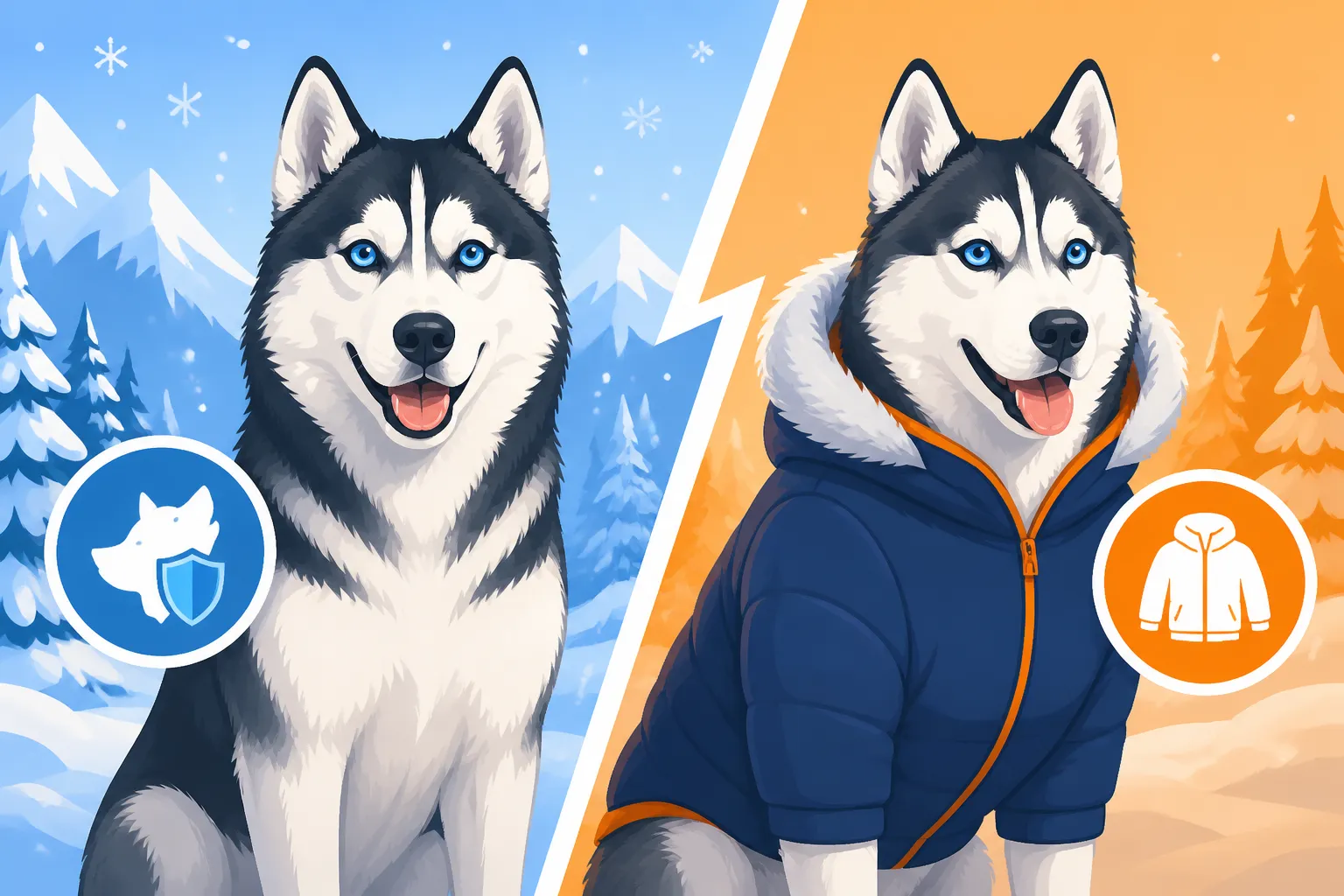
Winter Jackets and Whether a Siberian Husky Wears One
It’s a common sight to see dogs bundled up in adorable sweaters and jackets when the temperatures drop, and it’s natural for us Siberian Husky owners to wonder if our fluffy companions need the same protection. But let me tell you, when it comes to winter jackets, the answer for most Huskies isn't what you might expect, and often, putting one on them does more harm than good. This guide will dive deep into why your Siberian Husky is already perfectly equipped for the cold, and in what rare circumstances a jacket might ever be considered.
The Siberian Husky's Natural Winter Coat: A Masterpiece of Evolution
Siberian Huskies hail from one of the harshest environments on Earth, bred by the Chukchi people for centuries to thrive in brutally cold conditions. This isn't just a thick coat; it's a highly specialized piece of natural engineering that allows them to withstand temperatures far below freezing without batting an eye. Understanding this coat is key to understanding why they almost never need extra layers.
How the Double Coat Works
Your Husky's glorious coat is a marvel of adaptation, a true "double coat" designed specifically for extreme cold. It's not just hair; it's a sophisticated insulation system. The outer layer consists of coarse, straight "guard hairs" that are water-resistant and protect against snow, ice, and wind. Think of them like the shingles on a roof, shedding moisture and creating a barrier.
Beneath these guard hairs lies the truly magical part: a dense, soft, downy "undercoat." This undercoat is incredibly thick, almost like a wool blanket, and it traps a layer of warm air close to your dog's body. This trapped air acts as an insulator, preventing body heat from escaping and keeping the cold from penetrating. The loft of this undercoat is crucial for its insulating properties. It's why brushing regularly, especially during a Siberian Husky Coat Blow and the Six Weeks It Lasts, is so important—it keeps the coat from matting, which would compress the undercoat and reduce its effectiveness. This natural insulation is so efficient that for most healthy Huskies, adding an artificial layer like a jacket simply hinders their ability to regulate their own temperature. It's also why you should Why You Must Never Shave a Siberian Husky, as it completely destroys this natural defense system.
Why Their Metabolism is Key
Beyond their incredible coat, Siberian Huskies possess a unique metabolism that contributes to their astounding cold tolerance. Unlike many other breeds that burn through calories quickly to generate heat, Huskies have an incredibly efficient metabolism. Their bodies are adept at converting fat stores into energy without rapidly depleting their reserves. This allows them to maintain their core body temperature for extended periods, even when working hard in freezing temperatures.
This metabolic efficiency is a direct result of their heritage as endurance sled dogs. They were bred to run for miles, pulling loads in sub-zero conditions, and their bodies learned to make the most of every calorie. For a pet Husky, this means they often eat less than you might expect for their size, especially if they aren't working strenuously. If you're comparing your Husky's food intake to, say, a Labrador Retriever of similar weight, you'll often find your Husky needs significantly less to maintain a healthy weight. Their body is a finely tuned machine, optimized for cold survival, and adding a jacket can disrupt this delicate balance.
When a Winter Jacket Might Be Considered
While it's rare, there are indeed a few specific, often health-related, circumstances where a winter jacket could be a beneficial, albeit temporary, consideration for a Siberian Husky. These are exceptions to the rule, driven by compromised natural defenses or extreme environmental shifts.
Elderly or Ill Huskies
As our beloved Huskies age, their bodies, much like our own, start to become less efficient. An older Husky might have a thinner coat due to hormonal changes, a reduced fat layer, or a less robust circulatory system, making them more susceptible to the cold. For these senior citizens, a jacket could provide some much-needed warmth, particularly during short potty breaks or slow, gentle strolls in very harsh weather. It's about supporting a system that isn't quite as effective as it once was. You might notice other signs of aging, too, such as changes in their activity level or appetite; for advice on senior care, see Caring for a Siberian Husky Past Ten.
Similarly, Huskies suffering from certain illnesses might struggle with cold. Conditions like hypothyroidism, where the thyroid gland doesn't produce enough hormones, can lead to a dull, thin coat and an inability to regulate body temperature effectively. Siberian Husky Hypothyroidism and Coat Change can manifest as a poor-quality coat that doesn't provide adequate insulation. In these cases, under veterinary guidance, a lightweight, breathable jacket for very short outdoor excursions could offer comfort and prevent the dog from getting chilled. Always consult your vet if you suspect your Husky might be struggling with the cold due to health issues.
Acclimation and Location Differences
Another niche scenario where a jacket might be briefly entertained is for a Husky that has recently moved from an extremely warm climate to a suddenly very cold one. Imagine a Husky spending its entire life in Florida and then relocating to Minnesota in January. While their genes are built for cold, their body hasn't had the chance to fully develop its densest winter undercoat, and their system hasn't acclimated to the shock. Even then, this would be a temporary measure for extremely short outings, just until their natural coat has time to adjust, which often takes weeks or months. For more on relocating a Husky, see Moving a Siberian Husky to a Warmer State.
However, even with these considerations, it's critical to understand that this is not a recommendation for long-term jacket use. A Husky's natural defenses are incredibly powerful. Even one that has lived in a warm climate will still retain much of its inherent cold tolerance. The goal is always to allow their natural coat and metabolism to do their job, only intervening with a jacket if absolutely necessary and under specific, temporary conditions. Remember, their bodies are designed for cold, even after acclimation.
Why Most Huskies Don't Need Jackets (and Can Be Harmed By Them)
The vast majority of healthy Siberian Huskies do not need, and in fact, should not wear winter jackets. Their bodies are perfectly engineered to handle the cold, and interfering with this natural system can lead to discomfort and even health problems. It's a classic case of trying to "fix" something that isn't broken.
Overheating Risks
One of the biggest dangers of putting a jacket on a healthy Siberian Husky is the significant risk of overheating. Their double coat, as we discussed, is a phenomenal insulator. When you add another layer on top of that, especially during activity, you effectively create an oven. Huskies primarily regulate their temperature through panting, and while some heat dissipates through their paws, their fur is designed to trap heat, not release it. A jacket prevents this natural thermoregulation from occurring efficiently.
Picture your Husky on a brisk walk. They're generating internal heat through exercise, and their coat is already working overtime to keep them warm. A jacket traps that excess heat, raising their core body temperature to dangerous levels. Signs of overheating can include excessive panting, drooling, lethargy, bright red gums, and even collapse. This is a serious condition that can quickly become life-threatening. For a deep dive on recognizing trouble, read Panting That Means Trouble in a Siberian Husky. It’s far better for them to be a little chilly and regulate naturally than to be dangerously hot and unable to cool down.
Coat Damage and Matting
Beyond the immediate danger of overheating, winter jackets can also cause significant damage to your Husky's magnificent coat. The undercoat, which relies on its loft to trap insulating air, can become compressed and matted when constantly rubbed by a jacket. This compression drastically reduces the coat's insulating properties, making it less effective at keeping your Husky warm in the long run. Matting also creates a breeding ground for skin infections, as moisture and debris can get trapped against the skin.
Furthermore, the constant friction from a jacket can break and damage the delicate guard hairs, compromising their water-resistant qualities. Imagine trying to keep a shingle roof effective if you constantly rub it with abrasive material. It's the same principle. Maintaining the health and integrity of their natural coat through regular grooming is far more beneficial than adding an unnecessary jacket. Investing in a good undercoat rake and knowing how to properly de-shed your Husky is a much better use of your resources than buying them a winter coat. If you ever need professional help, look for groomers who understand how to handle double coats and avoid those who suggest shaving; check out Professional De-Shedding for a Siberian Husky for more.
| Factor | Healthy, Adult Siberian Husky | Elderly/Ill/Acclimation Husky |
|---|---|---|
| Natural Insulation | Excellent (double coat, efficient metabolism) | Potentially compromised |
| Risk of Overheating | High with a jacket | Moderate, if short-term |
| Coat Damage Potential | High | Moderate |
| Recommended Action | No jacket needed | Jacket for brief, specific use, vet advised |
| Primary Goal | Allow natural thermoregulation | Support compromised systems |
Better Ways to Ensure Winter Comfort
Instead of resorting to unnecessary jackets, there are far more effective and Husky-appropriate ways to ensure your companion's comfort and safety during the colder months. These methods work with their natural physiology, rather than against it.
Providing Appropriate Shelter
For the vast majority of pet Siberian Huskies, the best winter shelter is indoors with their family. They thrive on companionship and being part of the pack, and a warm, dry home is ideal. However, if you have a working Husky or one that spends significant time outdoors in an appropriate, secure enclosure, proper shelter is paramount. This means a well-built, insulated dog house that protects them from wind, snow, and moisture. The house should be just large enough for them to stand up and turn around, allowing their body heat to warm the interior effectively. For insights into suitable outdoor shelters, look up Insulated Houses for an Outdoor Siberian Husky.
Even with an insulated dog house, it's crucial to understand the limits of their cold tolerance. While they can handle incredibly low temperatures, sustained exposure to extreme cold without adequate activity or proper nutrition can still be detrimental. Always be mindful of the ambient temperature and wind chill. For more information on their cold limits, refer to The Coldest a Siberian Husky Should Be Left Out. The key is providing options for them to escape the elements and maintain their warmth when they choose to, rather than forcing them into an uncomfortable situation.
Paw Protection and Other Considerations
While their bodies are built for the cold, their paws can sometimes be vulnerable, especially to artificial hazards. Road salt and ice melt chemicals used on sidewalks and streets can be highly irritating and even toxic to paw pads. In these conditions, investing in high-quality paw balm (like Musher's Secret, available on Amazon or Chewy) can create a protective barrier, or even better, dog booties can offer excellent protection. Just make sure the booties fit well and don't restrict blood flow. For more specific guidance on protecting their paws, see Road Salt on Siberian Husky Paw Pads or Booties for a Siberian Husky in Winter. Always check their paws after walks to ensure no ice balls or debris are lodged between their toes.
Beyond paw care, consider their nutritional needs if they are particularly active in cold weather. Working Huskies, for example, will burn significantly more calories to fuel their activity and maintain body heat. A high-quality diet with increased fat content might be appropriate to meet these demands. Brands like Ollie offer fresh, nutrient-dense options that some owners find beneficial, though always ensure any dietary changes are gradual and appropriate for your dog's activity level. For an overview on feeding a working Husky, you might find High-Fat Food Costs for a Working Siberian Husky helpful. However, for the average pet Husky, their regular quality food in appropriate portions (remembering their efficient metabolism!) is usually sufficient. Remember, a healthy, well-fed, and active Husky with a pristine double coat is already wearing the best winter jacket nature ever designed.
Disclaimer
This article is for general informational purposes only and does not constitute professional advice. Laws, prices and regulations vary by location and change over time. Consult a qualified professional for guidance on your specific situation.