Why Siberian Huskies Clean Themselves Like Cats
If you've ever owned a Siberian Husky, or even just spent some time with one, you've probably noticed something a little peculiar about their grooming habits. They aren't exactly like your average dog who rolls in mud and then expects you to handle all the cleanup. Instead, many Husky owners are struck by how fastidious their dogs can be, often cleaning themselves with a thoroughness that reminds them more of a feline than a canine. It's a common observation, and it leads many to wonder why these beautiful, wolf-like dogs seem to have adopted the meticulous grooming rituals of a cat. This guide dives deep into the fascinating reasons behind this unique behavior, offering insights into their ancient lineage, unique coat, and how this impacts their care.
The Ancestral Roots of Husky Cleanliness
It’s easy to look at a Siberian Husky and see a dog that’s a little bit different, a little more wild, perhaps, than your average Golden Retriever or Poodle. Part of that distinctiveness comes directly from their ancient heritage, specifically their origins with the Chukchi people in Siberia. These weren't just any dogs; they were survivalists, bred for efficiency and resilience in one of the harshest environments on Earth. And that environment, believe it or not, played a huge role in shaping their "cat-like" cleanliness.
Survival in the Arctic Wilderness
Imagine living in a frigid, barren landscape where every calorie counts, and cleanliness isn't just about looking good, it's about staying alive. For the ancestors of the Siberian Husky, a dirty, matted coat could mean the difference between life and death. A coat matted with ice, mud, or debris would lose its insulating properties, making the dog vulnerable to hypothermia. Furthermore, a filthy coat could harbor parasites or introduce infections, neither of which a working sled dog could afford.
The Chukchi people also lived in close quarters with their dogs, often bringing them inside during extreme cold. A dog that naturally maintained a clean coat would have been a much more desirable housemate than one constantly tracking in dirt and smelling unpleasant. This close living arrangement likely reinforced the selective breeding for dogs with inherently clean habits. It wasn't about vanity; it was about practicality, health, and maintaining the vital insulation provided by their unique fur. This instinct to stay clean, almost an imperative for survival, has been passed down through generations, manifesting today in the meticulous nature many Husky owners observe.
The Genetic Link to Ancient Canines
Siberian Huskies are known to be one of the oldest dog breeds, sharing a closer genetic link to wolves than many other breeds. While wolves aren't exactly "cat-like" in their social behavior, they are incredibly efficient and clean creatures in their own right. They meticulously groom their fur, often licking and nibbling to remove debris, parasites, and keep their coats in prime condition for insulation and camouflage. This natural, instinctive self-grooming behavior from their wild ancestors likely contributed to the Husky’s inherent fastidiousness. It's less about trying to be a cat and more about carrying forward highly effective, ancient canine self-care strategies that just happen to resemble feline habits to our modern eyes.
When you see your Husky meticulously licking a paw or working a section of their fur with their teeth, you're not just seeing a quirky habit; you're witnessing an echo of thousands of years of evolutionary pressure and intelligent design by both nature and early human breeders. It's a testament to how crucial a clean, healthy coat was for their very existence.
The Science of the Siberian Husky Double Coat
The primary reason behind your Siberian Husky's cat-like grooming isn't just ancient instinct; it's also deeply rooted in the physical structure of their coat. Unlike many breeds, Huskies possess a magnificent double coat, a marvel of natural engineering perfectly adapted for extreme climates. This coat is designed for optimal thermal regulation and, perhaps surprisingly, for self-cleaning.
Understanding the Double Coat's Structure
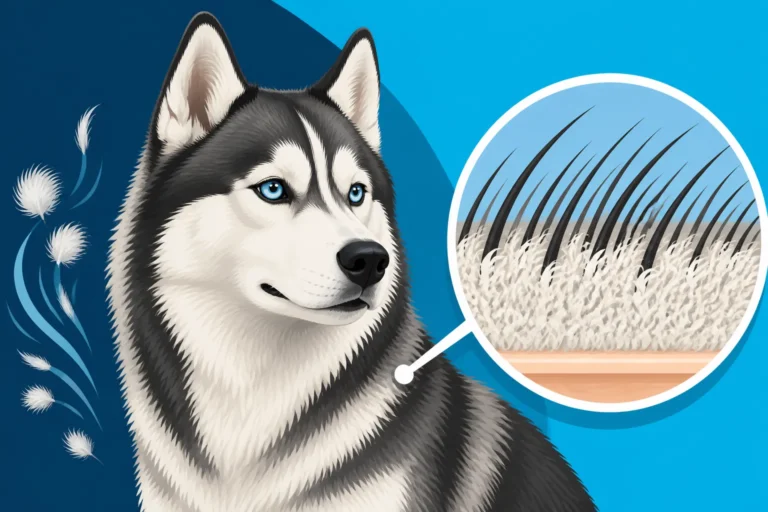
A Siberian Husky's coat consists of two distinct layers:
- The Outer Coat (Guard Hairs): These are the longer, coarser, and slightly stiffer hairs that you see on the surface. They are water-repellent and provide the primary barrier against snow, ice, and environmental debris. The guard hairs prevent moisture from reaching the undercoat and skin, effectively shedding dirt and water.
- The Undercoat: This is the dense, soft, woolly layer found close to the skin. It acts as the dog's primary insulation, trapping air to keep them warm in winter and surprisingly, to help regulate their temperature and keep them cool in summer.
This combination creates a highly efficient system. The guard hairs are not easily penetrated, and anything that does get caught in them is often dislodged by movement or the dog's natural shaking. When your Husky grooms itself, it's often working to maintain the integrity of this outer layer, ensuring it remains smooth and functional, which in turn protects the delicate undercoat. You can read more about Guard Hairs and Undercoat in a Siberian Husky to appreciate the complexity.
How the Coat Stays Clean and Odor-Free
The structure of the Siberian Husky's coat actively resists dirt and repels water, which means less grime actually sticks to them in the first place. Think about how many breeds come in from a walk looking like they rolled in every puddle and dirt patch. Huskies, more often than not, come back remarkably clean, or at least with superficial dirt that quickly falls off. This isn't magic; it's their coat's natural design at work.
Furthermore, Huskies produce less natural oil (sebum) than many other dog breeds. Sebum is what often gives many dogs their distinct "doggy odor" and can make their fur feel greasy and attract dirt. Because Huskies produce less of it, they tend to smell much less and their coats stay cleaner, longer. This low oil production directly contributes to why they don't usually require frequent bathing; in fact, over-bathing can strip their natural protective oils, which is actually detrimental to their skin and coat health. We often tell people Bathing a Siberian Husky and How Rarely is key.
The less oil, the less sticky, and the less odor. This is a crucial element in their self-cleaning process. When a Husky licks its fur, it's not trying to get rid of a deep-seated funk; it's often performing routine maintenance, removing loose hairs, dust, or minor surface debris, much like a cat delicately cleaning its pristine coat.
Practical Implications for Husky Owners
Understanding why your Siberian Husky is such a clean creature can actually make your life as an owner a whole lot easier – and sometimes, a little more perplexing. Their natural fastidiousness impacts everything from grooming routines to how you might manage their living environment.
Less Frequent Bathing and Professional Grooming
One of the biggest takeaways from a Husky’s cat-like cleanliness is that they generally do not need frequent baths. Seriously, it's a huge myth that all dogs need a monthly scrub-down. For Huskies, too much bathing can be detrimental, stripping those precious, natural oils that keep their double coat healthy and functional. Many Husky owners find that a bath once every few months, or even less, is perfectly adequate, unless they've had a particularly messy adventure.
What they do need, however, is regular brushing, especially during their "coat blow" seasons. This is when their dense undercoat sheds out in massive quantities, usually twice a year. During these periods, you'll be amazed at the sheer volume of fur that comes off. Daily raking and brushing with the right tools are essential to prevent matting and keep their skin healthy. If you’re overwhelmed, professional de-shedding services can be a lifesaver, and they’ll have high-velocity dryers that push out loose undercoat without stripping those guard hairs. Siberian Husky Coat Blow and the Six Weeks It Lasts delves into this intense period.
| Characteristic | Siberian Husky Grooming | Typical Dog Grooming (General) |
|---|---|---|
| Bathing Frequency | Infrequent (every few months or as needed) | More frequent (monthly, bi-weekly) |
| "Doggy" Odor | Very low to non-existent | Often noticeable, can vary by breed |
| Self-Grooming | Meticulous licking, nibbling, fastidious | Some licking, often less thorough |
| Coat Type | Double coat, low oil production | Varies widely (single, double, oily) |
| Shedding Pattern | Heavy "blows" twice a year | Consistent shedding, seasonal increase |
| Purpose | Maintain insulation, repel dirt, survival instinct | General hygiene, comfort, aesthetics |
You can find specialized grooming tools like undercoat rakes and high-velocity dryers on platforms like Amazon or Chewy, which are essential for managing their massive sheds. These tools help you remove the dead undercoat without damaging the protective outer layer, which is crucial for maintaining the integrity of their coat.
Managing the Shedding – A Reality Check
Despite their self-cleaning habits, let’s be realistic: Huskies still shed, and when they shed, they really shed. That "cat-like" cleanliness applies more to their body odor and how they handle minor dirt, not to their fur dispersal. During a coat blow, you'll find tumbleweeds of fur in every corner of your home, stuck to your clothes, and woven into your furniture. This is just the reality of living with a double-coated breed.
The good news is that their self-grooming helps manage some of this, by actively pulling out loose hairs themselves. But it’s not enough. You’ll need a robust vacuum cleaner, good quality undercoat rakes, and a solid routine for Siberian Husky Weekly Grooming Between Blows. While they might not smell like a typical dog, your home will definitely collect fur. Investing in appropriate grooming tools and being diligent about brushing will help keep the fur manageable and your Husky comfortable.
Respecting Their Natural Instincts
When you observe your Husky engaging in their meticulous self-grooming, remember you're seeing an instinct honed over millennia. This isn't just a quirky habit; it's part of what makes a Husky a Husky. Try not to interrupt them too much unless it's necessary. Also, avoid shaving their coat, even in summer, thinking it will help with cleanliness or heat. Shaving a Husky can permanently damage their double coat, impairing its ability to insulate effectively and leaving them vulnerable to sunburn and improper regrowth. We’ve talked at length about Why You Must Never Shave a Siberian Husky for good reason. Their coat is a finely tuned system, and their self-grooming is how they keep it that way.
Ultimately, while their self-cleaning might make you chuckle at the "cat-dog" living in your home, it’s a wonderful trait that contributes to their overall hardiness and relatively low-maintenance hygiene (in terms of bathing). Embrace it, understand it, and you’ll have a happier, healthier, and cleaner Husky companion.
Disclaimer
This article is for general informational purposes only and does not constitute professional advice. Laws, prices and regulations vary by location and change over time. Consult a qualified professional for guidance on your specific situation.