Why Two Siberian Husky Littermates Look Nothing Alike
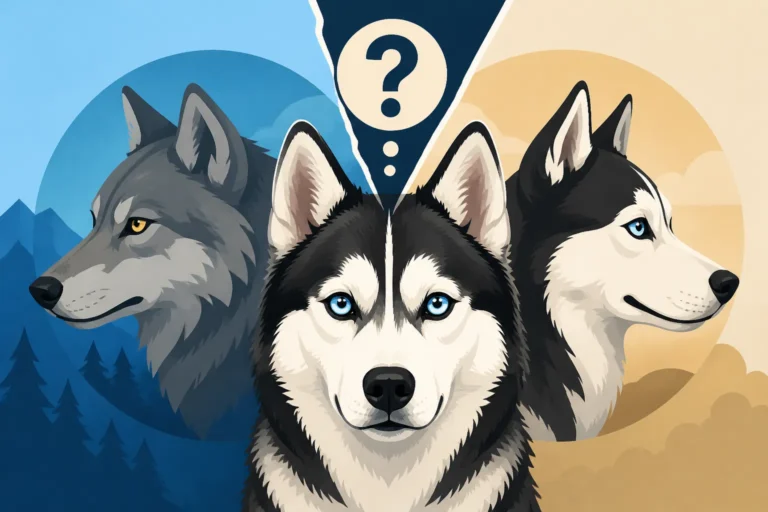
It’s a common moment for new puppy parents: you bring home your adorable Siberian Husky, convinced she’s a dead ringer for one of her littermates, only to be completely floored when another puppy from the very same litter shows up a few months later looking like a completely different breed. This isn't just a trick of the light or a case of "ugly duckling syndrome"; it's a fascinating peek into the complex genetics that make Siberian Huskies such a visually diverse breed. This guide will delve into the marvelous reasons why two Siberian Husky littermates can indeed look nothing alike, from their kaleidoscope of coat colors and markings to their captivating eye hues.
The Genetic Marvel of Siberian Husky Appearance
When you look at a litter of Siberian Husky puppies, it’s easy to assume they’ll all mature into similar-looking adults. But with Huskies, that’s rarely the case! The sheer variety you can see within a single litter is a testament to the rich and complex genetic blueprint of the breed. It’s like watching a genetic lottery unfold right before your eyes, where each pup draws a unique combination of traits from its parents. This isn't a flaw in breeding; it's a hallmark of the Siberian Husky.
A Deep Dive into Coat Color Inheritance
Unlike some breeds where coat color is determined by one or two simple genes, Siberian Huskies are a polygenic marvel. This means that multiple genes at different locations on the chromosome interact to produce the incredible spectrum of colors we see. Think of it like a master chef’s recipe with many ingredients, where subtle changes in quantities lead to vastly different dishes. Each parent contributes a set of these "ingredients" (alleles), and the combination received by each puppy is entirely random, leading to incredible diversity.
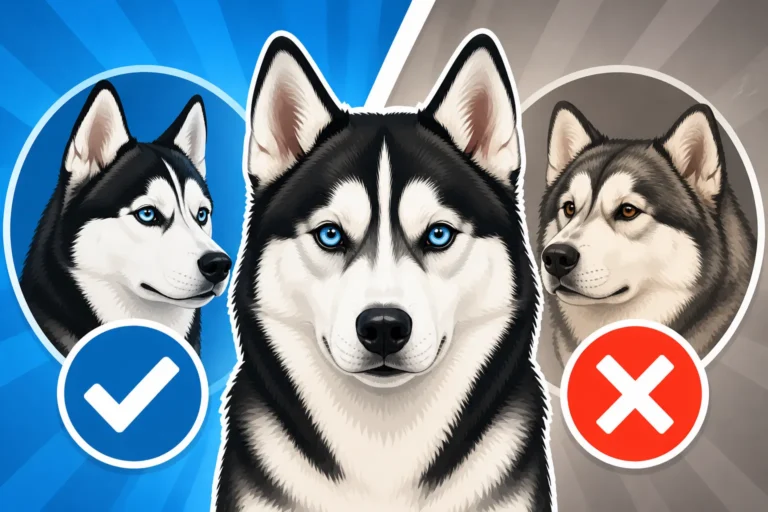
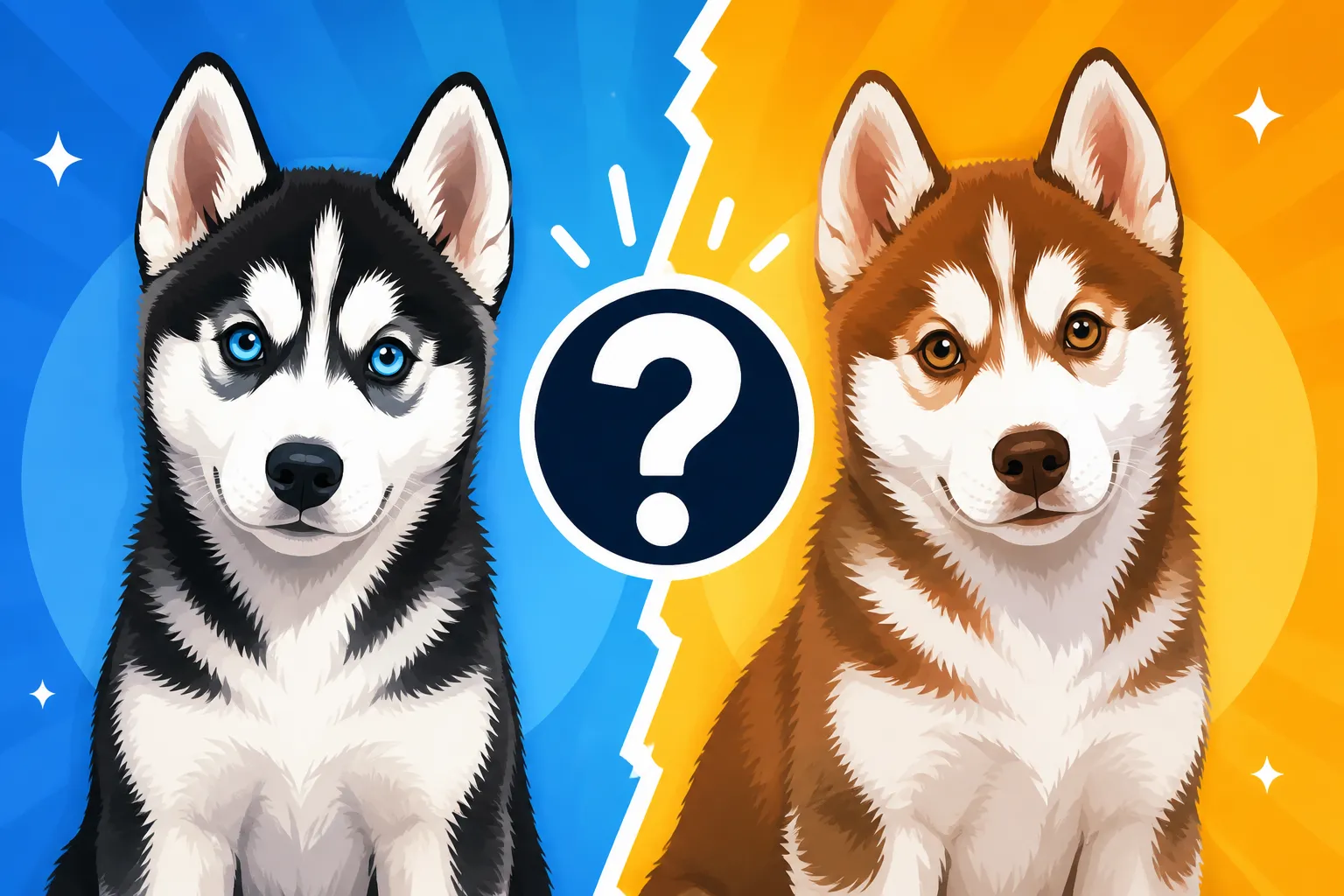
For instance, you might have two seemingly black and white parents, but their genetic makeup carries recessive genes for red, sable, or even agouti. These hidden genes, which didn't express themselves in the parents' visible coats, can suddenly pop up in their offspring. One puppy might inherit the dominant genes for a classic black and white coat, while its brother or sister receives a recessive gene combination that results in a striking red and white, or a nuanced wolf-gray with distinct banding on each hair. It's a beautiful, unpredictable mosaic of possibilities. This also explains why understanding The Coat Colors the Siberian Husky Standard Allows can be so helpful.
The genes at play, such as the A locus (which controls the banding patterns on individual hairs, leading to variations like agouti, sable, or black and tan), or the K locus (which determines whether black pigment is expressed), all combine in countless ways. It’s why you can literally have a jet-black and white pup, a copper-red pup, and a classic wolf-gray pup all tumbling out of the same whelping box. Each pup is a unique genetic masterpiece, a living testament to the vast gene pool that makes the breed so resilient and visually stunning. This genetic breadth means that even if you're looking for something specific, like an Agouti and the Wolf-Gray Siberian Husky, it could appear unexpectedly in a litter from different colored parents.
Unpacking the Mask and Marking Genes
Beyond the base coat color, Siberian Huskies also display a dazzling array of markings, from full facial masks to delicate spectacles, bold blazes, and distinctive saddles. These markings are also dictated by specific genetic loci and their combinations, often independently of the primary coat color genes. It's like having a separate set of genetic instructions for where to "paint" the white, black, or red patterns on the dog's canvas.
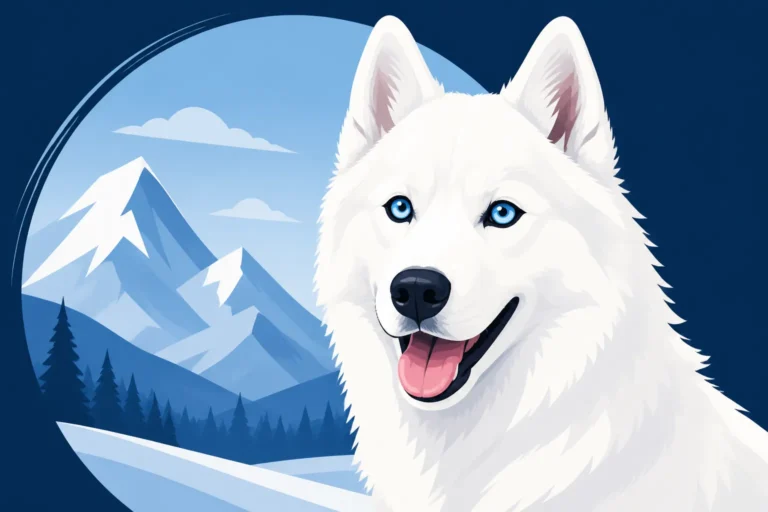
Consider a scenario where a mother has a strong black mask, and the father has a subtle blaze. One puppy might inherit a prominent, well-defined mask that almost entirely covers its face, while another might display only faint "spectacles" around its eyes, and a third could have a clean, unmarked white face. This variation is often influenced by what’s called the Irish spotting gene (S locus), which controls the extent and placement of white markings on the body. This gene has varying degrees of expression, from minimal white on the chest and feet to extensive white, almost appearing as a solid color, creating breathtaking Pure White Siberian Huskies.
It’s truly a roll of the dice in terms of how these genes combine. A single litter might produce a puppy with a dramatic black cap and saddle, another with an elegant pinto pattern, and yet another with a more subtle splash of white on its chest. The beauty is in this diversity; it ensures that each Siberian Husky is genuinely unique, even among its closest relatives. Observing Siberian Husky Coat Colors and Markings across different dogs really highlights this genetic artistry.
The Enigma of Siberian Husky Eye Color
One of the most captivating features of the Siberian Husky is the incredible variety of their eye colors. From piercing blues to warm amber and intriguing bi-colored eyes, their gaze alone can make littermates appear remarkably different. This is another area where Siberian Husky genetics delight in their unique expression.
The Blue Eye Gene and its Variability
When most people think of blue-eyed dogs, they often picture breeds like Australian Shepherds, where blue eyes are often linked to the merle gene. However, in Siberian Huskies, the mechanism for blue eyes is distinct and not associated with merle, which isn't present in the breed. Instead, blue eyes in Huskies are thought to be caused by a specific, dominant gene that affects how light reflects off the stroma (the fibrous tissue) of the iris. It’s not about a lack of pigment, but rather how the existing pigment scatters light, giving that stunning, icy blue appearance.
This blue eye gene can be incredibly variable in its expression. You can have parents with deep brown eyes producing a litter with sky-blue eyed puppies, or a blue-eyed parent whose offspring all have brown eyes. The inheritance isn't always straightforward, which adds to the delightful unpredictability of a Husky litter. It's not a simple dominant/recessive switch in the way we traditionally think about it, but a more complex interplay. Some puppies might have brilliant, clear blue eyes, while others might exhibit a lighter, almost milky blue. This variability ensures that even if you're drawn to Siberian Husky Eye Colors and Heterochromia, you'll find a full spectrum of stunning possibilities.
What's truly remarkable is that this specific blue eye gene doesn't carry the health implications sometimes associated with blue eyes in other breeds (like those linked to merle). For Siberian Huskies, blue eyes are simply a beautiful, characteristic trait, proudly accepted within the breed standard. This means that a breeder doesn't need to worry about compromising health for eye color, which is a wonderful aspect of the breed's genetic makeup. Understanding Whether Blue Eyes Are Faulted in a Siberian Husky can put prospective owners' minds at ease.
Understanding Bi-Eyed and Parti-Eyed Huskies
Further adding to the mystique of Husky eye color are the phenomena of bi-eyes and parti-eyes. A bi-eyed Siberian Husky has two eyes of completely different colors, most commonly one blue and one brown. Imagine looking at a puppy and seeing one eye like a clear summer sky and the other like rich dark earth – it’s truly striking! A parti-eyed Husky, on the other hand, has one eye that contains two distinct colors within the same iris, often appearing as a split or marbled effect, such as half blue and half brown.
These captivating variations are also products of the same complex genetic lottery that gives us blue eyes. The genes that control pigment distribution within the iris can sometimes express themselves unevenly, leading to these unique patterns. It's not a flaw or a defect; it's simply a different way the genes have combined and expressed themselves. It's entirely possible for a litter to produce a mix of all these eye colors: some puppies with two brown eyes, some with two blue eyes, others with one blue and one brown (bi-eyed), and even those with parti-colored eyes.
I once fostered a litter where one pup was bi-eyed, another had stunning sky-blue eyes, and a third had rich amber eyes – all from the same parents! Each one was beautiful in its own right, showcasing the incredible genetic tapestry of the breed. If you're fascinated by these unique ocular traits, you might enjoy learning more about Bi-Eyed Siberian Huskies and Parti-Eyed Siberian Huskies. These eye variations are just another reason why each Siberian Husky truly stands out, even when standing next to its siblings.
Beyond Genetics: Developmental Influences
While genetics lay the foundational blueprint for a Siberian Husky's appearance, it's important to remember that puppies are constantly changing and developing. What you see in a tiny eight-week-old fluffball might be quite different from the magnificent adult dog it becomes. These developmental shifts can further exaggerate the differences between littermates, even if their genetic codes are quite similar.
Puppy Coat Changes and "Fading" Colors
One of the most common surprises for new Husky owners is how much a puppy's coat can change as it matures. Puppy coats are typically softer, fluffier, and often have a more muted or, conversely, a more intense color than their adult counterparts. Many puppies that appear "black and white" at eight weeks might mature into a beautiful dark grey or even a lighter wolf gray as their adult guard hairs come in and their undercoat develops.
Similarly, a light red or cream-colored puppy might deepen into a rich, coppery red, or a soft silver-gray could become a vibrant, almost iridescent silver. This process, often called "fading" or "deepening," is entirely normal and part of the Husky's maturation. The true adult coat often doesn't fully develop until they are well over a year old, and sometimes even two. It's a journey of transformation that adds another layer of uniqueness to each dog.
Furthermore, some Huskies experience seasonal changes in their pigment, particularly on their noses. This phenomenon, known as "snow nose," means their black nose pigment might lighten to pink or liver during the colder months, only to darken again in summer. While distinct from genetic pigment loss, it's another visible change that adds to the dynamic nature of a Husky's appearance. You can read more about A Siberian Husky Nose That Loses Its Color if you're curious about this specific trait. These natural shifts mean that even genetically similar littermates can appear to diverge visually as they grow, simply due to the timing and extent of these coat developments.
The Role of Environment and Nutrition (Limited Impact)
While genetics are undoubtedly the primary determinant of a Siberian Husky's appearance, environmental factors and nutrition do play a supporting, albeit limited, role in the overall health and vibrancy of their coat. These factors won't fundamentally change a genetically determined color or marking, but they can certainly influence how well that genetic potential is expressed.
Proper nutrition, especially during critical growth phases in puppyhood, is essential for a healthy, lustrous coat. A well-balanced diet, rich in essential fatty acids and quality protein, supports strong hair growth and skin health, which in turn contributes to a coat's natural sheen and resilience. While it won't magically turn a black Husky into a red one, it ensures that the black coat is as deep and healthy as it can be. You can find quality dog food options on sites like Chewy that cater to different life stages and support coat health.
External factors like sun exposure can also have a minor, superficial impact. Prolonged time in direct sunlight, especially for darker coated Huskies, can sometimes lead to a slight bleaching or "rusting" effect, where the black hairs take on a reddish tint. This is not a genetic change but a temporary alteration of the hair shaft itself. However, it's important to stress that these environmental influences are superficial compared to the profound genetic variations that truly dictate why littermates look so different. The core genetic code for color and pattern remains, but a healthy environment helps that code shine its brightest.
What the AKC Standard Says About Variety
The American Kennel Club (AKC) breed standard for the Siberian Husky is a fascinating document because, unlike some breeds with very restrictive appearance guidelines, it embraces a wide range of colors and markings. This reflects the breed's origins as a working sled dog, where functionality and health were always prioritized over strict cosmetic uniformity.
Embracing the Spectrum of Acceptable Colors
The AKC standard explicitly allows for an astonishing array of coat colors and patterns in Siberian Huskies. It states that "all colors from black to pure white are allowed." This broad acceptance is precisely why you can have such dramatic differences between littermates, and yet every single one is considered perfectly within the breed's ideal. The standard doesn't dictate a single "correct" color, but rather celebrates the natural diversity of the breed.
You'll find Huskies in everything from classic black and white, to striking reds and coppers, nuanced grays (ranging from silver to wolf gray), sables, and the pure, ethereal white. Each of these variations, and the myriad combinations thereof, are fully acceptable. This means that a black and white pup, a red and white pup, and a sable pup from the same parents can all be equally "correct" according to the standard. This wide acceptance allows breeders to focus on temperament, health, and working ability without being unduly constrained by a narrow color palette.
This inclusive approach to color is one of the many reasons Siberian Huskies capture so many hearts. It means that whether you fall for a dog with a dramatic mask or a minimalist blaze, a vibrant red coat or a subtle gray, you're appreciating a true representation of the breed. If you're looking for a new family member, you can often explore various color options, and many reputable breeders and rescues will list this information, much like the detailed descriptions you might find on pet supply sites like Chewy that support various breed types. It truly highlights The Coat Colors the Siberian Husky Standard Allows.
Faults and Disqualifications (Related to Appearance)
While the Siberian Husky standard is remarkably inclusive regarding color and eye variations, it does have specific points about physical traits that are considered faults or disqualifications. These usually relate to features that would hinder the dog's ability to perform its original purpose as a light, fast sled dog. For instance, a "wooly" coat – an excessively long, soft, or shaggy coat with little undercoat – is considered a serious fault because it doesn't provide the proper insulation for arctic conditions and can easily mat. This is a perfect example of how function dictates form in the standard. You can learn more about Wooly Coated Siberian Huskies if you're interested.
Interestingly, blue eyes, bi-eyes, or parti-eyes are never considered faults in the Siberian Husky standard. In fact, they are often celebrated as distinguishing characteristics of the breed. This demonstrates the breed's unique genetic allowance for eye color variations, setting them apart from many other breeds where non-brown eyes might be penalized. This clear acceptance reinforces that the striking differences you see in eye color among littermates are perfectly normal and desirable.
The standard essentially guides breeders to maintain the integrity of the Siberian Husky as a powerful, enduring, and efficient sled dog. This emphasis on functional anatomy and overall balance means that while cosmetic variety in color and eye type is cherished, any structural or coat characteristic that would impede their historical role would be viewed as a fault. This approach inherently contributes to the visible diversity within litters, as appearance is less about strict uniformity and more about overall breed type and health.
Responsible Breeding and Understanding Pedigrees
For those committed to the health and future of the Siberian Husky breed, responsible breeding practices are paramount. Even with all the genetic knowledge in the world, the appearance of a litter can still hold delightful surprises, reinforcing the inherent diversity of the breed.
Predicting Litter Appearance – A Breeder's Challenge
Even the most experienced Siberian Husky breeders, who thoroughly understand their dogs' pedigrees and genetic lineage, can be surprised by the variety within a single litter. They meticulously study the parents' backgrounds, looking at the colors and markings that have appeared in previous generations, but the actual combination of genes that each puppy receives is still a random event. It's like having a deck of cards where you know all the cards, but you don't know the exact order they'll be dealt to each player.
A responsible breeder might know that a particular pairing has a history of producing red and white pups, or that there's a good chance of blue eyes appearing. However, they can never guarantee that every pup will have a specific color, mask, or eye combination. This is part of the magic and challenge of breeding. Their focus is always on producing healthy, well-tempered dogs that conform to the breed standard in terms of structure and athleticism, rather than solely on specific aesthetic traits. This includes ensuring appropriate Health Testing Before You Buy a Siberian Husky for parents.
The goal is to enhance the breed's strengths and minimize health predispositions, not to create "designer" puppies with predetermined appearances. This dedication to genetic health over purely cosmetic goals ensures that the breed remains robust and vibrant, even if it means a little unpredictability in the whelping box! This rich genetic tapestry is what keeps the breed healthy and ensures the delightful variety we see.
The Importance of Health Over Aesthetics
Perhaps the most crucial takeaway for both prospective Siberian Husky owners and dedicated breeders is that health and temperament should always take precedence over aesthetic considerations. While it’s natural to be drawn to a particular coat color or a pair of striking blue eyes, these visual traits should never be the sole basis for selecting a puppy or a breeding pair. The genetic diversity that allows for so much variation in appearance is a sign of a healthy breed, but it's the responsible breeding practices that truly ensure long-term well-being.
A reputable breeder will prioritize health clearances, genetic screening for known breed issues like certain eye conditions, and excellent temperaments. They will be transparent about their dogs' health histories and be able to provide verifiable documentation. Looking past a pretty face to understand the health behind the puppy is paramount. When looking for a puppy, always ask about the health history of the parents, no matter how cute the litter looks. You can also find valuable resources for understanding breed health and responsible pet care on platforms like Chewy.
The joy and companionship a Siberian Husky brings come from its unique personality, its boundless energy, and its robust health, not merely the specific shade of its coat or the color of its eyes. Embracing the genetic diversity that makes each Husky unique means appreciating them for who they are, knowing that those differences, even between littermates, are part of the breed's enduring charm and resilience.
Here's a quick look at some common Siberian Husky color terms and what they generally mean:
| Term | General Appearance Description | Common Markings | Eye Color Tendencies |
|---|---|---|---|
| Black & White | Deep black guard hairs, white undercoat/markings. Can range from solid black to mostly white. | Full mask, cap, saddle, solid white blaze. | Brown, blue, bi-eyed, parti-eyed |
| Gray & White | Ranging from silver-gray to darker wolf-gray. Guard hairs banded with black, gray, white. | Wolf mask, spectacles, light blaze. | Brown, blue, bi-eyed, parti-eyed |
| Red & White | Copper to deep rust red guard hairs, white undercoat/markings. Liver-colored nose. | Full mask, minimal mask, open face, blaze. | Brown, amber, blue, bi-eyed, parti-eyed |
| Sable & White | Reddish guard hairs with black tips, often appears "smoky" or darker than red. Liver-colored nose. | Darker mask, often more extensive shading on face. | Brown, amber, blue, bi-eyed, parti-eyed |
| Agouti & White | Wild-type pattern with banded hairs (black, tan, gray) across body. Often darker, "dirty" looking. | Dark, often extensive mask, resembling a wild canine. | Brown, amber (often dark), blue, bi-eyed, parti-eyed |
| Pure White | All white, often with underlying skin pigmentation (not albino). | No distinct mask (all white). | Blue, brown, bi-eyed (sometimes with light pigment on nose) |
| Piebald / Pinto | Large, irregular patches of color on a white base. | Varies widely based on color patches. | Varies widely based on color patches. |
Disclaimer
This article is for general informational purposes only and does not constitute professional advice. Laws, prices and regulations vary by location and change over time. Consult a qualified professional for guidance on your specific situation.