Why Malamutes Pull Freight and Siberians Pull Fast
It's a common misconception that all big, fluffy northern breeds are just "sled dogs," capable of doing the exact same job. But anyone who's spent time around a Siberian Husky and an Alaskan Malamute quickly realizes there's a world of difference in their build, their drive, and especially their pulling style. If you're looking to understand why one pulls freight and the other pulls fast, you've come to the right place. This guide will dive deep into the distinct purposes and physical traits that set these magnificent breeds apart in the harness.
Understanding the Core Purpose of Each Breed
When you look at a Siberian Husky or an Alaskan Malamute, it's easy to see a powerful, beautiful dog. They both have that undeniable northern charm, thick coats, and an air of ancient wilderness. However, their physical differences and behavioral tendencies are direct reflections of the specific jobs they were selectively bred to do over centuries. One was optimized for speed and endurance over vast distances, while the other was developed for sheer strength and stamina, pulling heavy loads through challenging terrain.
The Siberian Husky's Heritage: Speed and Endurance
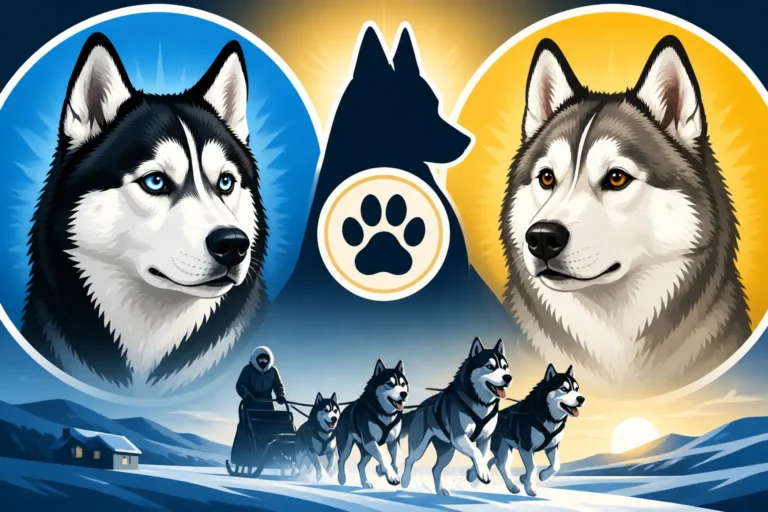
The Siberian Husky’s history is deeply intertwined with the semi-nomadic Chukchi people of northeastern Siberia. These resourceful folks needed a dog that could travel long distances quickly, often with relatively light loads, to reach hunting grounds or trade routes. Imagine traveling across frozen tundras and snow-covered plains, needing to cover many miles in a day to sustain your community. That's the life the Siberian Husky was born into. They were bred for efficiency, agility, and the ability to maintain a consistent, swift trot for hours on end, often in extreme cold. This meant a focus on a leaner build, a high-stepping gait, and an incredible desire to run. The dogs were also cherished members of the family, sharing shelters with their human companions, which speaks to their generally affable nature, even if they have an independent streak a mile wide. To learn more about their incredible journey, check out The Chukchi Origins of the Siberian Husky.
This specific need for speed and endurance means that a Siberian Husky possesses a particular kind of metabolic efficiency. They are often described as "easy keepers," meaning they can run for miles on surprisingly little food, especially compared to other working breeds of similar size. Their gait is designed for sustained, efficient motion, allowing them to glide over snow rather than trudge through it. When you see a team of Huskies in action, it's like watching a well-oiled machine, each dog contributing to a collective flow that maximizes speed and minimizes wasted energy. This genetic programming for long, fast runs is why many husky owners find themselves endlessly trying to Wear Out a Siberian Husky Without Leaving the House when they can't get out for a proper run.
The Alaskan Malamute's Heritage: Power and Stamina
In stark contrast, the Alaskan Malamute was developed by the Mahlemut Inuit people in Alaska. Their needs were different: they required a dog capable of hauling heavy loads—think large game like seals and bears, or supplies for an entire village—through deep snow and over rough, mountainous terrain. Speed was secondary to brute strength and an unwavering resolve to keep pulling, even when the going got tough. These dogs were the literal workhorses of the Arctic, designed to move massive weights slowly but surely, day after day. Their role demanded a powerful, robust build, immense strength, and a thick, protective coat to withstand the harshest conditions. They often worked in small teams or even alone, showcasing their incredible individual power.
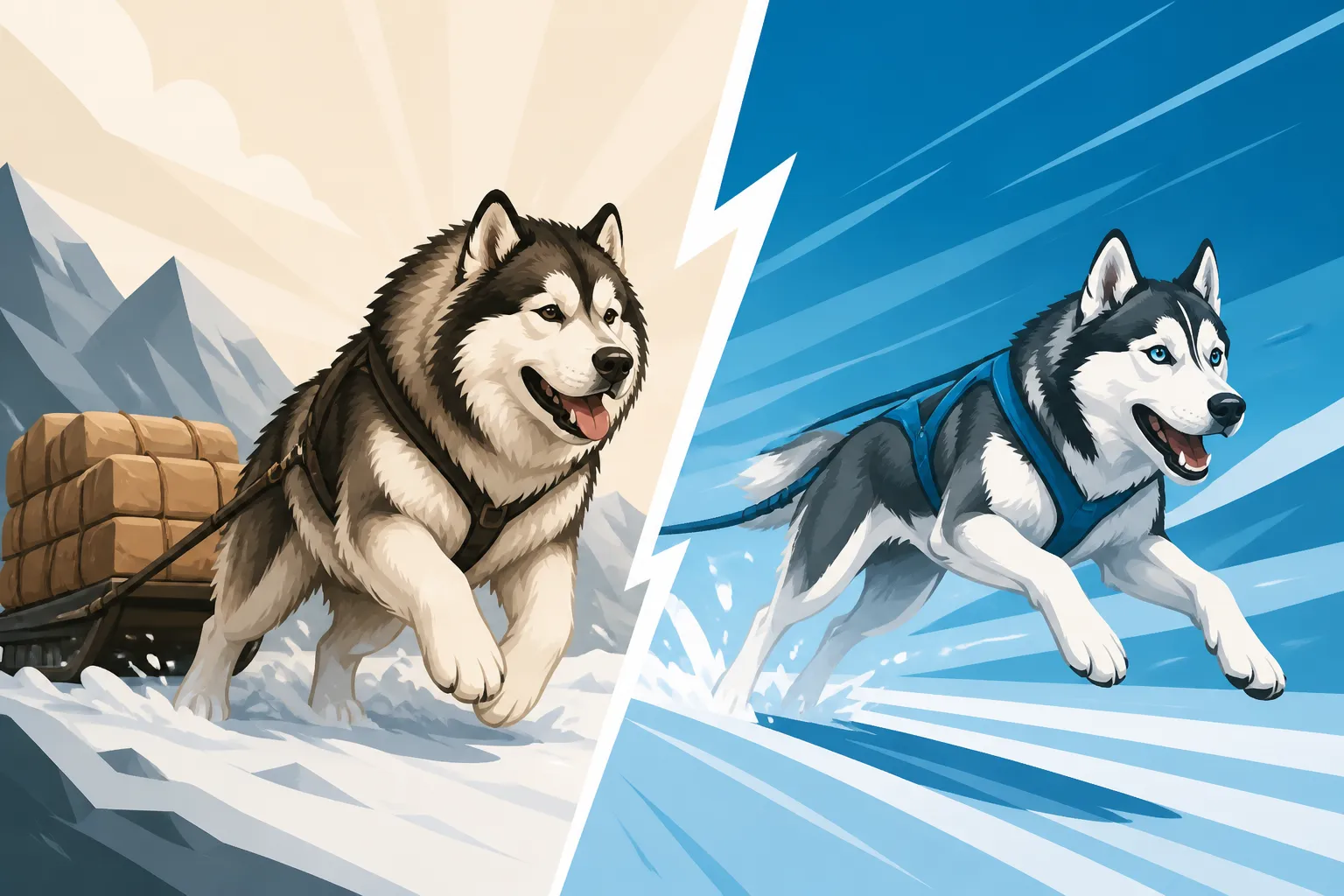
This lineage means a Malamute is typically a larger, more heavily boned dog than a Husky. Their deeper chest and broader shoulders are perfectly suited for anchoring a heavy load and moving it forward with powerful, deliberate strides. While they have endurance, it's an endurance for power-pulling rather than speed-running. They excel at tasks that require sustained effort and sheer strength, often described as having a "freight train" mentality in harness. They lean into the weight, digging in and moving it with immense force. If you're curious about the general differences, our article Siberian Husky Against the Alaskan Malamute offers a broader comparison.
Physical Adaptations for Their Roles
The old adage "form follows function" couldn't be truer for these two breeds. Every aspect of their physical structure, from bone density to paw size, has evolved to serve their distinct ancestral purposes in the harsh northern environment. These adaptations are what truly differentiate their pulling styles and capabilities.
How a Siberian Husky is Built for Speed
A Siberian Husky has a moderate bone structure; they are not delicate, but they are certainly not heavy-boned. Their bodies are lean and athletic, built for agility and quick turns. Their legs are well-muscled but appear longer and more refined than a Malamute's, allowing for that efficient, ground-covering trot. The key is their moderate size and proportion, which enables them to be light on their feet. Typically, a male Siberian Husky stands between 21 to 23.5 inches at the shoulder and weighs 45 to 60 pounds, while females are slightly smaller. This lighter weight reduces the energy expenditure needed to propel themselves forward quickly. You can find more details on their size in Siberian Husky Height and Weight in the Standard.
Their paws are another marvel of adaptation for speed. While still well-furred and padded for protection against cold, they tend to be slightly smaller and more oval-shaped than a Malamute's. This design is excellent for navigating snow and ice efficiently, allowing for quick foot placement without getting bogged down. Their gait is often described as smooth and effortless, a true demonstration of their breeding for speed and efficiency. When running at their peak, a Siberian Husky can seem to float over the snow, expending minimal energy for maximum distance. This efficiency is why they are often used in sprint races, where covering ground quickly is paramount.
The Malamute's Physique for Heavy Hauling
The Alaskan Malamute, on the other hand, is a dog of substantial bone and muscle. They are built like canine powerhouses, designed to withstand immense physical strain. Males typically range from 23 to 25 inches at the shoulder and weigh 75 to 85 pounds, with some individuals being even larger. This larger, denser frame provides the necessary leverage and mass to move heavy loads. Their body is compact and powerful, with a deep chest and broad shoulders that serve as a strong anchor for a harness. Their heavy bone structure provides a robust framework that can endure the constant strain of pulling significant weight.
Their paws are perhaps one of the most distinctive features reflecting their role. Malamute paws are large, thick, and snowshoe-like, with well-cushioned pads and dense fur between the toes. This design acts like a natural snowshoe, distributing their weight over a larger surface area to prevent them from sinking too deeply into soft snow. These paws provide exceptional traction and stability, essential when digging in to pull a heavy sled. The sheer size and power of a Malamute mean that when they hit the harness, they are truly built to haul, not to sprint. For anyone interested in the sheer mass of these dogs, you might like What an Adult Siberian Husky Weighs, which offers a comparison point.
| Feature | Siberian Husky | Alaskan Malamute |
|---|---|---|
| Primary Role | Light freight, speed, endurance | Heavy freight, power, stamina |
| Build | Moderate bone, lean, athletic | Heavy bone, robust, powerful |
| Weight (Male) | 45-60 lbs | 75-85 lbs (often more) |
| Height (Male) | 21-23.5 inches | 23-25 inches |
| Gait | Smooth, efficient, ground-covering trot | Powerful, deliberate, "freight train" pull |
| Paws | Oval, well-furred, efficient for speed | Large, thick, snowshoe-like, excellent traction |
| Metabolism | Highly efficient, "easy keeper" | Can require more fuel due to sheer mass/power |
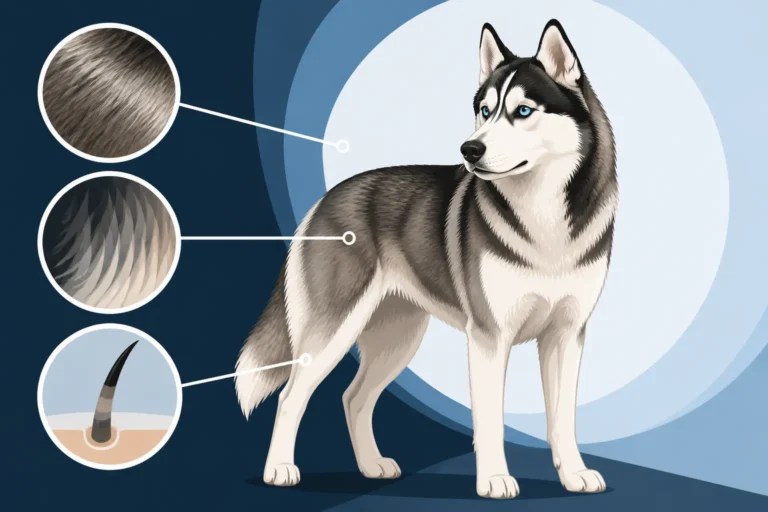
| Coat | Dense double coat, excellent insulation | Very dense double coat, maximum protection |
Temperament and Drive in Harness
Beyond the physical, the innate temperament and drive of each breed play a crucial role in how they perform their pulling duties. It’s not just about what they can do, but what they want to do and how they approach the task at hand. This is where centuries of selective breeding for specific working traits truly shine through in their personalities.
The Siberian Husky's Eagerness to Run
Siberian Huskies are famous for their desire to run. It's often said that if a door opens, a Husky's first instinct is to bolt and see what's over the horizon. This intense roaming instinct, deeply embedded in their DNA, translates directly to their performance in harness. They love to move, and they love to move fast. When hooked up to a light sled or a canicross belt, their excitement is palpable. They spring forward with an incredible burst of energy, eager to stretch their legs and cover ground. Their mental focus is often on the thrill of the chase, the joy of the run, and the satisfaction of reaching the end of the trail as quickly as possible. This makes them absolute stars in sprint racing and competitive canicross. You can explore activities suitable for them in Canicross and Bikejoring With a Siberian Husky.
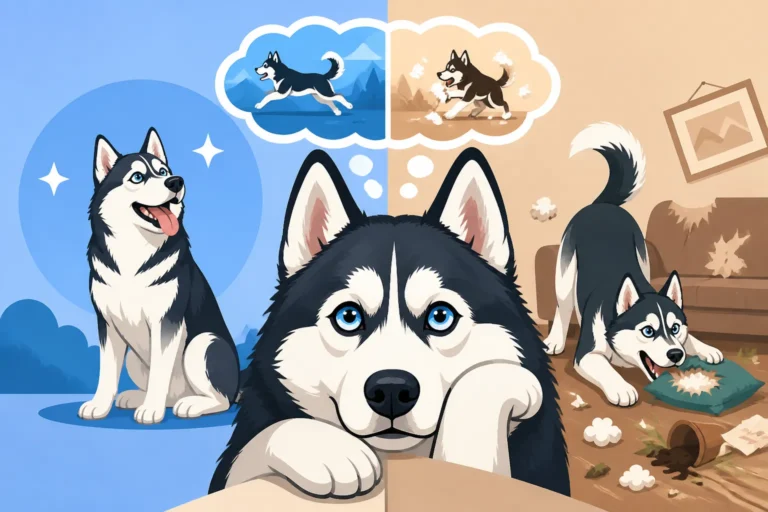
This isn't to say they lack focus, but their focus is on the act of running itself. They thrive on consistency in their stride and maintaining pace. While they can pull a decent load, their true calling is in demonstrating speed and agility. Their independence can sometimes manifest as a playful stubbornness, but when it comes to running, they are typically all in. It's important to channel this drive appropriately, giving them a job that matches their natural inclination. Providing outlets like regular runs or Teaching a Siberian Husky to Pull in Harness can make them incredibly happy and fulfilled dogs. Without this outlet, their natural inclination to run can lead to some well-known behavioral challenges.
The Malamute's Steadfast Determination
Alaskan Malamutes possess a different kind of drive. While they enjoy exercise and can certainly move with purpose, their primary motivation in harness is not sheer speed, but steady, powerful progress. They exhibit an almost stoic determination, a powerful resolve to pull whatever is asked of them, no matter how heavy or how challenging the terrain. This isn't a dog that bursts out of the gate in a flurry of speed; it's a dog that settles into a powerful, rhythmic pull, tackling obstacles with unwavering strength. They are the marathoners of the freight world, built for sustained effort over long periods.
Their focus is often on the task at hand: moving the load. They tend to be less distracted by external stimuli when working, their powerful bodies and minds locked into the rhythm of the pull. This inherent steadfastness makes them incredibly reliable for tasks requiring immense strength and perseverance. They don't typically have the same "bolt" instinct as a Husky, preferring to stay with their handler and their pack. This makes them excellent companions for skijoring or carting, where consistent, powerful pulling is more valuable than outright speed. If you're considering putting a dog in harness, understanding Weight Limits for a Siberian Husky in Harness can also offer some helpful perspective, even if the weight dynamics differ for Malamutes.
Practical Considerations for Owners
Understanding the fundamental differences in how these breeds pull is crucial for any owner considering harness activities, or even just daily walks. Mismatched expectations can lead to frustration for both dog and human. By choosing the right equipment and training methods, you can empower your dog to excel at what they were naturally bred to do.
Choosing a Harness for Speed vs. Power
The type of harness you choose is paramount and must align with your dog's build and the activity you intend to do. For a Siberian Husky, whose purpose is speed and light pulling, a well-fitting X-back harness or a comfortable multi-sport harness designed for movement is ideal. These harnesses distribute pressure evenly across the chest and shoulders, allowing for a full range of motion and enabling their efficient, ground-covering trot. Brands like Ruffwear or similar outdoor gear specialists on Chewy often have excellent options that accommodate a Husky's athletic build without impeding their natural movement. The goal is to allow them to extend fully and run freely, without any restriction that would hinder their speed. Many owners find that a traditional dog collar simply isn't enough when their Husky is in full pull mode, which is why we often discuss Harness Against Collar for a Siberian Husky.
For an Alaskan Malamute, who is built for power and heavy hauling, a sturdier, more robust harness is typically required. These might be wider, more padded harnesses designed to handle significant weight distribution. The focus is on strength and durability, ensuring the harness can withstand the immense force a Malamute can generate. A freight harness or a heavy-duty pulling harness with wider straps will spread the load more effectively, preventing discomfort and injury when they are truly leaning into a pull. While these harnesses might be heavier, they provide the necessary support for a dog designed to move serious weight. Always prioritize a harness that fits snugly but allows for full shoulder articulation.
Training Differences for Pulling Discipline
Training a Siberian Husky to pull involves channeling their innate desire to run forward. The key is often positive reinforcement, rewarding their enthusiasm for going forward, and teaching directional cues ("gee" for right, "haw" for left) while they are moving. Because they are so driven by speed, keeping training sessions engaging and focused on the joy of running is vital. They learn quickly what the harness means: go time. Consistency in cues and positive reinforcement for forward momentum will build their confidence and responsiveness in harness. Many start with Starting Long Line Work With a Siberian Husky to build a strong foundation before moving to harness work.
Training an Alaskan Malamute to pull focuses more on building steady power and reinforcing consistent effort. While they also respond well to positive reinforcement, the emphasis might be less on speed bursts and more on sustained, controlled pulling. Teaching them to "dig in" and maintain pressure on the lines, especially through challenging spots, is crucial. Their intelligence and determination mean they can learn complex commands, but their independent nature requires patience and a clear, consistent hand. Both breeds benefit immensely from early introduction to harness and line work, always keeping sessions positive and building confidence. It's truly amazing to see a well-trained Malamute steadily move a heavy load, showcasing their incredible strength and mental fortitude.
This article is for general informational purposes only and does not constitute professional advice. Laws, prices and regulations vary by location and change over time. Consult a qualified professional for guidance on your specific situation.