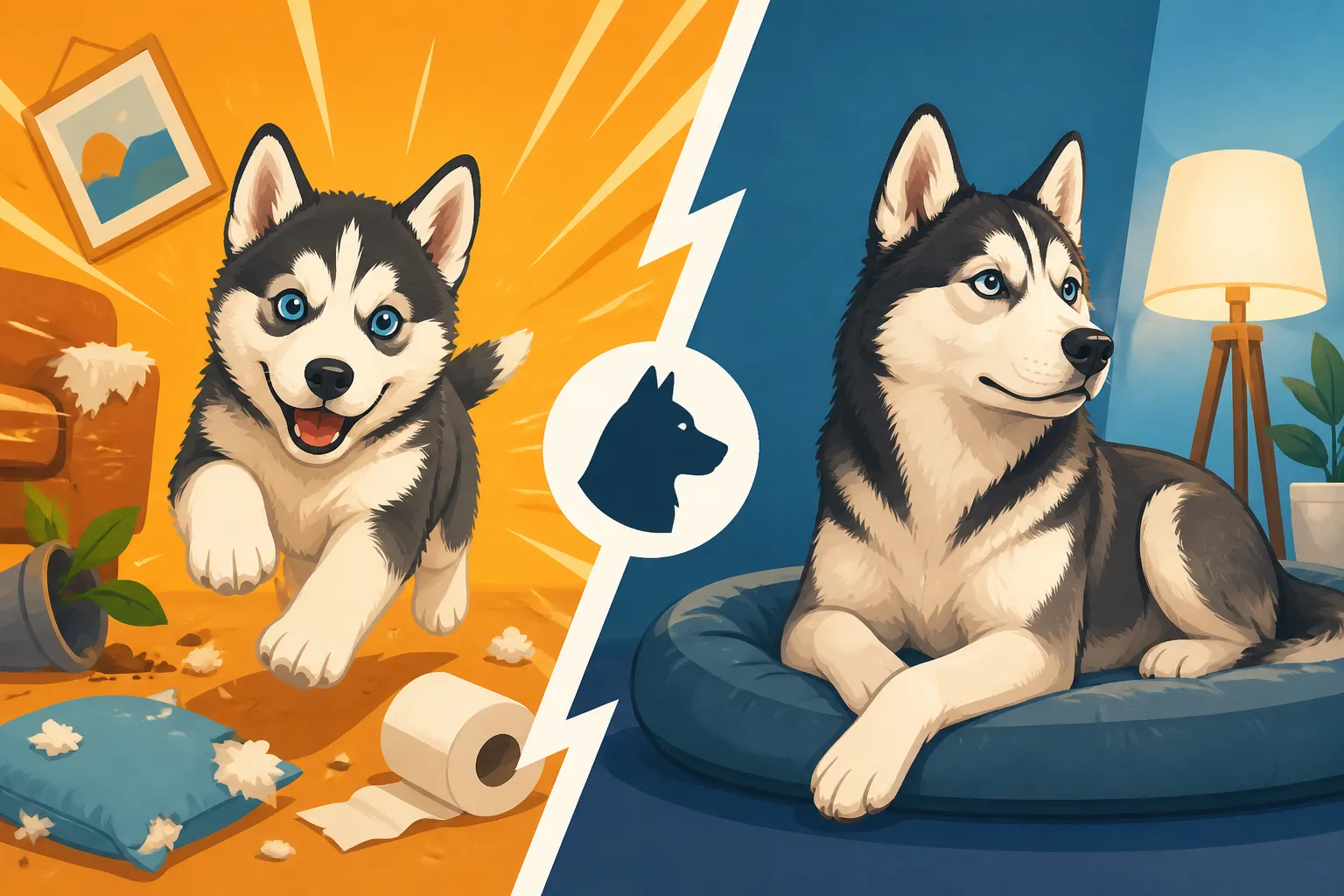
Whether an Adult Siberian Husky Settles Faster
An adult Siberian Husky may settle into a household routine faster than a puppy, especially if the dog has lived in a home before. But “adult” does not automatically mean calm, easy, or ready to be left alone. This guide explains what settling in really looks like, what can slow it down, and how to help a newly adopted Husky feel secure.
Do adult Siberian Huskies settle faster than puppies
Often, yes, in some practical ways. An adult may already understand house training, sleep through the night, or know how to walk on a leash. That can make the first days feel less demanding than raising a puppy who needs frequent bathroom breaks, close supervision, and basic training from scratch.
But settling is not one single skill. A dog can be house-trained and still be anxious when left alone, unfamiliar with stairs, or determined to find a way out of the yard. A Husky may also need time to learn your household’s routine, trust new people, and understand what is expected in a new environment.
What “settled” actually means
It helps to separate a few different kinds of adjustment. A dog might settle physically by eating, sleeping, and using the bathroom regularly. They might settle into a routine by recognizing walk times and learning where they rest. Emotional comfort—being able to relax, recover from surprises, and feel safe around household members—can take longer.
For example, an adult Husky may curl up near the sofa after a few days but still pace when the front door opens. Or they may seem perfectly comfortable indoors while becoming intensely alert outdoors, especially around squirrels, cats, or other dogs. Those are not necessarily signs that adoption is failing. They may be signs that the dog has not yet learned that this new place is predictable and safe.
A useful expectation is progress, not a finish line. Look for small changes: the dog choosing to nap, eating more comfortably, checking in with you on walks, or recovering more quickly after a noise. Some dogs show these changes quickly; others need a longer, quieter adjustment period. There is no dependable timetable that applies to every adult Husky.
Why puppies and adults can feel different to live with
Puppies often need more hands-on care because their routines are still developing. They are learning where to toilet, what is safe to chew, how to handle being alone, and how to respond to everyday experiences. Their energy and attention can change quickly as they grow, so a puppy who seems manageable one week may be testing boundaries the next.
An adult dog may have a more established personality and a longer history of household experience. If they have lived in a home and received consistent training, they could arrive with useful habits already in place. On the other hand, an adult may also bring learned fears, incomplete training, or habits that worked in a previous home but do not fit yours.
The comparison is not simply “puppy equals difficult” and “adult equals easy.” It is more useful to ask what care each dog needs now. A puppy may need frequent supervision and basic education; an adult may need patient behavior work and support through a major transition. For a broader look at the realities of the breed, What New Siberian Husky Owners Underestimate is a helpful companion topic.
What affects how quickly an adult Husky adjusts
An adult Husky’s adjustment depends on more than age. Their previous experiences, health, temperament, daily exercise, and the amount of change involved all matter. A confident dog moving from one stable home to another may adapt differently from a dog coming out of a shelter or an unpredictable situation.
Previous home life and adoption history
A dog who has lived comfortably in a home may already understand everyday things such as household sounds, resting indoors, or walking on a leash. That familiarity can make certain parts of the transition smoother. Even so, moving homes changes the people, smells, schedules, boundaries, and sometimes the other animals around them. Familiarity with “home life” does not mean immediate comfort in your home.
A dog with an uncertain history may need more time to show their real behavior. In a shelter or foster setting, they might have been quiet because they were overwhelmed. Once they feel safer, they may become more playful, vocal, energetic, or assertive. The reverse can happen too: a dog who seemed social in a temporary setting may need space before feeling comfortable with visitors or other pets in a new household.
Ask the rescue or previous caregiver what the dog has actually done, not only what they think the dog is like. Useful questions include whether the Husky has been left alone, lived with children or other animals, escaped from a yard, guarded food, or shown signs of distress around particular sounds. If you are adopting through a rescue, What a Siberian Husky Rescue Asks of Adopters can help you prepare for the questions and conversations involved.
Temperament, energy, and household fit
Adult Huskies vary. Some are sociable and eager to explore; some are more reserved; many are energetic, curious, and quick to notice movement. A dog’s age may reduce puppy-style needs, but it does not erase the breed’s interest in running, investigating, or making their own choices.
The home environment matters too. A quiet household with a predictable schedule may feel easier for one dog, while another may thrive with regular activity and company. A small home is not automatically unsuitable, but the dog still needs enough exercise, enrichment, and secure management. If you are weighing living space and daily routines, Whether a Siberian Husky Fits an Apartment explores the practical trade-offs.
Consider the household’s other pets carefully. A Husky that has lived peacefully with another dog may still need a gradual introduction to your dog, and a history of living with cats does not guarantee comfort with every cat. Some Huskies have strong chase instincts, so do not assume that a dog’s friendly behavior toward people means they will be safe around smaller animals. Siberian Huskies With Other Dogs and Why So Many Siberian Huskies End Up in Rescue offer more context on compatibility and the commitments that can surprise new owners.
Health, stress, and changes in routine
A dog who seems withdrawn, restless, unusually reactive, or reluctant to move may be stressed—but behavior changes can also have a physical cause. Pain, illness, digestive upset, or vision and hearing changes can affect how comfortable a dog feels in a new setting. A new-home transition is a good time to arrange a veterinary check and share any behavior concerns with the veterinarian.
Try not to change everything at once. A new food, new walking route, long periods alone, visitors, and introductions to other pets can create a lot of pressure in a short time. Keep the initial routine simple where possible: regular meals, quiet rest, predictable outings, and a consistent sleeping area. If the dog is eating a familiar food, maintain it initially and discuss any dietary changes with the rescue or veterinarian. If you need to replace a familiar food or find a particular enrichment item, a retailer such as Chewy can be one place to look; avoid making a sudden food change just because a different option is convenient.
How to help an adult Husky feel at home
The most useful first step is to make life predictable without demanding instant closeness. A dog does not need to meet every friend, visit every neighborhood park, and learn the whole house on the first day. Give them time to observe, rest, and understand what happens next.
Set up a calm first week
Before the dog arrives, choose a quiet resting area and prepare food, water, a leash, identification, and a secure way to manage doors and gates. Keep the first few days low-key. Let the dog explore the home at a comfortable pace, and supervise access to rooms, stairs, and outdoor areas until you know how they behave.
Take walks on leash, even if you have a fenced yard. A newly adopted Husky may be disoriented, and a dog who appears relaxed can still bolt when startled or spot something they want to chase. Check gates and latches each time, and do not treat a yard as secure until you have watched the dog around its boundaries. For more on this breed-specific risk, see Stopping a Siberian Husky From Escaping the Yard.
Give the dog a place where they can rest without being approached. This is particularly important in homes with children or frequent visitors. Ask people to let the dog come to them rather than leaning over, hugging, or calling them repeatedly. Calm, ordinary interactions build trust better than a busy welcome parade.
Build routines before raising expectations
Start with a few reliable daily patterns: meals at consistent times, regular bathroom opportunities, walks suited to the dog’s fitness, and quiet periods. Keep training sessions short and rewarding. Practice simple skills—responding to their name, checking in, or settling on a mat—before expecting polished leash manners or dependable behavior around distractions.
Do not assume an adult dog can immediately manage a full workday alone. If the Husky has not been left alone in your home, begin with short absences and watch for signs of distress, such as prolonged howling, frantic pacing, destructive behavior, or escape attempts. A camera can help you understand what happens after you leave, but it does not replace a gradual plan if the dog is panicking. Siberian Husky Separation Behavior covers common signs and ways to approach alone-time concerns.
Exercise is important, but exhausting the dog is not the only answer. A long run in a new place may overwhelm a dog who is still adjusting, while a quiet sniff walk and a simple food puzzle can offer useful stimulation without adding too much pressure. If you are considering a full-time work schedule, Siberian Huskies for People Who Work Full Time can help you think through company, exercise, and care arrangements.
Use enrichment without flooding the dog
Huskies often enjoy having something appropriate to investigate or work on. Try a few options and notice what your dog chooses: sniffing for scattered kibble, a safe chew, a basic puzzle feeder, or a calm training game. Keep these activities easy at first. A complicated puzzle can frustrate a dog who is already unsettled, while an activity that is too exciting may make it harder for them to rest.
If you need to gather a few basics—such as a food puzzle, a longer training line, or a safe chew—Chewy is one possible place to browse, alongside local pet stores and recommendations from your veterinarian or rescue. The important part is matching the item to the dog and supervising its use, especially if you do not yet know whether they chew or swallow objects.
Keep a simple note of what helps. You might find that your dog settles after a quiet morning walk, sleeps better when the house is less busy, or needs more distance from passing dogs. A long line can provide controlled exploration in suitable spaces, but it should be used safely and never treated as a substitute for secure fencing or reliable recall. For related guidance, Teaching a Siberian Husky to Come Back explains why recall practice and safety management need to work together.
A practical comparison and signs of progress
The table below is a starting point, not a prediction. A dog’s individual history and temperament matter more than the label “puppy” or “adult.”
| Area | Adult Siberian Husky | Siberian Husky puppy |
|---|---|---|
| House training | May already have a routine, but new surroundings can cause setbacks | Needs frequent opportunities and consistent teaching |
| Alone time | May have experience, or may need gradual practice from the beginning | Must learn alone time in small, positive steps |
| Energy and exercise | Still needs activity suited to age, health, and fitness | Needs play and exploration, with care not to overdo strenuous exercise |
| Training | May know useful cues but need time to adjust to new expectations | Starts with basic skills and needs frequent, brief practice |
| History | May have established habits or unknown experiences | Has less life history but is still developing |
| Settling in | May adapt quickly to routines while taking longer to feel emotionally secure | May bond quickly but require more constant supervision |
Look for small, steady changes
Progress can be quiet. The dog may choose to rest in the same room as you, eat more consistently, or show curiosity instead of avoiding a household sound. On walks, they might check in briefly, recover after seeing another dog, or begin to recognize the route home. These moments are worth noticing even if the dog still has challenging behaviors.
Setbacks do not automatically mean the placement is a poor fit. A dog may seem relaxed one day and unsettled the next, especially after visitors, a busy outing, or a change in schedule. Return to a calmer routine and reduce demands while you work out what is difficult. Avoid punishing fear or distress; punishment can make the dog less comfortable communicating and may increase anxiety.
If behavior is dangerous, worsening, or difficult to manage—such as repeated escape attempts, intense distress when alone, or serious conflict with another pet—seek individualized help. A veterinarian can check for medical contributors, and a qualified reward-based trainer or veterinary behavior professional can help you make a safe plan. Choosing Between a Siberian Husky Breeder and a Rescue also discusses the different preparation involved when bringing a dog into your home through either route.
When to ask for extra help
Contact the rescue or previous caregiver if the dog’s behavior differs sharply from what you were told, or if you need details about known triggers and routines. They may recognize patterns or be able to share what has worked before. Keep your questions specific: “What happened when the dog was left alone?” is more useful than “Is the dog good?”
Get veterinary advice for sudden or persistent changes in appetite, movement, sleep, toileting, or behavior. Likewise, do not wait for a settling period to pass if the dog may be in pain or at risk of injury. A calm transition is valuable, but it should not delay care when something seems physically wrong.
An adult Husky can indeed fit into a home more quickly than a puppy in some ways. The best expectation, though, is not that age will make the adjustment automatic. Give the dog time, keep routines dependable, manage escape risks, and let trust grow at the dog’s pace.
Disclaimer
This article is for general informational purposes only and does not constitute professional advice. Laws, prices and regulations vary by location and change over time. Consult a qualified professional for guidance on your specific situation.