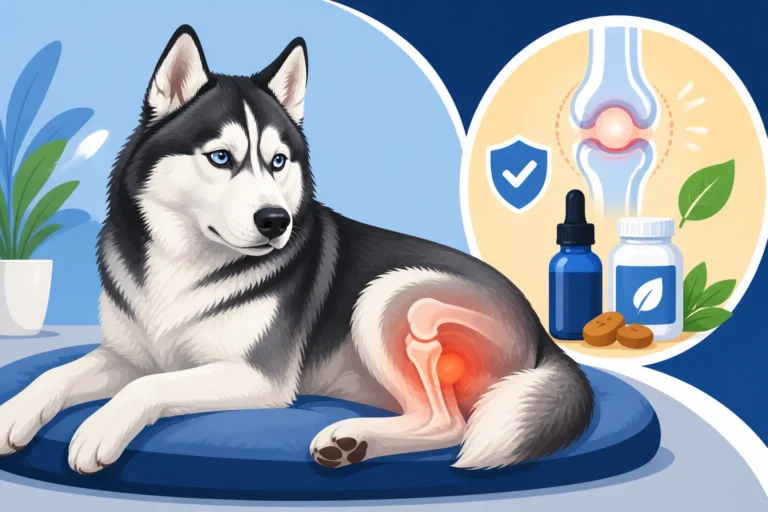
Where Husky Zinc Dermatosis Lesions Appear First
It's incredibly disheartening to notice your beloved Siberian Husky developing mysterious skin issues – perhaps you've spotted strange crusting, areas of hair loss, or redness around their face or paws. It’s natural to feel frustrated and worried when your active, beautiful companion starts looking uncomfortable. This guide is here to shed some light on one specific, often perplexing, skin condition common in our breed: zinc-responsive dermatosis. We’ll walk you through the tell-tale initial signs and the most common locations where these lesions first appear, helping you understand what you're seeing and what steps to take.
The Earliest Warning Signs of Zinc Dermatosis on Your Husky
When zinc-responsive dermatosis (ZRD) strikes a Siberian Husky, it rarely starts with a bang. Instead, it usually begins subtly, often mistaken for allergies or minor irritations. But if you know what to look for, and where, you can catch it early. This condition is fundamentally about the body’s inability to properly absorb or utilize zinc, leading to skin problems that are frustratingly persistent. The lesions tend to appear symmetrically, meaning if you see it on one side, you’ll likely see it mirrored on the other.
The Iconic Facial Manifestations: Around the Muzzle and Eyes
For many Husky owners, the first place they notice something amiss is often around their dog's face. This is particularly true for the muzzle and the delicate skin surrounding the eyes.
You might wake up one morning and notice a slightly dull, flattened look to the hair right around your Husky's nose or on the bridge of their snout. This can quickly progress to actual crusting. Imagine dry, flaky skin, often gray or yellowish-brown, that feels rough to the touch. It’s not just superficial; these crusts can become thick and adherent, making the skin beneath them appear red and inflamed. Sometimes, the crusting can be so pronounced that it resembles dried mud or a severe scabbing, making you instantly think of an injury or infection. This crusting often extends from the edges of the nostrils, down the philtrum (the groove above the upper lip), and spreads out onto the skin of the muzzle itself. It can be quite itchy for the dog, leading to rubbing their face on carpets or furniture, which only exacerbates the irritation. If you've ever seen a Husky with this type of facial crusting, you'll know exactly what I mean; it's quite distinctive, and often leads owners to search for information on Why a Siberian Husky Crusts Around the Muzzle.
Similarly, the skin around the eyes is another prime target. You might notice the eyelids themselves becoming dry, flaky, and crusty. The hair around the eyes can thin or fall out entirely, leaving bald patches. This can make your Husky look perpetually tired or even sore. In some cases, the skin can even appear fissured or cracked, which must be incredibly uncomfortable for the dog. Owners often confuse these initial signs with allergies, thinking their dog has just rubbed their face too much, or with a minor eye irritation. However, with ZRD, the problem persists and often worsens despite typical allergy remedies or gentle cleaning. It's truly one of the most common spots where Crusting Skin on a Siberian Husky's Face will show up first.
Less Obvious but Common Starting Points: Ears and Pressure Points
While the face is a common hotspot, ZRD doesn't always confine itself to such visible areas immediately. Sometimes, you might notice changes in other, less obvious spots first.
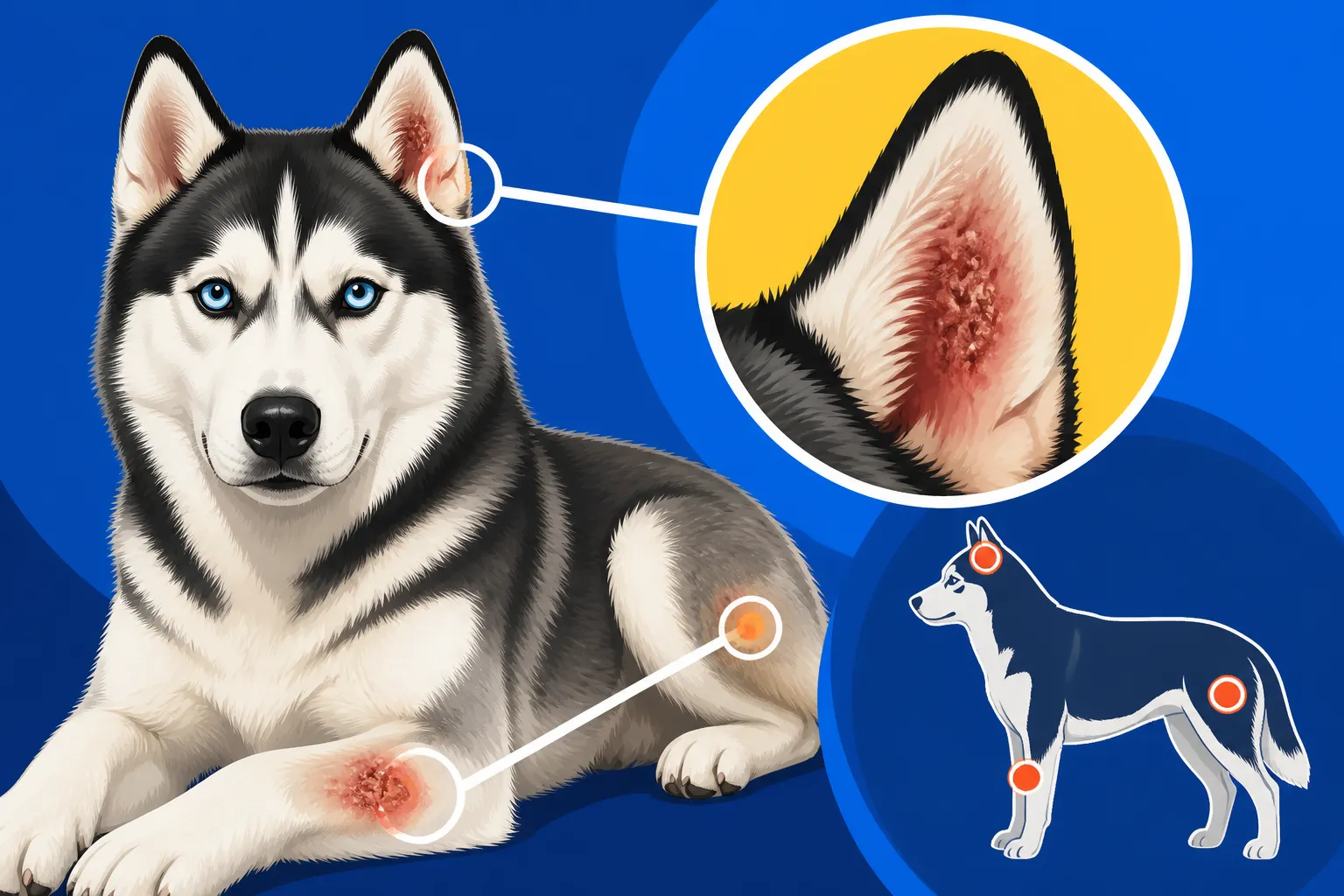
The ear tips are another area frequently affected early on. You might feel the edges of your Husky’s ears becoming dry and scaly, almost like very rough sandpaper. This can progress to visible crusting, and in severe cases, the tips can even crack or bleed, especially if the dog scratches or shakes their head frequently. The skin around the base of the ear canal, on the inner surface of the pinna, can also show signs of redness and scaling. It’s easy to miss these subtle changes, particularly if your Husky has thick fur, so a thorough weekly check of their ears should become part of your routine. These lesions on the ears are usually symmetrical, appearing on both sides, which is a key indicator of systemic issues like ZRD rather than a localized injury.
Beyond the face and ears, ZRD lesions commonly emerge on areas of the body that experience frequent friction or pressure. Think about your Husky's elbows and hocks (the joints on the hind legs that bend backwards). These are classic "pressure points" where the skin is naturally thicker and takes more wear and tear. You might notice the hair thinning or disappearing over these joints, followed by the skin becoming dry, thickened, and hyperpigmented (darker). These patches can develop crusts and scales, resembling calluses but with a more active, inflamed appearance. For a working breed like the Siberian Husky, who loves to lie down and relax hard after a good run, these areas are constantly contacting hard surfaces, which can accelerate the appearance of these lesions once the zinc deficiency starts to impact skin health. It's a cruel twist when the very activities your Husky loves can highlight a burgeoning health issue.
When Paws and Joints Show Trouble First
The paws are crucial for a Husky, carrying them through snow, over trails, and across your living room floor. Unfortunately, they're also common sites for early ZRD lesions, often manifesting as dry, cracked, and crusty paw pads.
You might notice your Husky's paw pads becoming unusually hard, dry, and prone to cracking, especially around the edges. These cracks can be painful, sometimes even bleeding, and can make walking uncomfortable for your dog. Beyond the pads themselves, the skin between the toes can also become red, scaly, and crusty. This can lead to your Husky constantly licking or chewing at their paws, trying to relieve the itching and discomfort. This excessive licking can then lead to secondary bacterial or yeast infections, making the original ZRD harder to diagnose clearly without veterinary intervention. It's a vicious cycle where the underlying condition predisposes them to further problems. This paw involvement is often one of the most frustrating aspects for owners, as it directly impacts their dog's mobility and comfort.
Other joints, such as the carpal joints (wrists) and around the vulva in females or the scrotum in males, can also develop these same crusting, scaling, and hair loss patterns. Essentially, any area where the skin folds, rubs, or experiences pressure can become an early indicator. A thorough examination might reveal subtle patches of dry, scaly skin and thinning hair in these regions before they become overtly crusty. It’s important to remember that these lesions tend to be symmetrical; if you find a problem on one elbow, check the other, and if you find it on one paw, check all four. This symmetry is a strong clue for a systemic issue like ZRD. Recognizing these diverse initial locations is key to early detection and management, potentially saving your dog from prolonged discomfort. Many owners find that while they might have a robust pet insurance plan like those offered by Healthy Paws, early detection can minimize the extent and cost of treatment.
Why Siberian Huskies Are Prone to Zinc-Responsive Dermatosis
It can feel unfair that such a hardy, ancient breed like the Siberian Husky would be susceptible to something as seemingly simple as a zinc deficiency. Yet, it’s a well-documented genetic predisposition. This isn't just about their diet; it's about how their bodies process zinc. Understanding this unique susceptibility is crucial for both prevention and treatment.
Understanding the Unique Absorption Challenge
The primary reason Siberian Huskies are so prone to zinc-responsive dermatosis isn't usually that their diet lacks zinc. Most commercial dog foods are fortified with adequate levels of essential minerals, including zinc. The real issue lies in their unique metabolism and a genetic defect that impairs their ability to absorb and utilize zinc from the digestive tract, regardless of how much is present in their food. This is why a simple "balanced diet" often does not fix the problem, as explored in Why a Balanced Diet Does Not Fix Husky Zinc Loss.
Their intestinal cells simply aren't as efficient at transporting zinc into the bloodstream as they should be. It’s like having a perfectly good water faucet, but the pipes leading from it are too narrow – no matter how much water you turn on, only a trickle gets through. This malabsorption means that even if a Husky eats a diet rich in zinc, their body might not be able to get enough of it to function optimally, especially for rapid cell turnover in the skin. This genetic trait has been passed down through generations, likely due to a gene mutation specific to the breed. It’s part of what makes them a distinct and beautiful breed, but it also comes with certain health considerations that owners need to be aware of. This isn't a deficiency caused by poor feeding habits; it's an inherent biological challenge.
Dietary Factors and Inherited Predisposition
While the genetic predisposition is the root cause, certain dietary factors can exacerbate the problem, particularly in dogs already struggling with poor zinc absorption. High levels of phytates (found in plant-based ingredients like cereals and soy) and calcium can interfere with zinc absorption. These compounds bind to zinc in the gut, making it even harder for the already compromised Husky digestive system to extract the mineral.
For Huskies on diets high in grains or certain supplements that boost calcium, the underlying genetic issue can be made worse. This is why blindly switching to a "high zinc" food might not be effective; the issue isn't typically the amount of zinc in the food, but the bioavailability of that zinc and the dog's ability to absorb it. Certain dog foods, especially those formulated for generic large breeds, might not take into account the unique metabolic needs of a Siberian Husky. The hereditary nature of this condition means that if a Husky's parents had zinc dermatosis, their offspring are at a significantly higher risk, emphasizing the importance of responsible breeding practices and asking about parental health history, as covered in topics like Whether Husky Zinc Dermatosis Is Inherited. Knowing your dog's lineage can be incredibly helpful in understanding their predispositions.
How Stress and Illness Can Trigger Flare-Ups
It's not uncommon for a Siberian Husky with underlying zinc absorption issues to suddenly develop full-blown dermatosis symptoms after a period of stress or another illness. Think of it this way: their body is already operating on the edge of a zinc deficit. When stress, whether from environmental changes, travel, or even separation anxiety, puts an extra demand on their system, their already limited zinc reserves can be depleted.
Similarly, other health issues, such as gastrointestinal upsets, infections, or even routine surgeries, can increase the body's demand for zinc or further impair its absorption. For example, a severe bout of diarrhea could reduce nutrient uptake, including zinc, pushing a predisposed Husky over the edge into clinical signs of ZRD. These stressors or concurrent illnesses act as a trigger, revealing the underlying genetic weakness. This can be particularly confusing for owners, who might attribute the skin changes solely to the new stressor or illness, overlooking the deeper metabolic issue. This is why veterinarians often ask about recent changes in your dog's life when presented with dermatological problems, as these events can be critical clues in diagnosing conditions like ZRD.
Differentiating Zinc Dermatosis from Other Common Skin Issues
When your Husky develops crusty, flaky skin, it's easy to jump to conclusions or feel overwhelmed by the sheer number of possible causes. Is it allergies? An infection? Or something more serious? The key is to avoid self-diagnosing and to seek veterinary help. However, understanding the distinctions can help you describe symptoms to your vet more accurately.
Allergic Reactions and Autoimmune Conditions
One of the most common misdiagnoses for zinc-responsive dermatosis is allergies. Indeed, allergic reactions, whether to environmental allergens (pollen, dust mites) or food ingredients, can cause itching, redness, and secondary skin infections that look superficially similar to ZRD. However, there are typically some key differences. Allergic skin disease often presents with more generalized itching and redness, sometimes without the classic thick, adherent crusts seen in ZRD. Hair loss from allergies is usually due to self-trauma (licking, scratching) rather than primary follicular damage.
Autoimmune conditions, such as Pemphigus Foliaceus, can be even trickier to differentiate because they also cause crusting lesions, particularly on the face, ears, and paw pads. For example, Pemphigus Foliaceus in the Siberian Husky presents with pustules that rupture and form crusts, often targeting similar areas. However, Pemphigus lesions often start as pus-filled blisters or pustules before crusting, and the dog may be systemically ill. A definitive diagnosis often requires a skin biopsy, where a veterinary dermatologist can examine tissue samples under a microscope to distinguish between ZRD and autoimmune diseases. Without this, even experienced vets can struggle, which is why your detailed observations are so important.
Fungal and Bacterial Infections
Skin infections, both fungal (like ringworm) and bacterial (pyoderma), are also common culprits that can mimic zinc dermatosis. These infections can cause redness, scaling, pustules, and hair loss. They often arise as secondary complications of other skin issues, including ZRD, making diagnosis even more challenging.
Ringworm, a fungal infection, can create circular patches of hair loss with red, scaly centers. It's often itchy and can be contagious. Bacterial pyoderma, on the other hand, might present with pus-filled bumps, scabs, and general skin inflammation. A vet can often diagnose these infections with simple tests like skin scrapes, fungal cultures, or cytology (examining cells from the skin surface under a microscope). If a Husky with ZRD has been scratching or licking their irritated skin, it's very likely they could develop a secondary bacterial or yeast infection, muddying the waters and requiring treatment for both the underlying zinc issue and the infection. This is where the diagnostic process becomes critical.
The Importance of a Proper Veterinary Diagnosis
Given the overlap in symptoms with so many other skin conditions, it cannot be stressed enough how vital a proper veterinary diagnosis is. Self-treating or guessing can lead to prolonged suffering for your Husky and potentially worsen their condition.
Your veterinarian will likely start with a thorough physical examination and discuss your Husky's history – when the lesions started, how they've progressed, what their diet is like, and any previous treatments. They may then recommend diagnostic tests, which could include:
- Skin scrapings: To rule out parasites like mites.
- Fungal cultures: To check for ringworm.
- Cytology: To identify bacterial or yeast infections.
- Blood tests: To check overall health and sometimes zinc levels, though blood zinc levels aren't always directly correlated with skin zinc levels in ZRD.
- Skin biopsy: This is often the most definitive test for zinc-responsive dermatosis, where a small piece of affected skin is removed and sent to a specialized lab for histological examination. The characteristic cellular changes associated with ZRD are quite specific under a microscope.
Working closely with your vet, and potentially a veterinary dermatologist, is the surest way to get an accurate diagnosis and develop an effective treatment plan. Rushing to a conclusion could mean your dog suffers unnecessarily or receives ineffective medication. Remember, diagnosing skin conditions in Huskies can be complex, and it’s okay for your vet to perform several tests to get to the bottom of it. For owners thinking ahead, having a robust pet insurance plan like Healthy Paws can provide peace of mind that these diagnostic tests and subsequent treatments are covered, alleviating the financial stress of managing a chronic condition.
What to Do If You Suspect Zinc Dermatosis in Your Husky
Finding crusty, uncomfortable patches on your beloved Siberian Husky is stressful, and your first instinct might be to try everything at once. But a calm, methodical approach is always best. Here’s what you should do if you suspect your Husky might be dealing with zinc-responsive dermatosis.
Gathering Information for Your Vet Visit
Before you even call your vet, take a moment to meticulously observe and document your Husky’s symptoms. This detailed information will be invaluable to your veterinarian in reaching a diagnosis.
Start by noting exactly when you first saw the lesions. Were they subtle, or did they appear suddenly? Take clear photos of all affected areas, especially the initial spots you noticed around the muzzle, eyes, ears, or paws. Try to get different angles. Keep a journal:
- Location: Pinpoint every single area affected.
- Appearance: Describe the lesions – are they crusty, scaly, red, bald? Are there pustules or open sores?
- Symmetry: Do they appear on both sides of the body?
- Behavior: Is your Husky itchy? Are they licking, scratching, or rubbing the areas?
- Progression: Have the lesions changed in size or severity?
- Diet: What food are you feeding, and have there been any recent changes? Include any supplements.
- Environment: Any changes in their routine, stress levels, or exposure to new things?
This comprehensive record helps your vet rule out other conditions like allergies or infections, and it can significantly speed up the diagnostic process for conditions like Zinc-Responsive Dermatosis in the Siberian Husky. Don’t be afraid to be overly detailed; no piece of information is too small when dealing with a challenging dermatological case.
Initial Steps for Comfort and Care
While you wait for your vet appointment, there are a few things you can do to keep your Husky comfortable, but it's important not to overtreat, which could mask symptoms.
First, resist the urge to vigorously scrub or pick at the crusts. This can be painful for your dog and might introduce secondary infections. Instead, you can gently clean the affected areas with a warm, damp cloth, perhaps with a mild antiseptic solution recommended by your vet or a pet-safe chlorhexidine wipe. This helps to soften the crusts and remove loose debris, reducing irritation and promoting healing. Ensure the area is dried thoroughly afterwards, as moisture can encourage bacterial or yeast growth. You might also consider using an Elizabethan collar (e-collar) or a recovery cone if your Husky is excessively licking or scratching the lesions. This prevents further self-trauma and allows the skin to heal without constant disturbance.
Avoid applying any over-the-counter creams or ointments unless specifically instructed by your vet. Many human products can be toxic to dogs or contain ingredients that might worsen the condition. Focus on keeping the affected skin clean and dry, and minimizing your Husky's ability to irritate it further. For ongoing care and potential recurring issues, having pet insurance from a provider like Healthy Paws can be incredibly helpful for managing vet visits and medication costs.
Long-Term Management and Outlook
Once zinc-responsive dermatosis is officially diagnosed, the good news is that it’s generally a very manageable condition. The primary treatment involves lifelong zinc supplementation. This isn't just about adding zinc to their food; it's about providing it in a highly absorbable form and at specific doses.
Your vet will prescribe the appropriate form of zinc (often zinc sulfate, zinc methionine, or zinc picolinate) and the correct dosage for your Husky. It’s crucial to follow these instructions precisely, as too little won’t be effective, and too much can be harmful, as discussed in Zinc Doses Used in Siberian Huskies. Many Huskies show significant improvement within a few weeks to a couple of months of starting supplementation. The crusts will begin to soften and fall off, hair will regrow, and the skin will return to a healthy appearance. However, it's a condition that requires continuous management; if supplementation stops, symptoms will almost certainly return.
Beyond zinc, your vet might also address any secondary infections with antibiotics or antifungals. Dietary adjustments, such as choosing a food with lower phytate or calcium levels, may also be recommended to support better zinc absorption, complementing the direct supplementation. While it sounds like a lot, once you establish a routine, managing ZRD becomes a normal part of your Husky's care. Most Huskies with ZRD, once properly diagnosed and treated, go on to live full, happy, and comfortable lives with healthy skin. Consistent care and regular check-ups with your vet are key to their long-term well-being.
| Initial Lesion Location | Common Appearance | Key Characteristics |
|---|---|---|
| Muzzle | Dry, flattened hair; thick, adherent gray/yellow crusts | Symmetrical; often extends from nostrils; itchy |
| Around Eyes | Dry, flaky eyelids; hair loss; red, fissured skin | Symmetrical; often mistaken for allergies |
| Ear Tips/Bases | Rough, scaly edges; crusting; cracking | Symmetrical; easy to miss in thick fur; can bleed |
| Paw Pads | Hard, dry, cracked pads; scaling between toes | Painful; can lead to licking/chewing; secondary infection risk |
| Elbows/Hocks | Hair loss; thickened, dark, crusty skin | Symmetrical; on pressure points; resembles calluses |
| Genitalia | Redness, scaling, crusting (vulva/scrotum) | Symmetrical; less common initial site, but possible |
Disclaimer
The information provided in this guide is intended for educational purposes only and should not be considered a substitute for professional veterinary advice. Always consult with a qualified veterinarian regarding any health concerns or before making any decisions about your Siberian Husky's medical care or treatment plan.