Nail Grinders for Thick Siberian Husky Nails
If you're a Siberian Husky owner, you know the struggle is real when it comes to nail trims. Those thick, often dark nails can be intimidating, making you nervous about cutting too short and hitting the quick, and your Husky probably isn't making it any easier. This comprehensive guide is here to help you navigate the world of nail grinders, providing practical advice and techniques to make paw care a less stressful, more successful experience for both you and your beloved furry friend.
The Unique Challenges of Siberian Husky Nails
Let's be honest, those beautiful paws that carry our Huskies through snow and trails are equipped with some seriously tough nails. Unlike some breeds with delicate, translucent claws, Siberian Huskies often have thick, strong nails that can be a real pain to trim with traditional clippers. It’s a common frustration, and you are definitely not alone in feeling overwhelmed.
Why Traditional Clippers Often Fall Short
Many Husky owners find that standard scissor-style or guillotine clippers just don't cut it – literally. The sheer density and thickness of a Husky's nails can make clipping a struggle. You might feel like you need excessive force, or the clippers might just crush the nail instead of making a clean cut. This isn't just uncomfortable for your dog; it can also lead to splintering or cracking, which nobody wants.
Beyond the physical challenge, there's the psychological aspect. A loud, sudden "snap" from clippers can be startling, especially if your Husky is already a bit sensitive about their paws. Once they associate nail trims with discomfort or fear, it becomes a battle every single time. And let's not forget the ever-present fear of cutting too far back and hitting the quick – that sensitive bundle of nerves and blood vessels within the nail. With dark nails, it's incredibly difficult to see where the quick ends, making each clip a leap of faith. This fear can cause owners to trim too conservatively, leaving nails longer than they should be, which then affects their dog's gait and paw health. If you've ever had a close call, you know the panic of seeing that tiny drop of blood and the subsequent guilt. Cutting Thick Siberian Husky Nails can be a daunting task for many, leading to a cycle of avoidance.
The Problem with Overly Long Nails
It might seem like a small thing, but long nails can lead to a host of problems for your Siberian Husky. When nails grow too long, they push up into the nail bed, putting pressure on the toe joints and affecting how your Husky stands and walks. Imagine walking around all day with shoes that are too small, constantly pushing your toes back – that's what it can feel like for your dog. Over time, this chronic pressure can contribute to arthritis, pain, and even changes in gait, which can then impact their joints, especially their hips.
Furthermore, long nails are more prone to snagging and tearing, which can be incredibly painful and often requires a vet visit. They can also make it difficult for your Husky to get proper traction on smooth surfaces, leading to slips and falls. For a breed known for its athleticism and love of running, this is a significant concern. Proper paw care, including regular nail maintenance, is crucial for their comfort, mobility, and overall long-term health. We talk more about general paw health in Siberian Husky Paw Care Through Snow and Salt.
Choosing the Right Nail Grinder for Your Siberian Husky
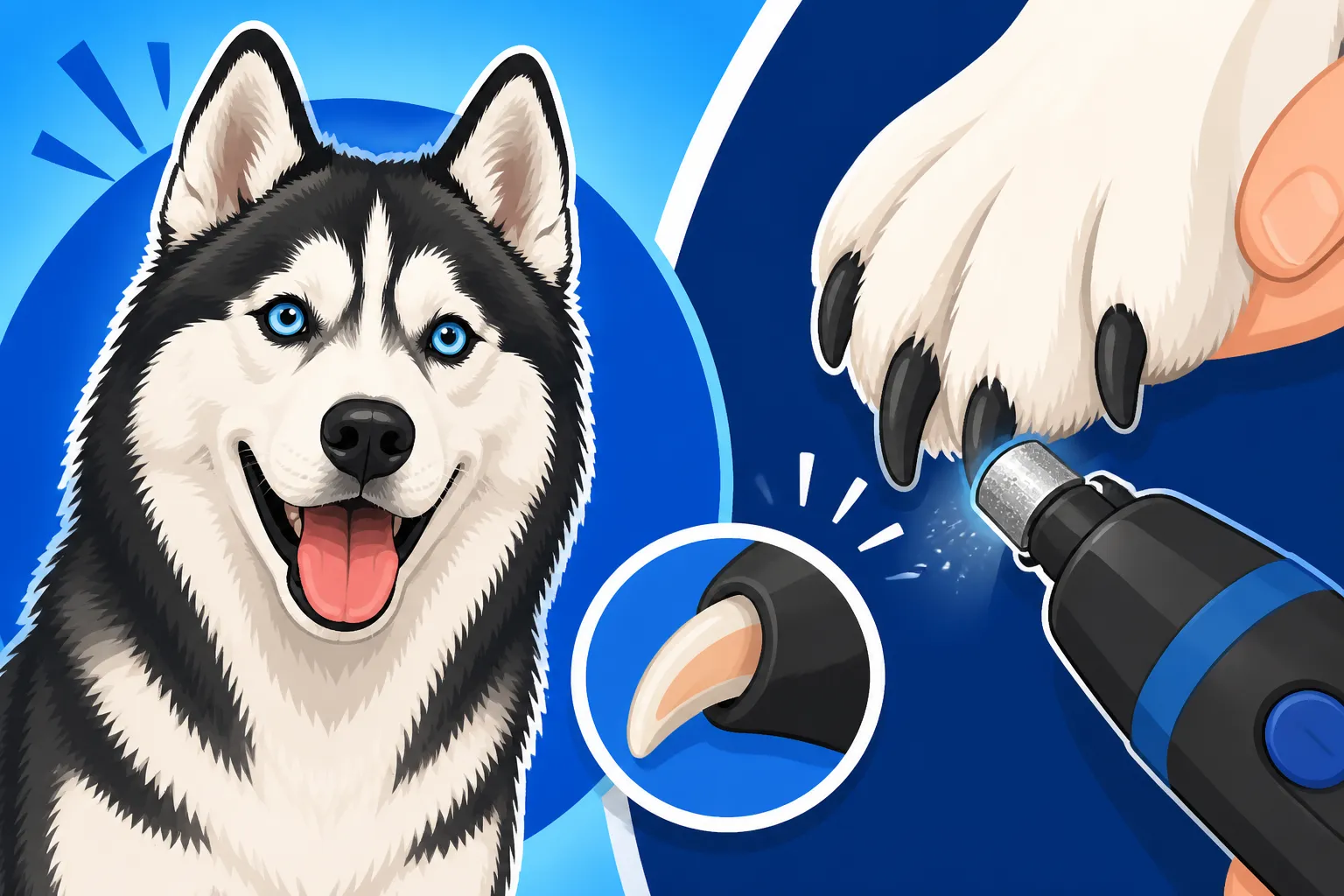
So, if clippers aren't cutting it (again, pun intended!), what's the alternative? Enter the nail grinder. These handheld tools gently file down your dog's nails, offering more control and reducing the risk of quicking. But not all grinders are created equal, especially when you're dealing with the robust nails of a Siberian Husky.
Key Features to Look For
When you're shopping for a nail grinder for your Husky, you'll want to prioritize power, quiet operation, and comfort.
- Power and Durability: Siberian Husky nails are thick and tough. You need a grinder with a strong motor that won't bog down or overheat easily. Look for models designed for large breeds or those with higher RPMs (revolutions per minute). A weak grinder will just make the process longer and more frustrating for both of you. You want something that can handle the job efficiently.
- Quiet Operation and Low Vibration: This is absolutely critical for Huskies who might be hesitant or fearful. Many dogs are scared by the loud buzzing sound or the vibrating sensation of a grinder. Opt for a model that boasts quiet operation and minimal vibration. Some brands specifically design their grinders to be low-noise, which can make a huge difference in your dog's comfort level and willingness to cooperate. Reading reviews from other large dog owners can be really helpful here.
- Safety Features: Look for grinders with adjustable speed settings, allowing you to start slow and increase as your Husky gets comfortable. Many models also come with a protective cover or guard that helps guide the nail and minimizes the risk of hair getting caught or skin being accidentally ground. This guard is especially useful for quickly filing a small amount off the tip.
- Ergonomics and Cordless Design: A comfortable grip is important for you, especially during longer sessions. A cordless, rechargeable design offers the most flexibility, allowing you to work in any location without being tethered to an outlet. Just make sure the battery life is sufficient for your needs.
Recommended Types of Grinders
While I can't name specific models or brands directly due to not having live data, I can describe the types of grinders that generally work best for Huskies:
- Rotary Tools (like a Dremel brand tool): Many professional groomers and experienced Husky owners swear by a good quality rotary tool. These are often more powerful and durable than entry-level pet-specific grinders, making quick work of even the thickest nails. The key here is to choose one with variable speed settings, so you can start low and gradually increase as your dog tolerates it. You'll also want to invest in appropriate sanding bands or grinding stones designed for pet nails.
- Pet-Specific High-Power Grinders: Some brands focus specifically on pet grooming tools and offer high-power grinders designed for large breeds. These often come with pet-friendly features like noise reduction technology and safety guards built-in. They might be a good starting point if you're not comfortable adapting a general rotary tool. You can often find a wide selection of these on sites like Chewy, which can be helpful for comparing options and reading reviews.
It’s worth noting that even with a powerful grinder, you'll still need appropriate grit sanding bands. Fine-grit bands are great for finishing, but coarser options will take down thick Husky nails more efficiently. Always have spare bands on hand, as they wear out over time. When considering your Grooming Tools a Siberian Husky Owner Buys Once, a good quality nail grinder should absolutely be on that list.
A Step-by-Step Guide to Using a Nail Grinder on Your Siberian Husky
Okay, you've got your powerful, quiet grinder ready to go. Now, how do you actually use it without turning your Husky into a furry, protesting statue? It’s all about preparation, patience, and positive reinforcement.
Preparing for the Grinding Session
Preparation is key, both for your Husky's nails and their mental state.
- Introduce the Grinder Gradually: Before you even touch a nail, let your Husky get used to the grinder. Start by just letting them see and sniff it. Then, turn it on away from them so they can hear the sound without feeling threatened. Offer high-value treats (more on those in a moment!) while the grinder is running. Repeat this for several short sessions over a few days until they seem indifferent to the sound. You might even touch the turned-off grinder to their paw or nail so they get used to the sensation.
- Choose the Right Environment: Find a quiet, comfortable space where your Husky feels safe and there are minimal distractions. This might be on their favorite bed, on your lap, or even outside if that's where they're most relaxed. Make sure you have good lighting so you can clearly see the nails.
- Gather Your Supplies: Beyond the grinder itself, have your high-value treats ready, a towel or mat for grip, and styptic powder or a styptic pencil nearby in case you accidentally graze the quick. Even with a grinder, it can happen, so it's always best to be prepared for Quicking a Siberian Husky Nail and What to Do.
- Tire Them Out (Optional but Recommended): A tired Husky is a more cooperative Husky. Consider a long walk or a good play session before your grooming appointment. A well-exercised dog will be calmer and more receptive to staying still.
The Grinding Process
Now for the actual grinding. Remember, slow and steady wins the race. You're not aiming for perfection in one session; you're building trust and comfort.
- Hold the Paw Firmly but Gently: Cradle your Husky's paw in your hand, extending one toe at a time. Make sure to push the paw pad back slightly to expose the nail fully and ensure no fur gets caught.
- Touch, Grind, Treat: With the grinder on a low speed, lightly touch the tip of the nail for just a second or two. Immediately remove the grinder and offer a high-value treat and praise. Repeat this "touch, grind, treat" process for each nail. The goal is many short, positive interactions rather than one long, stressful one.
- Shape the Nail: Instead of trying to grind straight across, aim to create a rounded, slightly sloped edge. Start by grinding the bottom of the nail, then the sides, and finally the top. This helps to slowly push the quick back over time, allowing you to achieve shorter nails safely.
- Check the Quick: Especially with dark nails, look for a small, dark dot or ring appearing in the center of the nail as you grind. This indicates you're getting close to the quick. Stop grinding that nail and move on. You can always come back to it another day.
- Don't Overheat: The friction from grinding can generate heat, which can be uncomfortable for your Husky. Grind for only a few seconds at a time on each nail, then move to another nail or take a short break to let the nail cool. This also helps prevent the grinder from getting too hot itself.
- Consistency is Key: Aim for frequent, short grinding sessions (e.g., once or twice a week) rather than infrequent, long ones. This keeps the nails consistently short and makes the process less of a chore. Siberian Husky Weekly Grooming Between Blows should always include nail care.
| Step | Action | Rationale |
|---|---|---|
| Preparation | Introduce grinder sound/vibration away from dog, then on paw. | Desensitization and building positive associations. |
| Choose a quiet, well-lit area. | Reduces distractions and improves visibility. | |
| Gather treats, styptic powder. | Essential for positive reinforcement and emergency. | |
| Exercise your Husky beforehand. | Calms them, making them more receptive to grooming. | |
| Grinding | Hold paw firmly, isolating one nail. | Provides stability and prevents fur entanglement. |
| Grind for 1-2 seconds, then remove and treat. Repeat. | Prevents overheating, builds tolerance, pushes quick back gradually. | |
| Grind from bottom, then sides, then top to shape. | Achieves a natural, rounded shape and encourages quick recession. | |
| Watch for dark "dot" indicating quick proximity. | Prevents injury to the quick. | |
| Take breaks to cool nails. | Avoids discomfort from heat. | |
| Aftercare | Praise and play after session. | Ends on a positive note, reinforcing good behavior. |
| Offer a special reward (e.g., a chew). | Further strengthens positive association. |
Making Nail Grinding a Positive Experience for Your Siberian Husky
The secret to successful nail care with a Husky lies not just in the tool, but in the experience itself. Huskies are incredibly intelligent but also notoriously independent. You can't force them; you have to convince them. This means turning what could be a chore into something they tolerate, or even look forward to.
Positive Reinforcement and High-Value Treats
This is where your Husky's love of food can truly work in your favor. Forget the dry kibble here; you need the big guns. Think about small pieces of cooked chicken, cheese, hot dogs, or even a dollop of peanut butter on a lick mat. Brands like Ollie often offer human-grade, fresh dog food options that can be incredibly motivating as high-value treats due to their enticing smell and taste.
Every time the grinder comes out, the treats should appear. Even if you only get one nail done, celebrate it! Lavish praise, pet them, and give them a treat. If they tolerate the sound, treat. If they let you hold their paw, treat. If they stay still for a second of grinding, treat! You're essentially teaching them: "Grinder equals amazing goodies and attention." The more positive associations you build, the easier future sessions will become. Remember, Food Rewards a Siberian Husky Will Work For are often the key to unlocking cooperation.
Desensitization and Counter-Conditioning
This sounds fancy, but it just means making your Husky less sensitive to the grinder and changing their emotional response to it.
- Desensitization: Gradually exposing your Husky to the grinder in small, manageable steps (as described in the "Preparation" section) is desensitization. Start with the grinder off, then on low, then eventually on the nail. The goal is to keep them below their fear threshold. If they show signs of stress (tail tucked, yawning, lip licking, pulling away), you've gone too far, too fast. Go back a step.
- Counter-Conditioning: This involves changing your Husky's negative emotional response to a positive one. Instead of "grinder equals scary noise," you want "grinder equals delicious treats." Every time the grinder is present, something good happens. Over time, their internal feeling about the grinder will shift.
Patience is your greatest tool here. Some Huskies might take days or even weeks to become comfortable. Don't rush it. A few minutes of calm interaction each day is far more effective than one long, stressful battle. Maintaining a consistent, positive training approach is vital for Keeping a Siberian Husky Interested in Training, especially when it comes to routine care.
When to Seek Professional Help
Sometimes, despite your best efforts, a Husky might simply refuse to cooperate, or their nails might be so overgrown that you're nervous about tackling them yourself. This is where professional help comes in.
- Veterinary Technicians: Many vet clinics have skilled veterinary technicians who are experienced in handling difficult dogs and overgrown nails. They can often provide a quick and efficient trim, and some might even offer "fear-free" techniques or gentle sedation if absolutely necessary.
- Professional Groomers: A good groomer who understands Siberian Husky temperament can also be a fantastic resource. They often have powerful, quiet equipment and a wealth of experience in managing wiggly or anxious dogs.
- Trainer Consultation: If your Husky's fear or aggression around nail trims is extreme, consulting with a certified professional dog trainer or behaviorist can be invaluable. They can help you develop a tailored behavior modification plan to address the underlying anxiety.
Don't feel like a failure if you need to call in the cavalry. Your Husky's comfort and safety are paramount, and sometimes a team approach is the best way to achieve healthy nails.
Maintaining Your Husky's Nails for Long-Term Health
Consistent and proper nail care isn't just about avoiding scratches on your floors; it's a vital part of your Siberian Husky's overall health and well-being. Think of it as preventative medicine for their paws and joints.
How Often Should You Grind Your Husky's Nails?
The ideal frequency for nail grinding depends on a few factors: your Husky's activity level, their nail growth rate, and how short you want to keep them.
- Active Huskies: Dogs that frequently run on rough surfaces (like pavement or gravel) might naturally wear down their nails, requiring less frequent grinding. However, even active Huskies often need their dewclaws (the nails on the inner side of their legs, which don't touch the ground) trimmed regularly.
- Less Active Huskies: If your Husky spends more time on soft surfaces (like grass or carpet), their nails will grow faster and require more frequent attention.
- The "Rule of Thumb": Generally, you want your Husky's nails to be short enough that they don't touch the ground when they're standing naturally. If you can hear their nails clicking on the floor, they're too long. For most Huskies, this means grinding every 1-2 weeks. Consistent, short sessions are much better than letting them get long and trying to take a lot off at once. Regular grinding actually helps the quick recede over time, allowing you to achieve even shorter nails safely. This attention to Siberian Husky Nails and How Thick They Get is important throughout their lives.
Beyond Grinding: Holistic Paw Care
Nail grinding is just one piece of the paw care puzzle. For a truly healthy Husky, you need to consider the whole paw.
- Regular Inspections: Make it a habit to check your Husky's paws regularly – ideally, at least once a week. Look between their paw pads for foreign objects (thorns, burrs, pebbles), cuts, cracks, or signs of irritation. Feel for any lumps or bumps. Huskies love to run and explore, and their paws can take a beating.
- Paw Pad Health: Keep their paw pads moisturized, especially in harsh weather conditions (hot pavement, snow, ice, salt). A good paw balm can prevent cracking and dryness. In colder climates, road salt and ice can be particularly damaging, making good Siberian Husky Paw Care Through Snow and Salt essential.
- Hair Trimming: The fur between your Husky's paw pads can grow quite long, becoming matted or collecting debris. Carefully trim this hair flush with the paw pads using blunt-nosed scissors or a small clipper. This improves traction and prevents discomfort.
- Joint Health: Long-term paw health is closely tied to joint health. Ensure your Husky is on a high-quality diet and maintaining a healthy weight. If you notice any limping, stiffness, or reluctance to move, consult your veterinarian. Early intervention can make a big difference for any joint issues that arise. Some owners consider supplements for joint support, but always discuss these with your vet. Companies like Healthy Paws, while an insurance provider, highlight the importance of proactive care that can often prevent larger health issues down the line.
By integrating regular nail grinding with a comprehensive paw care routine, you'll ensure your Siberian Husky remains comfortable, active, and happy on their magnificent paws for years to come. It’s an investment of time and patience, but one that truly pays off in their quality of life.
Disclaimer
This article is for general informational purposes only and does not constitute professional advice. Laws, prices and regulations vary by location and change over time. Consult a qualified professional for guidance on your specific situation.