Groomers That Offer to Shave a Siberian Husky
It's a hot summer day, and your beautiful Siberian Husky is panting heavily, looking utterly miserable. The thought crosses your mind: "Maybe a shave would help?" Many Husky owners, desperate to alleviate their dog's discomfort or manage the endless shedding, have considered this. And shockingly, some groomers will actually agree to do it. This guide will delve into why that's a problem, what happens when a Husky is shaved, and how to find a groomer who understands the unique needs of this magnificent double-coated breed.
Understanding the Siberian Husky Double Coat
Before we even talk about clippers, we need to talk about the Siberian Husky's incredible coat. It's not just fur; it's a marvel of natural engineering, designed to protect them in extreme environments. This understanding is key to grasping why shaving is such a detrimental idea.
The Two Layers of Protection
A Siberian Husky's coat consists of two distinct layers, each with its own crucial function. First, you have the coarse, straight, outer guard hairs. These are the protective layer, resistant to water, snow, and dirt. They shield the delicate undercoat from the elements and reflect sunlight, providing insulation against both heat and cold. Think of them as tiny, natural shingles.
Beneath this outer layer lies the dense, soft undercoat. This fluffy layer is what provides the primary insulation. In winter, it traps warm air close to the body, keeping the Husky cozy in freezing temperatures. In summer, after the famous Siberian Husky Coat Blow and the Six Weeks It Lasts, this undercoat thins out significantly, allowing air to circulate close to the skin. This air circulation, combined with the reflective properties of the guard hairs, actually helps to keep the dog cool by creating a natural barrier against the sun's harsh rays. It's a misconception that a thick coat makes them hotter; it's quite the opposite when managed correctly. For more on this, you can read What the Siberian Husky Double Coat Actually Does.
The Role of the Coat in Temperature Regulation
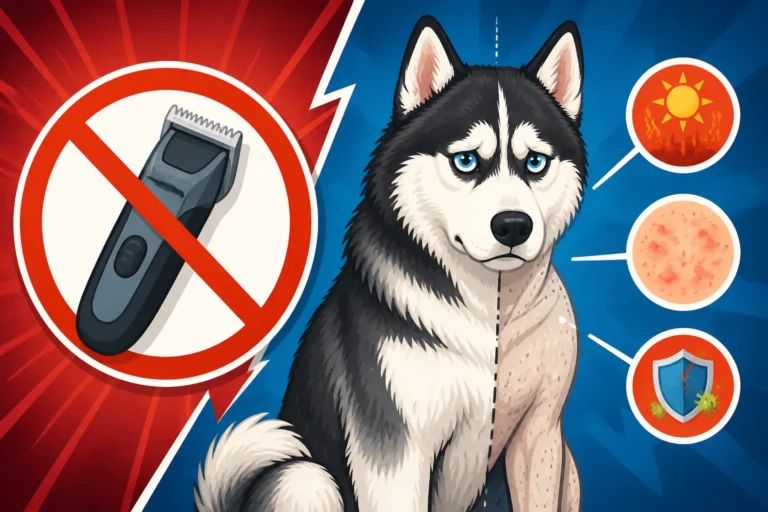
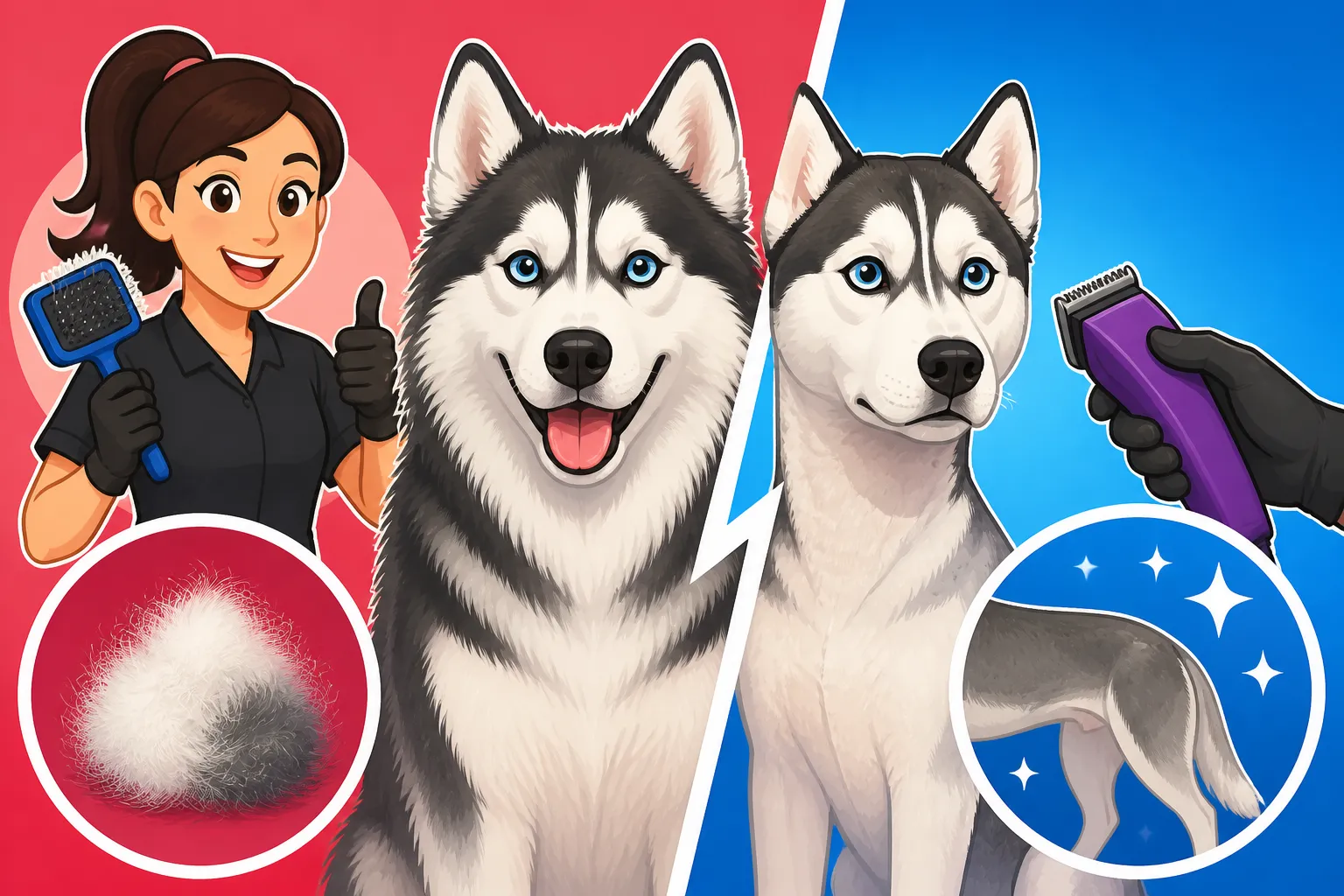
Many people mistakenly believe that shaving a Husky will make them cooler. In reality, it does the exact opposite. When you remove those protective guard hairs, you strip away the dog's natural insulation and sunblock. Suddenly, their delicate skin is exposed to direct sunlight, leading to potential sunburn, heatstroke, and an inability to properly regulate their body temperature.
Imagine wearing a thick wool sweater in winter. It keeps you warm, right? Now imagine wearing that same sweater in summer. You'd be sweltering! But a Husky's coat isn't a sweater. It's more like a highly advanced, self-regulating ventilation system. The guard hairs create a barrier, while the undercoat (when blown out properly) allows air to flow. Shaving disrupts this entire system, leaving the dog vulnerable. It's a common struggle for owners in warmer climates, often leading to a search for Whether a Siberian Husky Belongs in a Hot State.
Why Some Groomers Might Offer to Shave a Siberian Husky
Despite the overwhelming consensus among veterinary professionals and experienced Husky breeders that shaving a double-coated dog is harmful, you might still encounter groomers who are willing to do it. This can be incredibly confusing for a well-meaning owner who just wants their dog to be comfortable.
Lack of Breed-Specific Knowledge
One of the primary reasons a groomer might offer to shave a Husky is a simple lack of understanding regarding double coats. Not all groomers are equally trained or experienced with every breed. Some may operate on the general assumption that shorter hair equals cooler skin, without fully appreciating the unique physiology of a breed like the Siberian Husky. They might treat a Husky like a Poodle or a Golden Retriever, whose single coats or different double coat structures respond differently to clipping.
These groomers may not fully understand the delicate balance of the guard hairs and undercoat, or how crucial both layers are for protection and temperature regulation. Their intentions might be good – they want to help you reduce shedding or make your dog seem more comfortable – but their method is misguided and can lead to long-term coat damage and health issues.
Client Demand and Misinformation
Another factor is client demand. Many Husky owners, influenced by popular culture or simply not knowing better, approach groomers specifically requesting a shave. In an effort to please a client and secure business, some groomers might reluctantly agree, especially if they haven't been educated on the severe implications. It's a frustrating cycle where misinformation from owners leads to poor practices from groomers, which then reinforces the misconception among other owners.
The internet, while a wonderful resource, can also spread myths. Pictures of shaved Huskies might circulate, making it seem like a normal or even desirable practice. It's vital for owners to seek out reliable information and for groomers to educate their clients on why this service should be refused.
The "Wooly Coat" Exception (and why it's still risky)
There's a specific coat type, known as a "wooly coat," that can appear in Siberian Huskies. This is a genetic fault where the undercoat is excessively long and thick, often growing out past the guard hairs. These coats can become incredibly matted and can indeed trap heat more than a standard Husky coat, as the normal ventilation system is compromised.
While some groomers might argue that a wooly-coated Husky needs to be shaved to prevent matting and manage heat, it's still a contentious issue. Even with a wooly coat, shaving can damage the growth cycle and texture, leading to an even more difficult-to-manage coat in the future, often growing back even thicker and more cotton-like. The ideal approach even for wooly coats is careful, professional de-shedding and trimming without shaving down to the skin. You can learn more about this by researching Wooly Coated Siberian Huskies.
The Detrimental Effects of Shaving a Siberian Husky
Deciding to shave your Husky, even with good intentions, can lead to a cascade of negative consequences for their health, comfort, and coat integrity. These aren't just cosmetic issues; they impact their quality of life.
Coat Damage and Improper Regrowth
The most immediate and noticeable effect of shaving a Husky is the damage to their double coat. The guard hairs are cut short, and in many cases, the undercoat is disproportionately removed or damaged at the follicle level. When the coat attempts to grow back, the soft, fluffy undercoat often grows in faster and thicker than the coarser guard hairs. This results in a coat that is even less efficient at insulation and protection. It can feel like cotton, be prone to matting, and shed even more profusely than before.
This change is often irreversible or takes years of dedicated care to partially correct. The coat's texture can become "blown" permanently, losing its natural ability to shed properly or repel water and dirt. Owners report that their once magnificent, easy-to-care-for coat turns into a matted, dull mess. For a deeper dive into this, check out Why a Shaved Siberian Husky Coat Grows Back Wrong.
Increased Risk of Sunburn and Heatstroke
Once those protective guard hairs are gone, your Husky's skin is directly exposed to ultraviolet (UV) radiation. Just like humans, dogs can get sunburned, especially on areas with less pigment. Sunburn is painful and increases the risk of skin cancer over time. More critically, the loss of the reflective topcoat means the sun's heat penetrates directly to the skin, making the dog significantly more prone to overheating and potentially deadly heatstroke.
A shaved Husky in summer is like a human venturing out into the desert without any clothing or sunscreen. They lose their natural defense mechanism. This can be particularly dangerous for Huskies living in warmer climates, where managing heat is already a challenge. Learning to identify Signs of Heat Trouble in a Siberian Husky is crucial.
Other Skin Issues and Allergies
Beyond sunburn, shaving can expose the skin to a host of other problems. The sudden lack of protection can lead to skin irritations, cuts, scrapes, and increased susceptibility to insect bites. Some Huskies may develop "post-clipping alopecia," a condition where the shaved hair simply doesn't grow back at all, or only grows back in patches, leaving bald spots. This is more common in certain breeds, but can affect Huskies.
The altered coat texture can also make the dog more susceptible to skin infections, as moisture might be trapped against the skin, or irritants may more easily reach it. Instead of solving a problem, shaving often creates several new ones, including managing Hot Pavement Under Siberian Husky Paws when their natural protection is gone.
Better Alternatives to Shaving for Husky Comfort and Coat Health
So, if shaving is off the table, what can you do to help your Siberian Husky stay cool, reduce shedding, and maintain a healthy coat? There are plenty of effective, humane, and coat-safe options that a knowledgeable groomer will be happy to provide.
Professional De-Shedding Services
This is the gold standard for Husky coat care. A professional de-shedding treatment involves using specialized tools and techniques to remove the loose, dead undercoat without damaging the healthy guard hairs. This process helps the coat perform its natural insulating function more effectively by allowing better air circulation. It also drastically reduces the amount of hair floating around your home.
A good groomer will use a combination of raking, brushing, and high-velocity dryers to achieve this. These dryers don't just dry; they physically blast out loose undercoat that brushing alone might miss. During a major Spring and Fall Sheds in a Siberian Husky, these appointments are invaluable. You might find groomers using products like specific de-shedding shampoos or conditioners, often available through retailers like Chewy or Amazon, to aid in the process.
Here's a comparison of shaving vs. proper de-shedding:
| Feature | Shaving a Siberian Husky | Professional De-Shedding |
|---|---|---|
| Coat Integrity | Severely damaged; guard hairs cut, undercoat growth altered. | Preserved; only dead undercoat removed, guard hairs remain intact. |
| Temperature Regulation | Compromised; increased risk of overheating and sunburn. | Enhanced; allows better air circulation, improves natural insulation. |
| Shedding Reduction | Initial reduction, but often returns thicker and harder to manage. | Significant and sustained reduction of loose hair. |
| Skin Health | Increased risk of sunburn, irritation, and post-clipping alopecia. | Promotes healthy skin by removing dead hair and debris. |
| Long-Term Coat Health | Often irreversible damage to texture and function. | Maintains coat health, natural texture, and protective qualities. |
| Aesthetic Appearance | Drastically alters appearance, often for the worse. | Enhances natural beauty, leaving a clean, healthy coat. |
Regular At-Home Grooming
Between professional appointments, consistent at-home grooming is crucial. This involves using the right tools to remove loose undercoat. An undercoat rake, a slicker brush, and a pin brush are your best friends. During a coat blow, daily brushing might be necessary to keep up.
Focus on getting deep into the coat without scraping the skin. Many excellent tools are available online; even a quick search on Amazon for "Siberian Husky undercoat rake" will yield many options. Regular brushing not only helps with shedding but also distributes natural oils, keeping the coat healthy and shiny. For more details on tools, see Undercoat Rakes and Slickers for a Siberian Husky.
Environmental Cooling Strategies
Instead of shaving, focus on creating a cool environment for your Husky, especially if you live somewhere warm. This means:
- Timing walks: Exercise your Husky in the early morning or late evening when temperatures are cooler. Timing Siberian Husky Walks in Hot Weather is a critical skill.
- Shade and water: Ensure constant access to fresh water and ample shade in your yard. A kiddie pool can also be a huge hit for some Huskies!
- Indoor climate control: Air conditioning is often essential for Huskies in hot climates. Fans and cooling mats (also easily found on Chewy) can provide additional relief.
- Avoid hot surfaces: Keep your Husky off hot asphalt or concrete to protect their paws and prevent them from absorbing ground heat.
Nutritional Support for Coat Health
A healthy coat starts from within. Feeding a high-quality, balanced diet supports strong hair growth and skin health. Some owners opt for fresh food diets, like those offered by Ollie, which can contribute to overall vitality, including coat quality. A healthy coat is a functional coat, and good nutrition plays a big part in its ability to manage shedding and regulate temperature. Zinc supplementation might also be necessary for some Huskies with specific dermatological issues; you can read more at Zinc Supplementation for a Siberian Husky.
In conclusion, while the thought of shaving your Siberian Husky might be tempting, it's almost always a harmful choice. Seek out groomers who understand and respect the unique needs of a double-coated breed, and embrace the power of proper de-shedding and environmental management to keep your Husky happy, healthy, and comfortable year-round.
Disclaimer
This article is for general informational purposes only and does not constitute professional advice. Laws, prices and regulations vary by location and change over time. Consult a qualified professional for guidance on your specific situation.