Slimming an Overweight Siberian Husky
It's a common misconception that all Siberian Huskies are naturally lean, tireless machines, always on the go and immune to packing on the pounds. The reality, however, is that many Husky owners find themselves grappling with a slightly, or even significantly, overweight companion. It's a frustrating situation because you love your dog and want them to be healthy, but figuring out how to trim down a breed known for both its energy and its efficient metabolism can feel like cracking a secret code. This guide is here to demystify the process, offering practical, empathetic advice to help you get your beloved Siberian Husky back to a healthy weight, protecting their long-term well-being.
Understanding Why Your Siberian Husky Might Be Overweight
When you look at your Siberian Husky, you probably picture a dog pulling a sled across vast snowy landscapes, their muscles rippling, their body lean and agile. It’s the image ingrained in our minds, a testament to their heritage. So, when your own Husky starts looking a bit rounder, it can be quite baffling. Surely, your Husky, with its boundless energy (at least sometimes), couldn't be overweight, could it?
The Metabolism Myth: Why Huskies Don't Always Stay Lean
While it's true that Siberian Huskies generally have a remarkably efficient metabolism, often requiring fewer calories per pound than many other breeds of similar size, this efficiency can actually work against them in a modern pet home. Their bodies are designed to conserve energy, making the most of every calorie to survive in harsh, lean environments. In our homes, where food is plentiful and easily accessible, and daily exercise might not match the demands of their ancestors, that efficiency means those extra calories stick around rather than being burned off.
Think about it: a Husky bred to run hundreds of miles on minimal rations doesn't need much to simply maintain weight when their most strenuous activity is a leisurely walk around the block or a romp in a securely fenced yard. If you’re feeding them according to the generic guidelines on the back of a dog food bag, which are often geared towards breeds with higher metabolic demands, you’re almost certainly overfeeding your Husky. It’s not about blame; it’s about understanding their unique biology. Many owners are surprised to learn that their Husky might thrive on just Calories a Fifty-Pound Siberian Husky Needs Daily or even less, depending on their activity level.
Identifying the Subtle Signs of Weight Gain
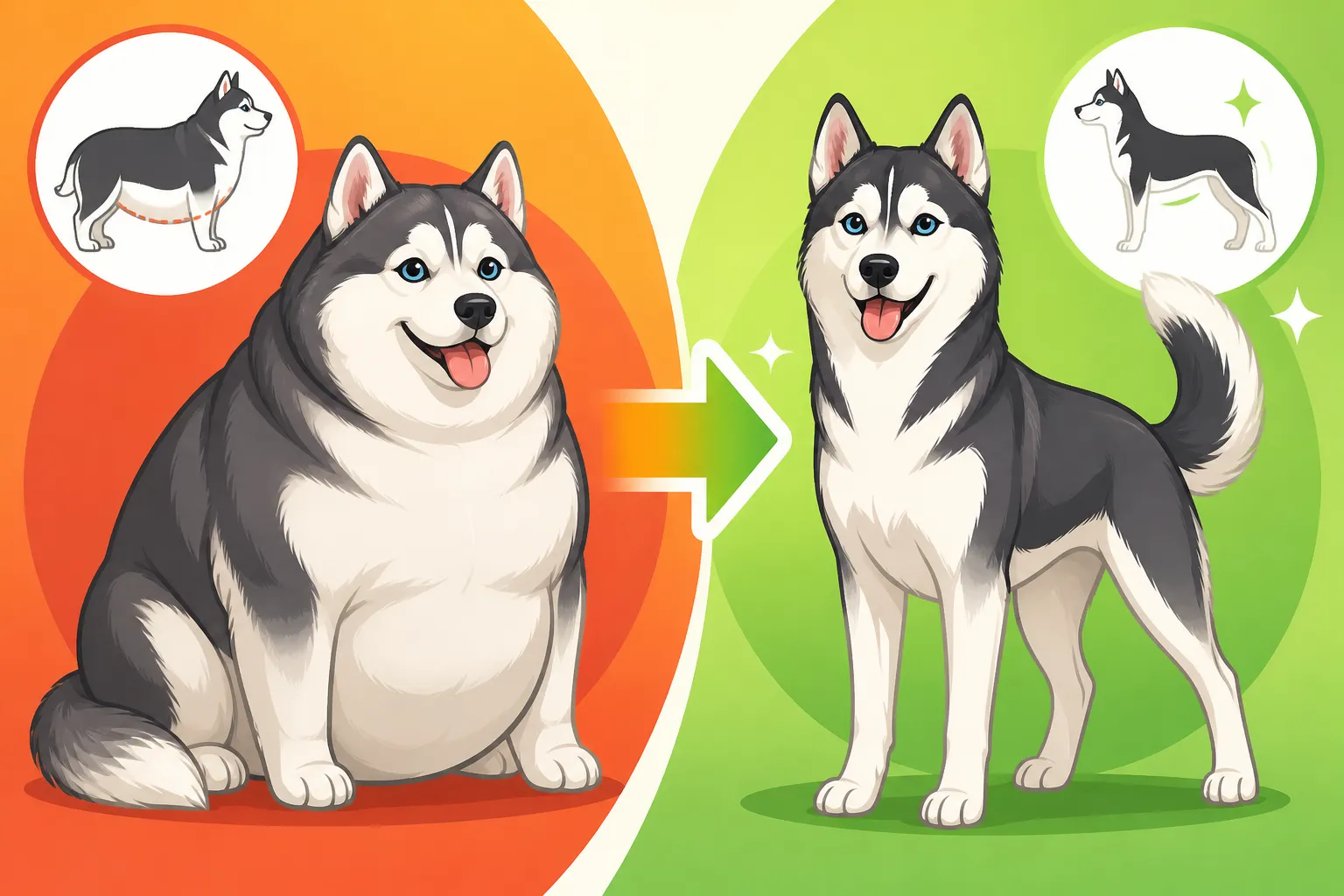
Before your Husky looks like a fluffy barrel, there are usually subtle signs of creeping weight gain that can be easy to miss, especially with their magnificent double coat. It's not always about a bulging belly; sometimes it’s just a lack of definition, a certain softness where there should be firm muscle. Beyond the obvious visual cues, learning to feel your dog’s body is crucial. You should be able to easily feel their ribs under a thin layer of fat, almost like feeling the back of your hand, without having to press hard. If you have to dig your fingers in to find them, your Husky is carrying too much weight.
Look at your Husky from above: they should have a distinct waistline that tapers in slightly after their ribs. From the side, their abdomen should tuck up slightly, not hang straight down or sag. If they look more like a straight line from chest to tail, or if their stomach is parallel to the ground, that’s a red flag. You might also notice changes in their movement – perhaps they're a little slower to get up, less enthusiastic about playtime, or pant more easily on walks. These aren’t just signs of getting older; they can be indicators that their body is struggling under extra weight, putting unnecessary strain on their joints, which can lead to issues later in life, impacting their Siberian Husky Lifespan and What Shortens It and their overall quality of life. Even the way they carry their tail or the bounce in their step can tell you a lot.
Practical Steps to Adjust Your Husky's Diet
Once you've determined your Siberian Husky is carrying extra weight, the diet is almost always the first place to make adjustments. This isn't about drastic, sudden changes, but rather a thoughtful, systematic approach to their caloric intake. It’s easy to feel guilty about cutting back on food, especially if your Husky has perfected the "starving artist" gaze, but remember you’re doing this for their health and longevity.
Calculating the Right Calorie Target for Weight Loss
This is where many owners get stuck, and it's understandable. The feeding charts on dog food bags are notoriously generous, often leading owners to vastly Why the Bag's Feeding Chart Overfeeds a Siberian Husky. These charts are generic, designed for a broad range of breeds and activity levels, and rarely account for the Husky's unique, efficient metabolism. So, the first step is to discard the bag's recommendations for now.
Instead, a critical first step is to consult your veterinarian. They can help you determine a healthy target weight for your specific Husky, factoring in their age, current weight, and activity level. From there, they can provide a more accurate daily calorie target for gradual, safe weight loss. As a general starting point, many veterinarians recommend feeding about 80-90% of the calories needed to maintain their ideal weight, not their current overweight one. For example, if your Husky's ideal weight is 50 pounds, and a healthy 50-pound Husky needs roughly 800-900 calories a day to maintain, you might start by aiming for 700-800 calories. It’s a process of careful calculation and observation.
Here's a simplified example of how calorie reduction might look:
| Current Weight (lbs) | Ideal Weight (lbs) | Estimated Maintenance Calories (Ideal) | Target Weight Loss Calories (85% of Ideal) |
|---|---|---|---|
| 60 | 50 | 850 | 720-760 |
| 55 | 45 | 780 | 660-700 |
| 50 | 40 | 700 | 590-630 |
Note: These are illustrative numbers. Always consult your vet for precise figures.
Choosing the Best Food for Weight Management
Once you have a calorie target, the next step is selecting the right food. This doesn't necessarily mean switching to an expensive "diet" food, though those can be helpful. What you're looking for is a food that offers a good balance of protein, fat, and fiber within your Husky's caloric budget. Higher protein can help maintain muscle mass during weight loss and keep your Husky feeling fuller. Fiber also aids satiety and digestive health. Look for ingredients lists that prioritize whole meat sources and have a reasonable fat content – not too high, but not stripped entirely, as healthy fats are still essential.
Many standard adult dog foods can work, but you'll need to be diligent about portion control. You can explore options from reputable online retailers like Chewy or Amazon, or even specialty brands like Ollie that offer portion-controlled, fresh food options, though you'll still need to adjust their recommendations for your Husky's specific needs. Some owners find success with foods labeled for "weight management" or "light" if their vet recommends it. These typically have lower caloric density per cup. Remember, it's not just what they eat, but how much. Learning to Weighing a Siberian Husky's Ration Instead of Scooping is far more accurate than using a measuring cup, which can vary wildly in how much food it actually holds. Even a small difference daily adds up over weeks.
Smart Snacking and Portion Control
This is often the hardest part for owners: realizing just how many "extra" calories sneak into their Husky's diet. A handful of kibble here, a piece of cheese there, a bite of your dinner – it all counts. For a Husky on a weight loss plan, these seemingly small additions can sabotage progress. Many Huskies are also clever beggars, and it's easy to fall prey to their charming ways. When your Husky gives you those big, soulful eyes, it's easy to think they're starving, but remember, Whether a Siberian Husky Will Overeat is a real concern, and they'll happily eat past satiety if given the chance.
The key is precise portion control. Measure all food, including treats, and subtract treat calories from their daily meal allowance. If you use treats for training, opt for very small, low-calorie options like freeze-dried liver bits (broken into tiny pieces), plain green beans, or carrot sticks. Some Huskies even love ice cubes. Avoid fatty human foods, and be especially mindful if you have other pets in the house who might leave food accessible. If your Husky was recently spayed or neutered, keep in mind that Adjusting Siberian Husky Food After Neutering is crucial, as their metabolism can slow down, making them more prone to weight gain. Treats should be a planned, mindful part of their diet, not an impulsive handout.
Incorporating More Exercise Without Overdoing It
Diet is paramount for weight loss, but exercise is its essential partner, especially for a breed like the Siberian Husky. The challenge with an overweight Husky is finding the right balance: they need to move more to burn calories and build muscle, but you don't want to injure them or make them uncomfortable by pushing them too hard, too fast.
Tailoring an Exercise Plan for an Overweight Husky
If your Husky is currently overweight and out of shape, starting slow is non-negotiable. Imagine jumping into a marathon without training; it’s not going to end well. The same applies to your dog. High-impact activities or long, strenuous runs might put undue stress on their joints, tendons, and ligaments, especially if they are carrying extra weight. This is where conditions like Siberian Husky Weight and Joint Health become a real concern.
Begin with gentle, consistent exercise. Shorter, more frequent walks are often better than one long, exhausting one. If you usually walk for 20 minutes, try two 15-minute walks instead. Focus on walking at a brisk, consistent pace rather than stop-and-go sniffing. Swimming can be an excellent low-impact option if your Husky enjoys it and you have access to a safe pool or calm body of water. It provides a full-body workout without the strain on joints. As your Husky's fitness improves and they start to lose weight, you can gradually increase the duration and intensity. This might mean adding a few minutes to each walk every week or introducing slight inclines. Always pay attention to your Husky's breathing and body language; if they're struggling, panting excessively, or lagging behind, it’s time to slow down or take a break. Also, be mindful of the weather, as overweight Huskies are at an increased Heat Stroke Risk in a Siberian Husky.
Engaging Activities Beyond the Leash Walk
While regular walks are fundamental, Huskies thrive on variety and mental stimulation. Their ancestral jobs involved purposeful work, and tapping into that can make exercise more enjoyable and effective. Once your Husky has shed some initial pounds and their stamina has improved, you might explore activities that tap into their natural inclinations.
Harness sports like canicross (running with your dog pulling you via a belt) or bikejoring (cycling with your dog pulling you) can be fantastic outlets for a fit Husky, but they are not for beginners or overweight dogs. These require a base level of fitness and proper training to ensure safety and enjoyment for both of you. For now, focus on activities that are less intense but still engaging. Tug-of-war in the yard, fetch (if your Husky is a retriever, which isn't always a given!), or even just chasing a flirt pole can provide bursts of activity. Mental stimulation is also key to preventing boredom and destructive behaviors, which can sometimes lead to less activity overall. Wearing Out a Siberian Husky Without Leaving the House with puzzle feeders and training games can supplement physical exercise, especially on days when the weather isn't cooperating. Engaging their minds can be just as tiring as engaging their bodies. You could try hiding their meal portions around the house, making them "hunt" for their food, adding mental effort to their daily routine.
Monitoring Progress and Troubleshooting Challenges
Weight loss is rarely a linear journey, and there will be weeks where progress seems to stall, or perhaps even a slight gain. This is normal and doesn't mean you're failing. Consistent monitoring and a willingness to troubleshoot are key to long-term success.
Regular Weight Checks and Body Condition Scoring
Stepping on the scale is important, but it's not the only measure of success. Your Husky's body condition score (BCS) is arguably more valuable. Most vets use a 1-to-9 scale, where 1 is emaciated, 5 is ideal, and 9 is morbidly obese. You're aiming for that sweet spot of 5. Learning to assess your Husky's BCS at home involves feeling their ribs, spine, and hip bones, as well as observing their waistline and abdominal tuck. You should be able to easily Reading a Siberian Husky's Ribs Under the Coat, see a noticeable waist, and have a good abdominal tuck.
Weigh your Husky weekly or bi-weekly, preferably on the same scale at the same time of day. Keep a log. Don't be discouraged by small fluctuations. Sometimes, muscle gain can mask fat loss on the scale, which is why BCS is so vital. Take photos every month from the top and side. Sometimes, the visual changes aren't obvious to us day-to-day, but side-by-side comparisons reveal significant progress. Celebrating these small victories can keep you motivated on the longer journey. Remember that health testing, such as The Two Tests Siberian Husky CHIC Requires, often includes a physical examination, and your vet will always assess body condition.
When to Consult Your Veterinarian
While many weight loss journeys can be managed with diet and exercise adjustments at home, there are times when your veterinarian's expertise is invaluable. If your Husky isn't losing weight despite your best efforts, if they seem unusually lethargic or unwell, or if you're noticing any other concerning symptoms, a vet visit is in order.
Stubborn weight loss can sometimes be a sign of an underlying medical condition, such as hypothyroidism (though less common in Huskies than some other breeds), that needs to be addressed. Your vet can perform blood tests to rule out such issues. They can also provide a more tailored dietary plan, potentially recommending specific prescription weight-loss diets that are formulated to promote satiety while being low in calories. They might also suggest specific exercise protocols if your Husky has joint issues or other limitations. Don't hesitate to lean on your vet as a partner in your Husky's health. They want to see your dog thrive just as much as you do and can offer guidance, support, and professional resources to ensure your Siberian Husky returns to and maintains a healthy, active life.
Disclaimer
This article is for general informational purposes only and does not constitute professional advice. Laws, prices and regulations vary by location and change over time. Consult a qualified professional for guidance on your specific situation.