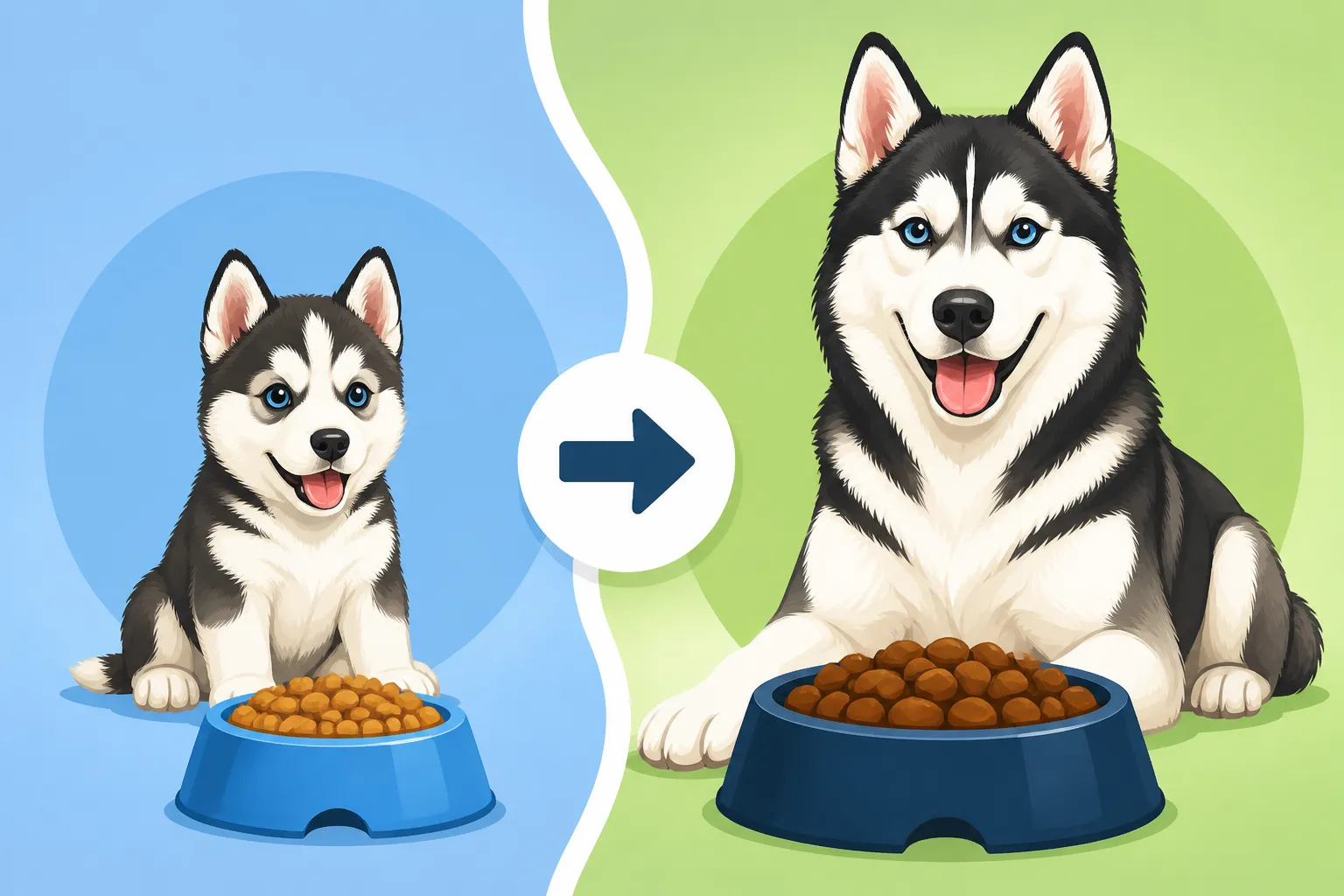
The Age a Siberian Husky Moves to Adult Food
One of the most common questions new Siberian Husky parents have revolves around their food: specifically, when to wave goodbye to those high-octane puppy kibbles and welcome in the adult fare. It's not as simple as flipping a calendar page, and getting it wrong can inadvertently impact your Husky's long-term health. This guide will walk you through understanding your Siberian Husky's unique growth, recognizing the signs they're ready for a dietary shift, and making that transition smoothly to ensure they thrive.
Understanding Your Siberian Husky's Unique Growth Trajectory
Siberian Huskies are truly a marvel of natural selection, bred for endurance and efficiency in harsh climates. This ancestral background means their growth patterns and nutritional needs differ quite a bit from many other breeds, especially those often classified as "large breeds." You might expect a dog of their size to mature rapidly, but the Husky has its own timeline.
Why Huskies Aren't Your Average Large Breed
Unlike giant breeds that might need specialized large-breed puppy formulas well into their second year to support explosive growth, Siberians grow at a more moderate, sustained pace. They reach most of their height and length fairly quickly, often by 6-9 months, but they continue to fill out and mature muscularly for much longer. This "slow and steady wins the race" approach to growth is partly why their joint health is generally quite good compared to other similar-sized dogs; their bones and joints aren't subjected to the same rapid stress. Their metabolism is also notoriously efficient, meaning they require fewer calories per pound than many other active breeds, even as puppies. This is a crucial detail, as overfeeding can quickly lead to unwanted weight gain, even on puppy food.
For instance, you might notice your Husky puppy, even a very active one, doesn't eat as much as a Labrador puppy of the same age. This isn't necessarily a cause for alarm, but rather a testament to their efficient bodies. It means you need to be extra vigilant about not overfeeding, especially as they approach maturity. The goal is steady, healthy growth, not chunky puppy fat.
Growth Plate Closure and Maturity
The most significant physical milestone when considering a switch to adult food is the closure of growth plates. These are areas of cartilage at the ends of long bones in young dogs that produce new bone, allowing them to grow longer. Once these plates "close" or ossify, the bones stop growing in length, indicating skeletal maturity. For most Siberian Huskies, this process occurs between 12 and 18 months of age, with smaller individuals sometimes finishing a bit earlier and larger, slower-maturing ones closer to 18 months.
While size is a good indicator, it's not the only one. A vet can sometimes confirm growth plate closure with X-rays, particularly if there are concerns, but for most owners, observing their dog's general development is sufficient. Until these plates are closed, their bones are more vulnerable to injury from excessive or inappropriate exercise. This is also why we're so careful about Protecting a Siberian Husky Puppy's Growth Plates – ensuring their diet supports steady bone development without encouraging too-rapid growth. A puppy food that is too high in calories or certain minerals can sometimes exacerbate these issues.
Signs Your Siberian Husky is Ready for Adult Food
Knowing when to make the switch isn't just about reading the age recommendation on a bag of kibble, though that's a starting point. It's about really observing your individual dog. Every Husky is a bit different, and their physical and behavioral cues will give you the most accurate timeline.
Physical Development vs. Age Milestones
As mentioned, a typical Siberian Husky will largely reach its adult height by 9-12 months. However, they continue to put on muscle and fill out their chest and body for several more months. Most are considered physically mature and ready for adult food between 12 and 18 months. If your Husky is closer to 12 months, has reached most of their adult height, and is starting to look less "leggy" and more substantial, it’s a good time to start thinking about the transition.
For instance, imagine your 10-month-old male Husky, Loki. He's standing tall, almost the same height as an adult male Husky you know, but he still looks a bit slender, a little gangly perhaps. By 14 months, he'll likely be fully filled out, his chest broad, and his musculature well-developed. This filling out phase is when the body shifts from primarily growing bone to solidifying muscle and fat distribution. The Weight a Siberian Husky Hits at Six Months can give you a benchmark, but remember that individual growth varies. You’re looking for a sustained period where growth seems to have largely stopped in terms of height, and they are now consolidating their adult form.
Behavioral Cues and Energy Levels
Beyond physical size, pay attention to your Husky's overall energy and behavior. Puppy food is formulated with high calorie and nutrient densities to fuel rapid growth and boundless puppy energy. As your Husky matures, their metabolism might start to slow just a touch, and their growth requirements decrease significantly. You might notice they aren't quite the perpetual motion machine they once were, though a Husky will always be energetic! If your Husky is maintaining a healthy weight but seems to be getting a bit pudgy on their usual puppy rations, or they are no longer growing, it’s a strong signal they are ready for a less calorically dense diet.
Consider a young Husky that, at 6 months, could zoom around for hours, crash, and then be ready to go again. By 12-14 months, while still incredibly active, they might not have the same frantic puppy-like bursts. Their play becomes more focused, their sleep more solid, and their growth rate visibly slows. These shifts, combined with their physical development, indicate their metabolic needs are changing, making adult food a more appropriate choice.
The "Rib Check" and Body Condition
This is arguably one of the most important indicators. Regardless of age, your Husky's body condition is a paramount factor. You should be able to easily feel your Husky’s ribs, but not see them prominently. When you look down at your Husky from above, you should see a clear waist tucking in behind their ribs, and a slight abdominal tuck from the side.
To perform a "rib check":
- Run your hands along their sides: Place your palms flat on their chest and run them back along their ribs. You should feel the individual ribs under a thin layer of fat and muscle, like the knuckles on your hand if you flex it gently.
- Too prominent: If the ribs are highly visible or feel very sharp, your Husky might be too thin.
- Too difficult to feel: If you have to press hard to feel the ribs, or they feel like they’re buried under a significant layer of padding, your Husky is likely overweight.
Puppy food is often richer in calories and fat. If your Husky has already reached adult size and is still on puppy food, they are at a higher risk of becoming overweight, which can strain developing joints and lead to other health issues down the line. Reading a Siberian Husky's Ribs Under the Coat becomes a crucial skill to master as your dog transitions from puppyhood to adulthood and throughout their life. It's your personal gauge for their nutritional needs.
Making the Transition to Adult Food
Once you've determined your Siberian Husky is ready, the transition isn't just about swapping bags overnight. A sudden change can upset their sensitive digestive system, leading to diarrhea or vomiting. A gradual approach is key.
Choosing the Right Adult Formula for a Husky
When selecting an adult food, keep your Husky's unique physiology in mind. They don't typically need extremely high-protein, high-fat diets unless they are actively working in intense sled dog sports. A good quality adult dog food with moderate protein (around 22-26%) and fat (12-16%) is usually appropriate for most pet Huskies. Look for reputable brands with easily digestible ingredients and check the calorie content. Remember, their efficient metabolism means they might need less than the bag suggests.
When browsing options on a site like Chewy or looking at brands like Ollie, pay close attention to the ingredient list. Look for a named meat source as the first ingredient (e.g., "chicken meal," not "meat by-products"). Avoid excessive fillers or ingredients you can't pronounce. Some owners prefer to rotate between a few different high-quality brands or protein sources to provide a varied diet and help prevent the development of sensitivities. For more details on what makes a good diet, check out Protein and Fat Ratios for a Siberian Husky.
Here's a quick comparison of what to look for in puppy vs. adult food for a Siberian Husky:
| Feature | Puppy Food (for Huskies) | Adult Food (for Huskies) |
|---|---|---|
| Calorie Density | Higher, to support rapid growth and high energy | Moderate, to maintain adult weight and energy |
| Protein | Higher (often 28-32%+) for muscle and tissue development | Moderate (typically 22-26%) for maintenance and repair |
| Fat | Higher (often 15-20%+) for energy and healthy skin/coat | Moderate (typically 12-16%) for energy and overall health |
| Calcium/Phos. | Carefully balanced for bone growth, often higher than adult food | Balanced for maintenance, usually lower than puppy formulas |
| Target | Rapid, healthy growth; high energy output | Weight maintenance, sustained energy, organ health |
| Common Issue | Overfeeding can lead to rapid growth, joint stress, obesity | Overfeeding can lead to obesity; underfeeding can cause weight loss |
The Gradual Switch
To avoid digestive upset, transition your Husky to their new adult food gradually over 7-10 days. This gives their system time to adjust to the new ingredients and nutrient profile.
Here’s a typical schedule:
- Days 1-2: 75% old food, 25% new food
- Days 3-4: 50% old food, 50% new food
- Days 5-6: 25% old food, 75% new food
- Days 7+: 100% new food
During this period, monitor their stool for any changes. Loose stool or diarrhea indicates you might need to slow down the transition further, perhaps extending each stage by a day or two. If they experience persistent diarrhea or vomiting, consult your vet.
Monitoring and Adjusting Post-Transition
Once your Husky is fully on adult food, your job isn't over! You'll need to continually monitor their weight, body condition, energy levels, and coat health. Huskies are incredibly efficient eaters, and it's very easy to overfeed them, even on adult food. The feeding guidelines on the back of any food bag are just a starting point; many Huskies thrive on significantly less, sometimes as little as 60 Percent of the Label recommendations.
- Body Condition: Continue your regular "rib check." If they start to gain too much weight, reduce their portion size slightly. If they seem too thin, increase it.
- Energy Levels: Observe their energy. Are they still eager for walks and play? A drastic drop could indicate something is off, or it could simply mean you're feeding them the right amount for their maintenance needs.
- Stool Quality: Healthy stool is firm and well-formed. Any consistent looseness or changes in color/consistency might mean the new food isn't agreeing with them, or you're feeding too much.
- Coat Health: A shiny, full coat is a sign of good nutrition. A dull, dry, or excessively shedding coat (outside of their normal Siberian Husky Coat Blow and the Six Weeks It Lasts) could suggest dietary deficiencies.
Remember to consider factors like activity level and whether they've been spayed or neutered. Adjusting Siberian Husky Food After Neutering is often necessary, as the procedure can lead to a decrease in metabolic rate and an increased propensity for weight gain.
Common Pitfalls and Misconceptions
Despite their robust nature, Huskies are often victims of well-meaning but misguided feeding practices. Understanding these common errors can help you keep your dog healthy and happy.
Overfeeding "Growing" Huskies
One of the biggest mistakes owners make is assuming a growing Husky needs to eat all the time or that a bigger dog needs proportionally more food than the bag states. While puppies do need more calories than adults, continuing to feed puppy food for too long, or overfeeding adult food, is a fast track to an overweight Husky. Husky puppies, with their efficient metabolism, can easily become chunky on standard puppy food portions.
An overweight Husky, even a young one, puts unnecessary strain on their joints, tendons, and ligaments. While Siberian Huskies are generally known for their good hips, excessive weight can still contribute to discomfort or accelerate the onset of conditions like arthritis later in life. Always remember that the bag's feeding chart often aims for a higher calorie intake than an average pet Husky truly needs. It’s always best to err on the side of slightly less and monitor their body condition carefully. Many experienced Husky owners know that Why the Bag's Feeding Chart Overfeeds a Siberian Husky is a truth universally acknowledged in the breed community.
The "Large Breed Puppy Food" Trap
This is a specific pitfall many owners fall into. Because Huskies are a medium-large breed, it’s natural to reach for "large breed puppy formulas." However, these foods are typically designed for breeds that grow into giant sizes, like Great Danes or Mastiffs, which have vastly different growth rates and mineral requirements (especially calcium and phosphorus) to prevent skeletal problems.
While these formulas aim to slow growth, their caloric density can still be too high for a Husky's efficient metabolism, leading to excessive weight gain. For most Siberian Huskies, a good quality, regular puppy food is perfectly fine, provided you feed appropriate, reduced portions, or a puppy formula specifically balanced for medium breeds. Always check the nutritional analysis carefully, or better yet, discuss your food choices with a veterinarian experienced with northern breeds.
Ignoring Zinc Needs in Adult Food
Siberian Huskies have a genetic predisposition to absorb zinc poorly from their diet, even if the food contains adequate amounts. This can lead to a skin condition called Zinc-Responsive Dermatosis in the Siberian Husky, characterized by crusting, hair loss, and scaly skin, often around the eyes, muzzle, and pressure points. While this is more commonly seen in puppies, it can occur at any age.
Even after transitioning to adult food, it’s wise to remain aware of your Husky’s zinc needs. Some high-quality adult foods might provide sufficient chelated zinc, but if your Husky shows any signs of dermatosis, or if your vet suggests it, a zinc supplement may be necessary. Always consult your vet before adding any supplements, as too much zinc can also be harmful. While a balanced diet is essential, sometimes Why a Balanced Diet Does Not Fix Husky Zinc Loss holds true due to their unique absorption issues. Regularly checking their skin and coat is another way you can stay ahead of potential nutritional issues.
Disclaimer
This article is for general informational purposes only and does not constitute professional advice. Laws, prices and regulations vary by location and change over time. Consult a qualified professional for guidance on your specific situation.