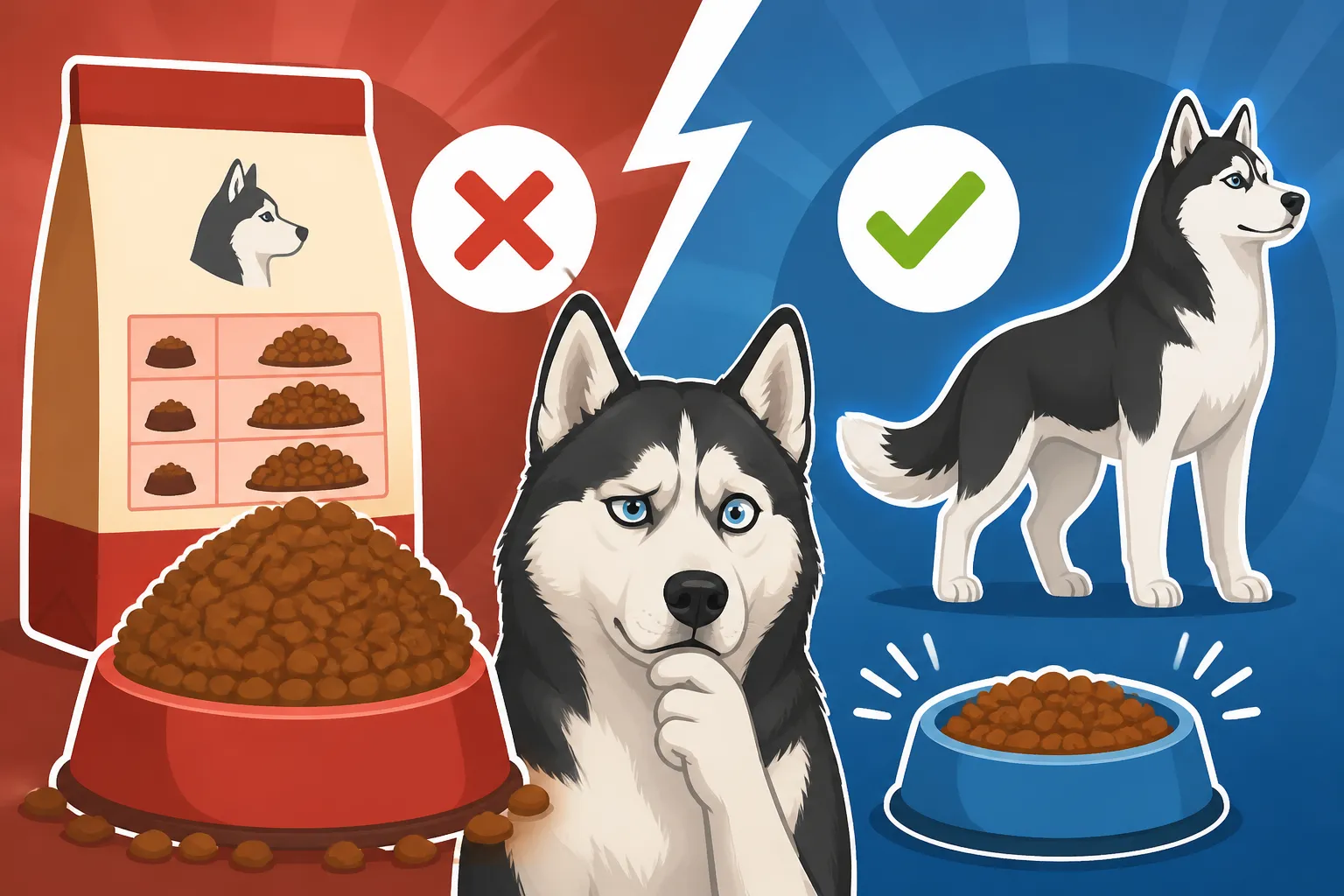
Why the Bag’s Feeding Chart Overfeeds a Siberian Husky
It’s a tale as old as time for Siberian Husky owners: you bring home your beautiful, energetic dog, committed to giving them the best life. You diligently read the feeding guidelines on the back of that premium dog food bag, carefully scoop out the recommended amount, and then… your Husky starts packing on the pounds. Or maybe they just aren't thriving, and you're left scratching your head, wondering if you're doing something wrong. You’re not alone in this frustration; those generic feeding charts simply don’t understand the unique metabolism of our beloved Huskies. This guide will dive deep into why those recommendations often overfeed a Siberian Husky and how you can tailor their diet for optimal health and a lean, athletic build.
The Unique Siberian Husky Metabolism
Siberian Huskies are incredible athletes, designed by centuries of selective breeding to thrive in harsh, demanding conditions. Their bodies are masterpieces of efficiency, built to run for hours on relatively few calories. This isn't just a quirk; it's a fundamental aspect of their physiology that makes feeding them vastly different from many other breeds.
Bred for Efficiency, Not Excess
Imagine dogs living and working in the unforgiving Arctic with the Chukchi people. Food wasn't always plentiful, and every calorie counted. The Huskies that survived and excelled were those that could extract maximum energy from minimal intake, storing little to no excess fat. This genetic blueprint for efficiency is deeply embedded in every Siberian Husky, whether they're pulling a sled across a frozen tundra or lounging on your living room rug. Their bodies are incredibly good at converting food into usable energy without needing a huge volume of it. They have a lean, compact build, not one designed for carrying extra weight, which would only hinder their work in the snow.
This historical context is crucial when you look at that dog food bag. Most commercial dog foods and their corresponding feeding charts are designed for the "average" dog, a generalized canine metabolism that simply doesn't exist in a breed as specialized as the Husky. You might find your Husky doing very well on significantly less food than what a chart suggests for a dog of their size, all while maintaining excellent energy levels and a healthy weight. Why Siberian Huskies eat less than a Labrador is a perfect example of this difference in metabolic rates compared to other popular breeds.
Why Most Dog Food Charts Don't Apply
Those feeding charts on kibble bags are, by necessity, broad guidelines. They provide a range based on weight and sometimes age, assuming a certain level of activity and a generic metabolism. However, they can't possibly account for the vast differences between, say, a sedentary Basset Hound and an active Siberian Husky, both weighing 50 pounds. For our Huskies, who possess an incredibly efficient "furnace" for burning calories, these charts are almost always an overestimate.
If you follow the chart strictly, especially with a high-calorie, nutrient-dense kibble, you'll likely see your Husky slowly but surely gain weight. This isn't a reflection of your Husky being lazy or greedy; it's a reflection of their body simply not needing that much fuel to operate. Their bodies are programmed to conserve, to make every morsel count. When they receive more than they need, that excess gets stored, often around the ribs and flanks, which can quickly lead to an unhealthy weight. It's a frustrating cycle because you feel like you're doing everything right, yet the results don't align with the advice.
Understanding the "Working Dog" Label
Many premium dog foods market themselves with a "working dog" label, implying that they're perfect for active breeds. While Huskies are indeed working dogs by heritage, this label can still be misleading for a pet Husky. A true working sled dog, running dozens of miles a day in sub-zero temperatures, has an astronomical caloric need that far exceeds even the most active pet Husky's requirements. They might eat vast quantities of high-fat, high-protein food to sustain their extreme energy output.
Your pet Husky, even if they're highly active with daily runs and hikes, simply isn't performing at that level of caloric expenditure. Therefore, feeding a "working dog formula" according to its bag's chart can be a recipe for overfeeding. It's not that these foods are bad; it's that their caloric density combined with the Husky's efficient metabolism means you need to feed a much smaller portion than recommended, often significantly so. It’s about understanding the context of the food and the context of your specific dog, not just the label.
Reading Your Husky, Not Just the Bag
The most important tool for properly feeding your Siberian Husky isn't a measuring cup; it's your own eyes and hands. Learning to assess your Husky's body condition directly is far more accurate than any generalized chart. This allows you to make real-time adjustments based on their individual needs, activity levels, and current physique.
The Rib Test: A Hands-On Approach
The "rib test" is a simple, yet highly effective way to determine if your Husky is at a healthy weight. Forget what the scale says for a moment; it’s about how their body feels. To perform the rib test, gently run your hands along your Husky's sides, over their ribs.
-
Ideal Weight: You should be able to easily feel their ribs without pressing hard, much like feeling the knuckles on your hand when your palm is flat. You shouldn't see the ribs prominently poking out, but they should be easily palpable beneath a thin layer of skin and muscle. There should be a noticeable tuck-up at their waist when viewed from above, and a visible distinction between their rib cage and their abdomen from the side. This lean condition is crucial for their joint health and overall agility. To learn more about this, check out Reading a Siberian Husky's Ribs Under the Coat.
-
Underweight: If their ribs are clearly visible, feel sharp, or have no discernible fat covering, your Husky is likely underweight. This isn't common for Huskies eating regular meals, but it can happen with extreme activity or underlying health issues.
-
Overweight: If you have to press firmly to feel their ribs, or if you can't feel them at all, your Husky is carrying too much weight. This is the most common scenario when following standard feeding guidelines. You won't see a distinct waist, and their belly might appear rounder.
Perform this test regularly – weekly is a good habit – to catch any changes early. It's a quick, free way to monitor their health.
Observing Energy Levels and Activity
Your Husky's daily energy expenditure plays a huge role in their caloric needs. A Husky that gets two brisk walks around the block each day will require vastly different amounts of food than one that accompanies you on daily five-mile runs or participates in active dog sports.
- High Activity: If your Husky is truly high-energy, running, hiking, or working in harness for extended periods most days, they will naturally need more fuel. Even then, start conservative and monitor their weight, increasing food slowly as needed. How Much Exercise a Siberian Husky Really Needs explores this further.
- Moderate Activity: Most pet Huskies fall into this category, with a good balance of walks, playtime, and mental stimulation. They need a moderate amount of calories.
- Low Activity: Older Huskies, those recovering from injury, or those in more sedentary households will require significantly fewer calories to maintain a healthy weight. Overfeeding an inactive Husky will lead to rapid weight gain.
Pay attention to whether your Husky is maintaining their typical zest for life. A sudden drop in energy could signal an illness, but if they're still zooming around and looking happy, yet gaining weight, it's almost certainly a caloric imbalance.
Tracking Weight Changes Over Time
While the rib test gives you an immediate assessment, regular weight tracking provides objective data over time. You don't need to weigh them daily, but a monthly or bi-monthly weigh-in can be very helpful.
- At Home: For smaller Huskies, you can weigh yourself, then weigh yourself holding your dog, and subtract the difference. For larger Huskies, a trip to the vet clinic to use their scale (often available for free) is ideal.
- Recording: Keep a simple log in a notebook or on your phone. Note their weight and any food adjustments you've made. This helps you identify trends. For example, if your Husky gains a pound over two months, you know you need to slightly reduce their daily intake. Conversely, if they start to look a little too lean, you can gradually increase it. Siberian Husky Weight and Joint Health emphasizes why maintaining an ideal weight is so critical throughout their life.
Practical Adjustments to Feeding Strategies
Once you understand why the bag is wrong, it's time to learn how to feed your Siberian Husky correctly. It's less about drastic changes and more about consistent, mindful adjustments tailored to your individual dog.
Starting with a Lower Calorie Baseline
The single most effective strategy is to assume the bag's feeding chart is an overestimate and start with less. A good rule of thumb for many Siberian Huskies is to start with about 60-70% of the recommended amount for their ideal adult weight. This might sound shockingly low, but it aligns well with their efficient metabolism.
For example, if the bag recommends 3 cups a day for a 50-pound dog, start with 1.8 to 2.1 cups and observe your Husky for a few weeks. Monitor their energy, stool quality, and, most importantly, perform the rib test regularly. You can always increase the food slightly if they appear too lean or seem overly hungry, but it's much easier to prevent weight gain than to take it off. This concept is explored further in Feeding a Siberian Husky on 60 Percent of the Label.
Weighing Food for Accuracy
Using a standard measuring cup for kibble can be incredibly inaccurate. The density of kibble varies wildly, meaning a "cup" of one brand might weigh significantly more or less than a "cup" of another. Even within the same bag, how tightly you pack the kibble can change the actual amount.
The most precise method is to weigh your Husky's food using a kitchen scale. Most dog food bags list the caloric content per cup or per gram. Find out the appropriate daily calorie target for your Husky (your vet can help with this, or you can calculate it based on their ideal weight and activity level, as discussed in Calories a Fifty-Pound Siberian Husky Needs Daily). Then, weigh out that exact amount of food. This ensures consistency and prevents accidental overfeeding. A simple digital kitchen scale is an inexpensive investment that pays dividends in your Husky's health.
The Role of Treats in Total Calorie Intake
It's easy to overlook how quickly treats add up. A few small training treats here, a dental chew there, and suddenly you've added hundreds of extra calories to your Husky's daily intake without even realizing it. For a dog with such an efficient metabolism, these "extras" can easily push them into a caloric surplus.
- Account for Treats: Factor treats into your Husky's daily calorie budget. If you're giving a lot of treats for training, reduce their mealtime kibble proportionally.
- Healthy, Low-Calorie Options: Opt for small pieces of boiled chicken, carrots, green beans, or specialized low-calorie training treats. Many major pet supply retailers like Chewy offer a wide selection of healthy, low-calorie treat options.
- Size Matters: Break treats into tiny, pea-sized pieces. Your Husky cares more about the frequency of rewards than the size.
- Interactive Toys: Instead of always using food, incorporate puzzle toys or interactive play as rewards, especially if your Husky is prone to weight gain.
Choosing the Right Food for Your Husky
Beyond portion size, the type of food you choose also plays a critical role in your Siberian Husky's health and weight management. Not all dog foods are created equal, and understanding macronutrient profiles can make a big difference.
Protein and Fat Ratios for a Husky
Siberian Huskies generally thrive on a diet that is moderate to high in protein and fat, with lower carbohydrates. This mirrors the diet their ancestors would have consumed.
- Protein: Look for high-quality animal protein as the first ingredient (e.g., chicken, lamb, beef, fish). Protein is essential for muscle maintenance and repair, and it helps them feel full. Aim for foods with at least 25-30% protein content. The Protein Level a Siberian Husky Needs elaborates on this.
- Fat: Healthy fats are a concentrated source of energy crucial for skin and coat health, and they are easily metabolized by Huskies. Look for foods with around 15-20% fat content. For very active Huskies, or those in colder climates, you might go slightly higher with fat, as discussed in High-Fat Food for a Siberian Husky in Winter.
- Carbohydrates: While not inherently bad, excessive carbohydrates can contribute to weight gain in a Husky if not balanced with activity. Avoid foods with large amounts of corn, wheat, or soy as primary ingredients. Opt for complex carbohydrates like sweet potatoes, peas, or brown rice in moderation.
Avoiding Filler-Heavy Foods
Many inexpensive dog foods are packed with "fillers" – ingredients that add bulk but offer little nutritional value. These can include excessive grains, by-products, and artificial additives. While they might fill your Husky's stomach, they don't provide the high-quality, dense nutrition their efficient metabolism truly needs.
Choosing a higher-quality food, even if it seems more expensive per bag, can often save you money in the long run because you'll feed less of it, and your Husky will be healthier, potentially reducing vet bills. Look for foods with clearly identifiable meat sources, healthy fats, and a digestible carbohydrate source. Many owners find success with brands that focus on whole ingredients and minimal processing.
Considering Fresh or Specialized Diets
For owners who want even greater control over their Husky's nutrition, fresh food diets or specialized meal services can be an excellent option. Companies like Ollie, for instance, offer human-grade, personalized meal plans that are pre-portioned based on your dog's specific needs, breed, weight, and activity level. This can take the guesswork out of feeding and ensure your Husky gets exactly what they need without excess.
Similarly, if your Husky has specific dietary sensitivities or requires a prescription diet due to a health condition (like Zinc-Responsive Dermatosis in the Siberian Husky), a specialized formula might be necessary. Online retailers like Chewy and Amazon often carry a vast array of specialized diets, making it easier to find the exact food your vet recommends. Always discuss any significant dietary changes with your veterinarian to ensure they are appropriate for your Husky's unique health profile.
Common Pitfalls and Troubleshooting
Even with the best intentions, feeding a Siberian Husky can present unique challenges. Their independent nature and unique biology mean that what works for other breeds might not work for them.
A Siberian Husky That Skips Meals
It's a common concern for new Husky owners: your dog just isn't finishing their food, or sometimes skips a meal altogether. While this would be a red flag for many breeds, for a Siberian Husky, it's often perfectly normal behavior. Their efficient metabolism means they might genuinely not be hungry enough for every meal, or they might self-regulate their intake throughout the day. This is discussed further in A Siberian Husky That Skips Meals.
- Don't Panic: Unless your Husky is losing weight, showing signs of illness, or skipping multiple meals consistently, don't worry too much.
- Avoid Free-Feeding: While they might self-regulate, leaving food out all day can lead to overeating for some, or attract pests. Offer meals at set times, and if they don't finish within 15-20 minutes, pick up the bowl.
- Rule Out Illness: If meal skipping is new or accompanied by other symptoms (lethargy, vomiting, diarrhea), consult your vet to rule out any underlying health issues.
- Watch the Treats: If they're skipping meals, evaluate how many treats or caloric chews they're getting throughout the day. Those might be filling them up.
Adjusting Food for Different Life Stages
A Husky's caloric needs change dramatically throughout their life. What works for a puppy won't work for a senior, and vice-versa.
- Puppies: Growing puppies need more calories per pound of body weight than adults, but overfeeding can lead to rapid growth and potential joint problems. Feed a high-quality large-breed puppy food, carefully monitoring their growth and body condition. Avoid "fattening up" a puppy; a lean puppy is a healthy puppy.
- Adults: Once your Husky reaches maturity (around 12-18 months), their growth plates have closed, and their caloric needs stabilize. This is when the "60-70% of the bag" rule really comes into play. You might need to adjust their food slightly after neutering, as discussed in Adjusting Siberian Husky Food After Neutering, as their metabolism can slow down.
- Seniors: Older Huskies (typically after 7-8 years old) often become less active, and their metabolism can slow down further. They will require even fewer calories to prevent weight gain. Senior-specific foods often have lower calorie counts and added joint support. Always keep an eye on their weight and adjust accordingly, as discussed in Caring for a Siberian Husky Past Ten.
Dealing with Weight Gain Even on a "Diet"
You've cut back the food, you're weighing it, you're limiting treats, and your Husky is still gaining weight or not losing it. This can be incredibly frustrating. Here are a few things to consider:
- Re-evaluate Calorie Count: Double-check the caloric density of your chosen food. Some "light" or "senior" formulas can still be surprisingly calorie-rich. Consult your vet to determine a precise daily calorie target for your Husky's ideal weight and activity level.
- Hidden Calories: Are family members or guests sneaking extra treats? Are they getting human food scraps? These can quickly sabotage your efforts.
- Increase Exercise: While food is primary, consistent exercise is also vital. Make sure your Husky is getting enough physical activity to burn off calories. Even small increases in daily walks or playtime can make a difference.
- Underlying Health Issues: Sometimes, persistent weight gain despite dietary efforts can be a sign of an underlying medical condition, such as hypothyroidism. If you suspect this, a vet visit is crucial for diagnosis and treatment. Weight Gain in a Hypothyroid Siberian Husky can offer more insights. Your veterinarian can perform blood tests to rule out medical reasons for weight gain and help you find appropriate dietary solutions, potentially recommending specific weight management foods available through retailers like Amazon or your vet's office.
- Consider a Different Food: Some Huskies do better on different macronutrient profiles. Experimenting with another high-quality food, perhaps one with a different protein source or a slightly lower fat content, might help. For more detailed advice, look at Slimming an Overweight Siberian Husky.
Beyond the Bowl: Exercise and Overall Health
While nutrition is paramount, it’s just one part of the holistic picture for a healthy Siberian Husky. Their overall well-being is a careful balance of diet, physical activity, and mental engagement. Neglecting any one of these can impact their weight and health.
The Importance of Consistent Exercise
A well-fed Husky without sufficient exercise is like a high-performance car left in the garage – all that fuel has nowhere to go. Siberian Huskies were bred for endurance and need a significant outlet for their energy. If they don't get it, not only do they risk weight gain, but they can also become bored, destructive, and generally unhappy.
- Daily Activity: Aim for at least 1-2 hours of vigorous exercise daily. This isn't just a leisurely walk; it needs to be an activity that gets their heart rate up, like running, hiking, biking (with you on a bike-jor setup), or active playtime at a secure, fenced park (though remember Whether Any Siberian Husky Is Reliable Off Leash).
- Mental Stimulation: Don't forget their minds! Puzzle toys, training sessions, and interactive games can burn mental energy, which complements physical exercise and helps reduce boredom-related destructive behaviors that can sometimes be mistaken for an energy surplus needing more food.
- Consistency is Key: Just like consistent feeding, consistent exercise prevents energy peaks and valleys. A regular routine helps regulate their metabolism and mood.
By combining proper feeding with a robust exercise regimen, you’re providing the ideal environment for your Siberian Husky to maintain a lean, athletic physique and a happy, healthy disposition.
Hydration and Its Impact on Metabolism
Water is often overlooked in a dog's diet, but it's absolutely essential for every bodily function, including metabolism. Proper hydration helps cells function optimally, aids digestion, and can even contribute to a feeling of fullness.
- Fresh Water Always Available: Ensure your Husky always has access to fresh, clean water, especially after exercise.
- Multiple Water Sources: If you have a large house or multiple outdoor areas, consider having several water bowls.
- Hydration While Traveling: Bring water with you on walks, hikes, or car trips. Collapsible bowls are perfect for this.
- Wet Food or Add Water: If your Husky isn't a big drinker, consider adding water or low-sodium broth to their kibble, or incorporating some wet food into their diet. This increases their fluid intake and can make their meals more appealing.
A well-hydrated Husky is a happy and healthy Husky, and it supports all the other good feeding habits you're putting into practice.
| Factor | Standard Dog Food Chart Recommendation | Siberian Husky-Adjusted Recommendation (Typical) | Rationale for Husky |
|---|---|---|---|
| Calorie Basis | Average dog metabolism | Highly efficient metabolism | Bred for endurance on minimal calories. |
| Portion Size (e.g., for 50lb dog) | 2.5 – 3 cups per day | 1.5 – 2 cups per day (or 60-70% of bag) | Their bodies convert food more efficiently; less needed. |
| Assessment Method | Weight on scale | Rib test, visual body condition, then scale | Lean muscle & double coat can mask weight on scale. |
| Treat Allowance | Often not factored in | Must be factored into daily caloric budget | Extra calories add up quickly due to efficient metabolism. |
| Protein/Fat Ratio | Varies widely | Moderate to high protein, moderate to high fat | Optimal for muscle, energy, and coat health. |
| Carbohydrate Content | Can be high in fillers | Lower complex carbs, minimal fillers | Excess carbs can contribute to unnecessary weight gain. |
| Activity Level Assumption | Moderate to low | Must match actual high energy needs | Sedentary Huskies need significantly less food than active ones. |
Disclaimer
This article is for general informational purposes only and does not constitute professional advice. Laws, prices and regulations vary by location and change over time. Consult a qualified professional for guidance on your specific situation.