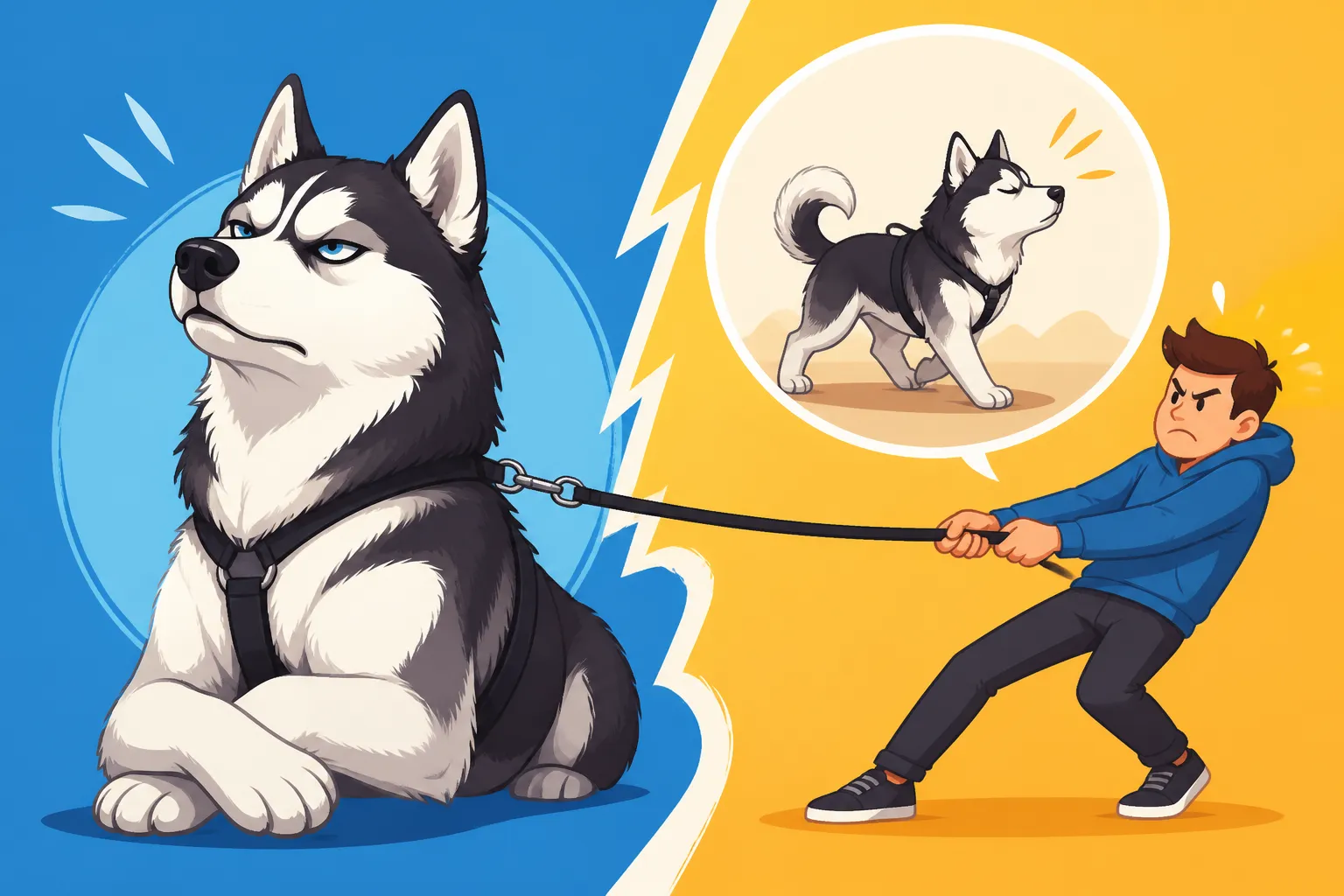
Why Siberian Huskies Are Called Stubborn
It's incredibly frustrating when your Siberian Husky seems to look you dead in the eye and then just… ignores you. Many Husky owners find themselves wondering if their beloved furry friend is just being stubborn, deliberately choosing not to listen, or perhaps simply has selective hearing. This guide will delve into the true nature of Siberian Huskies, unpacking why their unique traits often get misinterpreted as stubbornness and offering insights into working with their incredible minds.
Understanding the Husky's Independent Nature
The word "stubborn" often gets thrown around when describing Siberian Huskies, but it's more accurate to think of them as highly independent and self-sufficient thinkers. This isn't a flaw in their character; it's a direct inheritance from their ancestors and the environment they were bred to thrive in. These dogs weren't bred to be eager-to-please, always-at-your-side companions in the traditional sense. They were bred for a job that required quick thinking, problem-solving, and making decisions often far from their human handler.
Bred for Autonomy in Harsh Environments
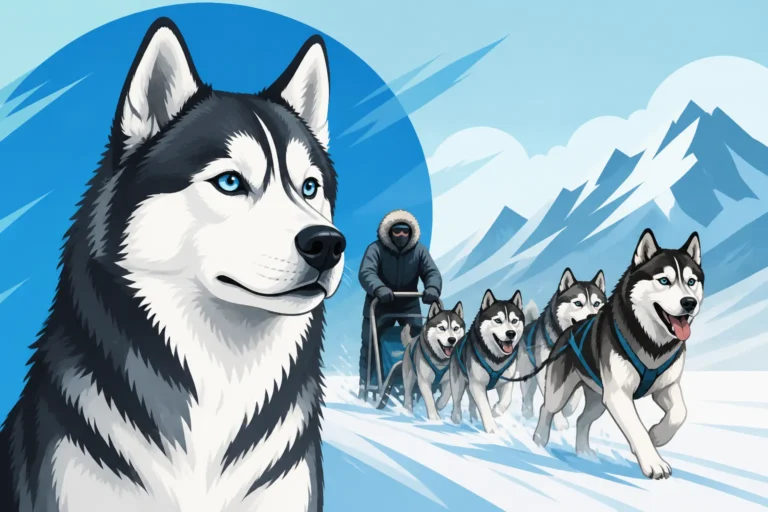
Imagine a team of Huskies pulling a sled across vast, frozen expanses in Siberia. The mushers, the people driving the sled, couldn't always see or react to every slight change in the terrain, every patch of thin ice, or every hidden crevice. Their lives, and the success of their journey, often depended on the lead dogs using their own judgment to navigate hazards, conserve energy, and find the safest path forward. This meant making decisions independently, sometimes even overriding the musher's commands if the dog perceived a better, safer route. This deep-seated instinct for self-preservation and problem-solving is hardwired into their DNA. It means they often process a command through their own filter: "Does this make sense? Is there a better way? What's in it for me?" before deciding to comply.
When your Husky pauses, looks at you, then takes a slightly different route on a walk, or hesitates on a command, they aren't necessarily being defiant. They might genuinely be assessing the situation, perhaps seeing something you've missed, or simply deciding their priority (like sniffing that interesting bush) outweighs yours at that moment. This independence is a double-edged sword: it makes them resilient and intelligent, but also challenges our modern expectations of dog obedience. It's why phrases like Why a Siberian Husky Cannot Be Trusted Off Leash ring so true for so many.
The Pack Mentality and Its Influence
While independent, Huskies are also inherently pack animals. They understand social hierarchies, but they often see themselves as equals or partners, rather than subordinates always awaiting instruction. In a natural pack setting, individual dogs contribute to the hunt or the journey in their own ways, with a level of autonomy. They might respect a leader, but they don't blindly follow every whim if it doesn't serve the pack's overall goal (or their own).
This translates to their behavior at home. If your Husky doesn't see the immediate benefit or logic in a command, they may simply choose not to engage. They're not trying to be rude; they're just operating from a different worldview. Establishing yourself as a consistent, fair, and rewarding leader can help, but it won't erase their fundamental drive to think for themselves. You'll often find that positive reinforcement, making the "right" choice the most appealing one, works far better than trying to force their hand. This intelligent problem-solving often makes owners mistakenly think that Siberian Huskies With Strangers and Children will automatically be protective, but their nature is quite different.
The Difference Between Stubbornness and Intelligence
It's easy to label a Husky as "stubborn" when they aren't performing as expected, but often, what we're seeing isn't a lack of willingness but a high degree of intelligence combined with a unique motivation system. Huskies are smart, sometimes too smart for their own good, and they learn quickly – both what you want and how to get what they want.
Learning Through Association and Benefit
Huskies are phenomenal at learning through association. They quickly figure out patterns and consequences. If a command consistently leads to something they value (a tasty treat, a favorite toy, a run in the park), they'll be more inclined to perform it. The challenge arises when the "benefit" isn't clear to them, or when something else is more enticing. For instance, if you call your Husky in the backyard, but there's a squirrel scampering up a tree, the squirrel is often a far more compelling reward in their minds than the treat you might offer. This is where their prey drive comes into play, making them appear "stubborn" when they're simply following a more powerful instinct.
This is also why they can be masters of selective hearing. They'll "hear" the crinkle of a treat bag from three rooms away, but suddenly go deaf to "come" if they're deeply engaged in exploring a scent. It's not that they can't hear; it's that they've weighed the options and made a different choice. Finding high-value treats and toys (and having plenty of them on hand, easily purchased from places like Chewy) is crucial for keeping their attention during training. This often leads to their infamous trait of A Siberian Husky That Comes Only When It Suits.
Short Attention Spans and Repetitive Tasks
Unlike some breeds that thrive on endless repetition, Huskies can get bored very quickly with redundant tasks. Their intelligence means they often grasp concepts swiftly, and once they understand what you want, practicing it twenty more times can feel pointless to them. They'll check out, start looking for other things to do, or simply refuse to continue, leading to that "stubborn" label.
To combat this, keep training sessions short, fun, and varied. Break down complex tasks into smaller, more manageable steps. End on a high note, even if it's just a simple command they execute perfectly, so they associate training with positive experiences. Incorporate games and mental stimulation that challenge their minds without feeling like a drill. Puzzle feeders, for example, can be an excellent way to engage their problem-solving skills and prevent boredom, and you can find a wide variety of these on Chewy. Remember, Keeping a Siberian Husky Interested in Training is a skill in itself.
High Drive, Low Motivation: Why They Seem to Ignore You
The Siberian Husky is a breed built for endurance and speed, with an insatiable drive to run and explore. When these fundamental needs aren't met, or when their natural drives conflict with human expectations, they can appear unmotivated or outright defiant. It's not a personal affront; it's simply their instinct taking over.
The Allure of the Chase: Prey Drive
Perhaps the biggest culprit behind the "stubborn Husky" myth is their incredibly strong prey drive. These dogs were bred to hunt and survive, and small, fast-moving objects trigger an ancient, irresistible urge to chase. A squirrel, a rabbit, a blowing leaf, or even a distant jogger can instantly become the most fascinating thing in their world, overriding any training or command you've ever given. This is why Why a Siberian Husky Cannot Be Trusted Off Leash is not just a suggestion, but a fundamental safety rule.
When your Husky spots something and bolts, they're not being stubborn; they're fulfilling a primal need. Expecting them to ignore a strong prey stimulus is like asking a human not to blink. While you can train a strong recall and emergency stops, you can never truly eradicate this instinct. Management is key: secure fencing, leashes, and careful supervision are your best friends. Understanding Siberian Husky Prey Drive Around Small Animals is crucial for living harmoniously with your dog and other creatures.
The Need for Movement and Mental Stimulation
A bored Husky is a destructive Husky, and a bored Husky is often a "stubborn" Husky. These dogs need a significant amount of physical exercise to be happy and well-adjusted. If they don't get enough outlets for their energy, they'll invent their own, and those "jobs" often involve things we deem undesirable: digging craters in the yard, destroying furniture, or indeed, ignoring commands in favor of self-amusement.
Beyond physical exercise, their intelligent minds need stimulation. Without puzzles, training, or engaging activities, they can become restless and prone to tuning out. A Husky that is getting two good runs a day (or equivalent vigorous exercise) and regular training sessions is far more likely to be attentive and "listen" than one cooped up all day with nothing to do. Remember that How Much Exercise a Siberian Husky Really Needs is probably more than you think. You can find robust enrichment toys and durable chew items on Chewy to keep their minds busy even when you can't be actively engaging them.
Here's a quick look at how common "stubborn" behaviors often stem from core Husky traits:
| Perceived "Stubborn" Behavior | Underlying Husky Trait/Instinct | Why it Happens |
|---|---|---|
| Ignores Recall Off-Leash | Strong prey drive, independent thinking, desire to run | Chase instinct overrides learned command; self-preservation to flee. |
| Doesn't Want to Learn New Tricks | Gets bored with repetition, quickly assesses benefit | Sees no immediate value; has already understood the task. |
| Pulls on Leash Constantly | Bred to pull, powerful working drive | Pulling is natural and rewarding; walking beside you is unnatural. |
| Destroys Items When Left Alone | High energy, need for mental stimulation, separation anxiety | Boredom leads to self-invented "jobs"; anxiety can cause destructive coping. |
| Doesn't Come When Called in the Yard | Roaming instinct, high curiosity, selective hearing | More interesting things to explore; assessing if coming is worth it. |
| "Talks Back" or Howls Excessively | Vocal breed, strong communication with the pack | Expressing displeasure, boredom, or trying to communicate needs. |
Communication Challenges and Building Trust
Sometimes, what we perceive as stubbornness in our Huskies is actually a breakdown in communication or a lack of strong trust and bond. These dogs respond best to leadership that is consistent, fair, and based on mutual respect, rather than force or intimidation.
The Language Barrier: Human vs. Husky
We often project human emotions and motivations onto our dogs. When a Husky doesn't comply, we might think they're being spiteful or trying to assert dominance. In reality, they are usually just being a dog. They communicate differently, relying on body language, scent, and vocalizations that we might miss or misunderstand. Learning to "speak Husky" – understanding their cues, their thresholds, and what truly motivates them – is essential.
For example, a direct, prolonged stare from a human can be perceived as a challenge by a Husky, rather than an attempt to gain attention. Loud, angry shouting can cause them to shut down or disengage, rather than comply. Instead, clear, calm commands, coupled with consistent positive reinforcement, build a stronger communication channel. Tools like long lines, easily sourced from Chewy, can help bridge the gap in training Teaching a Siberian Husky to Come Back from a distance, without putting them fully off-leash.
Consistency, Patience, and Rewards
The biggest "secret" to working with a Siberian Husky isn't finding a magic trick to stop their "stubbornness," but rather committing to unwavering consistency and immense patience. These dogs test boundaries, and if they find an inch, they'll take a mile. If a command is sometimes enforced and sometimes ignored, they quickly learn that it's optional. Every family member needs to be on the same page with commands, rules, and expectations.
Positive reinforcement is paramount. Huskies don't respond well to harsh corrections or force. It often makes them more resistant, or causes them to simply shut down. Instead, focus on rewarding the behaviors you do want. Make coming when called a party! Make walking nicely on a leash the most rewarding thing they can do. Find out what truly motivates your individual Husky – is it a squeaky toy, a game of chase, or a particularly delicious treat? Then use that to your advantage. It’s a journey of understanding and adaptation, not just training. You'll find that Training an Independent Siberian Husky is more about cooperation than control.
Disclaimer
This article is for general informational purposes only and does not constitute professional advice. Laws, prices and regulations vary by location and change over time. Consult a qualified professional for guidance on your specific situation.