Crusting Pustules on a Siberian Husky’s Ears
Discovering crusting pustules, especially around your beloved Siberian Husky's ears, can be incredibly alarming. One day their beautiful, thick coat is perfect, and the next you notice these angry-looking lesions, perhaps even with some fur loss or a reddish irritation. It’s a frustrating and worrying sight that immediately sends most owners down a rabbit hole of "what-ifs." This guide will help you understand what might be causing these troublesome skin issues, particularly focusing on a serious autoimmune condition known as Pemphigus Foliaceus, and what steps you need to take to get your husky back to comfortable, healthy skin.
Understanding Crusting Pustules on Siberian Husky Ears
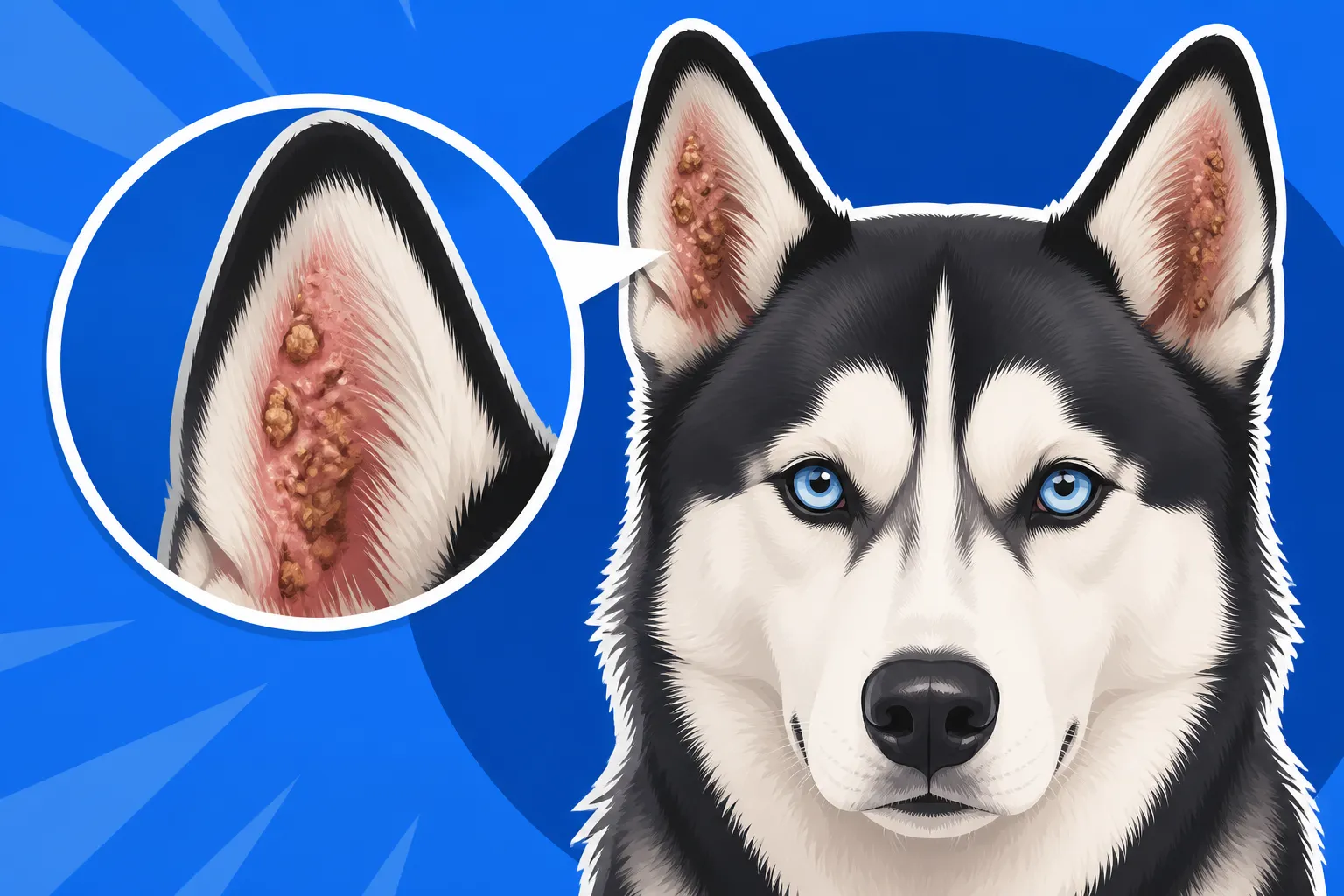
When you first spot those crusty, scabby lesions around your husky's ears, it’s natural to feel a pang of worry. They might start small, just a few tiny bumps that look like insect bites, but then they spread, forming larger, sometimes weeping or crusting patches. Often, owners might initially think it's just an allergy, a run-in with some irritating plant, or perhaps even a common bacterial skin infection. However, for a breed like the Siberian Husky, certain conditions are more prevalent, and what looks like a simple rash could be something far more complex, requiring specific veterinary attention.
The ears are a common spot for these kinds of lesions in Huskies, but you might also notice them on the bridge of the nose, around the eyes, or even on their paw pads. These areas are particularly vulnerable because they are thinner-skinned and often exposed. The pustules themselves are essentially small, pus-filled blisters. When they rupture, they form those characteristic crusts, leaving the skin beneath red, raw, and sometimes painful. It's not just a cosmetic issue; these can be quite uncomfortable for your husky, leading to itching, scratching, and potential secondary infections if not addressed promptly.
Distinguishing Pemphigus Foliaceus from Other Skin Issues
Pemphigus Foliaceus (PF) is an autoimmune skin disease that, while rare in the general dog population, unfortunately shows a higher incidence in certain breeds, and yes, our wonderful Siberian Huskies are on that list. It's a condition where the body's immune system mistakenly attacks the connections between its own skin cells, leading to the formation of pustules and crusts. Unlike a bacterial infection where the pustules contain bacteria, PF pustules are "sterile" in origin, filled with immune cells.
When PF manifests, it often starts subtly, making it easy to mistake for something less serious. The earliest signs might be just a few small pustules on the ears, particularly at the ear tips or along the edges. These can quickly rupture, leaving behind yellowish or brownish crusts. As the condition progresses, it can spread to the bridge of the nose, around the eyes, on the paw pads (where it can cause painful cracking and lameness), and even to the groin or generalized body areas. The hair in affected areas often falls out, leaving bald, scaly, and crusted patches.
It's crucial to differentiate PF from other common husky skin problems, as the treatment approaches are vastly different. For instance, you might be familiar with Zinc-Responsive Dermatosis in the Siberian Husky, which also causes crusting and hair loss, often around the face, muzzle, and pressure points. However, zinc dermatosis typically presents as thick, dry, adherent scales and crusts, often without the primary pustules seen in PF. Another common misdiagnosis is a simple bacterial skin infection (pyoderma) or a fungal infection (ringworm). Allergies, too, can cause itchy, red skin, but usually without the distinct pustules and extensive crusting seen in PF. This is why self-diagnosis is a trap – what looks similar on the surface can be fundamentally different at a cellular level.
Here’s a quick overview to help highlight the differences you might observe, though remember, a vet's diagnosis is always essential:
| Feature | Pemphigus Foliaceus (PF) | Zinc-Responsive Dermatosis | Bacterial Pyoderma | Environmental Allergies |
|---|---|---|---|---|
| Primary Lesion | Pustules that rupture into crusts | Thick, dry, adherent scales and crusts | Pustules, papules, epidermal collarettes | Redness, itching, hair loss (from scratching) |
| Common Locations | Ear tips, bridge of nose, eyes, paw pads, groin, generalized | Muzzle, eyes, pressure points (elbows, hocks), groin | Anywhere, often in skin folds, groin, armpits | Paws, ears, belly, armpits, face |
| Itchiness | Variable, can be intensely itchy or mildly uncomfortable | Variable, often mildly itchy | Moderate to intense | Intense |
| Pain | Can be painful, especially on paw pads or raw areas | Can be uncomfortable, especially with cracking | Can be painful, especially with deep infections | Generally not painful unless secondary infection occurs |
| Characteristic Feature | Autoimmune reaction against desmosomes | Impaired zinc absorption | Bacterial overgrowth | Hypersensitivity reaction |
| Diagnosis | Skin biopsy (definitive) | Skin biopsy, zinc levels, response to supplementation | Cytology, culture, response to antibiotics | Intradermal testing, diet trials, ruling out other causes |
The Autoimmune Nature of Pemphigus Foliaceus
To truly understand Pemphigus Foliaceus, we need to talk about its autoimmune nature. Imagine your husky's immune system as its personal bodyguard. Its job is to protect against invaders like bacteria, viruses, and parasites. In an autoimmune disease, this bodyguard gets confused and starts attacking healthy cells and tissues within its own body, mistaking them for threats. With PF, the immune system specifically targets certain proteins (desmoglein 1, a component of desmosomes) that act as the "glue" holding skin cells together in the superficial layers of the epidermis.
When these desmosomes are attacked, the skin cells (keratinocytes) detach from each other, creating fluid-filled spaces under the outermost layer of skin. These spaces rapidly fill with inflammatory cells, forming those characteristic pustules. When the pustules break, the top layer of skin sloughs off, leaving behind raw areas that quickly dry and form the crusts you see. It's a frustrating cycle for your dog, and for you as an owner, because it means the body is actively working against itself.
While the exact trigger for PF isn't always clear, genetics are thought to play a significant role in breeds like the Siberian Husky, Akita, and Chow Chow. There might also be environmental factors, sun exposure, or even certain medications that can sometimes trigger an autoimmune response in a predisposed individual. However, once it starts, it's a chronic condition that requires ongoing management. This isn't just a rash; it's a systemic immune system malfunction showing up on the skin. You might also want to learn about Siberian Husky Thyroid and Autoimmune Disease for a broader understanding of how these conditions can impact our beloved breed.
Diagnosing Crusting Pustules in Your Siberian Husky
Seeing these persistent, crusting pustules around your husky's ears or elsewhere is a clear sign that a trip to the veterinarian, and possibly a veterinary dermatologist, is absolutely non-negotiable. Trying to treat this at home with over-the-counter creams or general antibiotics without a proper diagnosis is likely to be ineffective and could even worsen the condition or mask crucial diagnostic clues. Your vet needs to understand exactly what they're dealing with to prescribe the correct treatment.
The diagnostic process usually begins with a thorough physical examination, where your vet will assess the extent of the lesions, their location, and how they appear. They'll ask you about your husky's history – when the lesions started, if they've spread, whether your husky is itchy or painful, and any other symptoms you've noticed. This initial conversation is vital for narrowing down the possibilities.
Following the physical exam, your vet will likely perform some initial tests. This often includes skin scrapings, where a small sample of skin is gently scraped to look for mites (like Demodex), and cytology, where a swab or impression of the pustules or crusts is examined under a microscope. Cytology can help identify bacterial or yeast infections, and critically, it can show if the pustules are filled with neutrophils and acantholytic cells (skin cells that have lost their connections), which are strong indicators of Pemphigus Foliaceus. However, while these initial tests can point towards PF, they usually aren't enough for a definitive diagnosis.
The Importance of a Skin Biopsy for Pemphigus Foliaceus
When Pemphigus Foliaceus is suspected, a skin biopsy becomes the gold standard for diagnosis. This isn't just a fancy way of saying "more tests"; it's a crucial step that allows a veterinary pathologist to examine tissue samples under a microscope to confirm the specific cellular changes characteristic of PF. Without this, you could be treating the wrong condition, potentially with medications that have significant side effects, all while your husky continues to suffer.
The biopsy procedure typically involves taking a few small pieces of skin from affected areas, ideally from intact pustules or the edges of lesions, rather than just old crusts. This usually requires sedation or a local anesthetic, as your vet wants to ensure your husky is comfortable and still during the collection. The samples are then sent to a specialized veterinary pathology lab. What the pathologist looks for is very specific: those "acantholytic" cells (skin cells that have separated from each other) and neutrophilic pustules located within the epidermis. This unique pattern is the hallmark of Pemphigus Foliaceus and differentiates it from other skin conditions, including various forms of dermatitis or even other autoimmune diseases like Uveodermatologic Syndrome and the Siberian Husky, which primarily affects the eyes and pigment.
Understanding the biopsy results gives your vet the confidence to initiate the appropriate, and often aggressive, treatment plan. It ensures that the powerful medications used for autoimmune diseases are indeed necessary and will target the correct underlying problem.
Ruling Out Other Conditions
Before confirming a diagnosis of Pemphigus Foliaceus, a good veterinary dermatologist will want to rule out other conditions that might mimic its symptoms. This is a critical part of the diagnostic journey because, as mentioned earlier, many skin issues can look similar on the surface.
Beyond the initial skin scrapings and cytology, your vet might recommend:
- Fungal Cultures: To check for dermatophytosis (ringworm), which can cause circular lesions, crusting, and hair loss. This is especially important as ringworm is contagious to other pets and humans.
- Bacterial Cultures and Sensitivity Testing: If a secondary bacterial infection is present, culturing the bacteria helps identify the specific type and which antibiotics will be most effective, guiding treatment for any co-existing issues.
- Allergy Testing: While PF is not an allergy, chronic allergic reactions can sometimes lead to secondary infections and skin changes. If allergies are suspected, your vet might discuss diet trials or intradermal skin testing. You can read more about distinguishing conditions like Telling Husky Zinc Dermatosis From an Allergy.
- Endocrine Panels: In some cases, hormonal imbalances, such as hypothyroidism (Siberian Husky Thyroid and Autoimmune Disease), can affect skin health, leading to hair loss and poor coat quality, although typically not pustules.
- Blood Tests: A full blood panel can give your vet an overall picture of your husky's health, checking for any systemic inflammation or organ involvement that might indicate other underlying issues.
This comprehensive approach ensures that the diagnosis of Pemphigus Foliaceus is accurate, preventing unnecessary or ineffective treatments for your Siberian Husky. It's about systematically eliminating possibilities to get to the true root of the problem.
Managing and Treating Pemphigus Foliaceus in Siberian Huskies
Once Pemphigus Foliaceus is definitively diagnosed, the focus shifts to management and treatment. The goal isn't to "cure" PF, as it's a chronic autoimmune disease, but rather to induce remission, reduce inflammation, alleviate discomfort, and control the misguided immune response. This often involves an initial aggressive treatment phase to get the disease under control, followed by a long-term maintenance phase with lower doses of medication.
It's a journey that requires patience, commitment, and close collaboration with your veterinarian. You'll likely become very adept at monitoring your husky's skin for any new lesions or changes.
Steroid Treatment for Husky Pemphigus Foliaceus
The cornerstone of Pemphigus Foliaceus treatment in Siberian Huskies, and most dogs, is immunosuppressive therapy, with corticosteroids being the primary choice. Medications like Prednisone or Prednisolone are powerful anti-inflammatory drugs that work by suppressing the overactive immune system, thereby stopping it from attacking the skin cells.
Initially, your husky will likely be prescribed a high, immunosuppressive dose of corticosteroids. This high dose is crucial for "knocking back" the disease and inducing remission. You might start to see improvements in the skin lesions within a week or two, which can be a huge relief after all the worry. However, steroids come with a range of potential side effects, especially at higher doses. These can include increased thirst and urination, increased appetite leading to weight gain, panting, muscle weakness, and behavioral changes like restlessness.
Once the skin lesions are under control and your husky is in remission, your vet will carefully and gradually taper down the steroid dose. This tapering process is critical – it needs to be slow and supervised to prevent a flare-up of the disease. The aim is to find the lowest effective dose that keeps your husky comfortable and symptom-free, minimizing side effects. Many dogs with PF will require some level of steroid medication for the rest of their lives. It's a balance, and your vet will guide you through it. If you're interested in how steroids are used for other autoimmune conditions, you can also look into Steroid Treatment for Husky Uveodermatologic Syndrome.
Other Immunosuppressants and Supportive Care
While corticosteroids are often the first line of defense, they aren't always used alone, especially if a husky doesn't respond well or if the side effects are too severe at the necessary steroid dose. In such cases, your vet might introduce other immunosuppressant medications, often in combination with steroids to allow for a lower steroid dose. These can include drugs like:
- Azathioprine: Another immunosuppressant that works differently from steroids, often used to help reduce the steroid dose needed.
- Cyclosporine: A potent immunosuppressant that has become more common for various autoimmune conditions. Brands like Atopica are often prescribed.
- Mycophenolate: Sometimes used in severe or refractory cases.
These medications also have their own potential side effects and require careful monitoring with regular blood tests to ensure your husky's internal organs are functioning properly.
Beyond systemic medications, supportive care plays a vital role:
- Topical Treatments: Medicated shampoos (like chlorhexidine-based washes) can help manage secondary bacterial infections and keep the skin clean. Topical steroid creams or ointments might be used for localized lesions to reduce inflammation directly on the skin.
- Antibiotics/Antifungals: If secondary bacterial or fungal infections develop due to the compromised skin barrier, appropriate antibiotics or antifungals will be prescribed.
- Pain Management: If the lesions are particularly painful, especially on paw pads, pain relief might be necessary to ensure your husky's comfort.
- Omega-3 Fatty Acids: While not a cure, these supplements can help support skin health and reduce inflammation.
Managing a chronic condition like Pemphigus Foliaceus can involve significant ongoing costs for medication and vet visits. This is where investing in pet insurance, especially from providers like Healthy Paws, can make a huge difference, provided your policy was in place before the condition manifested and covers autoimmune diseases. Understanding What a Siberian Husky Insurance Policy Excludes and carefully reviewing your policy is always wise.
Living with a Siberian Husky with Pemphigus Foliaceus
Living with a Siberian Husky diagnosed with Pemphigus Foliaceus is certainly a journey, but it’s one you can navigate successfully with the right approach and veterinary support. While PF is a chronic condition, many Huskies can achieve a good quality of life with consistent treatment and vigilant monitoring. The prognosis is generally good for managing the disease and keeping symptoms in remission, though it does mean a commitment to lifelong care.
One of the biggest aspects of living with PF is learning to recognize the subtle signs of a relapse. This could be the reappearance of a small pustule, a new crust, or even just increased itchiness in a previously affected area. Catching these signs early allows your vet to adjust medication before a full-blown flare-up occurs, preventing more severe discomfort for your husky. It's about being proactive rather than reactive.
Daily Care and Environmental Considerations
Daily care for a husky with Pemphigus Foliaceus goes beyond just administering medication. It involves creating an environment that supports their skin health:
- Gentle Skin Care: Keep your husky's skin clean, but avoid harsh scrubbing. Medicated baths, as recommended by your vet, can be very beneficial. After baths, ensure their thick double coat is thoroughly dried to prevent moisture-related skin issues.
- Sun Protection: Huskies with PF can be particularly sensitive to UV light, which can trigger or worsen flare-ups. Limit direct sun exposure, especially during peak hours. If your husky has hair loss on the bridge of their nose or ear tips, consider a pet-safe sunscreen or protective clothing when they're outdoors for extended periods.
- Paw Pad Protection: If paw pads are affected, booties can protect them during walks, especially on rough terrain or hot pavement, and help prevent further cracking or secondary infections.
- Nutrition and Supplements: While diet doesn't cure PF, a high-quality, balanced diet is always important for overall health. Discuss with your vet if any specific supplements, like omega fatty acids, might offer additional skin support. However, remember these are supportive, not curative, for an autoimmune disease.
- Regular Vet Check-ups: Even when your husky is in remission, regular veterinary check-ups and blood work are essential to monitor for side effects of long-term medication and to catch any signs of relapse early. You might find yourself at the vet more often than your friends with healthy pups, but it's all part of keeping your husky feeling their best. These check-ups are also important as your husky enters their senior years, as discussed in Caring for a Siberian Husky Past Ten.
Financial and Emotional Support
Managing a chronic illness like Pemphigus Foliaceus can take a significant financial and emotional toll on owners. The cost of diagnostic tests, ongoing medications, specialty vet visits, and regular monitoring blood work can quickly add up. For some, the financial strain is a major concern, and it's completely valid to feel that way. This is where pet insurance can be a lifesaver, assuming your policy was in place before the diagnosis and covers chronic conditions. Companies like Healthy Paws can help offset a substantial portion of these veterinary bills, making lifelong care more manageable. It’s a good idea to research pet insurance early in your husky's life, as pre-existing conditions are typically excluded. For a deeper dive into financial considerations, you might want to read What a Siberian Husky's Vet Money Actually Goes.
Beyond the financial aspect, the emotional burden can be heavy. Watching your beloved husky suffer, constantly worrying about flare-ups, and the daily commitment to medication can be exhausting. It's okay to feel overwhelmed. Seeking support from online communities or local groups for owners of dogs with autoimmune diseases can provide valuable emotional support and practical tips from others who truly understand your experience. Remember, you're not alone in this. Your dedication and love are what give your Siberian Husky the best chance at a happy, comfortable life despite this challenging condition.
Disclaimer
This article is intended for informational purposes only and does not constitute veterinary advice. The information provided should not be used for diagnosing or treating a health problem or disease in pets. Always consult with a qualified veterinarian for any medical concerns or before making any decisions about your pet's health or treatment.