A High-Velocity Dryer for a Siberian Husky Coat
If you're a Siberian Husky owner, you know the struggle: that fluffy, cloud-like undercoat seems to be everywhere, especially during those epic "coat blow" seasons. Trying to dry your Husky with a regular human hairdryer after a bath feels like an impossible mission, leaving them damp for hours and your house covered in even more loose hair. This guide is dedicated to helping you conquer the relentless shedding and drying challenges of the Siberian Husky coat by diving deep into the magic of a high-velocity dryer.
Why Traditional Drying Fails and Why You Need a Pro Tool
Let's be honest, trying to get a Siberian Husky fully dry with a towel and a standard household hairdryer is like bringing a squirt gun to a wildfire. It's just not going to cut it, and it often leads to more frustration than results. Husky owners deal with a unique set of challenges that demand a more specialized approach.
The Siberian Husky's Unique Double Coat
The very thing that makes our Huskies so stunning and perfectly adapted to cold climates is also what makes them a grooming marvel: their incredible double coat. This isn't just one layer of hair; it's two distinct layers designed for maximum insulation. First, you have the coarse, straight guard hairs on top. These are water-repellent and protect against snow, ice, and environmental debris. Beneath that, packed densely, is the soft, thick undercoat. This undercoat is what provides the incredible warmth, trapping air close to the body.
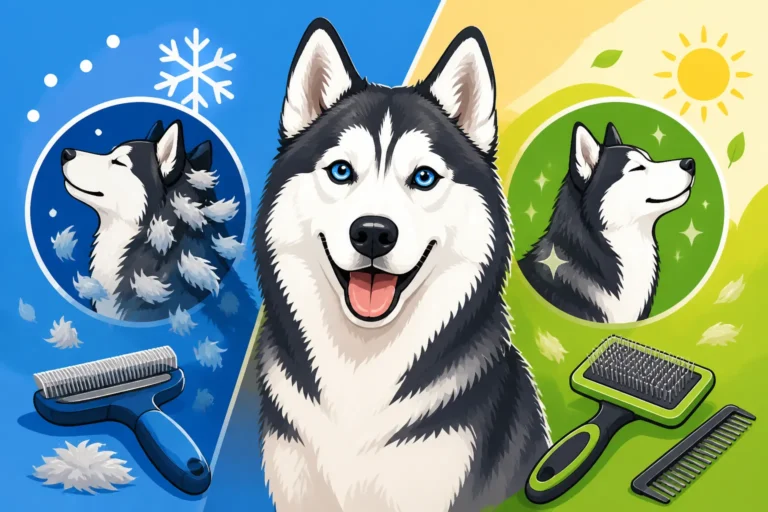
During a normal shed, and especially during their infamous "coat blow" twice a year (often in spring and fall, but sometimes seasonally depending on climate and hormones, such as after Neutering a Siberian Husky and the Coat Question), this undercoat releases in massive quantities. A household hairdryer, with its lower airflow and higher heat, simply pushes the guard hairs around and bakes the top layer, leaving the dense undercoat beneath still damp. It's like trying to dry a shag rug with a fan—you might get the very surface, but the core remains wet, creating a perfect breeding ground for problems.
The Sheer Volume of Undercoat During a Coat Blow
If you've ever witnessed a full Siberian Husky coat blow, you know it's a phenomenon. It feels like your dog is shedding enough fur to knit another small Husky. This isn't just a few stray hairs; it's a massive release of dead undercoat that needs to be removed. If this dead hair isn't thoroughly dislodged, it can compact, mat, and become incredibly difficult to manage.
Regular brushing, even with the best undercoat rakes (which are certainly helpful for Undercoat Rakes and Slickers for a Siberian Husky), can only do so much. When this much hair needs to come out, you need something that can penetrate deep into the coat, separate the hairs, and physically blast the loose fur out. The sheer volume makes manual removal exhausting and often incomplete, leaving your Husky uncomfortable and your home perpetually dusty with canine fluff.
The Risks of Incomplete Drying
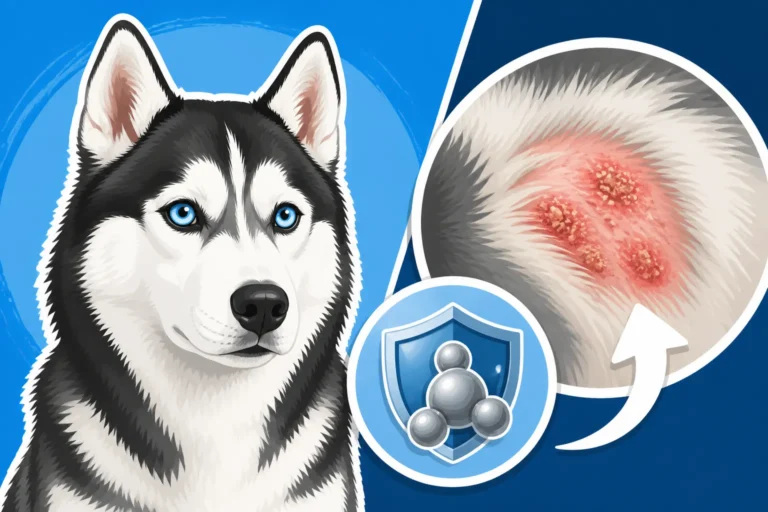
Beyond the annoyance of wet dog smell and never-ending shedding, incomplete drying poses significant health risks for your Siberian Husky. That damp undercoat, especially if it's thick and matted, creates a warm, moist environment that is a perfect incubator for bacteria and fungi. This can lead to hot spots—painful, red, irritated skin lesions that can develop rapidly and require veterinary attention. These are not only uncomfortable for your dog but can quickly become infected and lead to significant vet bills, which is where things like pet insurance from providers like Healthy Paws can come in handy, though prevention is always better.
Additionally, damp, compacted undercoat can easily mat, particularly behind the ears, under the legs, and around the tail. Mats pull on the skin, causing pain and restricting movement. Severe matting can even cut off circulation, leading to skin infections or necrosis. While our Huskies don't get hot spots as often as some other thick-coated breeds, it's still a risk we want to avoid. Proper drying isn't just about convenience; it's a critical part of maintaining your Husky's skin and coat health, helping you avoid issues like Zinc-Responsive Dermatosis in the Siberian Husky that can be exacerbated by poor coat hygiene.
How a High-Velocity Dryer Works Wonders
So, what's the magic bullet that tackles the Siberian Husky's formidable coat? Enter the high-velocity dryer, often simply called a "force dryer." This isn't your average human hair dryer; it's a purpose-built grooming tool designed to handle thick double coats like a Husky's.
Blasting Away Water and Loose Hair
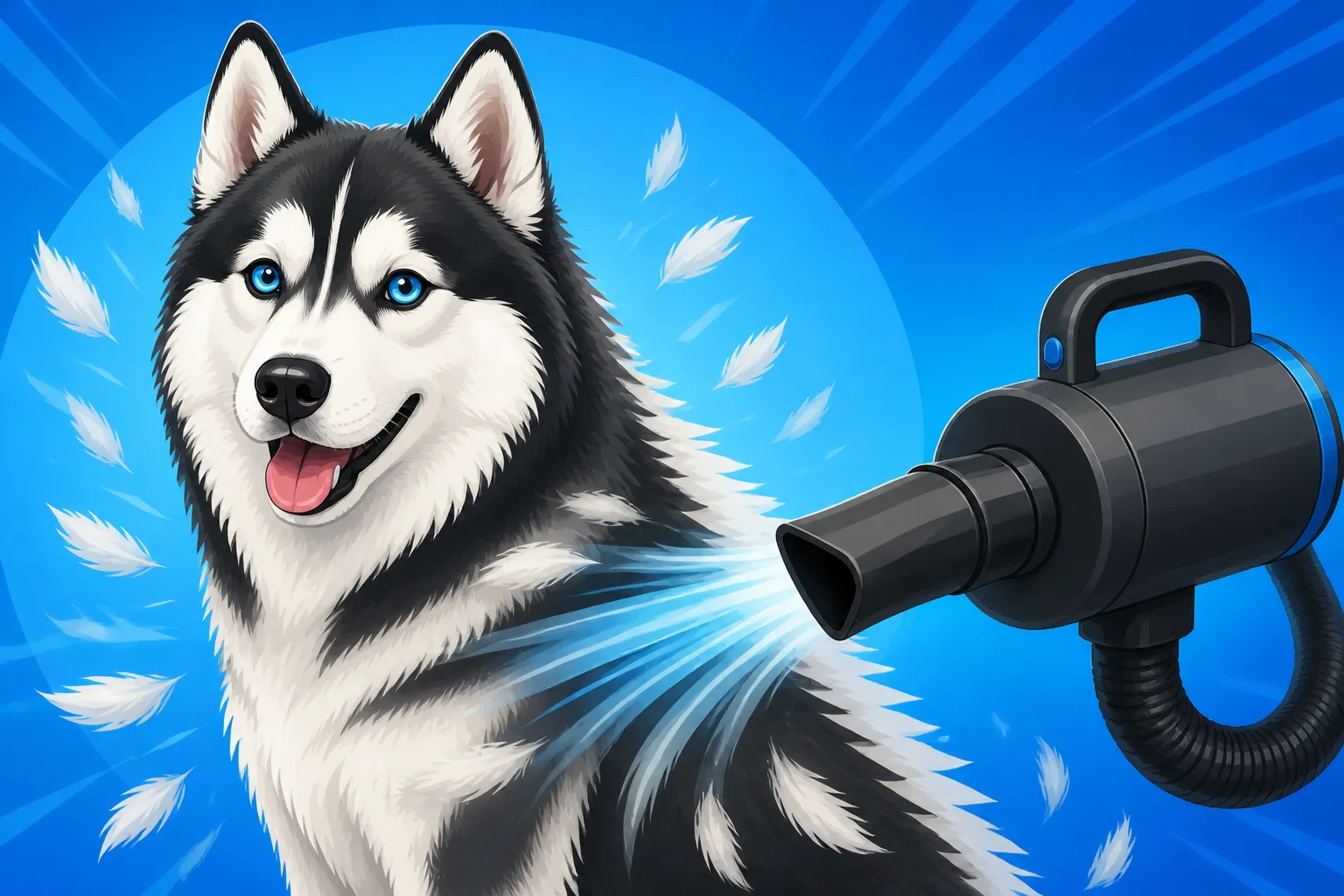
A high-velocity dryer works on a completely different principle than a human hairdryer. Instead of relying on high heat (which can burn your dog's skin), it uses sheer power—a strong, concentrated stream of unheated or minimally heated air. This powerful airflow does several amazing things simultaneously. First, it physically blasts water off the dog's coat, pushing it out rather than evaporating it. Imagine using a leaf blower to clear leaves off a driveway; it's a similar concept, but for water on fur.
This force also helps to separate the individual hairs of the undercoat, allowing air to penetrate deep down to the skin. This ensures thorough drying of both layers of the coat, eliminating dampness that can lead to skin issues. The rapid air movement also helps to lift and exfoliate dead skin cells, promoting a healthier skin barrier.
The De-Shedding Power Beyond the Bath
Here's where the high-velocity dryer truly shines for Siberian Husky owners: its incredible de-shedding capabilities. The force of the air literally blows out loose undercoat that brushing alone simply cannot reach. You'll be amazed at the sheer volume of fur that comes flying out even after what you thought was a thorough brush. This isn't just drying; it's active de-shedding.
Many owners use high-velocity dryers not just after a bath, but as a standalone grooming tool between baths, especially during peak shedding season. A quick session with the dryer can remove a significant amount of dead undercoat, drastically reducing the amount of fur floating around your house and sticking to your clothes. This focused air power is far more effective and less damaging than harsh brushing, which can sometimes break healthy guard hairs. It's a game-changer for managing the constant influx of Siberian Husky Coat Blow and the Six Weeks It Lasts.
Faster Drying, Less Stress for You and Your Husky
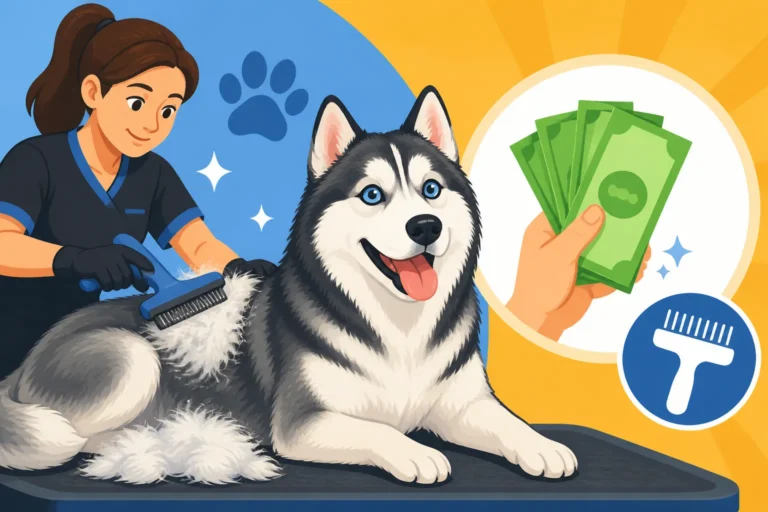
One of the most immediate benefits you'll notice is the dramatic reduction in drying time. What used to take hours of towel-drying and ineffective hairdryer blasting can often be accomplished in a fraction of the time with a high-velocity dryer. This isn't just convenient for you; it's also less stressful for your Husky. Prolonged drying sessions can be tedious and anxiety-inducing for some dogs, especially if they're not keen on being handled for long periods.
By speeding up the process, you minimize the time your dog is wet and cold, and you reduce the overall grooming duration. This makes the entire bath-and-dry routine a more positive experience for everyone involved, reinforcing that grooming doesn't have to be an ordeal. Think of it as investing in your sanity and your dog's comfort.
Choosing the Right High-Velocity Dryer for Your Husky
Now that you're convinced you need one (and you really do!), let's talk about how to choose the right high-velocity dryer. There's a range of options out there, and picking one that suits your needs and your Husky can make a big difference.
Key Features to Look For
When shopping for a high-velocity dryer, several features are important to consider:
- Motor Power (HP/CFM): This is perhaps the most critical factor. Motor power is often measured in horsepower (HP) or Cubic Feet per Minute (CFM) for airflow. For a dense-coated breed like a Siberian Husky, you'll want a dryer with good power—look for something generally in the range of 3.0 to 4.0 HP or higher CFM ratings. More power means faster drying and more effective de-shedding.
- Heat Settings: While the primary function is air force, some dryers offer a low-heat setting. This can be helpful in very cold environments or for adding a touch of warmth on cooler days, but remember the force of the air itself provides drying power, and high heat should never be used on a Husky.
- Noise Level: High-velocity dryers are inherently loud due to their powerful motors. Look for models that emphasize "quiet operation" or "noise reduction." While none will be silent, some are significantly less jarring than others. This is important for your dog's comfort and your ears!
- Hose Quality and Length: A durable, flexible hose is essential. You don't want it kinking or cracking. A longer hose offers more maneuverability, which is great for getting around your Husky comfortably.
- Durability and Build Quality: This is an investment, so you want it to last. Read reviews and look for dryers from reputable brands known for their sturdy construction. Many popular models can be found on pet supply sites like Chewy.
- Variable Speed Control: This is a fantastic feature. Being able to adjust the airflow allows you to start on a lower setting to acclimate a sensitive dog and gradually increase the power as they get comfortable. It also gives you more control over different areas of the coat.
Here's a quick comparison of features to consider:
| Feature | Ideal for Siberian Huskies | Less Ideal |
|---|---|---|
| Motor Power | 3.0+ HP or high CFM | Under 2.0 HP, low CFM (too weak for double coat) |
| Heat Settings | Unheated or low/warm setting only | High heat settings (risk of burns, coat damage) |
| Noise Level | Advertised as "quiet" or "low noise" | Very loud, no noise reduction features |
| Speed Control | Variable speed | Single speed (less control, harder for sensitive dogs) |
| Hose Durability | Flexible, thick, kink-resistant | Thin, stiff, prone to kinking |
| Nozzles | Multiple shapes (e.g., flat, round) for different tasks | Only one generic nozzle |
Safety First: Proper Usage Techniques
Using a high-velocity dryer requires a bit of technique to ensure both effectiveness and safety for your Husky.
- Always use the correct nozzle: A flat, wide nozzle is great for general drying and blasting out undercoat, while a rounder, more concentrated nozzle can be used for smaller areas or to finish drying.
- Keep the nozzle moving: Never hold the nozzle in one spot for too long, as the concentrated air pressure, even without heat, can cause skin irritation or discomfort. Keep it sweeping across the coat.
- Maintain a safe distance: Hold the nozzle several inches away from your dog's skin. The air pressure is strong enough from a distance.
- Protect sensitive areas: Be extremely careful around your Husky's face, ears, and genitals. Use a lower speed setting, and cup your hand around their ears to protect them from the noise and direct air. Some owners put cotton in their dog's ears, but ensure it's removed afterwards. Pay close attention around the eyes, as even debris blown from the coat can cause irritation.
- Start slow: If your Husky is new to the dryer, begin with the lowest speed setting and gradually increase it as they become accustomed to the sensation and noise.
- Avoid high heat: As mentioned, a Husky's double coat is designed to insulate. Adding high heat can quickly lead to overheating and skin burns. Most high-velocity dryers either have no heat or a very low, ambient warm setting. Heat Stroke Risk in a Siberian Husky is always something to be mindful of, especially during grooming.
Accessories That Make Life Easier
While the dryer itself is the star, a few accessories can enhance your grooming experience:
- Grooming Table: A sturdy grooming table with a no-sit haunch holder or arm allows you to comfortably work on your Husky at eye level, saving your back and keeping your dog secure.
- Ear Protection: Some dogs benefit from special ear muffs or cotton balls (carefully inserted and removed) to dampen the sound of the dryer.
- De-shedding Tools: While the dryer does much of the work, a good undercoat rake or slicker brush for Daily Raking Through a Siberian Husky Blow can help loosen initial fur before or during drying.
- Towels: Always start with thorough towel-drying to remove as much surface water as possible before bringing out the force dryer. This reduces drying time.
Integrating Your Dryer into Your Grooming Routine
Having a high-velocity dryer is one thing; effectively incorporating it into your regular Siberian Husky grooming routine is another. It's about establishing a comfortable, consistent process for both you and your furry friend.
Pre-Bath Prep and Post-Bath Perfection
The ideal time to use a high-velocity dryer is right after a bath. But before that, a little prep can go a long way. Start with a thorough pre-bath brush-out to remove as much loose hair as possible. This helps the shampoo penetrate better and reduces the amount of wet, loose fur you'll be dealing with. Use a good quality shampoo designed for dogs, followed by a conditioner to help with detangling and coat health.
After rinsing your Husky thoroughly (and I mean thoroughly—leftover shampoo can irritate their skin!), give them a good towel dry. Blot and squeeze out as much water as you can. Many Huskies will shake vigorously, which is great for expelling water! Once towel-dried, lead them to your designated drying area. Start the high-velocity dryer on a low setting, getting them used to the noise and sensation. Work in sections, blasting the water and loose undercoat out. You'll be amazed at the amount of fur that flies off; doing this outdoors or in an easy-to-clean space is highly recommended. Make sure your Husky is completely dry down to the skin, especially in thicker areas, to prevent any skin issues. This comprehensive approach is part of Siberian Husky Weekly Grooming Between Blows.
Using It for Regular De-Shedding Between Baths
You don't need to bathe your Siberian Husky every time you use the high-velocity dryer. In fact, one of the most beneficial uses is for dry de-shedding sessions between baths, particularly during coat blows. Huskies are naturally very clean dogs, often Why Siberian Huskies Clean Themselves Like Cats, and don't need frequent bathing. Over-bathing can strip natural oils, leading to dry skin.
During those infamous shedding periods, a quick 15-20 minute session with the force dryer can work wonders. Take your Husky outside or into a garage, turn on the dryer, and simply blast through their coat. You'll see clouds of undercoat come flying off, significantly reducing the amount of hair that ends up on your furniture, floors, and clothes. This is far more efficient than endless brushing, and it's less tiring for both of you. Regular de-shedding helps prevent mats from forming and keeps their coat healthier overall. Even if you feed them a diet of high-quality food, perhaps a fresh option like Ollie, which can contribute to a healthy coat, proactive grooming is still essential.
Tips for Training Your Husky to Love the Dryer
The sound and sensation of a high-velocity dryer can be intimidating for some dogs. Positive reinforcement is key to making it a comfortable, even enjoyable, experience.
- Acclimation to Noise: Before you even turn it on near your Husky, let them see and sniff the dryer while it's off. Give treats and praise. Then, turn it on in another room initially, so the sound is distant. Gradually bring it closer over several sessions, always pairing the sound with high-value treats and calm reassurance.
- Introduce the Airflow: Once they are comfortable with the noise, start with the lowest speed setting. Direct the air at their rear first, as this is usually less sensitive than the head or belly. Keep sessions very short at first—just a few seconds—and reward heavily.
- Gradual Increase: Slowly increase the duration and intensity (speed) of the drying sessions over time. Always stop if your Husky shows signs of significant stress or fear. Never force it.
- Make it a Game: Associate the dryer with positive things. Perhaps play a favorite game right after a short drying session. Make it part of a fun routine, not a punishment.
- Professional Help: If your Husky is extremely anxious, consider consulting a professional groomer who has experience with force dryers and can offer advice or even do the initial sessions in a controlled environment. Patience is truly a virtue here; a well-acclimated Husky will make your life (and theirs) much easier in the long run. Building positive associations will ensure grooming is never a battle.
Using a high-velocity dryer for your Siberian Husky isn't just a luxury; it's a practical, health-conscious investment for any owner dealing with this magnificent, yet challenging, double coat. It saves time, reduces shedding, and most importantly, helps maintain your Husky's skin and coat health, preventing uncomfortable and costly issues. Embrace the power, and enjoy a cleaner dog and a cleaner home!
Disclaimer
This article is for general informational purposes only and does not constitute professional advice. Laws, prices and regulations vary by location and change over time. Consult a qualified professional for guidance on your specific situation.