Whether a Siberian Husky Respects a Boundary
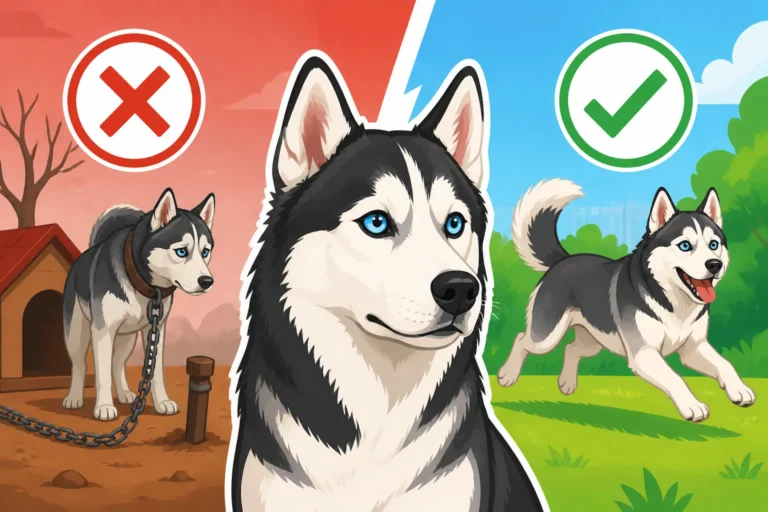
It's a frustrating reality for many Siberian Husky owners: you want to trust your furry companion, to believe they'll respect the invisible line or the open gate. Yet, time and again, Huskies prove they have a rather flexible interpretation of what a "boundary" truly means. This comprehensive guide is here to shed light on why your Husky seems to view fences as suggestions and open doors as invitations to adventure, and, most importantly, how you can realistically manage this deep-seated instinct to keep them safe and sound.
Understanding the Siberian Husky's Instinct for Freedom
To truly grasp why your Siberian Husky seems to ignore boundaries, we first need to look at their history. These dogs weren't bred to be pampered house pets; they were developed by the Chukchi people in Siberia as endurance sled dogs, covering vast distances in harsh conditions. This ancient lineage imbues them with a set of instincts that are incredibly strong and, frankly, often at odds with modern domestic life.
The Roaming Instinct: A Deep-Rooted Trait
The most dominant trait you'll contend with is the Siberian Husky's powerful roaming instinct. Imagine generations of ancestors whose survival depended on being able to travel miles, often with a team, to find food or shelter. They are built for movement, for covering ground, and their mental maps extend far beyond your property line. When a Husky sees an opening, their brain isn't calculating the consequence of leaving; it's recognizing an opportunity to explore, to follow a scent, or to simply run. It's not defiance, it's destiny, in a way. This profound urge means that a simple "stay" command or a casual expectation won't override millennia of selective breeding. It's why we always emphasize The Roaming Instinct Bred Into Every Siberian Husky.
For them, the world is their oyster, and your yard is just a small corner of it. This isn't a personality flaw; it's a hardwired drive. They are perpetually curious and driven by their noses and eyes. A fluttering leaf, a squirrel darting across the street, or the faintest scent of another animal can trigger this instinct instantly. They are not necessarily looking for trouble, but they are absolutely looking for an adventure, and they are incredibly self-sufficient in their pursuit of it.
"Boundary" is a Human Concept, Not a Canine One
Think about it from your Husky's perspective. You might point to a property line, or install an invisible fence, and declare "This is where the yard ends!" But dogs don't understand abstract concepts like property lines, legal ownership, or even the invisible forces that govern an electronic fence. What they understand are consequences and rewards. If the consequence of crossing a line isn't immediate, consistent, and unpleasant enough to outweigh the reward of exploration, then the line simply doesn't exist for them.
This difference in understanding is crucial. We humans tend to project our logic onto our pets, expecting them to reason as we do. But a Husky operates on instinct and direct experience. If they've successfully breached a boundary once and found something interesting (a new smell, a friendly person, another dog), that positive reinforcement strengthens their belief that crossing boundaries is a good thing. They don't reflect on the "rules"; they reflect on the outcome.
Their Drive to Explore and Chase
Siberian Huskies have an extremely high prey drive. They were bred to hunt small game when not pulling sleds, and that instinct is still very much alive. A bird in the yard, a rabbit, or even a leaf blowing by can instantly activate their chase response. Once that switch is flipped, their ears might as well be off, and their focus becomes laser-sharp on the object of their pursuit.
This prey drive makes any boundary incredibly fragile. If there's a tempting target on the other side of a fence, or if they spot something interesting while you're opening the door, that drive will overwhelm any training they've had, any desire to please you, or any perceived barrier. It’s a powerful, almost involuntary, reaction that dictates their actions in that moment. They don't choose to ignore you; they are literally wired to pursue.
Why Traditional Boundaries Often Fail for Huskies
Many well-meaning owners try to apply standard dog containment methods to their Siberian Huskies, only to find them woefully inadequate. It's not a failure on the owner's part as much as it is a misunderstanding of just how uniquely equipped Huskies are to overcome barriers.
The Limitations of Invisible Fences
One of the most common mistakes people make is relying on invisible or electronic fences for their Siberian Huskies. These systems deliver a static correction (a "shock") when a dog crosses a buried wire. For many breeds, this can be an effective deterrent. For a Husky? Not so much. Why Invisible Fencing Does Not Hold a Siberian Husky is a lesson learned by countless frustrated owners.
The problem is two-fold. First, a Husky's drive to run and explore is often stronger than their aversion to a momentary discomfort. They will take the shock if the reward on the other side (a squirrel, a new territory, or just sheer freedom) is appealing enough. They'll yelp, bolt through the correction, and then they're free. Second, once they're out, there's often nothing to deter them from coming back through the boundary. They've learned that escaping means a zap, but coming back might mean another one, or they might just choose to stay out. These fences teach escape, not containment.
Physical Fences: Height, Digging, and Climbing
You might think a tall fence is the answer, but even a robust physical barrier presents a unique challenge when you own a Siberian Husky. Huskies are notorious escape artists, and they will exploit any weakness in your defenses.
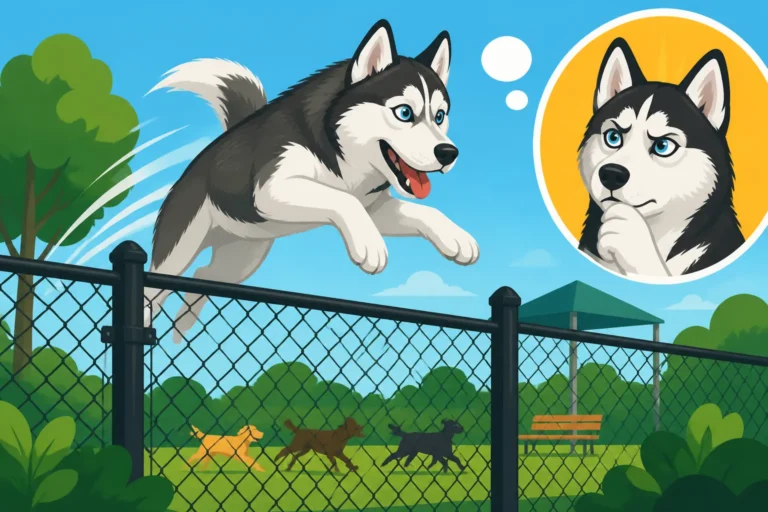
- Height: A standard four-foot fence is often little more than a suggestion to a determined Husky. Many can easily jump or climb over a six-foot fence, especially if there's anything they can use for leverage, like a snowdrift, a woodpile, or even just a particularly appealing branch hanging nearby. I've heard stories of Huskies scaling chain-link fences like furry mountaineers. Six-Foot Fences and the Siberian Husky That Climbs is a stark reminder of their athletic capabilities. They possess incredible agility and spring, making even impressive heights a conquerable feat if their motivation is strong enough.
- Digging: If they can't go over, they'll go under. Huskies are natural diggers, another trait inherited from their ancestors who would dig dens for shelter or to find cooler earth. A fence without an "L-footer" or buried wire is an open invitation for them to excavate their way to freedom. They can tunnel with surprising speed and efficiency, turning your carefully erected barrier into a leaky sieve.
- Climbing/Pushing: Beyond jumping and digging, Huskies are also problem-solvers. They'll test gates, push against loose panels, and even use their impressive strength to force their way through. A gate latch that seems secure to you might be a simple puzzle for a clever Husky, easily nudged open with a nose or paw. They're persistent, and if they find a weak point, they'll exploit it repeatedly.
The Art of the Open Gate or Door
Perhaps the most common, and heartbreaking, way a Siberian Husky escapes is simply through an accidentally open door or gate. You might think, "I'll just be quick," or "they know not to run out." But for a Husky, an open portal is a golden ticket. They live for opportunities like this, and their speed means that by the time you've registered what's happening, they could be halfway down the block.
Even if you've done extensive "door manners" training, the ingrained instinct to bolt for freedom is incredibly powerful. Door Manners That Keep a Siberian Husky Inside are absolutely vital, but they require constant vigilance and reinforcement. It's not about them disrespecting you; it's about them responding to a primal urge that's almost impossible to ignore when the barrier is suddenly removed. This is why multi-level security, like a second gate or a vestibule, is often recommended for Husky households.
Establishing Effective Boundaries Through Training and Management
Given their strong instincts, it's clear that conventional methods often fall short. Successfully managing a Siberian Husky's relationship with boundaries requires a multi-pronged approach that combines robust physical containment with consistent, positive reinforcement training and vigilant management.
The Crucial Role of Supervision and Containment
The harsh truth is that a Siberian Husky should almost never be left unsupervised in an unfenced yard, or even a fenced yard you haven't thoroughly "Husky-proofed." Their intelligence, athleticism, and drive mean that if there's a way out, they'll find it. This isn't about distrusting your dog; it's about respecting their breed characteristics and ensuring their safety. Every time they escape, it reinforces the behavior.
This means being hands-on whenever they are outside. If your yard isn't escape-proof, then all outdoor time needs to be on a leash, or within a kennel run specifically designed for Huskies. Even then, you need to be present and attentive. Remember, a bored Husky is an escape-prone Husky. Engage them, play with them, train them, and make their supervised outdoor time enriching. This isn't just about preventing escapes; it's about building a stronger bond and providing them with the mental and physical stimulation they crave. Supervising a Siberian Husky in an Unfenced Yard is a full-time job, truly.
Training for Impulse Control and "Place"
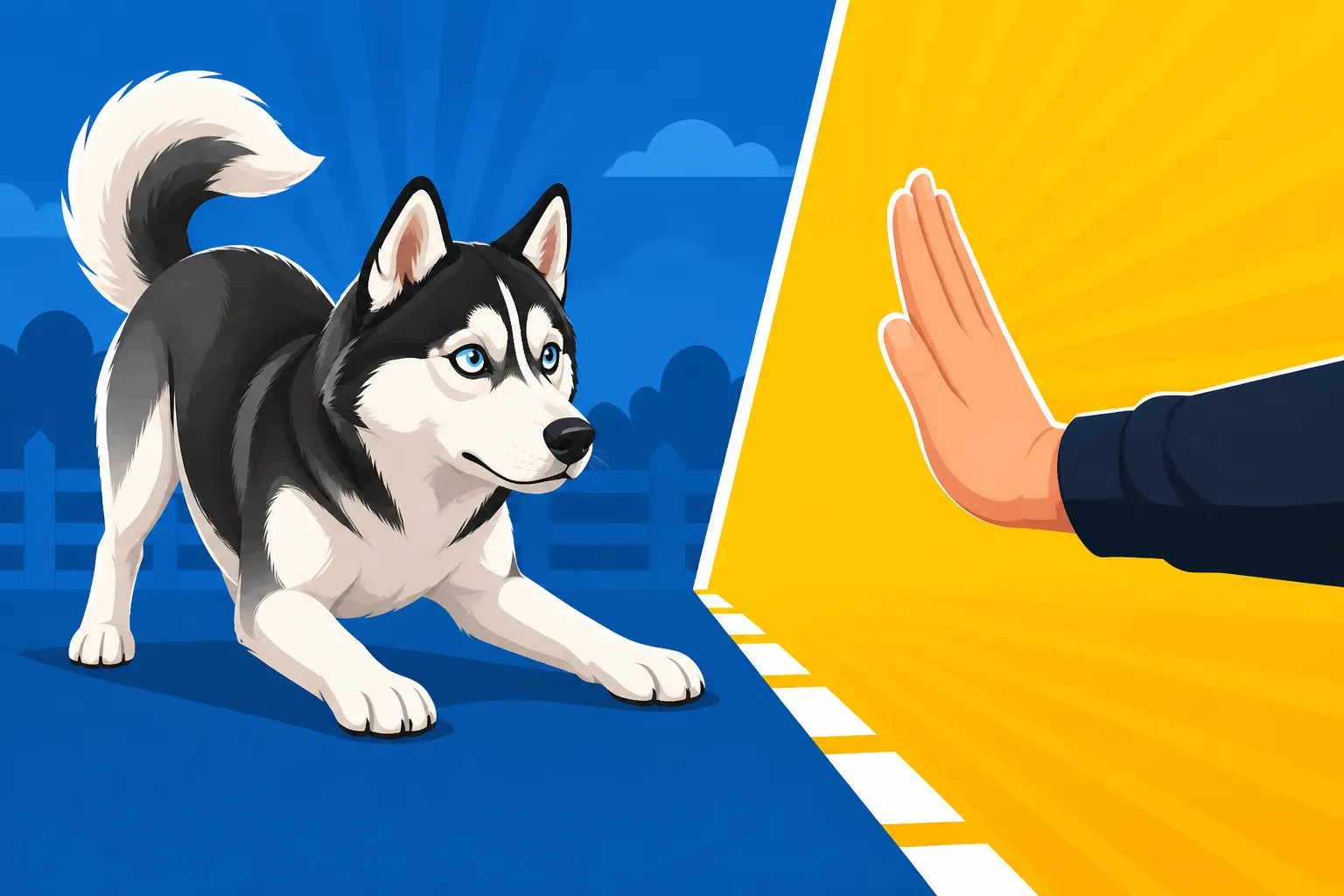
While you can't erase their roaming instinct, you can train for impulse control. This means teaching them to pause, to look to you for direction, and to resist the urge to bolt. Commands like "wait," "stay," and "leave it" are critical around open doors, gates, and enticing distractions. Practice these commands relentlessly, starting in low-distraction environments and gradually increasing the challenge.
A "place" command is also incredibly useful. This teaches your Husky to go to a designated spot (a mat, a bed, a crate) and remain there until released. This is invaluable when you have visitors, when the front door opens, or when you simply need them to settle. Many online training platforms, such as BAXTER & Bella, offer excellent modules on impulse control and "place" training that can be adapted for the unique Husky temperament. They often emphasize positive reinforcement, which is key to success with this independent breed.
Leveraging Long Lines for Safe Exploration
Since off-leash reliability is rare to non-existent for most Huskies, long lines become an indispensable tool. A long line is essentially a very long leash (15-50 feet) that allows your Husky to explore and run safely while still being under your control. It gives them a sense of freedom, the ability to sniff and wander, without the risk of them bolting.
Starting with a long line in a secure, open area (like a rented Sniffspot field or a very large, empty park) is a fantastic way to practice recall in a controlled environment. When using a long line, always attach it to a well-fitting harness, not a neck collar, to prevent injury if they hit the end of the line at speed. Starting Long Line Work With a Siberian Husky can be incredibly rewarding, giving your Husky the joy of movement they crave, while giving you peace of mind.
Tools and Strategies for Bolstering Boundaries
Beyond training, there are practical tools and strategies you can implement to create more secure physical and mental boundaries for your Husky. These are not magic bullets, but they significantly increase your chances of successful containment.
Reinforcing Physical Barriers
If you have a fenced yard, it needs to be a fortress designed specifically for a Husky. This means:
- Height: A minimum of six feet, ideally higher, with no horizontal bars on the inside that could aid in climbing. Some owners even angle the top of the fence inward to make climbing even harder.
- Dig-Proofing: Burying an "L-footer" (wire mesh laid horizontally under the ground and attached to the fence) or pouring a concrete footer around the perimeter. Alternatively, simply burying a foot or two of fence wire vertically into the ground can deter most casual digging attempts.
- Gate Security: Double-latching gates are a must. Huskies are clever and can learn to open simple latches. Consider adding padlocks or carabiners to all gates. A self-closing gate mechanism is also a smart investment.
- Visual Barriers: If your fence is transparent (like chain-link), adding privacy slats or even planting dense bushes along the inside can reduce visual stimulation that might tempt your Husky to escape. "Out of sight, out of mind" can sometimes apply.
These reinforcements aren't optional; they are essential for peace of mind. Remember, prevention is always better than the frantic search for a lost Husky.
Technology as a Management Aid, Not a Solution
While invisible fences are generally ineffective for containment, other technologies can be valuable management aids.
- GPS Trackers: A GPS tracker attached to your Husky's collar (look for reliable, durable options on Amazon) can be a literal lifesaesaver if they do manage to escape. It won't prevent the escape, but it dramatically increases the chances of a quick and safe recovery. Always ensure it's securely attached and that the battery is charged.
- Home Security Cameras: Cameras monitoring your yard and entry points can alert you to escape attempts in progress or show you how your Husky is finding the weaknesses in your setup. This information can then be used to further reinforce your physical boundaries.
- Remote Training Tools: While controversial for some, high-quality remote training collars (e-collars) that use vibration or tone (with static correction as a last resort, if professionally recommended and properly trained) can be used as an emergency interrupt during a high-drive moment within a secure environment, but never as a primary containment method. Again, proper training and guidance from a professional are paramount.
It's crucial to understand that these are aids to help you manage an escape-prone dog, not substitutes for solid physical boundaries and consistent training.
Consistent Training for the Long Haul
The independent nature of a Siberian Husky means that training isn't a "one-and-done" deal. It's a lifelong commitment to reinforcement and consistency. Every time your Husky listens to a recall, or waits patiently at an open door, it builds positive habits. Every time they are allowed to get away with ignoring a boundary, it erodes that training.
Consider continuing with advanced obedience classes or exploring dog sports like canicross, bikejoring, or agility. These activities provide mental and physical stimulation that can help channel their energy and intelligence positively, making them less inclined to seek their own "entertainment" by escaping. A dog that is physically and mentally satisfied is often a more compliant dog. Brands like BAXTER & Bella can offer guidance here, providing structured approaches to channel that boundless Husky energy. Rewards That Beat the Siberian Husky Chase Instinct are often high-value, and keeping training sessions fun and engaging is key to maintaining their interest.
The Lifelong Commitment to Husky Containment
Owning a Siberian Husky is a unique journey. Their stunning looks, charming personalities, and incredible athleticism are captivating, but they come with a responsibility to understand and respect their deeply ingrained instincts, especially when it comes to boundaries. There's no magical "fix" for their desire to roam; there's only intelligent management and unwavering commitment.
Adapting Boundaries Through Life Stages
A young Husky puppy might be easier to contain, but as they mature, their strength, intelligence, and roaming drive intensify. What worked for a four-month-old might be laughed at by a two-year-old. Likewise, an older Husky might develop mobility issues that change their escape methods, or their cognitive function might decline, making them more prone to wandering.
Your containment strategies need to evolve with your dog. Regularly inspect your fences, gates, and house for new weaknesses. Stay proactive. An often-cited statistic is The Age Most Siberian Huskies Are Surrendered, and it often correlates with owners underestimating the breed's needs, particularly around containment and exercise. Staying ahead of the curve means fewer heartaches down the road.
Why You Can Never Get Complacent
The moment you think, "My Husky finally gets it," is often the moment they'll prove you wrong. Huskies thrive on routine, but they also get bored and are always looking for new challenges. A boundary that held perfectly for years might suddenly be breached if a new scent drifts by, a new construction noise spooks them, or simply because they've had a particularly low-stimulation day.
Complacency is the enemy of Husky containment. Always double-check latches, always supervise, and always maintain your training. It’s a bit like having a furry, four-legged Houdini living with you. You wouldn't leave a professional escape artist in a poorly secured room and expect them to stay, would you? Your Husky deserves the same respect for their inherent abilities.
Accepting and Working with Their Nature
Ultimately, successfully living with a Siberian Husky who struggles with boundaries means accepting this fundamental aspect of their nature. They are not like a Golden Retriever who might stick close by; they are explorers, runners, and independent thinkers. Fighting against this innate drive will only lead to frustration for both of you.
Instead, learn to channel that energy and intelligence. Provide them with ample, safe opportunities to run and explore (on a long line, in secure areas, or through dog sports). Engage their minds with puzzle toys and training games. Make your home and yard a place where they want to be, but also ensure it's a place they have to be. By understanding their instincts and proactively managing their environment, you can build a life together that celebrates their unique spirit while keeping them safe.
| Husky Boundary Challenge | Common Solution Attempt | Why it Fails for Huskies | Effective Strategy |
|---|---|---|---|
| Desire to Roam | Invisible Fence | Drive to run outweighs static correction | Strong physical barrier + supervision + long line work |
| Jumping/Climbing | 4-foot Fence | Huskies can clear 6+ feet, use leverage | 6-foot+ solid fence, angled top, no climb-aids |
| Digging Under | Standard Fence | Ancestral digging instinct is strong | L-footer, buried wire, or concrete footer |
| Bolting Through Doors | Verbal "Stay" | Impulse control often fails in high-stimulus | Consistent "wait/place" training, double barriers (gates/vestibule) |
| Boredom/Lack of Stim | Left Alone in Yard | Creates motivation for escape & destruction | Daily vigorous exercise, mental enrichment, engaged supervision |
| Prey Drive | Relying on Recall Alone | Drive to chase overrides most commands | Always on leash/long line in unsecured areas, strong "leave it" command |
Disclaimer
This article is for general informational purposes only and does not constitute professional advice. Laws, prices and regulations vary by location and change over time. Consult a qualified professional for guidance on your specific situation.