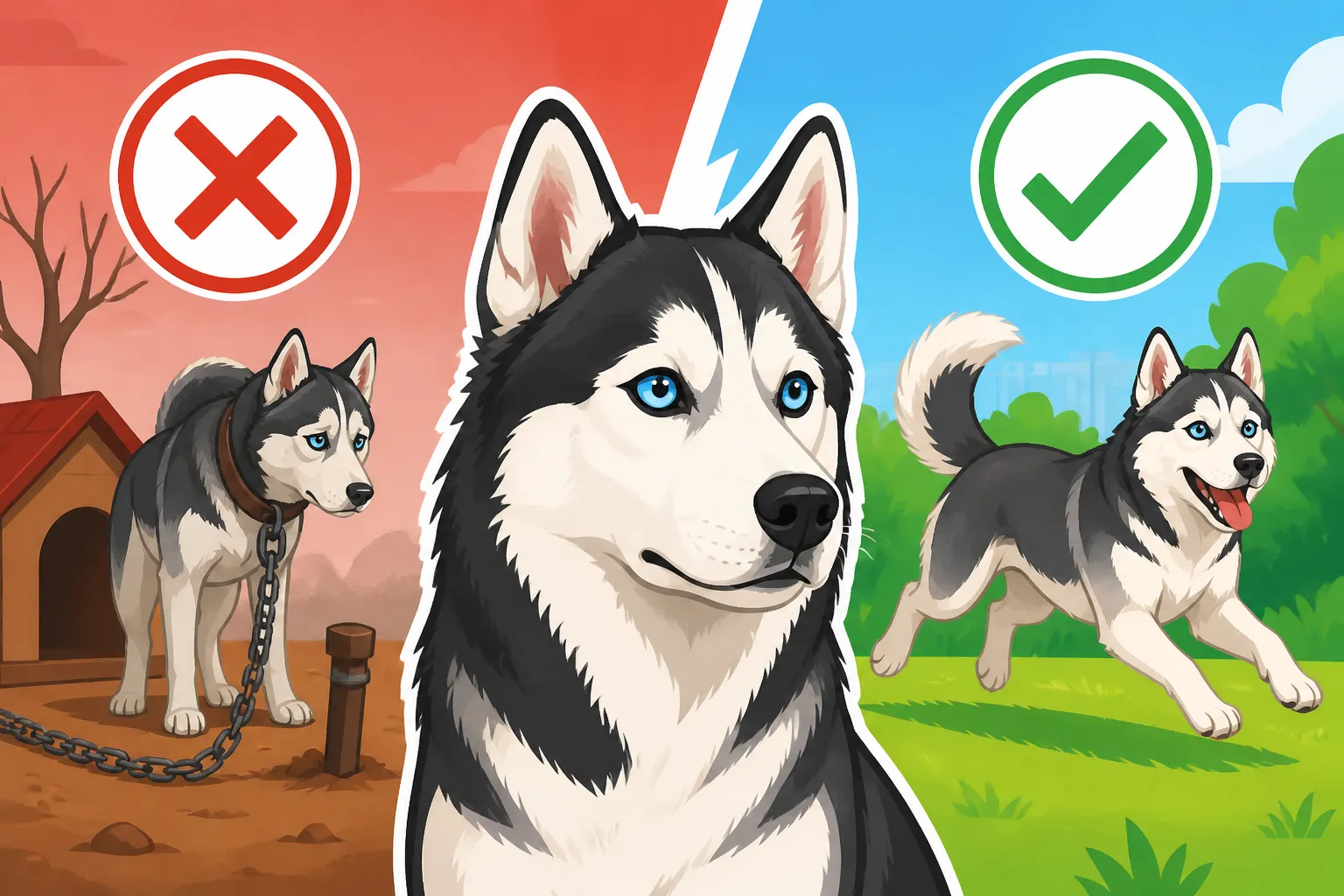
Whether a Siberian Husky Should Be Tied Out
It’s a tough spot, isn’t it? You love your Siberian Husky, but sometimes their boundless energy and uncanny ability to escape seem to leave you utterly stumped for how to keep them contained safely. Many owners, facing the sheer ingenuity of a Husky determined to explore, might look at a tie-out as a simple solution. However, this guide is going to walk you through why tying out a Siberian Husky is almost always a bad idea, and what safer, more humane alternatives exist to keep your furry escape artist secure and happy.
Why Tying Out a Siberian Husky Is Inherently Problematic
When you consider the very essence of a Siberian Husky – their history, their build, and their deeply ingrained instincts – you quickly realize that a tie-out is fundamentally at odds with who they are. These dogs were bred for endurance, for miles of running, and for independent problem-solving. Confining such an animal to a small, static radius is like trying to put a wild bird in a shoebox.
Their Instincts and Temperament Resist Confinement
Siberian Huskies have a profound roaming instinct. It's not just a desire; it's practically hardwired into their DNA from generations of pulling sleds over vast distances. They were bred to cover ground, to navigate, and to work independently. Being tethered to a single spot goes against every fiber of their being. This isn't stubbornness in a Husky; it's their natural drive expressing itself. When a Husky is tied out, that instinct to roam doesn't disappear; it just becomes a source of immense frustration. You'll often see them pacing, pulling relentlessly against the tether, and desperately looking for ways to get free. This isn't just uncomfortable; it's psychologically distressing for a breed that thrives on movement and exploration.
Moreover, Huskies are intelligent and curious. They learn quickly, and if their "job" becomes trying to break free from a tie-out, they will put all their considerable mental energy into it. They'll chew through ropes, figure out swivels, and test every weak point. A tie-out often acts less as a deterrent and more as a challenge, leading to a highly stressed and determined dog.
Physical Risks and Potential for Injury
A tie-out might seem sturdy, but for a powerful, athletic dog like a Siberian Husky, it presents numerous physical hazards. The most immediate and terrifying risk is strangulation or serious neck injury. Imagine your Husky, driven by their prey drive, suddenly lunging after a squirrel or a bird. If the tether is a collar, the sudden jolt can cause severe damage to their trachea, neck, or spine. I've heard too many heartbreaking stories of Huskies who have been permanently injured, or even worse, choked to death trying to get free or chase something while tied.
Beyond strangulation, there are other dangers. Rope burns or friction wounds can occur if the tether wraps around a leg or body part during a frantic attempt to escape. If the tie-out mechanism fails, they could break free in a panic, potentially bolting into traffic or getting lost. And let's not forget the risk of weather exposure. While Huskies are built for cold, even they have limits. And in warmer climates, being tied out with no access to shade or fresh water can quickly lead to deadly heatstroke. Heat Stroke Risk in a Siberian Husky is a very real concern, especially if they are left unattended.
The Dangers of Leaving a Siberian Husky on a Tie-Out
Beyond the inherent problems with their breed-specific traits, there are significant practical and ethical dangers associated with relying on a tie-out for any dog, but especially for a Siberian Husky. These dangers encompass their mental well-being, their behavior towards others, and the legal implications for you as an owner.
Exacerbated Behavioral Issues
A tied-out Husky is a frustrated Husky, and frustration very often manifests as behavioral problems. One common issue is barrier aggression. A dog constantly confined, unable to flee perceived threats or approach desired objects, can become highly reactive and aggressive towards anything or anyone passing by. This isn't because they're naturally aggressive; it's a learned response to feeling vulnerable and trapped. That friendly, boisterous Husky you know and love could transform into a snarling, lunging animal when on a tie-out, simply because they feel cornered.
Moreover, isolation and lack of mental stimulation can lead to destructive behaviors. A bored Husky will find a way to entertain themselves. This might mean digging craters in your yard, chewing through anything within reach (including the tether itself), or incessant howling. Siberian Husky Destruction When Left Alone is a common complaint, and tying them out only amplifies these tendencies, turning your yard into a war zone and your neighbors into irritated spectators of a constant symphony of barks and howls. Why Your Siberian Husky Howls and Talks is a fascinating trait, but not one you want amplified by stress.
Increased Risk of Escape and Getting Lost
It might sound counterintuitive, but tying out a Siberian Husky can actually increase their chances of escape. As mentioned, Huskies are problem solvers. A tie-out isn't a permanent solution for a dog with The Roaming Instinct Bred Into Every Siberian Husky. They will relentlessly work at it. They can chew through nylon, fray metal cables over time, or even snap cheap carabiners. I've seen Huskies twist out of harnesses, wriggle free of collars, and even dig under the anchor point until it comes loose.
Once free from the tie-out, a Husky, often disoriented or panicked, is much more likely to bolt. Their instinct is to run and cover ground, not to return to the place that confined them. A loose Husky is at extreme risk of being hit by a car, getting into fights with other animals, or simply getting lost miles from home. This isn't just a heartbreaking possibility; it's a very expensive one, too, with potential vet bills, search efforts, and fines for a loose animal. Why an Escaped Siberian Husky Is a Health Risk and Siberian Husky Deaths From Trauma and Escape are serious concerns.
Legal and Ethical Considerations
Many municipalities and counties have ordinances against tethering dogs for extended periods or in certain ways. These laws are put in place precisely because of the risks to the dog's welfare and public safety. You could face fines, have your dog confiscated, or even be charged with animal neglect if your Husky is found injured or suffering due to improper tethering. It's crucial to check your local laws, as they vary widely.
Beyond the legal aspect, there's the ethical responsibility. As dog owners, we commit to providing a safe, enriching environment for our pets. Tying out a Husky, a breed so unsuited to it, runs contrary to this commitment. It denies them appropriate exercise, mental stimulation, and social interaction. It places them at undue risk of injury and behavioral decline. For a breed known for its intelligence and deep connection with its human family, such isolation is a severe blow to their quality of life.
Safer and More Effective Containment for Your Siberian Husky
So, if tying out your Husky isn't the answer, what is? The good news is there are plenty of humane, effective, and safe ways to contain and exercise your adventurous Siberian Husky. It requires understanding their unique needs and investing in appropriate infrastructure and training.
Secure Fencing: The Gold Standard
For most Husky owners, a secure, physical fence is the absolute best option for yard containment. But this isn't just any fence; it needs to be Husky-proof.
- Height: A minimum of six feet is usually recommended, as Huskies are surprisingly agile climbers and jumpers. Some particularly determined individuals might even scale a six-foot fence, especially if there's an easy toehold.
- Digging Prevention: Huskies are champion diggers. To prevent them from tunneling under, you'll need to bury chicken wire or a similar material horizontally along the fence line, extending inwards by at least 1-2 feet. Another option is to pour a concrete footer. Stopping a Siberian Husky Digging Along the Fence is a vital strategy.
- Gate Security: Standard gate latches are child's play for many Huskies. Invest in strong, multi-point latches or even double-latching systems that require more dexterity than a paw can provide. Gate Locks a Siberian Husky Cannot Open are worth researching.
- Continuous Supervision: Even with the best fence, no containment is 100% foolproof for a Husky. Whenever your Husky is in the yard, especially if you're not absolutely certain of your fence's integrity, it's wise to supervise them. This also allows for interaction and prevents boredom. You can learn more in Stopping a Siberian Husky From Escaping the Yard.
Supervised Play in Secure Areas
For exercise beyond your yard, carefully chosen, securely fenced areas are crucial. Dog parks are often risky due to the unknown temperament of other dogs and the potential for your Husky to find an escape route. Many Huskies will clear a dog park fence if given enough motivation. Consider these alternatives:
- Sniffspot or Private Rentals: Services like Sniffspot allow you to rent private, fully fenced yards by the hour. This provides a safe, controlled environment for your Husky to run, explore, and simply be a Husky without the risks of public spaces or tie-outs.
- Long Line Work: If you want to give your Husky more freedom in a larger, unfenced area (like a field or beach where dogs are allowed), a long line (20-50 feet) is a fantastic tool. It allows them to run and explore while you maintain control and can reel them in if needed. This is an excellent way to practice recall in a safer setting. Starting Long Line Work With a Siberian Husky can be incredibly rewarding.
- Dog Sports: Engaging your Husky in structured activities like canicross, bikejoring, or even sledding (if you have the right climate) channels their natural energy and desire to run in a positive, controlled way. These activities build a strong bond and provide immense mental and physical stimulation. Giving a Siberian Husky a Job in Harness is often the key to a happy Husky.
Positive Reinforcement Training and Management
Training is absolutely paramount for a Siberian Husky, not just for obedience but for safety and building a strong relationship.
- Recall Training: A reliable recall is the holy grail for Husky owners, though it's notoriously challenging. Work on a rock-solid recall in distraction-free environments first, gradually introducing more distractions. Use high-value rewards and make coming back the most exciting thing ever. BAXTER & Bella offers excellent online training programs that focus on positive reinforcement, which is perfect for an independent breed like the Husky. Their structured approach can help you build those essential behaviors step by step. Remember, The Recall a Siberian Husky Will Actually Give You requires consistent effort.
- Leash Manners: Huskies are bred to pull, so teaching them the difference between "pull for work" and "walk politely on a leash" is essential. Invest in a good front-clip harness, which can help redirect their pulling power. Practice loose-leash walking consistently. Siberian Husky Leash Work Against a Pulling Instinct can be a lifelong endeavor but is so important for enjoyable walks.
- Mental Stimulation: A tired Husky is a good Husky, but a mentally stimulated Husky is an even better one. Provide puzzle toys, rotate chew toys (many durable options available on Amazon), and engage in training sessions daily. These activities burn mental energy and reduce the likelihood of boredom-induced destruction or escape attempts.
Indoor Confinement and Management
When you can't supervise your Husky, especially when you're away from home, a secure indoor space is critical.
- Crate Training: A properly crate-trained Husky sees their crate as a safe den, not a punishment. Choose a heavy-duty, escape-proof crate. Huskies are known for bending bars, so a cheap wire crate often won't cut it. Look for crates designed for strong chewers or escape artists. Make sure the crate is large enough for them to stand, turn around, and lie down comfortably. Crates a Siberian Husky Cannot Break Out Of are an investment, but worth it.
- Dog-Proofed Rooms: If crate training isn't an option, or for shorter periods, confine your Husky to a dog-proofed room (like a laundry room or kitchen) where all potential hazards and destructible items are out of reach. Provide plenty of safe chew toys and a comfortable bed.
| Confinement Method | Pros | Cons | Ideal Use Case |
|---|---|---|---|
| Tie-Out | (Perceived) convenience, low initial cost | High risk of injury, behavioral issues, escape, legal problems, stress | NOT RECOMMENDED for Huskies |
| Secure Fencing | Safe outdoor exercise, long-term solution, freedom to roam within bounds | High upfront cost, requires diligent maintenance, Huskies can still test limits | Primary outdoor containment for supervised or unsupervised yard time |
| Long Line | Allows supervised exploration in open spaces, aids recall training | Requires active supervision, not for unattended use, potential for tangles | Controlled exercise in open, unfenced areas |
| Crate Training | Safe indoor confinement, aids house training, prevents destruction | Requires proper training, some Huskies can escape flimsy crates, not for long hours | Indoor unsupervised time, travel, calming space |
| Dog-Proofed Room | More space than a crate, less "confined" feeling | Requires thorough preparation, still limited freedom, potential for destruction | Short-term indoor confinement when crate is not needed or preferred |
Tying out a Siberian Husky, while seemingly easy, is a high-risk, low-reward strategy that often leads to injury, behavioral problems, and ultimately, a less happy dog and owner. By understanding their unique needs and investing in secure physical containment and consistent positive training, you can provide your adventurous Husky with the safe and stimulating life they deserve. It takes more effort than a rope and a stake, but the peace of mind and the bond you build are immeasurable.
Disclaimer
This article is for general informational purposes only and does not constitute professional advice. Laws, prices and regulations vary by location and change over time. Consult a qualified professional for guidance on your specific situation.