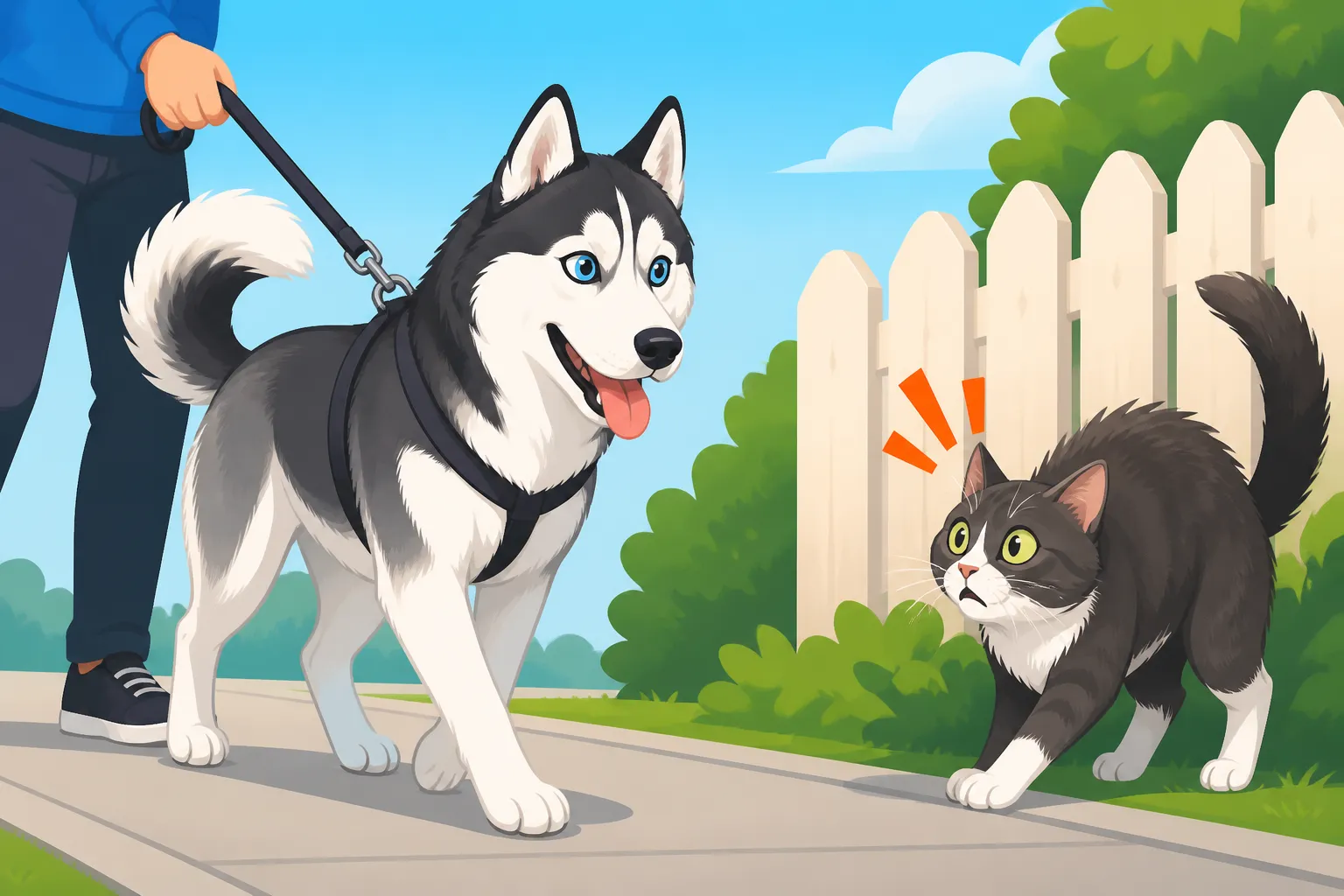
Walking a Siberian Husky Past a Cat
It’s a scenario many Siberian Husky owners dread: you're out for a peaceful walk, enjoying the crisp air, when suddenly, a cat darts into view. In an instant, your calm companion transforms into a lunging, barking, leash-tugging freight train, focused solely on the furry feline. This guide is here to validate that intense frustration and offer practical, empathetic strategies to help you navigate these high-prey-drive encounters, making your walks more manageable and less stressful for both you and your beloved Husky.
Understanding the Siberian Husky's Instinctive Prey Drive
The reason your Siberian Husky reacts so intensely to a cat isn't out of malice, but pure instinct. These dogs were bred for thousands of years to pull sleds over vast distances, requiring an independent spirit and keen hunting abilities to find food when resources were scarce. That drive to chase and capture small, fast-moving animals is deeply embedded in their DNA. It’s not something you can truly "train out" of them, but rather something you learn to manage and redirect.
The Hunter Within: Why Cats Trigger Huskies
Siberian Huskies are quintessential sighthounds in their reaction to movement. A cat darting across their field of vision immediately switches on that primal hunt sequence: spot, orient, chase, grab, and often, dispatch. For many Huskies, this isn't about aggression; it's about deeply ingrained behavior that has ensured survival for generations. Think of it less like a dog wanting to hurt a cat, and more like a wolf spotting a rabbit. The brain just takes over. This makes walking past a cat a profound challenge, as you're literally fighting against millions of years of selective breeding. Siberian Husky Prey Drive Around Small Animals delves deeper into this fundamental aspect of their nature.
Imagine walking through your neighborhood. A cat suddenly appears from behind a bush, streaks across a lawn, and disappears under a car. Your Husky sees that flash of movement, and before you can even react, they've gone from a leisurely trot to a full-blown lunge, straining against their collar or harness. This isn't disobedience; it's instinct overriding everything else in that moment. It's a powerful surge of adrenaline and focus that can be incredibly difficult to break, even with the most dedicated training.
The Challenge of Leash Control
When that prey drive kicks in, your Husky can generate an astounding amount of force on the leash. A medium-sized dog can suddenly feel like a miniature Clydesdale, dragging you off balance or even off your feet if you're not prepared. Standard flat collars are almost useless in these situations, as they offer little control and can even injure your Husky's neck. The sheer physical challenge of holding onto a lunging, twisting, 50-pound (or more) dog is a significant source of stress and can make owners dread walks altogether. You might find yourself avoiding certain routes or timing walks to minimize the chance of cat encounters, which isn't fair to either of you. Siberian Husky Leash Work Against a Pulling Instinct covers common struggles with leash control.
This isn't just a matter of strength; it's a matter of leverage and technique. If you're using just a collar, a Husky can brace their neck and pull with their entire body weight, effectively choking themselves to get where they want to go. This can lead to coughing, gagging, and potential long-term damage to their trachea. The struggle also creates negative associations with walks, making your Husky even more stressed and reactive over time, anticipating the next "fight" with you over a perceived target.
Preparing for a Cat Encounter on Your Walks
Successfully navigating a cat encounter starts long before you ever see one. It involves having the right equipment, building strong foundational skills, and always being vigilant. Huskies are smart, but they are also incredibly determined, so preparedness is your best friend.
Essential Equipment for Control
The right gear can make a world of difference when you're managing a Husky with strong prey drive. Forget traditional flat collars for walks in areas where you might see cats. They simply don't offer enough control. Instead, consider these options:
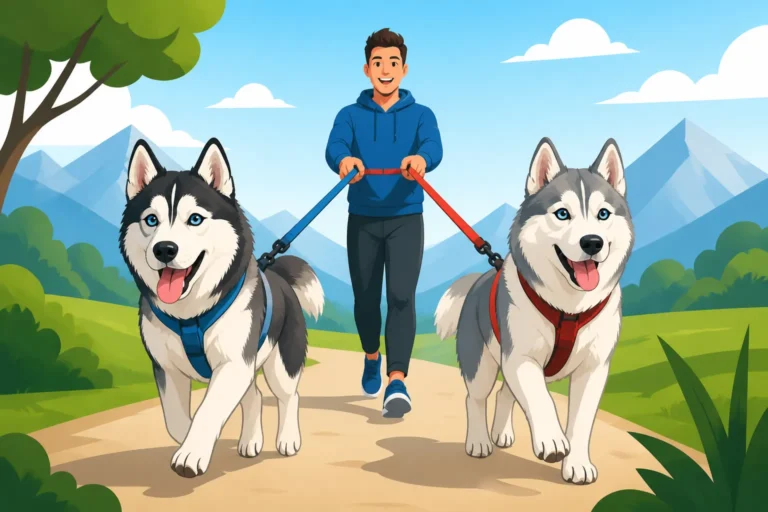
- Front-Clip Harnesses: These harnesses have the leash attachment point on the dog's chest. When your Husky pulls, the leash redirects them sideways, making it much harder for them to lunge forward with full force. This gives you more control and is generally safer for their neck. Brands like Easy Walk or Freedom Harness are popular choices and can be found readily on Amazon. Front-Clip Harnesses on a Siberian Husky can offer more guidance on these useful tools.
- Head Halters (Halti, Gentle Leader): These resemble a muzzle but are designed to give you steering control over your dog's head. Where the head goes, the body follows. They require proper introduction and training to ensure your Husky accepts them, but they offer excellent control for strong pullers.
- Martingale Collars: While not as good for active pulling as a front-clip harness or head halter, a martingale collar is an excellent choice for preventing escapes. It tightens gently when your Husky pulls, preventing them from backing out of it, without choking them like a traditional choke chain. If you use one, ensure it's fitted correctly and use it in conjunction with a harness for better control. Martingale Collars for a Siberian Husky provides more detail on their proper use.
- Durable Leashes: Invest in a sturdy, comfortable leash that won't snap under pressure. A 6-foot nylon or leather leash with a strong clip is ideal. Avoid retractable leashes, as they offer no real control and can be dangerous when a Husky suddenly lunges.
| Equipment Type | Primary Benefit | Best Use Case | Considerations |
|---|---|---|---|
| Front-Clip Harness | Redirects pulling, prevents forward momentum | Everyday walks, managing lunging | Can chafe if not fitted well; some dogs dislike the feel |
| Head Halter | Excellent steering and control | Strong pullers, highly reactive dogs | Requires desensitization; can be mistaken for a muzzle |
| Martingale Collar | Prevents escape, gentle tightening | Dogs prone to backing out of collars | Not for primary pulling control; best paired with harness |
| Standard Flat Collar | ID tag holder, basic leash attachment | Trained dogs with no pulling issues | Minimal control for Huskies, escape risk |
Building a Foundation of Focus and Engagement
Beyond equipment, consistent training is paramount. Your Husky needs to understand that you are the most interesting thing on the walk, even more so than a fleeting cat. This requires building a strong bond and making yourself the source of all good things.
- Positive Reinforcement: Use high-value treats and enthusiastic praise to reward calm behavior and attention on you. Think of treats your Husky would do anything for – bits of cheese, cooked chicken, or hot dogs.
- "Watch Me" Command: Teach your Husky to make eye contact on cue. Start in a low-distraction environment and gradually increase the challenge. This command is invaluable for redirecting their focus before they fixate on a cat.
- Leash Walking Skills: Practice loose-leash walking in quiet areas. Reward every moment they walk nicely beside you. Make it clear that pulling gets them nowhere, but calm walking earns rewards. Consistency is key here. Teaching a Siberian Husky to Heel on One Side is a good resource for improving their walking manners.
- Engagement Games: Play short, fun games on walks, like hide-and-seek behind a tree, or quick bursts of "find it" with scattered treats. This keeps their mind engaged with you and less likely to scan for distractions. Remember, a bored Husky is a destructive or a wandering Husky.
Developing these skills takes time and patience. It’s not about instant fixes but about gradually shifting your Husky’s default response from "chase!" to "check with my human." This ongoing work also strengthens your bond, which is the foundation of all successful training with an independent breed like the Husky. Online resources, like those offered by BAXTER & Bella, can provide structured guidance for these foundational skills, allowing you to learn and practice at your own pace.
Managing the Encounter in Real-Time
Despite all your preparation, a cat will inevitably appear. How you react in those crucial seconds can determine whether the encounter is a near miss or a full-blown struggle. This is where your vigilance and practiced responses come into play.
Early Detection and Redirection
The absolute best defense is a good offense. Always be scanning your environment, looking for potential cat sightings before your Husky does. This gives you a precious head start to intervene.
- Scan Ahead: Pay attention to bushes, parked cars, open garages, and any areas where a cat might be hiding or darting across. Don't be glued to your phone; your eyes should be constantly moving.
- Read Your Husky's Cues: Learn your Husky’s pre-lunge signals. Do their ears perk up? Does their body tense? Do they lock their gaze? The moment you see these, act immediately. This ability to read your dog is crucial for managing their prey drive. Reading a Siberian Husky Before It Fixates will give you more insight into these subtle signs.
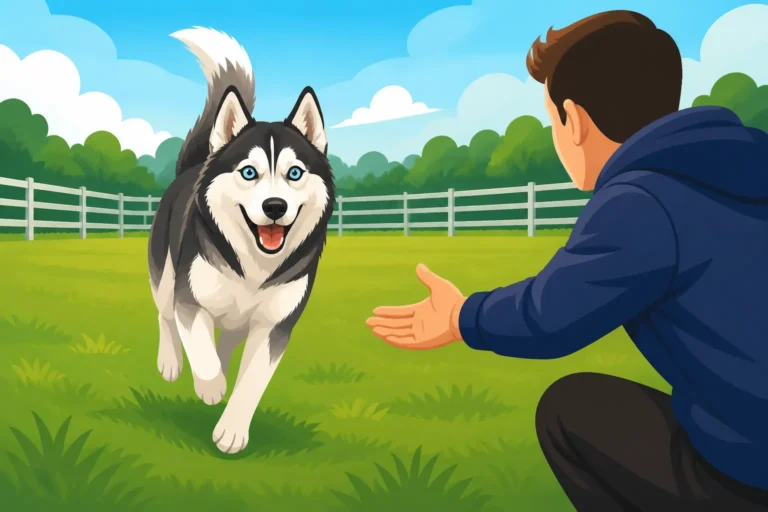
- The Power of "Look!" or "Watch Me!": The instant you spot a cat, or your Husky gives a pre-lunge signal, immediately use your "Watch Me" command. If they respond, even for a split second, reward heavily with a high-value treat and praise. The goal is to interrupt their fixation before it fully takes hold. If you can get their attention, you can often steer them away or create distance.
It's a dance of anticipation and swift action. You need to be more aware of your surroundings than your Husky, which, let's be honest, is a tall order for a breed designed to be hyper-aware. But by training yourself to look for cats, you buy yourself precious seconds to act proactively rather than reactively to a full-blown lunge. This vigilance doesn't just apply to cats; it's a valuable skill for managing any high-distraction environment with a Husky.
Creating Distance and Utilizing Space
If redirection isn't enough, or if the cat is too close, your next goal is to physically create distance. Space is your friend when dealing with a high-arousal situation.
- Cross the Street: If possible, cross to the other side of the street as soon as you spot a cat. The extra distance makes the cat less of an immediate, irresistible target.
- Turn and Walk Away: Don't hesitate to do a sharp U-turn and walk in the opposite direction. It’s better to lose a few steps of your walk than to engage in a frustrating battle of wills. This also teaches your Husky that focusing on you means continuing the walk, while fixating on distractions means the walk stops or changes direction.
- Use Your Body as a Block: If a cat is very close and you can't move away, subtly position yourself between your Husky and the cat. This acts as a visual barrier and can help break their line of sight. It's a temporary measure but can buy you time to implement other strategies.
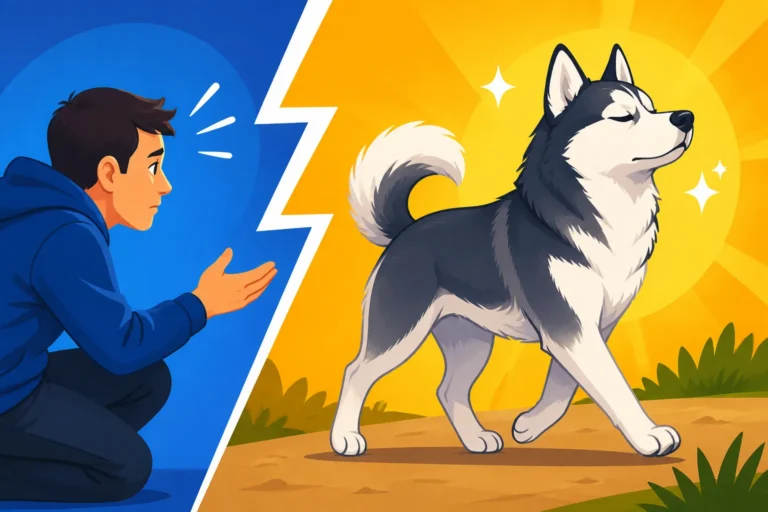
Remember, the aim is to prevent the full chase sequence from starting. Every time your Husky successfully doesn't lunge at a cat, it's a win. You're slowly building a new habit, one where they look to you for guidance instead of giving in to impulse. Don't be afraid to be assertive with your movements; a clear signal from you is often what they need.
Long-Term Training and Management Strategies
While quick fixes might help in the moment, true success in walking a Siberian Husky past a cat comes from consistent, long-term training and a realistic understanding of their breed traits. It's about ongoing management, not a cure.
Desensitization and Counter-Conditioning
This is where you slowly change your Husky's emotional response to seeing a cat. Instead of thinking, "CAT! CHASE!", you want them to think, "CAT! That means good things happen from my human!"
- Controlled Exposure: Start with very controlled, distant exposures. Find a friend with a calm, cat-savvy cat (or use a cat on a leash yourself) and keep your Husky at a distance where they notice the cat but don't react intensely. This might be across a park or even across a street.
- Pairing with Positive Reinforcement: The moment your Husky sees the cat and doesn't react, immediately reward them with high-value treats. As the cat gets slightly closer (over many, many sessions), continue to reward calmness and attention on you. The goal is to create a positive association: cat = treats from handler.
- Gradual Approach: Increase the proximity very, very slowly. If your Husky reacts, you've gone too fast. Go back a step. This process requires immense patience and shouldn't be rushed. It's about tiny victories over many weeks or months. Whether an Adult Siberian Husky Can Learn to Ignore Cats is a great resource to manage expectations.
This method works best when the cat is calm and predictable, not darting around. It can be challenging to find the right environment, but consistency is key. Think of it as slowly turning down the volume on their prey drive, one treat at a time.
Utilizing Professional Help and Advanced Tools
Sometimes, you need an extra hand, especially with a breed as independent as a Husky. Don't hesitate to seek professional guidance.
- Certified Professional Dog Trainer: A trainer experienced with high-prey-drive breeds like Huskies can assess your specific situation and provide tailored strategies. They can guide you through desensitization exercises and help you refine your leash handling. Look for trainers who use positive reinforcement methods. Trainer Rates for a Siberian Husky That Bolts can give you an idea of the investment, but it's often worth every penny.
- Long Lines for Controlled "Freedom": While not for walks past cats, a long line (20-30 feet) can be used in a secure, contained area away from distractions to practice recall and impulse control with other non-triggering stimuli. This builds a stronger foundation for listening to you, even at a distance. You can find durable long lines on Amazon.
- Advanced Leash Skills: A good trainer can teach you techniques for more effective leash handling, such as using your body language, quick turns, and even specific verbal cues that can break fixation more effectively. Remember, Huskies often interpret pulling back as a challenge, so finding softer, more cooperative methods is crucial.
It's important to remember that for many Siberian Huskies, the prey drive towards cats will always be present to some degree. The goal isn't to eliminate it entirely, but to teach your Husky to manage their impulses and look to you for direction, making walks enjoyable and safe for everyone involved. Whether a Siberian Husky can still run in harness or on trails demonstrates that their inherent drive can be channeled, but managing it around domestic animals like cats takes specific effort and understanding.
Safety Above All: Accepting Limitations
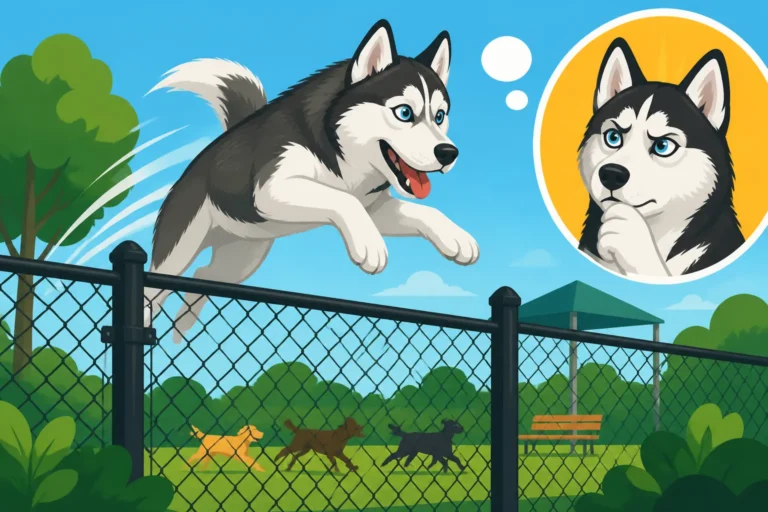
Realistically, there might be some limitations you have to accept. Not every Husky will become completely indifferent to cats, and that's okay. Your primary responsibility is safety. Why a Siberian Husky Cannot Be Trusted Off Leash is a stark reminder of their strong instincts.
- Avoid Known Cat Hotspots: If a particular street or park is teeming with cats, it might be best to choose an alternative route, especially during prime cat-sighting hours (dawn and dusk).
- Maintain a Secure Leash Grip: Always, always maintain a firm grip on the leash, preferably with a double-clip system (one clip to a front-clip harness, one to a martingale collar) for extra security. Leashes That Hold a Siberian Husky That Lunges are essential.
- Manage Expectations: Understand that you are working with a powerful, instinct-driven animal. Celebrate small victories, and don't get discouraged by setbacks. Every time you successfully prevent a lunge or redirect their attention, you're building a stronger, safer relationship.
Walking a Siberian Husky past a cat is a challenge, no doubt. But with the right tools, consistent training, patience, and realistic expectations, you can absolutely improve the situation and enjoy more peaceful adventures with your amazing canine companion. It’s a journey, not a destination, and every step forward, no matter how small, is a testament to your dedication.
Disclaimer
This article is for general informational purposes only and does not constitute professional advice. Laws, prices and regulations vary by location and change over time. Consult a qualified professional for guidance on your specific situation.