Siberian Huskies and Cats Under One Roof
Bringing a Siberian Husky and a cat together under one roof can feel like trying to mix oil and water, especially given the Husky's famously strong prey drive and independent nature. Many owners dream of a harmonious multi-pet household, but the reality can be fraught with anxiety, concern for the cat's safety, and a constant vigilance that wears you down. This guide is here to provide realistic, empathetic advice and actionable strategies for safely managing a Siberian Husky alongside a feline companion, focusing on coexistence rather than forced friendship.
Understanding the Siberian Husky's Instinctive Prey Drive
Before even thinking about introductions, it’s crucial to deeply understand the Siberian Husky. These dogs were bred for endurance and pulling sleds in harsh environments, but their heritage also includes a strong instinct for hunting small prey. It’s not aggression in the typical sense; it’s a hardwired predatory sequence that can be triggered by movement, size, and sound – all characteristics of a cat.
The Hunter's DNA: What Drives the Chase
The Siberian Husky’s ancestors, dogs developed by the Chukchi people, often had to supplement their diets by hunting small game. This isn't just a learned behavior; it's etched into their DNA. When a Husky sees a cat darting across a room, that sudden movement can flip a switch, activating a chase response that feels entirely natural to them. It's not malice; it's instinct. They aren't thinking "I want to hurt my cat friend"; they are reacting to a primal urge that says "prey."
This instinct manifests in several ways. You might see a sudden stiffening of their body, intense focus, dilated pupils, or a low, rumbling growl. Some Huskies will stalk silently, their eyes locked on the cat, while others might vocalize with a high-pitched "woo-woo" or even a full-blown scream of excitement. Understanding these signs is paramount because they tell you exactly when to intervene before the situation escalates. Trying to "train out" this drive completely is often unrealistic and can set both you and your Husky up for failure and frustration. The goal isn't to eliminate the drive, but to manage it.
Why "Friendship" Isn't the Primary Goal
Many new Husky owners, especially those with an existing cat, hope their new puppy will grow up to be best friends with the feline. While some rare pairs might achieve a peaceful, even affectionate, relationship, it’s vital to temper these expectations. For most Siberian Huskies and cats, the most realistic and safest goal is calm, managed coexistence. Your Husky might never cuddle with your cat, and that's perfectly okay.
The danger isn't necessarily that your Husky wants to eat your cat, but that in the excitement of the chase, serious injury can occur. A Husky's jaw strength, even when playing, can be devastating to a small cat. A playful pounce from a 50-pound Husky can easily break a cat’s bone or cause internal damage. Furthermore, the constant stress of being hunted or intimidated can severely impact your cat's quality of life and health. Therefore, managing interactions to ensure safety and peace for both animals is far more important than forcing a bond that might never materialize. It’s about creating an environment where both can thrive, even if separately.
Creating Safe Spaces and Introducing Them Gradually
The absolute cornerstone of a successful multi-species household with a Siberian Husky and a cat is ensuring the cat always has a safe, escape-proof sanctuary. Without this, you are putting your cat at immense risk. Once safety is established, introductions must be slow, controlled, and always supervised.
Cat-Only Zones: A Non-Negotiable Necessity
Your cat needs places where your Husky absolutely cannot reach them, ever. This isn't just about escape routes; it's about dedicated spaces where the cat can eat, sleep, use the litter box, and simply relax without any threat or perceived threat from the Husky. Imagine being constantly on edge in your own home – that's what your cat will experience without these safe havens.
Think vertically: tall cat trees, shelves, or even specially installed cat walkways are fantastic. Cats love high places, and they're naturally out of a Husky's reach. You can also utilize baby gates or pet gates strategically. For example, a tall baby gate (Huskies can jump!) across a doorway to a spare room or laundry room can create a perfect cat zone. Ensure the gate has a cat door, or install one yourself, allowing the cat to pass through easily while blocking the Husky. Products available on Amazon offer various heights and walk-through options, making it easier to find one that fits your home and your Husky’s athletic abilities. Even better, consider installing an L-footer barrier at the base of your gate if your Husky is a digger, preventing them from trying to tunnel underneath. The Six-Foot Fence a Siberian Husky Needs is a useful read for understanding how serious Huskies are about barriers.
The Scent Swap: Getting Acquainted Without Physical Contact
Before any face-to-face meeting, let your Husky and cat get used to each other's scent. This might sound minor, but it's a huge step in desensitization. Animals communicate a lot through scent, and making a new smell familiar can reduce anxiety and curiosity later on.
Start by swapping blankets or towels that each animal has slept on. Place the cat's blanket in your Husky's sleeping area and vice-versa. You can also rub a towel on your cat's cheeks (where they have scent glands) and then offer it to your Husky to sniff, rewarding calm behavior. Do this for several days or even a week. Observe their reactions: is your Husky intensely focused on the cat's scent, trying to shred the blanket? Or are they mildly curious, perhaps giving it a sniff and then moving on? A strong, agitated reaction to the scent alone is a clear sign you need to slow down the introduction process even further. This step lays the groundwork, helping both animals associate the new scent with their safe, familiar environment.
First Encounters: Controlled, Leashed, and Short
When you finally move to visual introductions, extreme caution is necessary. These must always be controlled, leashed, and brief. Never, ever just open a door and let them figure it out.
Step-by-step for a first visual introduction:
- Secure the Husky: Your Husky should be on a leash, preferably with a secure harness that they cannot slip out of. Have a second person present to help manage the Husky if possible.
- Cat's Choice: Allow your cat to enter the room on their own terms. Do not force them. They should have immediate access to their safe zone or an escape route.
- Distance is Key: Keep the Husky at a significant distance from the cat initially. You're aiming for them to simply see each other without any pressure.
- Observe Reactions: Watch both animals intently. For the Husky, look for signs of fixation, stiffening, growling, or lunging. For the cat, look for puffed fur, hissing, flattened ears, or attempts to flee.
- Positive Reinforcement: If your Husky remains calm and simply observes the cat, reward them immediately with high-value treats and calm praise. The goal is to create a positive association with the cat's presence.
- Short and Sweet: Keep these first sessions very short – just a few minutes. End on a positive note, even if it's just a moment of calm. Gradually increase duration over days or weeks, always maintaining distance and control.
- Never Unsupervised: Repeat: never leave your Husky and cat unsupervised, even for a second, during these early stages. Even if they seem calm, instinct can take over rapidly. Remember, Raising a Siberian Husky Puppy Beside a Cat requires this same level of vigilance.
Management Strategies for a Multi-Species Household
Once initial introductions have begun, the real work of ongoing management starts. It's a continuous commitment to safety, supervision, and clear boundaries that will allow your Husky and cat to share a home peacefully.
Dedicated Supervision and Physical Barriers
The golden rule for a Husky-cat household is "never unsupervised." This means that unless you are actively watching them, they should be physically separated. This isn't a temporary measure; for many Husky owners, it's a lifetime commitment.
Think about your daily routine. When you leave the house, the cat must be secured in their safe zone, and the Husky can be crated, left in a separate Husky-proofed room, or outdoors in a secure kennel. When you're home but distracted (cooking dinner, on the phone, watching TV), the same rules apply. This might mean keeping your cat in the bedroom with a gate across the door, or crating your Husky in the living room. Physical barriers like tall, sturdy pet gates are your best friend here. Consider gates that are pressure-mounted for temporary use, or hardware-mounted for more permanent solutions, especially for doorways that lead to cat-specific areas. For a truly determined Husky, even gates can be challenged, so ensure they are installed correctly and are tall enough to prevent jumping. Investing in high-quality, robust gates from a retailer like Amazon is well worth the peace of mind.
Leash Management Indoors and Out
Even within the home, a leash can be a vital management tool during supervised interactions, especially in the early stages or if your Husky has a particularly high prey drive. This doesn't mean your Husky is "bad"; it means you are being a responsible owner.
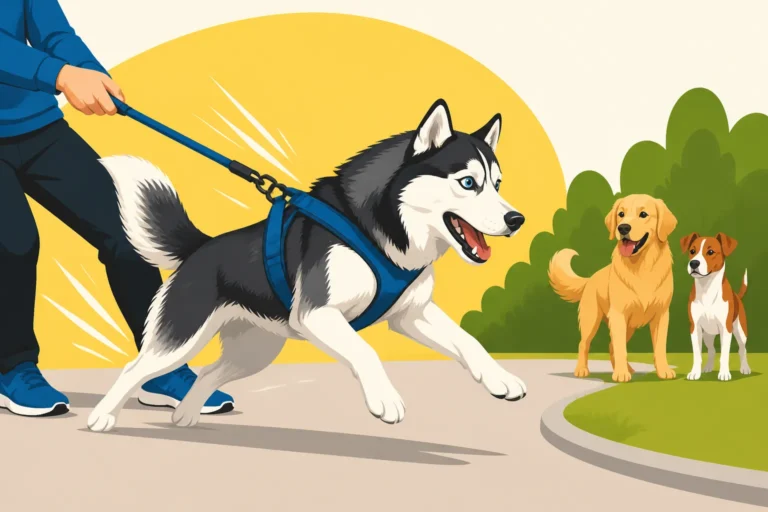
When the cat is out and about, and you want your Husky to be in the same general area, having the Husky on a leash gives you instant control. You can use a verbal cue like "leave it" or a gentle leash correction to redirect their attention if you see signs of fixation. This allows the cat to move freely, building confidence that they won't be chased, while giving you the ability to prevent any incidents. For outdoor settings, a long line can be a great tool for practicing recall and impulse control in a larger, but still controlled, environment. This relates to Starting Long Line Work With a Siberian Husky which emphasizes controlled practice. This strict leash management needs to be consistent, reinforcing to your Husky that chasing the cat is never an option.
Enrichment and Exercise to Reduce Drive
A bored, under-exercised Siberian Husky is a disaster waiting to happen in any home, but especially one with a cat. Huskies have immense energy and a keen intellect. If they don't have appropriate outlets for these traits, they will find their own, which often translates into destructive behavior or obsessive focus on anything that moves – including the cat.
Regular, vigorous exercise is non-negotiable. This means daily runs, long walks, or dedicated playtime. Think about engaging activities like Canicross and Bikejoring With a Siberian Husky if you have the space and desire. Beyond physical activity, mental stimulation is equally important. Puzzle toys, interactive feeders, and short, engaging training sessions can help tire out their minds. A satisfied Husky is less likely to fixate on the cat. You can find many puzzle toys on Amazon that challenge their minds and keep them occupied. Rotate toys regularly to keep things fresh and interesting. A Husky who has "worked" for their meal or just finished a satisfying training session is far less likely to be looking for trouble with the resident feline.
Training for Coexistence, Not Forced Friendship
While eliminating prey drive entirely is unrealistic, targeted training can significantly improve your Husky's impulse control and responsiveness around the cat. The goal is to teach your Husky to ignore the cat, or at least to respond calmly to cues when the cat is present.
Building a Strong "Leave It" and "Come" Cue
These two commands are your superpowers in a multi-species household. A rock-solid "leave it" can mean the difference between your Husky fixating on the cat and calmly looking to you for direction.
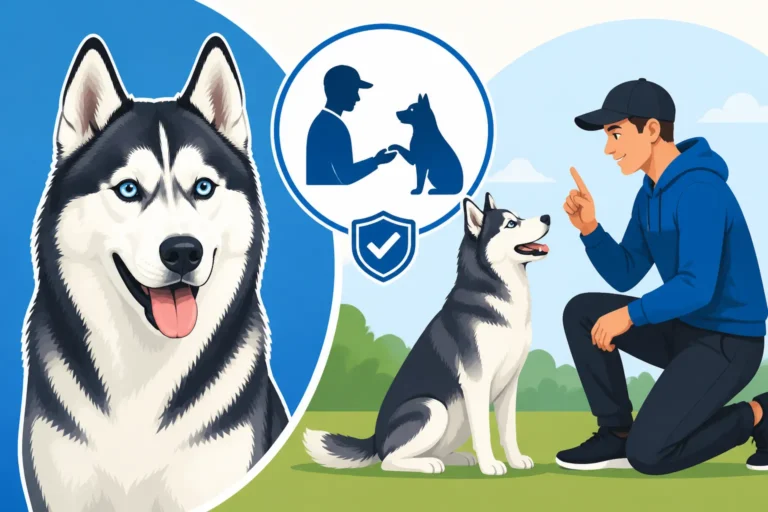
"Leave It": Start practicing "leave it" in low-distraction environments with tempting treats. Place a treat on the floor, cover it with your hand, say "leave it," and when your Husky looks at you, immediately reward them with an even better treat from your other hand. Gradually increase the difficulty: uncover the treat, then place it further away, then use less valuable items, and finally introduce distractions. Eventually, you want your Husky to be able to "leave" the cat alone when cued.
"Come" (Recall): This command is critical for safety, allowing you to call your Husky away from a potentially risky situation with the cat. Huskies are notoriously independent, making recall a challenge. The Recall a Siberian Husky Will Actually Give You delves into this. Start in a quiet, fenced area, using high-value rewards (like cooked chicken or cheese). Make "come" a fun, positive experience. Never use it to scold them. Practice often, gradually introducing more distractions. Platforms like BAXTER & Bella offer comprehensive online training programs that can guide you through building these essential cues with a high-drive breed like a Husky, providing video examples and structured lessons that are crucial for consistency.
Positive Reinforcement and Desensitization
The key to successful training with a Siberian Husky, especially around a cat, is consistent positive reinforcement and gradual desensitization. Never use punishment, as it can create fear and resentment, potentially leading to aggression towards the cat or a breakdown in your bond with your Husky.
Positive Reinforcement: Every time your Husky notices the cat but doesn't react, or looks at you instead of chasing, or maintains a calm demeanor in the cat's presence – reward them! High-value treats, verbal praise, or a favorite toy can all be used. The idea is to build a positive association: "cat present = good things from owner."
Desensitization: This involves gradually exposing your Husky to the cat in a controlled, non-threatening way, always staying below the "threshold" where your Husky reacts negatively. This means starting with visual separation (like through a glass door or across a room with a secure gate), moving to supervised leash interactions at a distance, and slowly decreasing the distance as your Husky demonstrates calm behavior. If your Husky starts to fixate or gets over-excited, you’ve gone too far, too fast. Take a step back and try again at a greater distance or with a shorter session. It's a marathon, not a sprint. This consistent, patient approach helps your Husky learn that the cat's presence isn't an invitation to chase, but simply another part of the home environment.
The Role of Professional Training and Support
If you're struggling to manage your Husky's prey drive around your cat, or if you feel overwhelmed, don't hesitate to seek professional help. A certified professional dog trainer or a veterinary behaviorist with experience in northern breeds can be an invaluable resource.
They can assess your specific situation, observe your Husky's behavior, and provide a tailored training plan that addresses your unique challenges. They can teach you advanced leash handling techniques, help you refine your "leave it" and "come" cues, and offer strategies for safe management within your home. Sometimes, an outside perspective and expert guidance are exactly what's needed to overcome hurdles. They can help you set realistic expectations and ensure both your Husky and your cat can live safely and happily under the same roof. Finding a trainer who has worked with Siberian Huskies That Bolt Through Open Doors can be particularly helpful.
When Coexistence Isn't Possible or Safe
Despite your best efforts, training, and management, there are situations where a harmonious, safe coexistence between a Siberian Husky and a cat simply isn't achievable. Recognizing this reality, and making difficult decisions for the safety and well-being of all animals involved, is a crucial part of responsible pet ownership.
Recognizing Red Flags and Escalating Risk
It’s important to be honest with yourself about the ongoing dynamics in your home. Some behaviors are clear red flags that indicate the situation is not safe for your cat and may never be.
Constant Fixation: If your Husky is constantly scanning for the cat, unable to relax when the cat is in sight, and immediately fixates on any movement, this is a major concern. A Husky whose eyes are always locked on the cat, even when the cat is still, indicates a deep-seated predatory drive that is difficult to manage.
Aggressive Lunging/Growling: While a small amount of curiosity or even a playful stalk might be manageable with training, any sustained, aggressive lunging, snarling, or hard growling directed at the cat, especially if it breaks through your control, is a serious warning sign.
Ignoring Cues Under Pressure: If your Husky completely ignores your "leave it" or "come" cues when the cat is present, particularly during a chase, it means your control is insufficient for the inherent risk. This suggests the prey drive is too strong to be reliably interrupted.
Repeated Incidents: Even small incidents, like rough play that results in the cat being injured or constantly terrified, should not be dismissed. One "oops" moment could be fatal for the cat. If accidents continue to happen despite strict management, the risk is too high.
Cat's Chronic Stress: Beyond the Husky's behavior, observe your cat. Is your cat constantly hiding, reluctant to eat, avoiding certain areas of the house, or exhibiting stress behaviors like over-grooming, house-soiling, or aggression towards you? A cat living in chronic fear is not living a quality life, and their health will suffer. This stress is a significant indicator that the living arrangement is not working for them. Siberian Huskies and Cats Under One Roof can be a difficult balance to strike.
Prioritizing the Cat's Well-being
Ultimately, the safety and well-being of the most vulnerable animal in the household—the cat—must be the top priority. While it’s heartbreaking to admit that a beloved pet dynamic isn't working, it’s far more heartbreaking for an animal to live in constant fear or, worse, to be seriously injured or killed.
This isn't a reflection of your failure as an owner, nor is it a judgment on your Husky. It simply acknowledges the reality of instinct and individual animal personalities. If you’ve exhausted all management and training strategies, sought professional guidance, and the situation remains unsafe or causes chronic stress for your cat, then rehoming one of the animals might be the most humane choice. Many breed-specific Siberian Husky rescues or cat rescues are experienced in finding appropriate homes for animals in these situations. They can help ensure that both your Husky and your cat find environments where they can truly thrive, rather than just survive. It's a tough decision, but a responsible one born out of love for all your animals.
Table: Safe vs. Unsafe Introduction Practices
| Aspect | Safe Practices (Recommended) | Unsafe Practices (Avoid) |
|---|---|---|
| Initial Exposure | Scent swapping, visual-only through barriers | Immediate, unsupervised physical contact |
| Control of Husky | Leashed, in a secure harness, second handler (if possible) | Off-leash, no control |
| Cat's Safety | Dedicated cat-only zones, escape routes, elevated platforms | No safe havens, cat forced into interaction |
| Interaction Length | Short, positive sessions (few minutes) | Prolonged, stressful encounters |
| Supervision | 100% constant, active supervision | Leaving animals alone, even "just for a minute" |
| Reinforcement | High-value treats and praise for calm Husky behavior | Punishment for Husky's natural instincts |
| Expectations | Coexistence, safety, mutual respect for space | Immediate friendship, forced cuddles |
| Escalation | Gradual, step-by-step, moving slower if signs of stress | Rushing stages, ignoring warning signs |
| Professional Help | Seeking certified trainer/behaviorist guidance early | Waiting until an incident occurs to seek help |
Disclaimer
This article is for general informational purposes only and does not constitute professional advice. Laws, prices and regulations vary by location and change over time. Consult a qualified professional for guidance on your specific situation.