Chews for a Teething Siberian Husky
That adorable, fluffy Siberian Husky puppy you just brought home might seem like a little angel, but give it a few weeks, and you’ll discover the true nature of a teething land shark. The incessant nipping, the frantic search for anything to gnaw on, and the sudden destruction of your favorite shoe or an innocent table leg can be incredibly frustrating. This guide is here to walk you through the challenging teething phase, helping you understand why your puppy is chewing everything in sight and, more importantly, how to provide safe, satisfying chews that will protect both your home and your sanity.
The Inevitable Chewing Phase: Why Your Siberian Husky Puppy is a Land Shark
It’s easy to feel like your Siberian Husky puppy has a personal vendetta against your furniture, but their intense chewing during puppyhood is a completely natural, even crucial, part of their development. Understanding the underlying reasons can help you approach the situation with more patience and provide the right outlets for their powerful jaws.
The Mechanics of Teething for Your Husky
Just like human babies, Siberian Husky puppies go through a significant teething process. They're born without teeth, then quickly develop 28 sharp "milk" or deciduous teeth by about 3 to 6 weeks of age. These are the tiny needles that make puppy bites surprisingly painful! Around 3 to 4 months old, these baby teeth start falling out, making way for 42 permanent adult teeth. This whole process typically wraps up by 6 to 7 months of age.
During this transition, your puppy’s gums are often sore, swollen, and itchy. Imagine a constant, dull ache in your mouth, coupled with an overwhelming urge to scratch it. That’s what your Husky puppy is experiencing. Chewing provides immense relief by massaging their gums and helping to dislodge stubborn baby teeth. Without appropriate chew toys, they will naturally seek out anything they can get their mouths on – from chair legs to remote controls – to alleviate that discomfort. It’s not malice; it’s instinct. Managing this period is a key part of Raising a Siberian Husky Puppy Through the First Year.
Why Huskies Have Such a Strong Drive to Chew
Beyond the physical discomfort of teething, Siberian Huskies, like many intelligent and energetic breeds, simply have a strong inherent drive to chew. This isn't just about pain relief; it's about exploration, mental stimulation, and boredom busting. Huskies are clever dogs, often described as independent thinkers, and they need mental engagement just as much as physical exercise. A bored Husky is almost always a destructive Husky.
If your puppy isn't given appropriate outlets for their chewing instincts, they will invent their own, often at the expense of your belongings. This strong chewing drive is hardwired into their DNA; their ancestors needed strong jaws and problem-solving skills to survive. When they chew, they’re not just relieving gum pain; they’re also exploring their world, learning about textures, and working their jaws. This can feel like a challenge to Training an Independent Siberian Husky, but it's really just a natural behavior needing redirection.
Safe and Satisfying Chew Options for Your Teething Husky Puppy
Now that we understand why they chew, let's talk about what they should be chewing. Providing a variety of safe, appealing options is paramount to saving your shoes and sanity. It’s not just about giving them a chew; it’s about giving them the right chew for their age, chewing style, and the stage of teething they're in.
Durable Rubber and Nylon Chews
These types of chews are often the backbone of a solid puppy chew arsenal because they’re built to last and designed with puppy needs in mind.
-
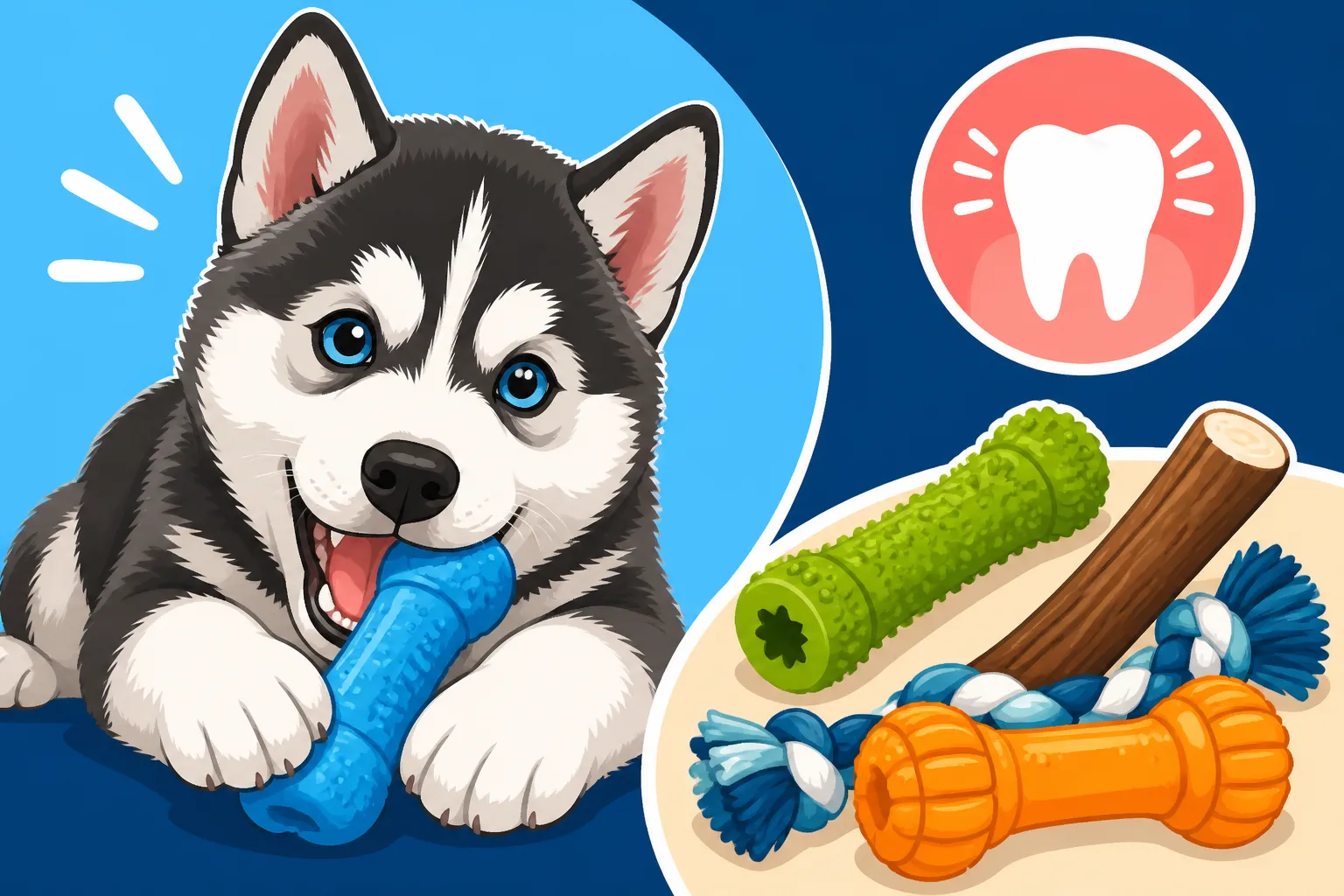
KONG Toys: The classic KONG toy is a true lifesaver for many puppy owners. Made from durable rubber (ensure you get the "puppy" or "extreme" strength if your Husky is a power chewer), they can be stuffed with all sorts of goodies – peanut butter, plain yogurt, canned pumpkin, or even a mix of kibble and water, then frozen. The cold sensation is incredibly soothing for inflamed gums, and the challenge of getting the treats out provides excellent mental stimulation, keeping your Husky occupied for a good while. You can find a huge selection of KONGs and other durable rubber toys on Chewy or Amazon, often with different shapes and textures to keep things interesting.
-
Nylabones: These nylon chews come in various shapes, sizes, and flavors, specifically designed for puppies and different chewing strengths. They’re non-consumable, meaning your puppy slowly grinds down tiny, rice-sized pieces rather than consuming large chunks. Nylabones can help clean teeth and satisfy the urge to gnaw without the risk of splintering or rapid ingestion. Always make sure to choose a Nylabone specifically labeled for puppies or appropriate for your Husky’s weight and chewing style. A chew that’s too hard can damage developing teeth, while one that’s too soft will be shredded in minutes. Keep a close eye on them, and replace them when they get too small or worn.
Edible Chews and Natural Options
When it comes to edible chews, supervision is always key. While they're often more appealing than rubber or nylon, they can also pose a greater risk if not chosen or monitored properly.
-
Bully Sticks: Made from dried beef pizzle, bully sticks are highly digestible and incredibly appealing to most dogs. They provide a satisfying, long-lasting chew that helps massage gums and clean teeth. However, they can be a bit pricey and are calorie-dense, so offer them in moderation, especially if your puppy is prone to packing on pounds. Always supervise your puppy with bully sticks, as they can become a choking hazard once they get small enough to swallow whole. You can find various sizes and thicknesses on Chewy, which can help tailor them to your Husky's chewing power.
-
Yak Chews (Himalayan Dog Chews): These are hard cheese chews made from yak and cow milk, salt, and lime juice. They are incredibly long-lasting and become softer and safer as the dog chews them. Once a small piece is left, you can often microwave it to puff it up into a crunchy, digestible treat, reducing choking risk. They are generally low-odor and a favorite for strong chewers, but like all hard chews, supervise to ensure no large pieces break off.
-
Frozen Fruits and Vegetables: For a healthy, low-calorie, and soothing option, consider frozen carrots or slices of apple (without seeds). The cold helps numb sore gums, and the natural fibers provide a satisfying crunch. Just be mindful of portion sizes to avoid stomach upset and always check if a fruit or vegetable is safe for dogs. Similarly, a frozen, damp washcloth can be incredibly soothing and provide a different texture for your puppy to mouth. Remember that Treat Spending Through Siberian Husky Training can include these healthy options too. Using chews that also double as Puzzle Feeders a Siberian Husky Cannot Beat can kill two birds with one stone.
Here's a quick comparison of some popular teething chews:
| Chew Type | Pros | Cons | Husky Puppy Suitability |
|---|---|---|---|
| KONG (Rubber, puppy/extreme) | Highly durable, fillable, freezable for gum relief, mental stimulation | Can be loud if dropped, need refilling, some dogs lose interest if not novel | Excellent (essential for Husky puppies) |
| Nylabone (Nylon, puppy-specific) | Long-lasting, helps clean teeth, various textures/flavors | Some puppies ignore them, can be too hard if not puppy-specific, no nutritional value | Good (ensure appropriate hardness and size) |
| Bully Sticks | Highly palatable, digestible, satisfying chew | Can be expensive, odor, calorie-dense, choking hazard when small, can be consumed quickly by power chewers | Good (supervised, moderate use, choose thicker varieties) |
| Yak Chews (Himalayan) | Very long-lasting, natural, low-odor, digestible (when microwaved) | Hard, potential for small sharp pieces, expensive | Good (supervised, ensure appropriate size for jaw) |
| Frozen Carrots/Washcloths | Soothing, low-cost, natural, low-calorie | Can be messy, consumed quickly, limited dental benefit compared to others | Good (supplemental, great for extra relief) |
Implementing a Smart Chew Strategy
Simply buying a pile of chews isn’t enough. You need a strategy to make them effective, keep your puppy interested, and ensure they are always chewing on appropriate items. This involves rotation, supervision, and proactive training. The cost of these chews adds to The Bills Before a Siberian Husky Comes Home, so choosing wisely matters.
Rotating Chews and Supervision
Puppies, especially smart ones like Huskies, can quickly lose interest in a chew if it’s always available. To keep things exciting and effective, rotate your chew selection. Have a few different types and textures on hand, and only offer one or two at a time. When your puppy seems to be losing interest, put that chew away and bring out a "new" one from the rotation a day or two later. This element of novelty makes them much more appealing. You can easily stock up on a variety of options from retailers like Chewy or grab a few different types when placing an Amazon order.
Supervision is non-negotiable, especially with edible chews. While products like bully sticks are generally safe, any edible chew can become a choking hazard as it gets smaller. Always be present when your puppy is enjoying an edible chew. If a piece breaks off that’s too large to swallow safely but small enough to pose a risk, gently remove it. Also, observe how your puppy chews; some will try to gulp large pieces, which can lead to blockages or choking. This careful approach helps avoid unnecessary vet visits and ensures your puppy's safety. Factor in these ongoing costs when considering Monthly Siberian Husky Costs After Year One.
Using Chews as a Training Aid
Chews aren't just for occupying your puppy; they're powerful training tools. The goal is to teach your Siberian Husky what to chew, not not to chew.
- Redirection: If you catch your puppy chewing something inappropriate (like your shoe), don’t just scold them. Interrupt the behavior with a firm but calm "no," then immediately offer an appropriate chew toy. As soon as they take the toy in their mouth and start chewing it, praise them enthusiastically! This teaches them that chewing the right item gets positive attention and rewards. This redirection is far more effective than just punishment.
- Positive Reinforcement: Make the appropriate chews the most exciting things around. When your puppy is quietly chewing their KONG or Nylabone, randomly walk by and offer gentle praise or a tiny, high-value treat. This reinforces the positive behavior of chewing their own toys. This is a core tenet of Clicker Training a Siberian Husky and using Food Rewards a Siberian Husky Will Work For effectively.
- Crate Training: During the teething phase, the crate can be your best friend. When you can’t actively supervise your puppy, putting them in their crate with a safe, appropriate chew (like a frozen KONG) can prevent destructive chewing of household items. It also helps them associate their crate with positive, relaxing activities.
Chew Alternatives and Boredom Busters
While dedicated chews are vital, remember that a Siberian Husky’s need for mental and physical stimulation extends beyond just chewing. Boredom is a primary driver of destructive behavior, so incorporating other activities can reduce the intensity of their chewing.
- Puzzle Feeders: Beyond a stuffed KONG, there are many interactive puzzle feeders available that make your puppy work for their food. These are excellent for mental enrichment and can tire out a busy brain. You can find a huge range of these on Chewy or Amazon.
- Exercise: A tired puppy is a good puppy! Ensure your Siberian Husky puppy is getting appropriate amounts of exercise for their age. While you don't want to overdo it with a growing puppy, regular walks, playtime, and short training sessions can burn off excess energy and reduce the urge to chew out of boredom. Remember that even a walk may not be enough for a Husky, so refer to How Much Exercise a Siberian Husky Really Needs.
- Frozen Washcloths/Ice Cubes: For quick, soothing relief, a frozen damp washcloth can be very appealing. The cold helps numb the gums, and the texture is different from other chews. Plain ice cubes can also be offered, but always in moderation and supervised, as too many can be hard on developing teeth.
What to Absolutely Avoid for Teething Huskies
Just as important as knowing what to offer is knowing what to never give your teething Siberian Husky puppy. Some common items can be incredibly dangerous, leading to expensive vet bills or even tragedy. When in doubt, err on the side of caution. Being informed helps prevent your puppy from becoming another statistic for What a Siberian Husky Destroys Around a House.
Dangerous and Inappropriate Chew Items
It's tempting to give your puppy anything they show interest in, especially if it seems to stop them from chewing something else. However, some items pose serious health risks.
- Cooked Bones: This is a big one. Never, ever give your dog cooked bones of any kind (chicken, beef, pork, etc.). Cooking makes bones brittle, causing them to splinter into sharp fragments that can cause lacerations in the mouth, throat, or intestines, or even lead to blockages requiring emergency surgery. Raw, appropriately sized recreational bones can be given with extreme caution and supervision, but for teething puppies, it's often safer to avoid bones altogether due to the risk to developing teeth and potential choking hazards. Protecting a Siberian Husky Puppy's Growth Plates is important, and bone injuries can be very serious.
- Rawhide: While widely available, rawhide chews are highly controversial. They can be incredibly difficult for dogs to digest, often swelling up in the stomach and leading to blockages. More commonly, they soften into a slimy, rubbery mass that poses a significant choking hazard. Many veterinarians advise against rawhide for these reasons.
- Ice Cubes (in excess): While a few ice cubes or a frozen washcloth can be soothing, allowing a puppy to crunch on large quantities of hard ice cubes can risk fracturing their developing teeth.
- Household Items: This might seem obvious, but any item not specifically designed as a dog chew is off-limits. This includes old shoes (which teach them that your shoes are fair game), sticks and rocks from the yard (splintering, choking, teeth damage), children’s toys (not durable enough, small parts), and anything made of plastic or fabric that can be easily ingested. These items can lead to choking, internal injuries, or toxic ingestion. You don't want to find yourself dealing with Foods That Poison a Siberian Husky because of an accidental chew.
Signs Your Puppy Might Be Chewing Something Wrong
Even with the best intentions and a plethora of safe chews, accidents can happen, or your puppy might get into something they shouldn't. It's crucial to recognize the signs that something might be wrong and seek veterinary attention immediately.
Symptoms that warrant a call to your vet include:
- Excessive Drooling or Pawing at Mouth: This could indicate a lodged object, a fractured tooth, or severe gum pain.
- Loss of Appetite or Difficulty Eating: If your puppy suddenly stops eating or seems to struggle, something in their mouth or digestive tract might be causing pain.
- Vomiting or Diarrhea: Especially if accompanied by lethargy, this can be a sign of an intestinal blockage from ingesting an inappropriate object.
- Lethargy or Behavioral Changes: Any sudden change in your puppy's energy levels or usual behavior should be taken seriously.
- Swelling Around the Face or Gums: This could indicate an infection, an abscess, or a reaction to something they’ve chewed.
Don’t hesitate to contact your veterinarian if you notice any of these signs. Early intervention can make a huge difference in the outcome. Regular Siberian Husky Vet Visits by Life Stage are important for prevention and addressing issues like these quickly.
Disclaimer
This article is for general informational purposes only and does not constitute professional advice. Laws, prices and regulations vary by location and change over time. Consult a qualified professional for guidance on your specific situation.