Why Nome Racers Switched to Siberian Huskies
Many folks look at a Siberian Husky today and see a beautiful, strong dog, but few realize the incredible legacy they carry, especially in the demanding world of Alaskan sled dog racing. Before these amazing dogs dominated the trails, other breeds and mixes were the norm, often struggling with the intense speed and endurance required. This guide delves into the fascinating history of why the discerning Nome racers ultimately switched to Siberian Huskies, uncovering the unique traits that made them indispensable on the brutal Alaskan frontier.
The Early Days of Alaskan Sled Dog Racing and the Dominant Breeds
Before the Siberian Husky made its indelible mark on Alaskan racing, the trails of Nome and other remote settlements were primarily traversed by a diverse array of working dogs. These dogs were the lifeblood of the frontier, essential for transportation, mail delivery, and eventually, the burgeoning sport of sled dog racing. The challenges were immense: vast distances, extreme cold, deep snow, and often unpredictable conditions. The dogs needed to be hardy, resilient, and capable of pulling heavy loads over long periods.
The Original Alaskan Working Dogs
In the early 1900s, when the All-Alaska Sweepstakes began to gain traction, the primary sled dogs were often larger, more powerful breeds like the Alaskan Malamute, or various local mixes known simply as "Alaskan sled dogs" or "husky dogs." These were not standardized breeds in the modern sense but rather utilitarian animals bred for their strength and survival instincts in harsh environments. They were incredible animals, perfectly suited for hauling freight and breaking trail through deep snow. Their strength was undeniable, making them excellent at slow, steady pulling.
Imagine a team of these big, brawny dogs, their muscles rippling under thick coats, digging in to pull a heavy sled laden with supplies through a blizzard. They were built for pure power and stamina over short bursts, or consistent, moderate speeds over long hauls. However, as races like the All-Alaska Sweepstakes grew in popularity, the emphasis began to shift. It wasn't just about getting from point A to point B; it was about getting there first. This competitive edge began to highlight the limitations of the traditional heavy-hauling teams. While strong, they often lacked the sustained speed and efficient metabolism needed for high-stakes racing.
The Demands of the All-Alaska Sweepstakes
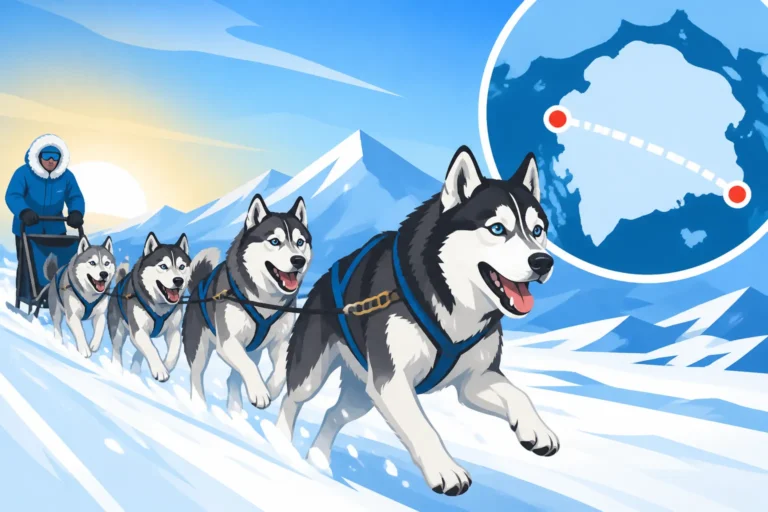
The All-Alaska Sweepstakes, which began in 1908, was a grueling 408-mile race from Nome to Candle and back. This wasn't just a casual jaunt; it was a true test of canine endurance, speed, and mental fortitude, mirroring the very real demands placed on mail and supply teams. Racers needed dogs that could not only withstand the elements but could also maintain a fast pace for days on end, often sleeping outdoors in sub-zero temperatures. The terrain was unforgiving, with icy coastal stretches, treacherous mountain passes, and vast, open tundra.
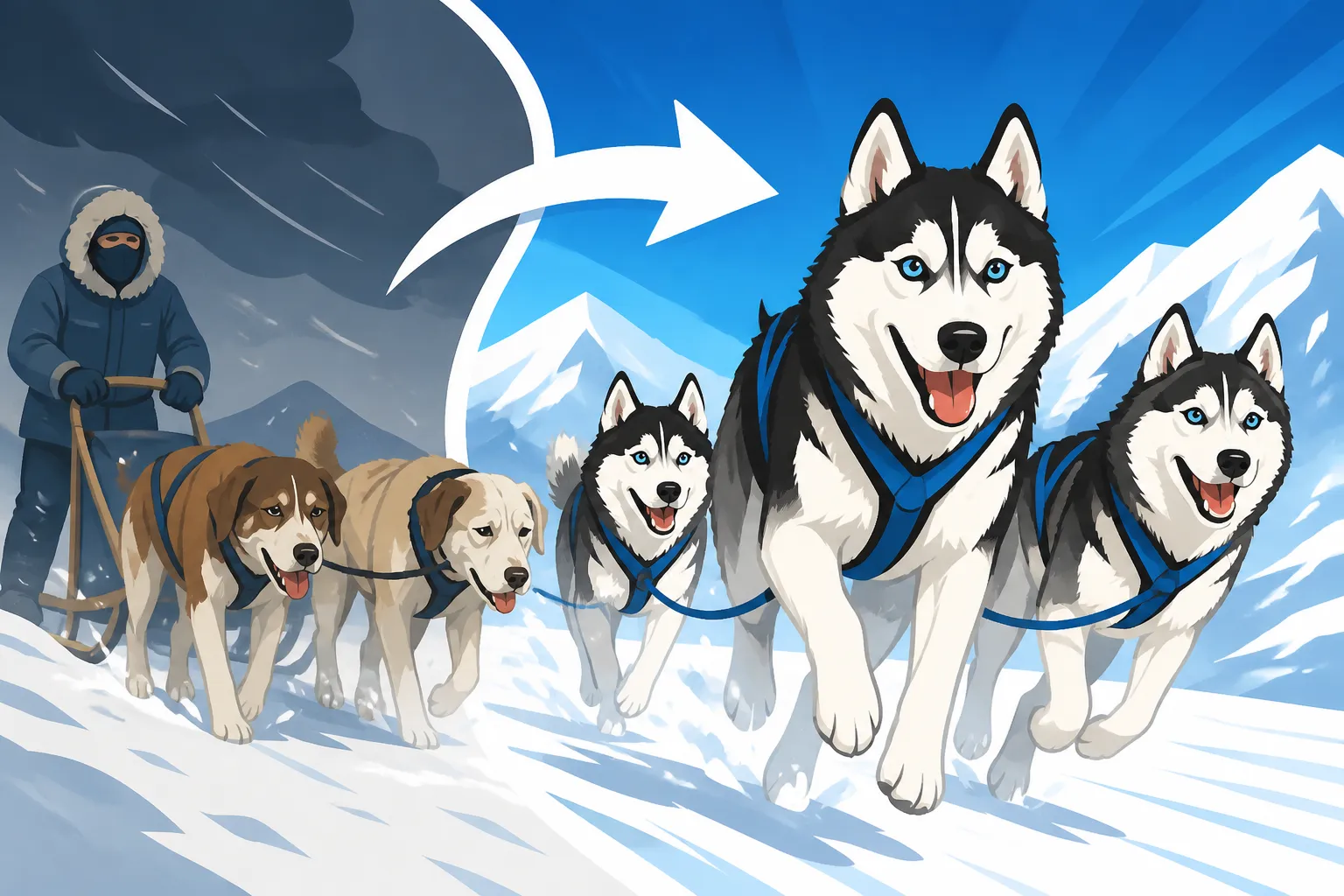
Teams were often composed of a mix of breeds and types – everything from local Eskimo dogs to Malamutes, and even St. Bernards or Newfoundlands, sometimes crossed with pointers or setters for speed. These early teams were a testament to the ingenuity and resourcefulness of the mushers, who were trying to piece together the best possible combination of strength and speed from the dogs available to them. Many stories from this era speak of dogs pulling so hard their shoulders would bleed, or collapsing from exhaustion. The search was always on for an edge, a better dog that could handle the unique blend of speed, stamina, and efficiency this monumental race demanded.
The Arrival of the "Siberian Rats" and Initial Skepticism
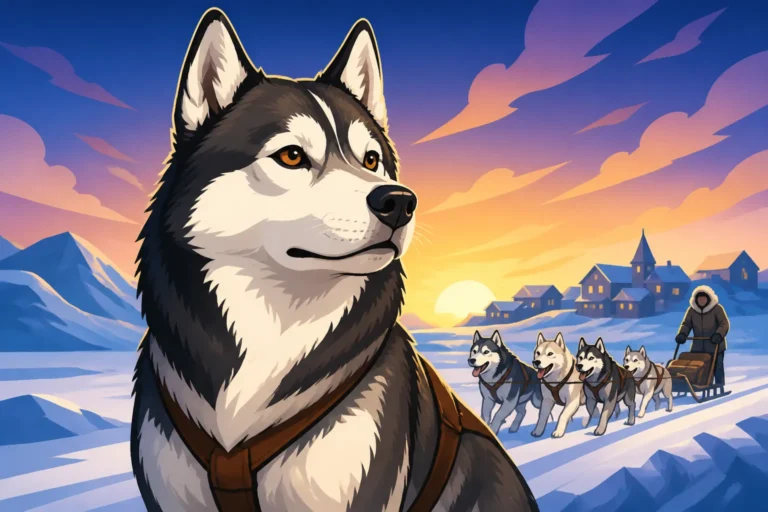
The game began to change in 1908 and 1909 with the arrival of a new type of dog in Alaska: the Siberian Husky. These dogs were brought over from Siberia by a Russian fur trader named Charles Fox Maule Ramsay. His decision to import these smaller, lighter dogs was met with a healthy dose of skepticism, if not outright ridicule, from the established Alaskan mushing community. They were so different from the powerful, heavy-boned dogs that everyone was used to.
Introducing the Siberian Huskies to Alaskan Trails
Ramsay's first team of Siberians, imported in 1908, competed in the 1909 All-Alaska Sweepstakes. The sight of these comparatively small dogs, weighing perhaps 40-60 pounds, next to the beefy Malamutes and local mixes, was quite a spectacle. The local press and many veteran mushers scoffed, derisively nicknaming them "Siberian Rats." How could these elegant, medium-sized dogs possibly compete against the established powerhouses of the trail? It felt like bringing a pony to a draft horse race. How Siberian Huskies Reached Alaska in 1908 is a fascinating read about this early period.
This initial perception was a huge hurdle. Mushers had long associated pulling power with sheer size and bulk. The idea that a smaller, more refined dog could outperform a larger one simply flew in the face of conventional wisdom. They looked at the Siberians and saw fragility, not efficiency. However, Ramsay, along with others who would soon champion the breed, understood something fundamental about the conditions of long-distance racing: it wasn't just about brute strength. It was about sustained energy, efficient movement, and the ability to cover ground quickly without burning out. The All-Alaska Sweepstakes and the Siberian Husky was truly a turning point.
Overcoming Prejudice and Proving Their Worth
Despite the initial skepticism, the Siberian Huskies quickly started to turn heads. In the 1909 Sweepstakes, Ramsay's team, driven by Norwegian musher Louis Thayer, finished third, a truly impressive feat that shocked many. While they didn't win, finishing on the podium against teams of much larger dogs was a powerful statement. It demonstrated that these "Siberian Rats" were far from fragile; they were tough, fast, and had an incredible ability to endure. This performance planted the seed of doubt in the minds of the old guard. Perhaps there was more to these dogs than met the eye.
The following year, Ramsay imported more Siberians and entrusted a team to the legendary musher John "Iron Man" Johnson. In the 1910 Sweepstakes, Johnson's Siberian Husky team absolutely dominated, winning the race and shattering the previous record. This victory wasn't just a win; it was a revelation. It proved, beyond a shadow of a doubt, that these smaller, more efficient dogs were the future of Alaskan sled dog racing. The nickname "Siberian Rats" began to fade, replaced by a grudging respect, and then outright admiration. The 1909 Sweepstakes Team Called Siberian Rats details this pivotal moment in husky history.
The Performance Advantage: Speed, Endurance, and Unmatched Efficiency
The switch from the traditional Alaskan sled dogs to Siberian Huskies wasn't based on sentiment or aesthetics; it was a purely practical decision driven by their superior performance on the race trail. These dogs possessed a unique combination of traits perfectly suited for the intense demands of long-distance speed racing, traits that their larger, heavier counterparts simply couldn't match.
The Husky's Efficient Metabolism and Speed
One of the most significant advantages of the Siberian Husky was its incredibly efficient metabolism. Bred for centuries by the Chukchi people in northeastern Siberia, these dogs were accustomed to working hard on minimal food in extreme cold. This meant they could maintain a high speed over long distances without burning through their energy reserves as quickly as larger, less efficient breeds. They were streamlined athletes, built for agility and quick footwork over varied terrain.
Think about it: a larger dog requires more calories to move its mass, and while it might have more brute strength for a short pull, that strength comes at a metabolic cost over 400 miles. The Siberian Huskies, with their lighter build and tireless trot, could keep going, mile after mile, often outpacing the heavier teams. This efficient energy use meant mushers could rely on them to cover ground faster, day after day, a critical factor when every minute counted in a race. It wasn't just about being fast in a sprint; it was about sustaining that speed. Many modern mushers still look for efficient metabolisms in their dogs, often finding specific high-fat dog foods on platforms like Chewy to fuel their working animals effectively. How Long the Chukchi Bred Siberian Husky Ancestors provides great insight into their origins.
Unparalleled Endurance and Toughness
Beyond speed, the endurance of the Siberian Husky was legendary. Their history with The Chukchi Origins of the Siberian Husky meant they were not only built for speed and efficiency but also for incredible resilience. They were known for their tough feet, thick double coats that offered superior protection against the biting Alaskan winds, and an uncanny ability to withstand the harshest conditions. They could run for hours, take a short rest, and be ready to go again, seemingly unfazed by the cold or the miles.
This endurance was paramount in races that spanned multiple days. A dog might be fast for the first 100 miles, but if it couldn't recover quickly and maintain its pace, it was useless. Siberian Huskies excelled at this sustained effort. Their mental toughness also played a role; they were known for their willingness to work and their incredible drive, even when tired. They just seemed to love to run. Mushers quickly learned that while the initial sight of them might be deceiving, their performance on the trail was anything but.
The Difference in Pulling Style
It's important to understand the fundamental difference in how these dogs pulled. Traditional Malamutes were often bred for "freighting" – pulling very heavy loads at a slower, more deliberate pace. Their strength was in their sheer pulling power. Siberian Huskies, on the other hand, were bred by the Chukchi for "light freighting and passenger hauling" at a faster clip. They had a lighter, more agile trot that was better suited for maintaining speed. Why Malamutes Pull Freight and Siberians Pull Fast delves into these distinct roles.
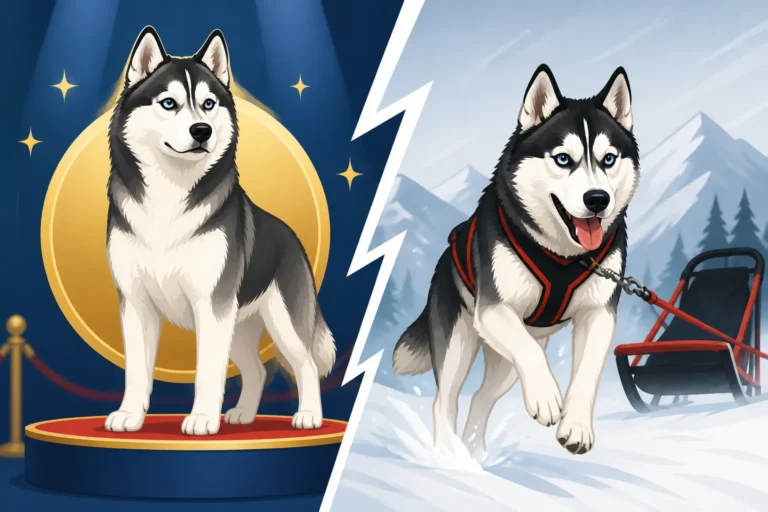
This difference in pulling style meant that a team of Siberians, while not individually as strong as a Malamute in a dead pull, could collectively generate more speed and cover ground more efficiently over distance. They moved with a fluid, ground-eating gait that minimized wasted energy. This was a revelation for racers seeking to shave precious hours off their finish times. Mushers started to appreciate the lean, athletic build that allowed the huskies to run without bogging down, even in soft snow. You can compare this to how some modern working line breeders differentiate their stock from show lines; it's all about purpose-bred efficiency. Show Lines Against Working Siberian Huskies offers more detail on these distinctions.
Key Figures and the Legacy of the Siberian Husky in Racing
The shift to Siberian Huskies wasn't just about the dogs; it was also about the visionary mushers who recognized their potential and were willing to challenge the status quo. These pioneers not only embraced the "new" breed but also cemented their place in sled dog history through legendary performances.
Leonhard Seppala: The Master of the Siberian Husky
No discussion of the Siberian Husky in racing is complete without mentioning Leonhard Seppala. A Norwegian musher, Seppala initially worked for Charles Fox Maule Ramsay and quickly became the most famous champion of the Siberian Husky. He possessed an unparalleled understanding of the breed's capabilities and how to get the most out of them. Under his expert care and training, the Siberian Husky teams truly hit their stride.
Seppala's teams dominated the All-Alaska Sweepstakes for years, winning multiple times between 1915 and 1917. His dogs, carefully bred and rigorously trained, were a testament to the breed's superior genetics and his masterful mushing technique. He demonstrated that with the right handling, these dogs were unbeatable. Leonhard Seppala and His Siberian Huskies tells more about this incredible musher. Seppala's commitment to the breed helped establish the Siberian Husky as the premier racing sled dog, forever changing the face of the sport. His legacy is deeply intertwined with the breed's success.
The 1925 Serum Run to Nome: Cementing Their Legend
While the All-Alaska Sweepstakes proved the Siberians' racing prowess, it was the 1925 Serum Run to Nome that etched them into the annals of global fame. When a diphtheria epidemic threatened the children of Nome, a life-saving antitoxin had to be rushed nearly 700 miles through a brutal Alaskan winter. Multiple sled dog teams participated in the relay, but the Siberian Huskies, led by Seppala's legendary Togo and another team led by Balto, covered the most critical and dangerous legs.
Togo, Seppala's lead dog, led his team on the longest and most treacherous leg, covering 264 miles across perilous Norton Sound ice, facing whiteout blizzards and extreme cold. Togo, the Siberian Husky Who Ran 264 Miles explains the incredible journey. Balto, a Siberian Husky from Seppala's kennel, led the final leg into Nome, becoming the public face of the heroic effort. This monumental undertaking showcased the breed's incredible courage, endurance, and devotion under the most harrowing conditions. The Serum Run wasn't a race for a trophy, but a race for life, and the Siberian Huskies delivered. The Diphtheria Outbreak That Sent Huskies to Nome further illuminates this historic event, and Balto, the Siberian Husky Who Reached Nome shares Balto's part of the story.
The Enduring Legacy
The victories in the All-Alaska Sweepstakes and the heroism of the Serum Run irrevocably solidified the Siberian Husky's reputation. Racers and homesteaders alike realized that for speed, endurance, and efficiency in the Arctic, there was no better dog. The breed's popularity soared, not just in Alaska but across the continental United States and beyond, leading to the formal recognition of the breed by the American Kennel Club in 1930.
Today, while other breeds like Alaskan Huskies (a type, not a purebred breed, often a mix for specific racing traits) are dominant in modern long-distance racing like the Iditarod, the purebred Siberian Husky remains a beloved working dog and companion. Their heritage as efficient, fast, and incredibly tough sled dogs is undeniable. For those looking to delve into their heritage, even everyday items like durable harnesses or nutritional supplements from Chewy can connect back to their working roots, acknowledging the need for reliable gear that stands up to an active husky's lifestyle.
The transition from the "Siberian Rats" to the undisputed champions of the Alaskan trails is a powerful story of performance, adaptation, and the ability of a truly specialized breed to shine when the stakes were highest. It demonstrates that sometimes, the most effective solution isn't the biggest or the strongest, but the one built with the most precise efficiency and heart for the job.
Here's a comparison of common early sled dog types vs. Siberian Huskies:
| Characteristic | Traditional Alaskan Sled Dog (e.g., Malamute Type) | Siberian Husky |
|---|---|---|
| Primary Role | Heavy freight hauling, breaking trail | Light freight/passenger hauling, speed racing |
| Build | Large, heavy-boned, powerful | Medium, athletic, lean, agile |
| Speed (sustained) | Moderate, strong pull | Fast, efficient trot, high sustained speed |
| Endurance | High, for steady, consistent work | Exceptional, for continuous, fast-paced work |
| Metabolism | Generally efficient, but higher caloric need for mass | Highly efficient, lower caloric need relative to work |
| Temperament | Strong-willed, powerful, focused on task | Independent, eager to run, tireless, often mischievous |
| Initial Reception | Established, trusted, "the norm" | Skeptical, derided as "Siberian Rats" |
| Cold Tolerance | Excellent | Excellent, with dense double coat |
Disclaimer
This article is for general informational purposes only and does not constitute professional advice. Laws, prices and regulations vary by location and change over time. Consult a qualified professional for guidance on your specific situation.