Show Lines Against Working Siberian Huskies
It’s easy to get swept up in the dream of owning a majestic Siberian Husky, but many prospective owners don't realize that not all Huskies are bred for the same purpose, leading to significant differences in their needs and characteristics. This guide aims to clear up the confusion between "show line" and "working line" Siberian Huskies, helping you understand what distinguishes them and which might be the right fit for your lifestyle.
The Divergence of Siberian Husky Lines
When we talk about "show lines" and "working lines" in Siberian Huskies, we're not talking about two different breeds. They are all Siberian Huskies, sharing the same breed standard and core genetics. However, over generations, breeders have focused on different traits, leading to a noticeable divergence in appearance, temperament, and drive. Understanding this historical context helps explain why two dogs from the same breed can seem so different in practice.
From Sled Dog to Show Ring Star
The Siberian Husky’s story begins with the Chukchi people of Siberia, who bred these dogs for endurance, speed, and hardiness in incredibly harsh conditions. These were true working dogs, essential for their survival, hauling light loads over vast distances. The Chukchi Origins of the Siberian Husky is a fascinating read on this history. When these dogs first arrived in Alaska in the early 20th century, they quickly proved their mettle in sled dog races, eventually becoming stars in events like the All-Alaska Sweepstakes and, most famously, the 1925 Serum Run to Nome. Their reputation for resilience and speed was undeniable.
As the breed gained popularity in North America, particularly after the heroics of dogs like Togo and Balto, interest grew beyond just racing. People admired their striking looks and friendly nature. This led to the establishment of the breed in the American Kennel Club (AKC) in 1930, creating a formal "standard" for what a Siberian Husky should look like. This standard, while acknowledging their working heritage, began to place more emphasis on consistent physical appearance, structure, and gait suitable for the show ring, rather than solely on endurance and speed on the trail.
The Split in Breeding Philosophy
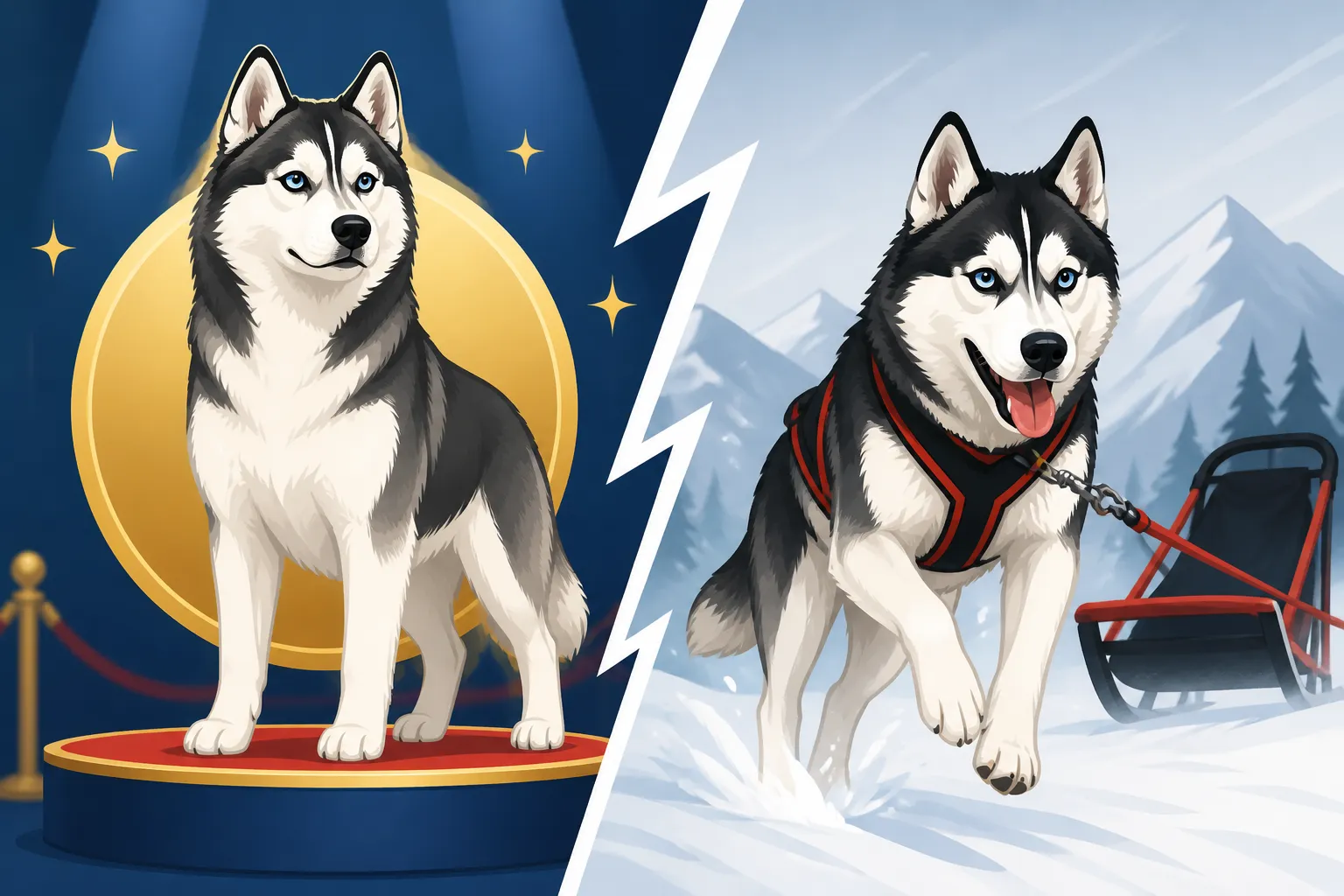
This formalization, while important for preserving breed type, inadvertently created a fork in the road for breeders. Some continued to focus primarily on developing dogs for actual sledding, racing, and other demanding canine sports, prioritizing athleticism, drive, and efficiency over strict adherence to show ring aesthetics. These became known as "working lines." Their focus was on function. Other breeders, equally dedicated to the breed, concentrated on producing dogs that best exemplified the written AKC standard, aiming for success in conformation shows. These became the "show lines." Their focus was on form.
It’s crucial to remember that this isn't a hard-and-fast rule with no overlap. A well-bred show dog should still possess the sound structure and temperament to perform its original function, and many working dogs are beautiful animals. However, the primary selection pressures applied by breeders in each camp have led to observable differences that potential owners absolutely need to consider.
The Show Line Siberian Husky: Beauty and Breed Standard
Show line Siberian Huskies are bred with the AKC (or similar kennel club) breed standard firmly in mind. This means breeders are striving to produce dogs that conform as closely as possible to the ideal physical appearance, movement, and general demeanor outlined in the standard.
Conformation and Appearance
When you look at a show line Husky, you'll often see a dog that epitomizes the "picture perfect" image of the breed. They tend to be slightly heavier in bone and more substantial in body than their working line counterparts. The AKC standard details everything from head shape, ear set, eye color (yes, blue eyes are perfectly acceptable!), coat texture, tail carriage, and overall balance. Breeders of show lines are meticulously selecting for these traits.
Their coats might appear fuller, sometimes even denser, though still within the double-coat parameters that define the breed. They are usually within the specified height and weight ranges, presenting a powerful yet agile appearance. What the AKC Standard Asks of a Siberian Husky provides a deep dive into these specifics. Every feature, from the almond-shaped eyes to the well-furred "brush" tail, is considered for its adherence to the written standard, ensuring a uniform and recognizable breed type across generations.
Temperament and Exercise Needs
While bred for conformation, show line Huskies still retain the core temperament of the breed: friendly, outgoing, and typically not aggressive. They are generally intelligent, but also possess that famous Husky independence. They tend to be good-natured with people and other dogs, which is a desirable trait in any show dog.
Their exercise needs are still significant. These are not couch potatoes by any stretch! A show line Husky will still need daily exercise, often in the form of long walks, runs, or play sessions. However, their drive for intense, sustained work, like pulling a sled for miles, might not be as pronounced as in a working line. They're often content with a good brisk walk or jog, combined with mental enrichment and playtime in a secure yard. They might not have the same "unlimited gas tank" as a working line dog, but they are still highly energetic and require consistent outlets for that energy.
The Working Line Siberian Husky: Built for the Trail
Working line Siberian Huskies are bred for performance. Their primary purpose is to excel at their original job: pulling a sled, whether in competitive racing, recreational mushing, or other demanding canine sports like canicross or bikejoring.
Athleticism and Efficiency
The appearance of a working line Husky often reflects its purpose. They are typically lighter-boned, leaner, and more athletic in build than show lines. Their bodies are honed for efficiency and endurance. You might see longer legs, a deeper chest, and a slightly less dense coat (though still a full double coat!) designed to allow for quicker cooling during intense exertion. They often fall within the lower end of the breed's weight standard, emphasizing speed and stamina over mass.
Their structure is all about fluid, powerful movement. Every angle and proportion is geared towards maximizing their ability to run and pull for extended periods without fatigue or injury. While they are certainly still beautiful dogs, their beauty is functional, a testament to their purpose. Breeders in working lines prioritize soundness, health, and a strong work ethic above all else, ensuring their dogs can handle the rigors of the trail.
Drive and Endurance
This is where working lines truly shine and also where potential owners must pay closest attention. Working line Huskies possess an incredibly high drive and an almost inexhaustible reservoir of energy. They are bred to run, to pull, and to do it for a long time. They thrive on having a "job" to do, whether it's pulling a sled, participating in dog sports, or simply going for very long, vigorous runs with their human.
Their mental and physical stimulation needs are exceptionally high. A simple walk around the block won't cut it for most working line Huskies. They need hours of vigorous activity daily, often incorporating activities that allow them to run and exert themselves fully. If these needs aren't met, they are far more likely to develop destructive behaviors, excessive howling, or attempts to escape, which are common frustrations of Why a Siberian Husky Cannot Be Trusted Off Leash and Siberian Husky Destruction When Left Alone. Their drive is a double-edged sword: magnificent when channeled, challenging when ignored.
Temperament and Lifestyle: A Key Distinction
While both lines share the fundamental Siberian Husky temperament, the emphasis in breeding can lead to subtle but important differences in their overall demeanor and how they fit into various lifestyles.
The Independent Spirit of Both Lines
Let's be clear: regardless of whether they come from show or working lines, Siberian Huskies are known for their independence. They are not typically "people pleasers" like some retriever breeds. They think for themselves, which can often be mistaken for stubbornness. This independent streak means that training requires consistency, creativity, and a good sense of humor. They might learn quickly, but they'll often decide if and when they want to comply. Training an Independent Siberian Husky is a valuable resource for navigating this trait.
Both lines also share that characteristic friendly, outgoing nature. They are generally not suspicious of strangers and make terrible guard dogs. They are social creatures who thrive on companionship, whether with humans or other dogs. However, their high prey drive is also inherent to the breed and must be managed carefully in both lines, especially around small animals. Siberian Husky Prey Drive Around Small Animals is a must-read for anyone considering the breed.
Tailoring Your Approach to Their Needs
The real divergence in temperament often comes down to energy output and mental stimulation needs. A working line Husky is often "always on," ready to go, and can become bored or restless much faster if not adequately stimulated. They need constant engagement and purposeful activity. This isn't just about physical exercise; it's about giving them a job, a challenge to conquer. Owners of working lines often find themselves deeply involved in dog sports or regular, intense outdoor adventures.
A show line Husky, while still active, might have a slightly lower baseline energy level and might be more content with a vigorous daily run or extended playtime without needing the same level of intense, goal-oriented work. They still need engagement, but perhaps the intensity of that engagement can be varied more easily. This isn't to say a show line can't be a fantastic working dog or a working line can't be a beloved pet; it's about the average tendencies and what you should be prepared for.
Choosing the right line heavily depends on your personal lifestyle, time commitment, and what you want to do with your dog.
| Feature | Show Line Siberian Husky | Working Line Siberian Husky |
|---|---|---|
| Primary Focus | Conformation to breed standard, appearance, balanced gait | Athleticism, endurance, speed, work ethic |
| Appearance | Often more substantial bone, fuller coat, balanced look | Leaner, more athletic, lighter bone, efficient build |
| Energy Level | High, but often satisfied with consistent daily exercise | Extremely high, requires intense and prolonged activity |
| Drive | Moderate to high, can be trained for various activities | Very high, strong desire to run, pull, and work |
| Ideal Lifestyle | Active family, regular runs/hikes, structured play | Mushing, canicross, bikejoring, marathon runners/hikers |
| Temperament | Friendly, independent, can be stubborn, still needs mental work | Friendly, independent, often more "on," needs constant jobs |
| Coat Density | Can be very dense, plush | Often slightly less dense (still double), facilitates cooling |
Health Considerations in Both Lines
Regardless of their line, Siberian Huskies are generally a robust and healthy breed. However, there are specific health concerns that all potential owners should be aware of, and responsible breeders of both show and working lines will conduct health testing. Health Testing Before You Buy a Siberian Husky is a critical read before bringing any Husky home.
Common Health Issues in Siberian Huskies
Siberian Huskies are known for good hips, with a relatively low rate of hip dysplasia compared to many other medium to large breeds. Siberian Husky Hips and Why the Rate Is Low goes into more detail. However, eye diseases are a more prevalent concern. These include juvenile cataracts, progressive retinal atrophy (PRA), and corneal dystrophy. Regular eye exams by a veterinary ophthalmologist are highly recommended for all Huskies throughout their lives. Siberian Husky Eye Disease and the Annual Exam explains why this is so important.
Another unique concern for the breed is zinc-responsive dermatosis, a condition where the dog struggles to absorb zinc from its diet, leading to skin issues. While a balanced diet is important, sometimes supplementation is necessary. Zinc-Responsive Dermatosis in the Siberian Husky covers this in depth. Thyroid issues can also occur, and responsible breeders will screen for these.
The Role of Responsible Breeding
For both show lines and working lines, a responsible breeder is paramount. They will not only be able to tell you about the health history of their breeding stock, but they'll also provide documentation of health clearances for the parents. This often includes eye certifications from organizations like OFA (Orthopedic Foundation for Animals) and potentially DNA tests for genetic conditions relevant to the breed.
It’s tempting to think that working lines might be inherently healthier because they are bred for performance, or that show lines are just about looks. But a good breeder in either category understands that a healthy dog is a fundamental requirement for success, whether that success is in the show ring or on the sledding trail. Always ask about health testing, meet the parents if possible, and don't hesitate to ask detailed questions about any health concerns in their lineage.
Making the Right Choice: Which Husky is for You?
Deciding between a show line and a working line Siberian Husky boils down to a very honest assessment of your lifestyle, expectations, and commitment. There's no "better" line, only a better fit for you.
Assessing Your Lifestyle and Commitment
If you're an avid runner, cyclist, or someone who loves long hikes and wants a canine partner to join you for miles and miles, a working line Husky might be an incredible match. These dogs thrive on sustained activity and purpose. They'll push you, challenge you, and reward you with unparalleled companionship on the trail. Just remember, their minds need work too, and they're incredibly intelligent escape artists if bored. Durable chew toys and puzzle feeders from retailers like Chewy can be essential tools for mental stimulation in a high-drive working line dog.
If your lifestyle is active but perhaps not quite "marathon runner" level, or if you're interested in competitive dog sports like obedience, agility, or rally, but not necessarily long-distance mushing, a show line Husky might be a more balanced fit. They still require substantial daily exercise and mental enrichment, but their drive for extreme endurance might be less intense. They will still need a secure yard (think The Six-Foot Fence a Siberian Husky Needs or even higher), consistent training, and plenty of interactive play.
The Importance of Training and Enrichment
Regardless of line, consistent training and enrichment are non-negotiable for a Siberian Husky. Their intelligence combined with their independent nature means they need clear boundaries, positive reinforcement, and a variety of activities to keep their minds engaged. Many Huskies, especially working lines, excel at various dog sports or even just daily "jobs" like carrying a backpack on walks. Interactive toys and mentally stimulating feeders you can find on Chewy.com can also play a huge role in preventing boredom.
Consider the time commitment. Both lines demand a significant investment of time for exercise, training, and companionship. They are social dogs who do not do well being left alone for long periods. If you work long hours away from home and can't provide ample exercise and engagement, a Siberian Husky of either line might not be the best choice. Who Should and Should Not Own a Siberian Husky offers more perspective on suitability.
The Nuance of the "Pet" Husky
It's also worth noting that many excellent Siberian Huskies are bred for companionship, falling somewhere in between strict show or working lines. These breeders prioritize good health, stable temperaments, and moderate drives that make for wonderful family pets. They might have a lineage that includes both show and working champions, seeking to blend the best of both worlds.
When speaking with a breeder, ask about their breeding goals. Do they prioritize specific physical traits, working ability, or an overall balanced temperament for a family companion? A good breeder will be transparent about their program and help you find a puppy whose innate drives and needs align with your ability to provide for them. Sometimes, the best "pet" Husky might not come from the extremes of either line, but from a thoughtful breeder who understands the needs of a typical active family.
Ultimately, the goal is to find a Siberian Husky whose energy level, drive, and temperament align with what you can realistically offer for their entire lifespan. Both show and working lines offer incredible canine companions, but they do require different levels of commitment to truly thrive.
Disclaimer
This article is for general informational purposes only and does not constitute professional advice. Laws, prices and regulations vary by location and change over time. Consult a qualified professional for guidance on your specific situation.