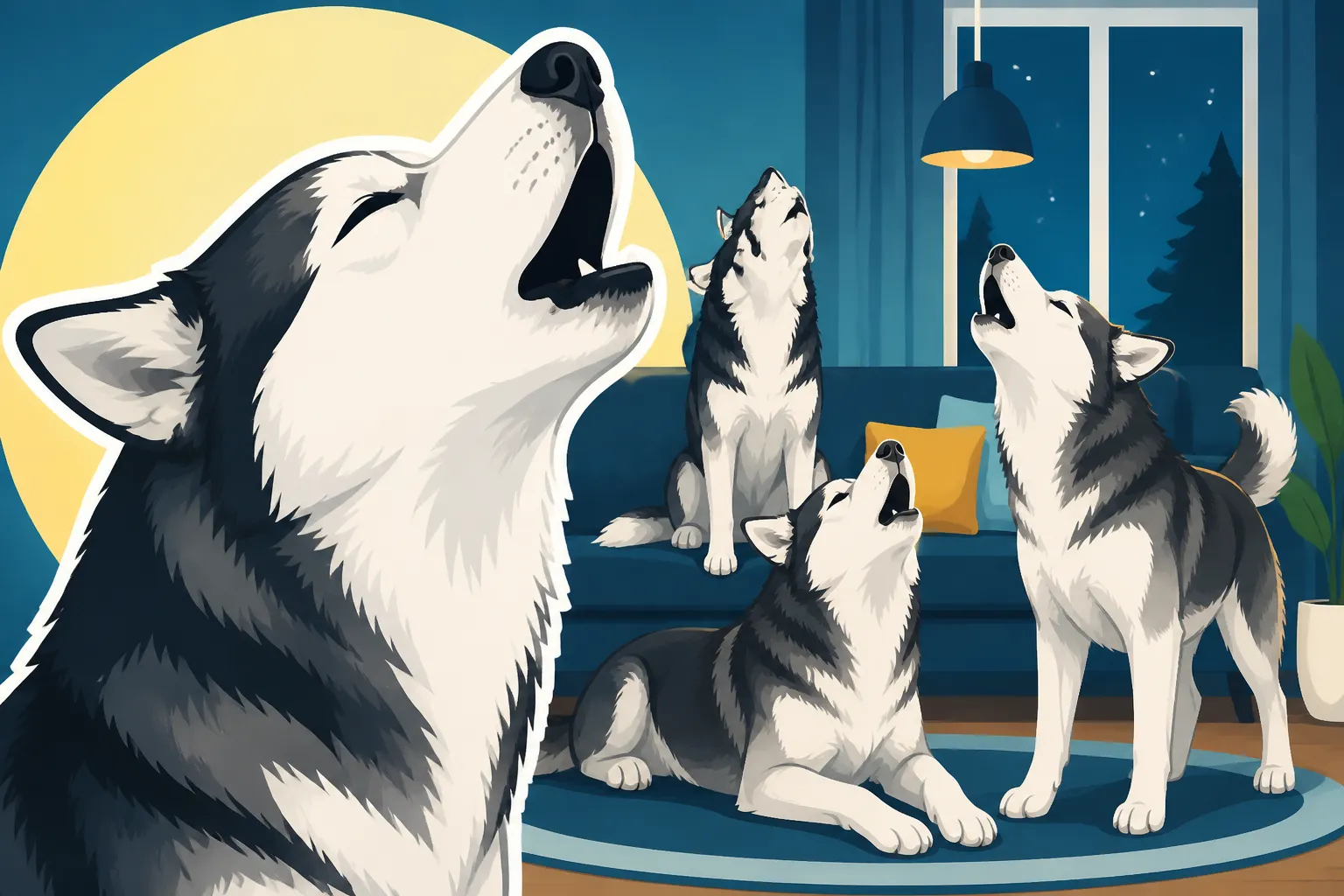
Howling in a Siberian Husky Household
One of the most defining, and sometimes most challenging, traits of living with a Siberian Husky is their incredible vocal range. If you’ve just welcomed a fluffy blue-eyed companion into your home, or even if you’re a seasoned Husky parent, you’ve probably experienced the full symphony: the drawn-out howls, the conversational mumbles, the enthusiastic screams. This guide is here to help you understand why your Siberian Husky is so talkative and, more importantly, how to manage their vocalizations for a more peaceful household.
Understanding the Siberian Husky's Voice
Siberian Huskies are not your average "woof-woof" dog. They come from a lineage that communicates in a much more ancient, wolf-like way, and their vocalizations are a direct echo of that heritage. This isn't just a quirk; it's a fundamental part of their breed identity. Trying to silence a Husky completely is often a losing battle and can even be detrimental to their natural expression. The key is understanding and guiding it.
The Ancestral Howl and Why It Lingers
Think about the origins of the Siberian Husky. They were bred by the Chukchi people in northeastern Siberia, not as guard dogs, but as endurance sled dogs. Their survival depended on working together in packs, navigating vast, often silent, landscapes, and communicating across distances. Barking, which is typically a territorial or alert sound, isn't as effective in these conditions. A howl, however, carries much further, allowing pack members to locate each other, signal findings, or simply express their presence over long distances. This deep-seated instinct to howl has been passed down through generations, making it a powerful and often uncontrollable urge for many modern Huskies.
It's not uncommon for a Husky to let out a mournful, drawn-out howl that just seems to hang in the air, stirring something primal within you. This isn't always a sign of distress; sometimes, it's just them connecting with that ancient lineage, expressing themselves in a way that feels natural to them. When you hear that sound, remember that you’re listening to a direct link to their past, a powerful testament to their history as working dogs in vast, open lands. This understanding can help you appreciate their vocal nature rather than just being frustrated by it.
Distinguishing Howls from Barks and Woofs
Many people assume all dog vocalizations are the same, but Huskies offer a masterclass in varied communication. While they can bark, it’s generally not their preferred or most common form of vocal expression. A Husky’s bark tends to be sharp and perhaps a bit infrequent, often used for immediate alerts or demanding attention in a more direct way. For instance, a quick "woof" at the mail carrier might happen, but it’s unlikely to escalate into sustained barking like some other breeds.
Their howls, on the other hand, are deliberate and nuanced. There are short, sharp "arooooos" of excitement, long, sustained howls that might be a response to distant sirens, and the softer, more conversational "woo-woo-woo" sounds that accompany greetings or requests. Then there’s The Siberian Husky Scream and What Sets It Off, a truly unique and often startling vocalization that sounds exactly as it implies – a high-pitched, almost human-like shriek of protest or extreme excitement. Learning to differentiate these sounds is crucial for understanding what your Husky is trying to tell you. It helps you respond appropriately, rather than treating all noise as a single problem.
Communication Through Sound: More Than Just Noise
Your Husky isn't just making noise; they are communicating. They use their voices to express a wide range of emotions and needs. Think of it as their primary language, especially when they can't physically reach you or when they feel the need to broadcast their feelings. A happy howl might greet you at the door, a worried howl might echo from the yard if they're lonely, and a playful howl might be directed at another dog during a romp.
For example, I once had a Husky, Kiana, who would "sing" to me every evening as I prepared dinner. It started as a low grumble, escalated into a series of "arooooos," and ended with a happy "woo-woo-woo" dance around my feet when her bowl hit the floor. This wasn't a problem; it was her ritual, her way of sharing her excitement and anticipation. Understanding these nuances helps you decode their messages and strengthens your bond. It also prevents you from inadvertently punishing communication rather than redirecting unwanted behaviors. Why Your Siberian Husky Howls and Talks can help you further decode these vocal messages.
Common Triggers for Siberian Husky Howling
Living with a Husky means becoming an expert in their triggers. Their vocalizations aren't random; they're usually a response to something specific, whether internal or external. Pinpointing these triggers is the first step toward effective management.
Siren Song and Environmental Stimuli
One of the most classic Husky behaviors is the "siren song." Fire truck sirens, police cars, ambulances, even distant church bells or harmonicas can set off a chorus of howls. This isn't usually distress; it's a response to a sound frequency that resonates with their ancestral instinct to communicate with their pack over long distances. They hear it, and their natural inclination is to respond, to join the "chorus." It’s a completely natural, if sometimes inconvenient, instinct.
Beyond sirens, other environmental sounds can trigger vocalizations. The distant howl of another dog, the sound of coyotes in rural areas, or even certain sounds from television can prompt a response. My neighbor’s Husky, Bandit, used to howl every time a particular opera singer came on TV. It was baffling until we realized the pitch and sustained notes mirrored the kind of sounds that would trigger his instinct. You might also find your Husky reacts to construction noise, the rumble of a distant train, or even the familiar sound of your car pulling into the driveway. They are highly attuned to their environment.
Separation Anxiety and Loneliness
Perhaps one of the most heartbreaking and common reasons for excessive howling is separation anxiety or profound loneliness. Huskies are incredibly social pack animals. They thrive on companionship and can struggle immensely when left alone for long periods. A Husky experiencing separation anxiety might howl incessantly as soon as you leave, sometimes escalating into destructive behaviors like chewing furniture or attempting to escape. This isn't naughtiness; it's a genuine panic response.
Imagine being utterly alone, unable to reach your family, and feeling vulnerable. That’s what a Husky with separation anxiety experiences. Their howls are a desperate cry for connection, a plea for you to return. This is where understanding A Siberian Husky That Howls When You Leave becomes critical. It's not just noise; it’s a symptom of deeper distress. Addressing this requires empathy, patience, and a structured approach to building their confidence when alone.
Attention-Seeking and Boredom Howls
Huskies are clever, and they learn quickly what gets a reaction from you. If your Husky howls, and you immediately rush over to comfort, scold, or otherwise acknowledge them, they've just learned that howling works to get your attention. This can quickly become a self-reinforcing cycle. These howls might not be as desperate as those from true separation anxiety but are still a persistent nuisance.
Similarly, a bored Husky is a destructive and vocal Husky. These dogs were bred to run for miles, work, and solve problems. If they're under-exercised or under-stimulated, they will find their own entertainment, which often includes a symphony of vocalizations. A bored howl might be accompanied by pacing, staring at you expectantly, or even nudging a toy in your direction. They're basically saying, "Hey! I'm still here! I have energy! Entertain me!" Ignoring a bored Husky's vocalizations without addressing the underlying lack of stimulation is like trying to ignore a leaky faucet – it'll just keep dripping louder. For broader context on this, consider Siberian Husky Destruction When Left Alone.
Excitement and Playtime Vocalizations
Not all howling is problematic. Sometimes, your Husky is just excited! This can manifest as short, enthusiastic "arooooos" when a favorite toy comes out, a playmate arrives, or it’s time for their beloved walk. These are joyful noises, a natural expression of their happy, energetic spirit. During play, Huskies often engage in "talking" – a series of grumbles, groans, and quiet howls exchanged between dogs. It’s their way of communicating play intentions and establishing boundaries.
My two Huskies, Ghost and Luna, have entire conversations during their wrestling matches. It's a low rumbling chorus of "oof-oof-arooo-grrr," perfectly understood by them. These vocalizations are part of the fun and are usually a sign of a well-adjusted, happy dog. The challenge lies in teaching them when these excited outbursts are appropriate (e.g., during playtime in the yard) and when they need to be toned down (e.g., when guests are over, or it's quiet hours).
Strategies for Managing Excessive Howling
Managing a vocal Husky isn't about silencing them completely, but about teaching them when and where vocalization is acceptable and redirecting unwanted habits. It takes consistency, patience, and often a multi-faceted approach.
Environmental Management and Soundproofing
If environmental triggers like sirens or neighborhood dogs are a major cause of howling, you might need to manage their exposure. This isn't always possible, especially in urban environments, but there are steps you can take. For example, playing white noise or calming music when you leave the house can mask external sounds that might trigger a response. Consider turning on a fan or a radio.
For more extreme cases, especially if you live in an apartment or close quarters, Soundproofing an Apartment for a Siberian Husky might be a consideration. Heavy curtains, draft stoppers, and even sound-absorbing panels (which you can often find on platforms like Amazon) can help reduce the transmission of both incoming triggers and outgoing howls. This creates a calmer environment for your Husky and minimizes disruption for your neighbors. It’s about creating a personal bubble of quiet for your dog, even if the world outside is noisy.
Enriching Their Lives to Reduce Boredom
A physically and mentally tired Husky is a much quieter Husky. These dogs need a job, even if that "job" is just regular, vigorous exercise and mental stimulation. Two brisk walks a day simply won't cut it for most Siberians. They need opportunities to run, explore, and use their brains. Incorporate activities like canicross, bikejoring, or even just long hikes where they can sniff and investigate.
Beyond physical exercise, mental stimulation is vital. Puzzle toys, snuffle mats, and obedience training sessions are excellent ways to engage their minds. Freeze Kongs filled with peanut butter or yogurt to provide a long-lasting distraction. Rotate toys regularly to keep things fresh. A dog that has spent its day problem-solving and burning energy is less likely to resort to boredom howling. Think of it this way: if they're busy working their brains or bodies, they have less time and energy to produce arias for the neighborhood. This proactive approach is far more effective than trying to suppress a deep-seated instinct.
Addressing Separation Anxiety with Training
If your Husky's howling stems from separation anxiety, a consistent and compassionate training plan is essential. This is not a quick fix; it requires gradual desensitization and counter-conditioning. Start with very short absences, literally seconds, and gradually increase the duration, always returning before your Husky becomes anxious or starts howling. Pair your departures with high-value treats or a special long-lasting chew toy that they only get when you leave.
The goal is to teach your Husky that your absence isn't something to fear, but rather an opportunity for a tasty reward or a relaxing nap. Never make a big fuss when you leave or return, as this can heighten their anxiety. Keep greetings calm and low-key. For structured guidance, consider an online program like those offered by BAXTER & Bella. They often provide step-by-step instructions for dealing with separation issues, which can be invaluable for owners navigating this challenging behavior. Patience is paramount here; rushing the process will only set you back. Siberian Husky Separation Behavior has more helpful information on this topic.
Teaching a "Quiet" Cue
While you can't stop a Husky from ever howling, you can teach them a "quiet" cue. This involves teaching them to bark or howl on command (yes, really!) and then teaching them to stop. Start by intentionally triggering a howl, perhaps by making an exciting noise or waiting for a siren. The moment they vocalize, praise them and give them a treat, pairing it with a cue like "speak" or "howl." Practice this until they reliably vocalize on cue.
Once they understand "speak," you can introduce "quiet." After they howl on command, present a treat to their nose, and as they quiet down to sniff it, say "quiet" and reward them. The key is to reward the absence of noise. Gradually increase the duration of silence before the reward. This teaches them control over their voice. It's much easier to teach a dog to be quiet if they know how to vocalize on command first. Consistency is crucial here; everyone in the household needs to use the same cues and methods. This is one aspect of Whether a Husky Can Be Taught to Stop Howling that really works.
When Howling Becomes a Concern
While much of a Husky's vocalization is natural, there are times when it crosses the line from quirky trait to a genuine problem. Recognizing these instances is important for both your dog's well-being and your household's harmony.
Identifying Howls Related to Pain or Distress
Not all howls are benign. A sudden, unexplained increase in howling, especially if it’s accompanied by other behavioral changes like restlessness, loss of appetite, lethargy, or reluctance to move, could signal pain or distress. A Husky might howl in response to an injury, an illness, or even significant discomfort. If your normally quiet Husky suddenly starts howling for no apparent reason, or if their howl sounds genuinely mournful or painful, it's time for a veterinary check-up.
Pay attention to the context. A howl that seems out of character for your dog, or one that occurs when they are touched in a certain spot, or when they try to get up, warrants immediate investigation. They can't tell us directly what's wrong, so their vocalizations become a vital indicator of their health. Don't dismiss these changes; your Husky might be trying to tell you something very important about their physical state.
Neighbors, Landlords, and the Legal Aspect
This is where Husky howling can quickly move from an endearing trait to a source of significant stress. What's charming to you might be infuriating to a neighbor trying to work from home, put a baby to sleep, or simply enjoy their quiet space. Persistent nuisance barking or howling can lead to neighbor complaints, official warnings from landlords or HOAs, and even legal action in some communities. Many leases explicitly state clauses about noise disturbances, and breed restrictions might even come into play if your Husky is deemed disruptive.
It's your responsibility as a Husky owner to be a good neighbor and prevent your dog's vocalizations from becoming a public nuisance. This means being proactive, not reactive. Talk to your neighbors if you suspect there's a problem. Ask them to be honest with you. Consider setting up a camera with audio recording while you're away to assess the extent of the howling. Addressing the issue head-on is far better than waiting for a formal complaint. Whether Neighbors Can Complain About Husky Howling is a topic many Husky owners sadly have to confront.
Seeking Professional Help for Persistent Vocalization
If you've tried various management strategies and your Husky's howling remains excessive or problematic, it’s absolutely okay, and often necessary, to seek professional help. A certified professional dog trainer, especially one experienced with northern breeds, or a veterinary behaviorist can offer tailored strategies and identify underlying issues you might have missed. They can assess your Husky’s body language, triggers, and overall temperament to create a customized training plan.
Sometimes, what appears to be simple attention-seeking can have roots in deeper anxiety, which a professional can help diagnose. In some severe cases of separation anxiety or chronic stress-induced howling, a vet might even suggest medication in conjunction with behavior modification, to help reduce anxiety levels enough for the training to be effective. Don't see seeking help as a failure; it’s an act of responsible pet ownership that benefits both you and your beloved Husky. This is particularly relevant given the independent nature of the breed, as covered in Training an Independent Siberian Husky.
Living Harmoniously with a Vocal Husky
Ultimately, living with a Siberian Husky means understanding and embracing their unique characteristics, and their voice is certainly one of them. While you can manage excessive howling, aiming for complete silence is often unrealistic and counterproductive.
Embracing Their Unique Communication Style
Once you accept that your Husky is inherently vocal, you can shift your perspective from frustration to appreciation. Their "talking" can be a source of joy and entertainment, a truly unique aspect of their personality. Learn to love their grumbles, their greetings, their siren serenades (within reasonable limits, of course!). Instead of seeing it as noise, view it as their way of interacting with the world and with you.
My old boy, Kody, used to have a distinctive "mumble-howl" when he wanted to go for a walk. It wasn't loud, just a persistent, conversational sound that clearly communicated his desire. It became an endearing part of our daily routine, and I learned to understand exactly what he was saying. This embracing of their communication style helps build a stronger, more trusting relationship where you're both understood.
Managing Expectations for Quiet Living
Let's be realistic: a completely silent Siberian Husky is a rare, rare thing. If your expectation is a dog that never makes a peep, then a Husky might not be the right breed for you. Instead, manage your expectations. Aim for a Husky whose vocalizations are within a reasonable, manageable range, one that doesn't disrupt your life or your neighbors' peace. This means accepting that there will be times when they howl, especially in response to strong triggers like sirens, but that these instances are limited and controlled.
It also means recognizing that some Husky vocalizations are simply non-negotiable expressions of their breed. They will "talk" to you, they will make excited noises, and they will likely howl at certain environmental stimuli. Focus your energy on addressing the problematic howling (e.g., constant howling when alone, nuisance howling) rather than trying to stifle every single vocalization. What New Siberian Husky Owners Underestimate often includes this aspect of their vocal nature.
Building a Stronger Bond Through Understanding
The journey of understanding and managing your Siberian Husky's howling is ultimately a path to a stronger bond. When you take the time to decode their vocalizations, to address their underlying needs (whether for exercise, mental stimulation, or reassurance), and to teach them appropriate communication, you show them that you hear them, you understand them, and you care. This builds trust and mutual respect.
A Husky that feels understood and listened to is a happier, more settled dog. They rely on you to provide structure, guidance, and a safe environment where they can express themselves within acceptable boundaries. By working with their natural instincts instead of against them, you can foster a harmonious household where your Husky's voice is not a burden, but a cherished part of their spirited personality. Engaging in positive reinforcement training, like that often discussed in programs by BAXTER & Bella, can significantly help in this process by building clear communication.
| Howl Type | Common Trigger | Potential Meaning | Management Strategy |
|---|---|---|---|
| Siren Howl | Sirens, distant dog howls | "I hear my pack! Responding!" | Environmental masking, "Quiet" cue training |
| Separation Howl | Being left alone | "I'm lonely/anxious! Where are you?" | Gradual desensitization, enrichment, professional help |
| Attention/Boredom | Lack of stimulation, ignored | "Entertain me! I'm here!" | Increased exercise & mental stimulation, ignore/redirect |
| Excitement/Play | Arrival of friends, playtime, walk | "Yay! Fun time!" | Redirect if excessive, teach appropriate timing |
| Distress/Pain | Injury, illness, discomfort | "I'm hurting/unwell! Help me!" | Immediate veterinary consultation, monitoring |
Disclaimer
This article is for general informational purposes only and does not constitute professional advice. Laws, prices and regulations vary by location and change over time. Consult a qualified professional for guidance on your specific situation.