Thirty Feet or Fifty on a Siberian Husky Line
One of the most common frustrations Siberian Husky owners face is the burning desire to give their adventurous pups the freedom to explore, to run, to truly be a husky, without the constant fear of them disappearing over the horizon. Huskies are notorious for their wanderlust and selective hearing when off-leash, making safe exercise a real challenge. This guide dives deep into the world of long lines, specifically helping you navigate the decision between a 30-foot and a 50-foot line to maximize your husky’s training and joyful outdoor experiences.
The Basics of Long Lines for Siberian Huskies
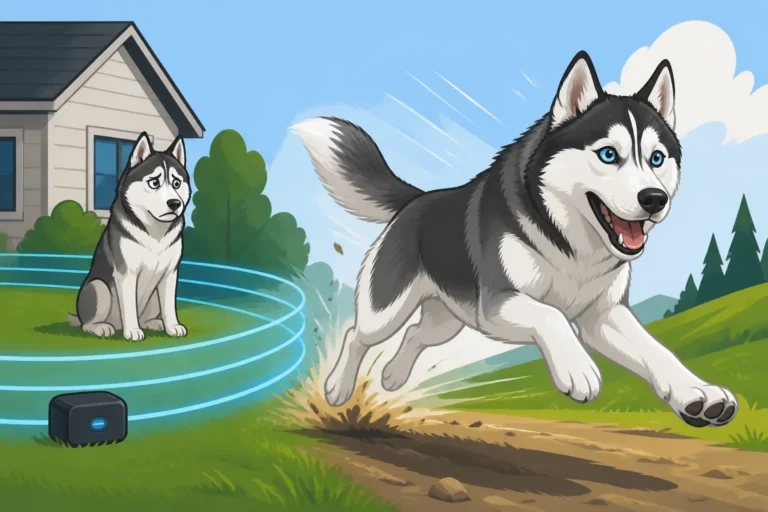
Let's be honest, the image of a majestic Siberian Husky galloping freely through a field is what many of us dream of. But the reality is often a frantic dash after a blue-eyed blur that has decided sniffing out that distant deer trail is far more interesting than your urgent recall. This is where a long line steps in, bridging the gap between a standard leash walk and the elusive off-leash reliability. It's a fundamental tool for any husky owner committed to safety and effective training.
Why a Long Line Isn't Just a Longer Leash
It’s easy to think of a long line as just a really, really long leash, but that misses the point entirely. A standard leash is primarily for control and keeping your dog close. A long line, however, is a training tool designed to simulate off-leash freedom while maintaining a crucial safety connection. For a Siberian Husky, this distinction is vital. Their innate roaming instinct means they aren't wired to stay close by default. They were bred to cover vast distances, to work independently, and to follow interesting scents for miles. Expecting them to ignore these deeply ingrained instincts with just a "come" cue in an unfenced area is setting them up for failure, and you for heartache.
A long line allows your husky to explore, sniff, and accelerate, giving them the mental and physical stimulation they crave, all while you hold the "emergency brake." It’s about teaching them boundaries and recall cues at a distance, gradually extending that distance, rather than simply restricting them. This isn't just about preventing escape; it's about building a solid foundation for Teaching a Siberian Husky to Come Back and Building a Siberian Husky Recall Word From Scratch in a controlled, safe manner.
When a Long Line Becomes Essential
There are countless scenarios where a long line isn't just a nice-to-have, but an absolute necessity for a husky owner. Imagine taking your energetic husky to a beautiful, open park that isn't fully fenced, or perhaps a hiking trail where off-leash isn't permitted but you still want to give them more room than a six-foot leash allows. This is where the long line shines. It gives them enough slack to stretch their legs, trot ahead, and investigate that interesting smell under the bush, all without you having to constantly micro-manage their every step.
For puppies and adolescent huskies, a long line is an invaluable tool for early recall training. You can start in a quiet, open space, let them wander a bit, then give your recall cue. If they hesitate, a gentle tug on the line reminds them of the expectation, allowing you to guide them back to you and reward them lavishly. This positive reinforcement, coupled with the physical guidance, is far more effective and humane than hoping they'll just decide to come back. It's also perfect for Practicing Siberian Husky Recall in a Fenced Field before attempting it in an unfenced area. Without a long line, you’re constantly battling their desire to bolt, which can quickly lead to frustration for both of you.
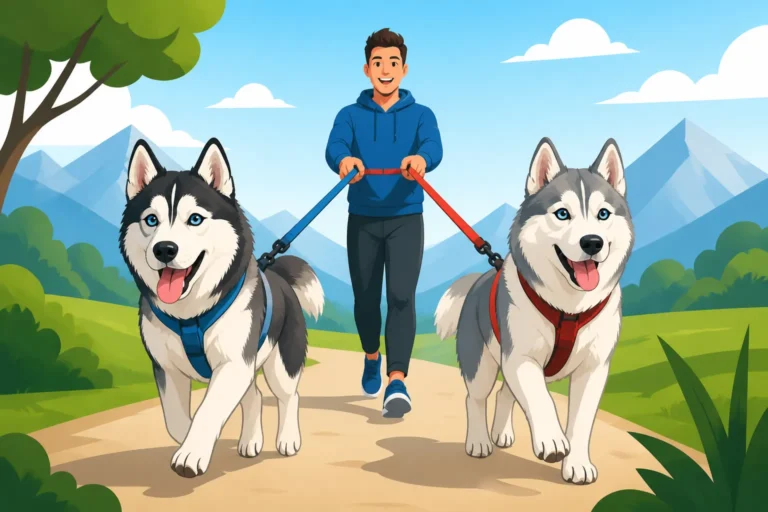
Beyond training, long lines are crucial for safe outdoor adventures. If you enjoy activities like canicross or bikejoring but are still working on your husky’s focus, a long line offers that extra layer of security. It ensures that if they suddenly spot a squirrel and decide to give chase, you have a chance to intervene before they put themselves or others in danger. It’s a peace of mind tool, allowing your husky to experience the joys of movement and exploration without the terrifying risk of them getting lost or encountering hazards.
Deciding Between a 30-Foot and 50-Foot Line
The core question often comes down to length: do you go for a 30-foot line or make the leap to a 50-foot one? Both have their place in a husky owner’s toolkit, and the best choice often depends on your specific training goals, your environment, and your husky's current level of obedience. There's no single "right" answer, but understanding the pros and cons of each can help you make an informed decision for your unique situation.
Advantages and Limitations of a 30-Foot Line
A 30-foot long line is often the entry point for many husky owners, and for good reason. It strikes a good balance between giving your dog freedom and maintaining a manageable level of control. Think of it as the "training wheels" of off-leash work. With 30 feet of line, your husky gets a decent amount of space to roam, sniff, and accelerate, which is far more satisfying for them than a standard 6-foot leash. This length is excellent for initiating recall training, allowing you to call your husky from a moderate distance and provide a gentle, guiding tug if they get distracted. It's long enough to let them feel somewhat independent, but short enough that you don't feel entirely disconnected.
One of the biggest advantages of a 30-foot line is its maneuverability. It's much easier to handle, coil, and store than its longer counterpart. You'll find it tangles less often around your legs, trees, or other obstacles, which can be a real blessing when you're focusing on your dog. This makes it a great choice for slightly more confined outdoor spaces, like smaller parks or even a larger backyard where you want to practice recall. If you're just Starting Long Line Work With a Siberian Husky, this shorter length provides a less overwhelming experience for both you and your dog, allowing you to build confidence before moving to greater distances. It also generally weighs less, making it easier on your hands if you're holding it for extended periods.
However, the limitation of a 30-foot line is, naturally, its length. While it offers more freedom than a standard leash, it doesn't truly simulate the expansive feeling of being off-leash in a vast, open field. For a husky with a strong prey drive and an instinct to really run, 30 feet might feel a bit restrictive after a while. It might not be long enough to truly test their recall under significant distraction, as they can't get quite far enough away to be fully absorbed in something else before you can reel them in. For advanced recall proofing, you might find yourself wishing for those extra feet.
Advantages and Considerations for a 50-Foot Line
Now, let's talk about the 50-foot long line. This is where your Siberian Husky can really feel the wind in their fur! A 50-foot line provides a significant amount of freedom, much closer to the experience of being truly off-leash. It allows your husky to gallop, chase scents further afield, and explore with a level of independence that a shorter line simply can't offer. For high-energy breeds like huskies, this extra length can be incredibly beneficial for physical exercise and mental enrichment. It enables more vigorous play and longer sprints, which are crucial for keeping these dogs happy and well-adjusted.
The main advantage of a 50-foot line for training is its ability to proof your husky's recall under greater distraction and distance. When your husky is 40-50 feet away, deeply engrossed in a smell or watching a distant bird, a successful recall is a huge win. This extended distance forces your dog to make a conscious choice to disengage from their environment and return to you, making the training much more impactful. It's ideal for refining The Recall a Siberian Husky Will Actually Give You and ensuring it holds up in a variety of challenging situations. If you have access to large, open areas like sports fields (when unoccupied) or expansive natural spaces, a 50-foot line allows you to fully utilize that environment for training and exercise.
However, the 50-foot line comes with its own set of considerations. The sheer length can be a challenge to manage. It's heavier, more prone to tangling, and requires more effort to coil and uncoil. You'll need to develop good line-handling skills to avoid tripping yourself or getting the line snagged on every tree branch. In areas with a lot of obstacles, a 50-foot line can quickly become a tangled mess, turning a pleasant walk into a frustrating wrestling match with nylon. Furthermore, in crowded areas, a 50-foot line can become a hazard for other people and dogs if not managed carefully. It demands more attention from you and a greater awareness of your surroundings. For these reasons, many owners prefer to progress to a 50-foot line after mastering the handling of a 30-foot one.
Here’s a quick comparison to help you visualize the differences:
| Feature | 30-Foot Long Line | 50-Foot Long Line |
|---|---|---|
| Freedom Given | Moderate; good for initial exploration | High; close to off-leash experience |
| Control Level | Easier to maintain immediate control | Requires more active handling; slower response |
| Manageability | Less tangling, easier to coil/store, lighter | More prone to tangling, heavier, takes up more space |
| Training Use | Ideal for introducing recall and basic boundaries | Excellent for proofing recall at significant distances |
| Ideal Environment | Smaller parks, larger backyards, moderate trails | Large open fields, beaches, expansive natural areas |
| Skill Required | Beginner to intermediate | Intermediate to advanced |
| Weight | Generally lighter | Noticeably heavier, especially when wet |
Practical Tips for Using Your Chosen Long Line
So you've chosen your weapon in the fight for recall reliability – excellent! But simply having a long line isn't enough; knowing how to use it safely and effectively is paramount, especially with a strong and intelligent breed like the Siberian Husky. A long line should empower both you and your dog, not become a source of frustration or danger.
Safety First
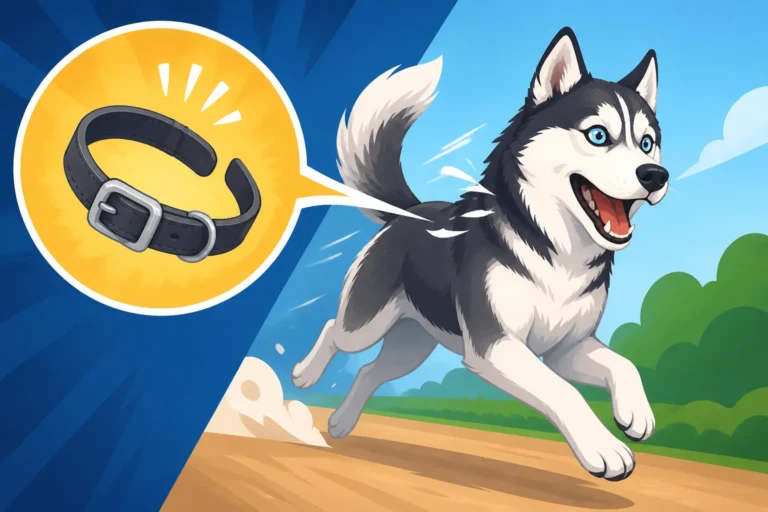
Before you even step out the door with your long line, prioritize safety. Firstly, never attach a long line to your husky's neck collar. A sudden lunge or sprint at the end of 30 or 50 feet of line can cause serious neck and spinal injury, or even choke your dog. Always use a well-fitting, secure harness. A front-clip harness can offer a bit more control if your husky is a strong puller, but a sturdy back-clip harness designed for pulling is generally best for long line work as it reduces the risk of entanglement around their legs if they bolt. For extra security, some owners even use two points of attachment – one to the harness and one to a Martingale Collars for a Siberian Husky as a backup, just in case.
Secondly, always be aware of your surroundings. Scan for other dogs, people, wildlife, and potential hazards like roads or dense underbrush where the line could get irrevocably snagged. A long line can quickly become a trip hazard for both you and others, so be mindful of its trajectory. Wear gloves to protect your hands from rope burn, especially with a strong husky that might suddenly decide to sprint. Never wrap the line around your hand or wrist, as a sudden pull can cause severe injury. Instead, use a firm grip, allowing the line to slip if necessary (while still maintaining control) rather than risking dislocation or rope burn. Your goal is to guide and interrupt, not to anchor your husky like a boat.
Integrating Training with the Long Line
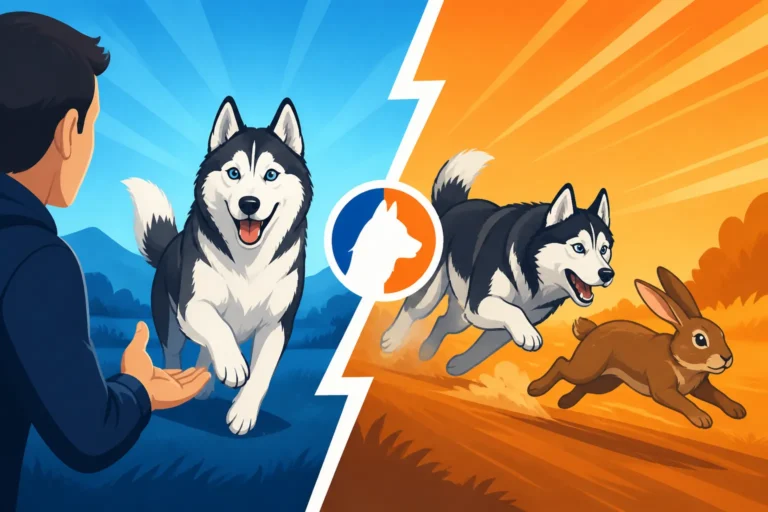
The long line is a powerful training tool, especially for Training an Independent Siberian Husky. Start in a quiet area with minimal distractions. Let your husky explore to the end of the line, then give your recall cue (a happy, enthusiastic "Come!" or "Here!"). If they turn towards you, immediately mark the behavior with a "Yes!" or a clicker, and reward them with high-value treats and praise as they reach you. If they hesitate, give a gentle, steady tug on the line, reeling them in while continuing to use your cue and positive reinforcement. The key is to make coming back to you the most rewarding thing in their world, even when distractions are present.
As your husky's recall improves, gradually introduce more distractions and practice in different environments. Play recall games like "ping-pong" recall with another person, where your husky goes back and forth between you, being rewarded each time. Use the line to interrupt undesirable behaviors at a distance, such as fixating on another dog or trying to chase a squirrel, then redirect their attention to you for a reward. Programs like those offered by BAXTER & Bella can provide structured guidance for recall training and other obedience skills, perfectly complementing your long line practice. Remember to keep sessions positive, short, and fun to maintain your husky's engagement.
Care and Storage of Your Long Line
Taking care of your long line will extend its life and make your training sessions much more enjoyable. After each use, especially if it's been dragged through mud, water, or sand, clean it thoroughly. Many lines can be hosed down or even machine washed in a laundry bag. Make sure it's completely dry before storing to prevent mildew and degradation of the material.
Proper storage is also crucial to prevent tangles. Don't just stuff it into a bag. Learn a simple coiling technique, such as the figure-eight method, to keep the line neat and ready for your next adventure. Some owners prefer to use a specific bag or bucket for their long line to keep it separate from other gear. If you use a biothane line, a simple wipe-down is often sufficient, but it still benefits from being coiled neatly. Quality long lines can be found from various retailers; checking options on Amazon, for example, allows you to compare different materials, lengths, and user reviews to find a durable option that suits your needs. Investing in good quality gear means it will stand up to the rigors of husky adventures.
Beyond the Length: Other Factors to Consider
While the length of your long line is a major decision, it's not the only one. Several other factors play a critical role in the effectiveness, durability, and safety of your long line setup. Ignoring these details can lead to frustration, premature wear and tear, or even safety compromises. A well-chosen long line complements your husky’s unique needs and your training style.
Line Material and Durability
Long lines come in various materials, each with its own benefits and drawbacks.
- Nylon: This is a very common and affordable material. Nylon lines are generally strong and come in a wide array of colors. However, they can absorb water, becoming heavy, and can also get quite abrasive if dragged through sand or gravel, leading to rope burn on your hands if not wearing gloves. They are also prone to tangling and can retain odors if not cleaned regularly.
- Biothane: Often considered the gold standard for long lines, biothane is a coated webbing that looks and feels a bit like leather but has all the advantages of synthetic material. It's waterproof, odor-proof, incredibly durable, and very easy to clean – just wipe it down! It's also less likely to tangle than plain nylon and offers a good grip. The main drawback is that it tends to be more expensive than nylon. For a husky that loves water or lives in a muddy environment, a biothane line is a fantastic investment.
- Cotton Webbing: While soft on the hands, cotton webbing is not generally recommended for a strong dog like a Siberian Husky. It absorbs water heavily, quickly becomes very dirty, and can lose its strength over time. It's better suited for smaller, less powerful breeds.
When choosing, consider your climate, how often you'll be using the line, and your budget. Durability is key; a husky can put a lot of strain on a line, so you want something that will hold up.
Your Environment and Available Space
The type of environment where you'll be using the long line is a huge determinant in your choice. If you primarily have access to wide-open spaces like large athletic fields (check for usage rules, please!) or expansive beaches, a 50-foot line allows your husky to truly stretch out and get in a good run. In these scenarios, the increased freedom outweighs the extra management needed for the longer line.
However, if your primary training grounds are smaller city parks with more trees, bushes, or other obstacles, a 30-foot line might be much more practical. A 50-foot line in a cluttered environment is a recipe for constant tangles and frustration. Consider the average "clearance" you'll have for your husky to run freely without the line getting snagged every few feet. Furthermore, if you're frequently walking through areas where other people and dogs are present, a shorter line makes it easier to manage your husky and prevent accidental tripping. Remember, Long Lines and Recall Gear for a Siberian Husky must always be chosen with safety and practicality in mind.
Your Husky's Temperament and Training Level
Finally, take an honest look at your husky's individual temperament and current training level. For a young, excitable husky puppy just starting out, or an adult husky with little to no recall, a 30-foot line is a safer and more manageable starting point. It allows you to build a foundation of reliable recall in a controlled manner before adding more distance and potential for distraction. You want to set your husky up for success, not overwhelm them or yourself.
As your husky matures and their recall improves, or if you have a husky that is already relatively reliable but needs more space to burn off energy, a 50-foot line might be the perfect next step. Some huskies are more independent and less focused than others; for these dogs, even a 50-foot line might require intense focus from you. Consider how well your husky responds to Rewards That Beat the Siberian Husky Chase Instinct and how quickly they disengage from distractions. The goal is to gradually increase their freedom as their reliability grows, rather than throwing them into the deep end too soon. If your husky's prey drive is particularly high, you might spend more time on a shorter line, working on engagement and focus, before moving to a longer one.
Ultimately, choosing the right long line for your Siberian Husky is a journey. You might start with a 30-foot line, build confidence, and then graduate to a 50-foot one. Or, you might find that having both lengths serves different purposes and environments. The most important thing is to use the tool consistently and safely, providing your amazing husky with the freedom they crave while ensuring their well-being.
Disclaimer
This article is for general informational purposes only and does not constitute professional advice. Laws, prices and regulations vary by location and change over time. Consult a qualified professional for guidance on your specific situation.