A Siberian Husky That Guards Food From Another Dog
It's incredibly frustrating, and honestly, a bit heartbreaking, when you bring a second Siberian Husky into your home, only to find one of them starts turning into a snarling, tense guard dog around their food bowl. You envisioned playful romps and shared naps, not a standoff at mealtime. This kind of resource guarding isn't just stressful for you; it creates anxiety for both dogs and can quickly escalate if not handled correctly. This guide will walk you through understanding why your husky might be guarding food from another dog, and, most importantly, provide clear, actionable steps to manage and resolve this challenging behavior safely and effectively.
Understanding Why Your Siberian Husky Guards Food
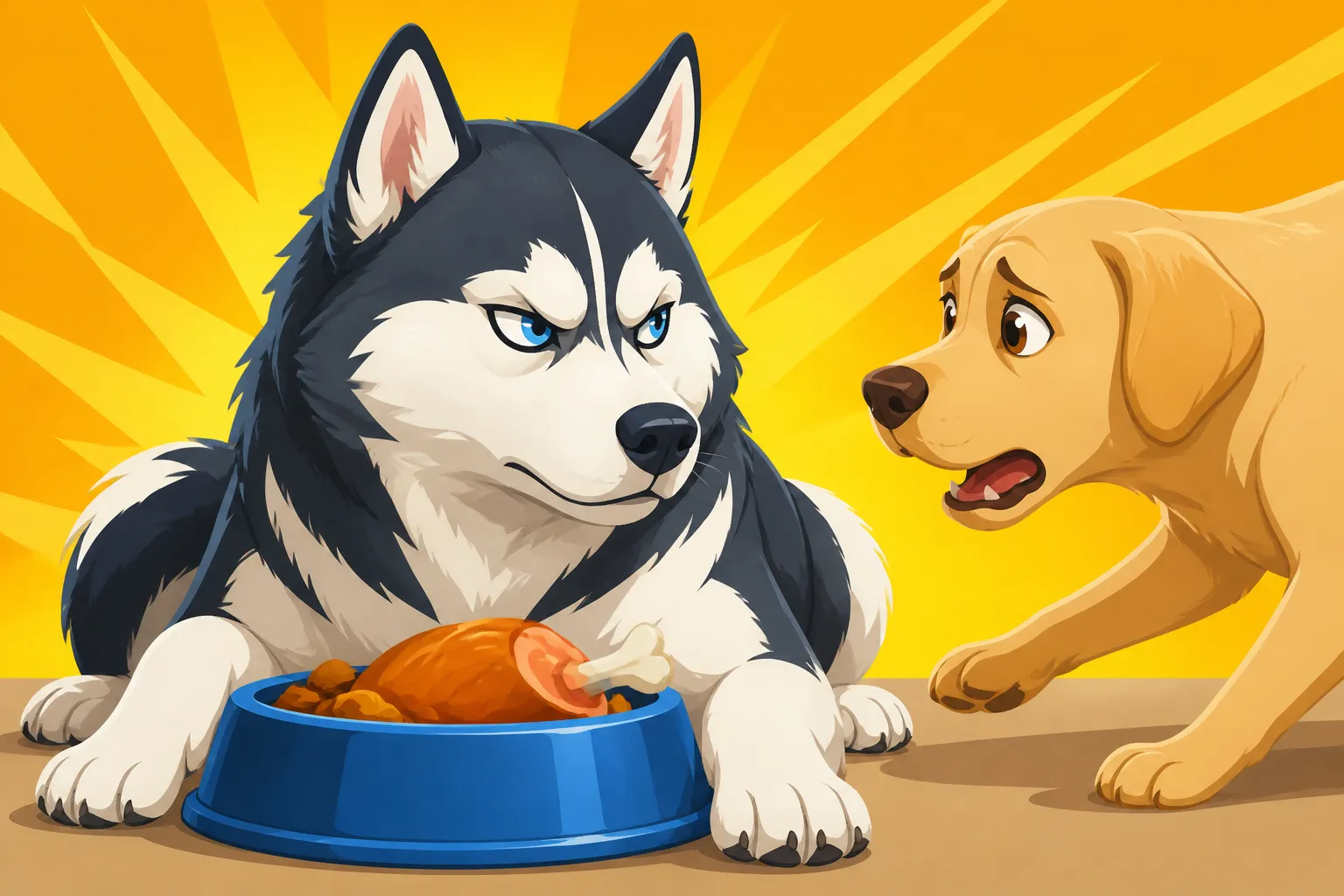
When your sweet, goofy Siberian Husky suddenly becomes rigid, growls, or even snaps when another dog approaches their meal, it can be a real shock. It's easy to take it personally or assume your dog is being "aggressive" or "naughty." But the truth is, resource guarding, especially around food, is a deeply ingrained, instinctual behavior for dogs, and it’s particularly common in breeds like Siberians who retain a strong connection to their ancestral survival drives. It's not about malice; it's often about anxiety and a perceived need to protect valuable resources.
The Instinctual Roots of Resource Guarding
Think about where Siberian Huskies come from: generations of dogs living and working in harsh environments, often with fluctuating access to food. In such conditions, securing food was paramount for survival. While our modern Huskies live pampered lives, those ancient instincts don't just disappear. For a dog, food is a primary resource, directly tied to their well-being. When another dog approaches their meal, their primal brain might interpret it as a threat to their survival, even if the other dog is just walking by. They aren't trying to be dominant or mean; they're genuinely feeling a need to protect something vital. This instinctual drive is a key part of Siberian Husky Temperament and What the Standard Says, often overlooked in the context of their friendly disposition.
This protective instinct can manifest subtly at first: a slight stiffening of the body, a rapid gulping of food, or a quick glance at the approaching dog. If those subtle signals are ignored by the other dog (who may just be curious or oblivious), the guarding husky might escalate to a growl, a snarl, or even a snap. It's their way of saying, "This is mine, stay away," in a language that dogs understand. Understanding this isn't about excusing the behavior, but about empathizing with your dog's underlying motivation, which is often fear or insecurity rather than true aggression. They're essentially broadcasting their discomfort and trying to avoid a direct confrontation.
Contributing Factors in Multi-Dog Households
Introducing a second dog, or even a change in dynamics between existing dogs, can frequently trigger or intensify resource guarding. When a new dog enters the picture, the established hierarchy (even if subtle) can be disrupted, leading to insecurity about resources. Perhaps one dog feels their share is threatened, or the new dog has a history of competition. Sometimes, it's simply the proximity. If you have two dogs eating side-by-side, even if they've always gotten along, the close presence of another potential "competitor" can heighten that innate guarding instinct. It's crucial to remember that not all dogs will guard resources, but for those that do, the presence of another dog can be a major catalyst. This is especially important when considering Siberian Huskies With Other Dogs, as their social dynamics are often more complex than many owners realize.
Furthermore, factors like perceived scarcity can play a huge role. If dogs are routinely fed from a single communal bowl, or if treats are tossed haphazardly between them, it can create a competitive atmosphere. Even something as simple as one dog eating faster can make the slower eater feel rushed and trigger guarding. Some owners might inadvertently reinforce guarding by immediately removing the object when a growl occurs, which, from the dog's perspective, confirms that guarding successfully protected the resource. Or, conversely, punishing the growl teaches the dog to skip the warning signs and go straight to a bite, making the situation far more dangerous.
Signs of Resource Guarding
Spotting the signs early is absolutely critical to managing resource guarding effectively. It's not always a full-blown fight; often, the earliest indicators are subtle cues that your dog is uncomfortable. These can include a stiffening of the body, freezing in place over the food bowl, or eating remarkably faster when another dog approaches. You might notice them hunching over their food, using their body as a shield. Their eyes might dart back and forth between their food and the other dog.
As the guarding escalates, you’ll typically hear a low growl or a snarl. Their lips might curl to show teeth, or they might emit a warning bark aimed specifically at the approaching dog. They might even charge at the other dog, not necessarily making contact, but sending a clear message to "back off." If you're seeing any of these behaviors, it's a signal that your husky feels their valuable resource is under threat and they are trying to communicate their need for space. It’s important not to ignore these early warnings, as they are your dog’s attempt to avoid a more serious confrontation.
Immediate Steps to Manage Food Guarding Safely
When you realize your Siberian Husky is guarding food, the very first thing to do is to ensure everyone's safety, both human and canine. This isn't a problem that will just "go away" or that can be "trained out" with a stern voice. It requires careful management to prevent incidents and create a calmer environment for both dogs.
Separated Feeding Stations
This is the golden rule, the absolute non-negotiable first step. If your husky is guarding food from another dog, you must feed them separately. This means in different rooms, behind closed doors, in their individual crates, or even outside if weather permits and your yard is secure. The goal is to completely remove the opportunity for conflict at meal times. There should be no line of sight between the dogs while they are eating.
Imagine the relief your guarding husky will feel knowing they can eat in peace without constantly watching their back. And imagine the other dog's relief at not having to navigate a tense mealtime. This simple act drastically reduces stress for all parties involved. Once the meal is finished, pick up all bowls promptly. Don't leave them on the floor to be guarded later. If you use crates, make sure they are sturdy and secure, especially if you have a clever Choosing a Crate a Siberian Husky Cannot Bend or Crating a Siberian Husky That Bends the Bars. This separation is not a punishment; it's a vital safety and management strategy that respects your dog's emotional state and prevents dangerous situations.
Removing All High-Value Items
It’s not just about mealtime. Anything your husky perceives as high-value can become a target for guarding. This includes bones, long-lasting chews, favorite toys, or even special treats. When your dogs are together and unsupervised, all such items should be put away. If you want to give a special chew, ensure each dog gets one in their separate, secure space, just like mealtime.
The reason for this is twofold: first, it prevents spontaneous guarding incidents that can flare up unexpectedly. You don't want a casual play session to turn into a fight over a treasured squeaky toy. Second, it helps to break the association that "having something good = potential conflict." By removing these triggers, you create a more peaceful shared environment. You can rotate toys, giving each dog access to different ones during their individual playtimes, or supervise play with toys that aren't typically guarded. For training, remember to use Food Rewards a Siberian Husky Will Work For but deliver them carefully and intentionally.
Avoiding Punishment
It's a natural human reaction to scold a dog for growling or snapping, thinking you're correcting "bad behavior." However, punishing resource guarding, especially the warning signs like growling, is one of the most counterproductive and dangerous things you can do. When you punish a growl, you teach your dog that growling is bad, not that the feeling of needing to guard is bad.
What happens then? Your dog learns to suppress the growl, but the underlying anxiety or fear remains. The next time they feel threatened over food, they might skip the growl altogether and go straight to a bite. This puts you, other pets, and anyone else at severe risk because you've removed their primary way of communicating their discomfort before things escalate. Instead of punishing, focus on managing the environment and teaching new, positive associations. Your goal is to alleviate the stress and fear that drives the guarding, not to suppress the symptoms. An independent breed like a Siberian Husky will often shut down or become more anxious under punitive methods, making Training an Independent Siberian Husky even harder.
Long-Term Training Strategies to Reduce Guarding
Once you've implemented immediate safety measures, you can start working on long-term training to change your husky's emotional response to others around their food. This isn't about "curing" the instinct entirely, but about teaching them that good things happen when others approach, and that their resources are safe and plentiful.
Desensitization and Counter-Conditioning
This is the cornerstone of resolving resource guarding. The idea is to slowly desensitize your husky to the presence of another dog (or even you) near their food, and counter-condition them to associate that presence with something positive.
- The "Trade Up" Game: While your guarding husky is eating (separately and securely!), approach their space (not the bowl itself) and toss an even higher-value treat near them, but not into their bowl. This teaches them that your approach means more good things, not taking things away. After a few seconds, walk away. Repeat this several times. You can find excellent high-value treats on Amazon that are irresistible to most Huskies. The key is to never reach for their bowl or try to take their food.
- Adding to the Bowl: Once they are comfortable with you tossing treats, you can try approaching and, as they eat, gently drop another high-value treat into their bowl. This reinforces that human presence means augmentation, not depletion. Only attempt this if your dog shows absolutely no signs of tension. If they growl or stiffen, you've moved too fast; go back to tossing treats from a distance.
- Introducing the Other Dog (Slowly!): This is the advanced stage, only attempted once your husky is completely relaxed with you approaching their bowl. With your guarding husky eating in their separate space, have the other dog calmly walk by at a significant distance. Each time the other dog passes, drop a high-value treat for the guarding husky. The distance is crucial here. Start far enough away that your husky doesn't react. Gradually, over many sessions and days/weeks, you can slowly decrease the distance, always ensuring your husky remains relaxed. If any tension arises, increase the distance again. This is a marathon, not a sprint. Remember, Why a Siberian Husky Looks Stubborn Rather Than Slow often relates to their careful processing and need for clear, positive reinforcement.
Structured Mealtime Routines
Consistency and predictability are immensely reassuring for dogs. Implementing a highly structured mealtime routine helps reduce anxiety and the perceived need to guard.
- Separate and Consistent Locations: As mentioned, always feed in separate, secure locations. Make this routine consistent. Your dogs should know exactly where and when they will eat without competition.
- "Wait" and "Release" Cues: Teach both dogs a "wait" cue before their bowls are put down. This helps build impulse control. Once their bowls are in place in their separate areas, use a "release" cue ("okay!") to allow them to eat. This gives you control over the start of the meal, preventing a frantic rush.
- Timing: Feed at the same times each day. This predictability helps dogs feel secure that food will always be available. You don't need to feed the "dominant" dog first; simply feed them consistently in their designated spots.
- Supervision: Always supervise meal times, even if they are separated. This allows you to intervene immediately if there's any attempt at guarding (e.g., if one dog finishes quickly and tries to approach the other's bowl, you can redirect them). Promptly remove bowls once they are empty.
Managing Treats and Chews
Treats and chews are often major triggers for resource guarding outside of regular meals. Handling them thoughtfully is part of creating a peaceful multi-dog home.
- Individual Treat Time: Whenever you give a high-value treat or a long-lasting chew (like a bully stick or a bone), ensure each dog receives it in a separate, secure location. Crates work wonderfully for this. This prevents any competition or anxiety over who gets what, or whose chew is better.
- Simultaneous Distribution for Training: If you're using treats for training, aim to give them simultaneously if the dogs are together, or better yet, take turns individually in separate spaces. This avoids one dog feeling deprived or trying to snatch from another. For instance, if you're working on Teaching a Siberian Husky to Come Back, ensure each dog gets a high-value reward for their efforts without a scramble.
- Puzzle Feeders: Incorporate puzzle feeders for both dogs. These can be given in their separate spaces and offer mental enrichment while also slowing down eating. This ensures both dogs are occupied and focused on their own food, reducing the likelihood of one dog finishing quickly and then bothering the other. You can find many types on Amazon, from simple Kongs to more complex interactive toys. These are great for keeping a husky's clever mind engaged and provide enrichment, especially if you have a Puzzle Feeders a Siberian Husky Cannot Beat.
When to Seek Professional Help and What to Expect
Sometimes, despite your best efforts, resource guarding can be persistent, severe, or escalate to dangerous levels. Knowing when to call in the cavalry is crucial for your safety and the well-being of your dogs.
Recognizing Escalation
You should absolutely seek professional help immediately if:
- The guarding involves snapping or biting (even if no skin is broken). This indicates a serious risk that needs expert intervention.
- The guarding behavior is directed at humans. This is a red flag and makes the situation much more dangerous.
- The guarding extends to multiple resources (food, toys, resting spots, even people).
- The tension in your household is constant, and you feel like you're walking on eggshells.
- Your attempts at desensitization and counter-conditioning are not working or are making the situation worse.
- The frequency or intensity of the guarding is increasing.
Don't wait for a serious injury to occur. An escalating situation can damage the bond between your dogs and create a perpetually stressful environment for everyone in the home.
Finding a Qualified Professional
It's vital to find the right kind of professional. Look for a Certified Professional Dog Trainer (CPDT-KA) with experience in behavior modification, or even better, a Certified Applied Animal Behaviorist (CAAB) or a Veterinary Behaviorist (Dip ACVB). These professionals have specialized knowledge in animal behavior and can help you create a tailored plan. Avoid trainers who advocate for punitive methods, "dominance theory," or using shock collars, as these approaches are detrimental to resolving resource guarding and can escalate aggression.
A good professional will assess your specific situation, observe your dogs (if safe to do so), and help you identify the underlying triggers and motivations for the guarding. They will then work with you to implement a safe and effective behavior modification plan using positive reinforcement techniques. Many reputable trainers, like those found through resources from BAXTER & Bella, understand the nuances of various breeds and their unique behavioral traits, which is essential for a breed as unique as the Siberian Husky.
The Journey of Behavior Modification
Please understand that resolving resource guarding is rarely a quick fix. It requires immense patience, consistency, and a long-term commitment. You are essentially retraining your dog's emotional response, which takes time. A behaviorist or trainer will guide you, but you will be doing the bulk of the daily work.
The process might involve environmental management (like continued separate feeding), desensitization, counter-conditioning, and potentially even medication in severe cases of underlying anxiety. There might be setbacks, and that's okay. The key is to remain consistent with the strategies provided by your professional and to celebrate small victories. The ultimate goal is to create a home where both your Siberian Huskies feel safe, secure, and confident that their resources are always plentiful, allowing them to live together harmoniously.
Here's a quick overview of immediate actions vs. long-term goals for managing food guarding:
| Action Type | Do's (Recommended) | Don'ts (Avoid) |
|---|---|---|
| Immediate Safety | Feed dogs in separate, secure rooms/crates. | Allow dogs to eat from communal bowls or in close proximity. |
| Remove all high-value items (bones, chews) when together. | Leave high-value items unsupervised. | |
| Supervise all interactions, especially around resources. | Ignore growls or warning signs; assume they'll sort it out. | |
| Promptly remove empty food bowls. | Leave empty bowls on the floor for potential guarding. | |
| Behavior Change | Implement desensitization & counter-conditioning. | Punish growling or snapping (suppresses warnings, increases bite risk). |
| Teach "wait" and "release" cues for meals. | Rush or force interactions around food. | |
| Use high-value treats for positive associations. | Rely on stern words or physical corrections. | |
| Seek professional help for severe or escalating guarding. | Self-diagnose or try unproven "dominance" methods. | |
| Maintain a predictable and consistent routine. | Be inconsistent with feeding schedules or resource management. |
Disclaimer
This article is for general informational purposes only and does not constitute professional advice. Laws, prices and regulations vary by location and change over time. Consult a qualified professional for guidance on your specific situation.