Growth Limits on a Siberian Husky Puppy’s Exercise
One of the biggest heartbreaks for a new Siberian Husky puppy owner is the fear of doing something wrong, especially when it comes to exercise. You know these dogs are built to run, but there's a whisper in the community about protecting their growing bones. It’s a genuine concern, and the truth is, pushing a husky puppy too hard too soon can have lasting consequences, leading to orthopedic issues that could shadow their entire life. This guide is here to walk you through exactly how to safely exercise your Siberian Husky puppy, respecting their delicate development while still allowing them to express their incredible energy.
The Critical Role of Growth Plates in Puppy Development
Before we even talk about specific exercises, it's absolutely vital to understand why we need to be cautious. Your husky puppy isn't just a miniature adult; their bones are still very much under construction. This isn't just a "be careful" warning; it's a scientific reality with serious implications for their long-term health and soundness.
What Exactly Are Growth Plates?
Think of growth plates, or epiphyseal plates, as the "construction zones" at the ends of your puppy's long bones. These are areas of cartilage that haven't yet hardened into solid bone. They're where new bone tissue is generated, allowing the bones to lengthen as your puppy grows from a tiny fluffball into a majestic husky. These plates are incredibly soft and vulnerable compared to the mature bone around them. They're weaker than ligaments, tendons, and even the surrounding bone itself. Imagine trying to build a house on a foundation of Jell-O – that’s essentially how fragile these areas are.
When a puppy is young, these growth plates are wide open and actively producing new bone. As they mature, these plates gradually close and calcify, eventually becoming fused with the rest of the bone. This process typically finishes around 12 to 18 months of age for Siberian Huskies, though it can vary slightly between individuals. Until those plates are fully closed, any excessive stress, impact, or twisting motion can cause serious damage, far more easily than it would in an adult dog. This vulnerability is why puppy exercise needs to be approached with such thoughtfulness and care.
Why Husky Puppies Are Particularly Vulnerable
Siberian Huskies are known for their boundless energy and incredible athleticism. They're naturally inclined to run, jump, and play hard. This inherent drive, while wonderful for an adult husky, makes husky puppies particularly susceptible to growth plate injuries. They don't have an "off" switch when they're having fun, and their eagerness can easily lead them to overdo it. A husky puppy will happily try to keep up with an older dog or a human runner, even if their growing body isn't ready for it. Their eagerness, combined with a seemingly endless well of energy, often blinds owners to the subtle signs of impending injury.
Furthermore, huskies are a medium-to-large breed with a fast growth rate. Rapid growth itself puts stress on the skeletal system. Their lean, muscular build, designed for endurance, means they develop strength quickly, which can sometimes outpace the strengthening of their developing bones and joints. This combination of high energy, rapid growth, and an owner's potential misconception that "more exercise is always better" creates a perfect storm for potential orthopedic issues down the line. It's a cruel irony that the very traits we love in a husky are what make their puppyhood exercise so critical to manage.
The Long-Term Consequences of Damage
Damage to growth plates isn't just a temporary sprain or ache. Because these plates are responsible for bone growth, an injury can lead to permanent structural problems. If a growth plate is fractured or crushed, it can close prematurely or grow unevenly. This might result in a limb that's shorter than the other, or one that develops an abnormal angle or twist. Imagine a dog with one leg significantly shorter, or an elbow that doesn't bend quite right. These types of developmental orthopedic diseases, like elbow dysplasia or osteochondritis dissecans (OCD), can cause chronic pain, arthritis, and lameness that can severely impact your husky's quality of life for years, potentially requiring expensive surgeries or lifelong pain management.
The consequences extend beyond physical discomfort. A husky who lives with chronic pain from an early age might become less tolerant, more withdrawn, or unable to participate in the activities that define the breed. This isn't just about avoiding a vet bill; it's about safeguarding your beloved companion's comfort, mobility, and overall happiness for their entire Siberian Husky Lifespan and What Shortens It. Taking the time to understand and implement appropriate exercise limits now can prevent a lifetime of heartache for both you and your husky.
Age-Specific Exercise Guidelines for Your Growing Husky
Navigating the right amount and type of exercise for your husky puppy is less about a rigid schedule and more about understanding their developmental stage. What's perfectly fine for a six-month-old could be detrimental to a ten-week-old. We need to be dynamic in our approach, always prioritizing gentle, low-impact activities during those critical formative months.
The Gentle Play Stage (8 weeks to 4 months)
During these tender first few months, your husky puppy is absorbing the world around them. Their primary exercise should come from natural, self-directed play. Think short bursts of zoomies around the living room, chasing a toy in the backyard, or wrestling gently with a well-socialized, calm adult dog. The key here is controlled environments and short durations. We're talking 5-10 minute play sessions, several times a day, always allowing the puppy to initiate and end the play.
Structured walks should be very short leashed potty breaks, exploring a small area at their own pace. Avoid forced marches, long hikes, or any activity that involves repetitive jumping or hard landings. Their joints and growth plates are at their most vulnerable. This is also a crucial time for Vaccinating a Siberian Husky Puppy on Schedule and early socialization, which are more important than pushing physical limits. Focus on mental enrichment with puzzle toys and short, positive training sessions. This stage is about building a strong bond and positive associations, not athletic prowess.
Structured Activity for Adolescents (4 months to 12 months)
As your husky puppy moves into adolescence, their energy levels will likely skyrocket, and their physical capabilities will increase. However, those growth plates are still open! This is where many owners make the mistake of thinking their dog is "old enough" for more strenuous activity. They aren't. While you can gradually increase the duration of walks, aim for a gradual progression. A good rule of thumb is the "five minutes per month of age" rule for structured leash walks. So, a five-month-old could have a 25-minute walk, a six-month-old a 30-minute walk, and so on.
Controlled running on soft surfaces like grass is better than pavement. Introducing light jogging briefly as part of a walk is okay, but avoid sustained, high-speed runs. Activities like swimming can be excellent low-impact exercise. This is a great time to work on obedience and manners, channeling their intelligence and energy into learning rather than just physical exertion. Focus on varied activities rather than repetitive ones. For instance, instead of 30 minutes of continuous fetch, do 10 minutes of fetch, 10 minutes of sniffing around, and 10 minutes of training cues. You might even consider starting very light introduction to The Age a Siberian Husky Can Start in Harness work, but emphasize commands and short bursts of pulling with negligible weight, not sustained effort.
Full Activity for Mature Huskies (12 months and beyond)
Generally, by 12-18 months, most of your husky's growth plates will have closed. This is the stage when you can gradually introduce more intense and prolonged exercise. However, "gradually" is still the operative word. Don't jump from moderate walks to a 10-mile run overnight. Slowly build up their endurance and muscle mass. You can start introducing longer runs, hiking on varied terrain, or more vigorous play sessions. This is also the time when structured harness sports like canicross, bikejoring, or even recreational sledding (if you have the snow!) can become a regular part of their routine.
Even though growth plates are closed, proper warm-ups and cool-downs are still important to prevent soft tissue injuries. Always observe your husky for signs of fatigue or discomfort, and remember that even an adult husky benefits from varied activities that work different muscle groups and provide mental stimulation. For insight into what their body goes through, you might find The Ages a Siberian Husky Changes Health-Wise an interesting read. This transition phase is critical to ensure they become a healthy, well-conditioned adult, ready for the adventures that await them.
Types of Exercise: What's Safe and What to Avoid
When it comes to exercising your husky puppy, it's not just about how much but what kind. Some activities are wonderful for developing strong, healthy bodies, while others put unnecessary stress on vulnerable joints. Being discerning about the type of exercise can make all the difference in preventing injury.
Safe and Beneficial Activities
For puppies, the best exercises are those that allow them to control the intensity and duration. Think free play in a safe, fenced area. Short, supervised sessions of chasing a soft toy or wrestling with a gentle, vaccinated adult dog (who understands puppy cues) are ideal. These activities promote natural movement, build muscle coordination, and encourage healthy social development. Walking on soft, natural surfaces like grass, dirt trails, or sand for short periods is also great, as the uneven ground helps develop balance and proprioception without hard impact.
Swimming is a fantastic low-impact exercise for puppies who enjoy it. It strengthens muscles without stressing joints. Just be sure the water is clean and safe, and always supervise your puppy. Short, positive training sessions, incorporating elements like "find it" games, hide-and-seek, or learning new tricks, are also invaluable. These mental exercises are just as tiring as physical ones for a puppy and help build their confidence and problem-solving skills. Consider getting a variety of interactive toys from retailers like Chewy or Amazon to keep their minds engaged, such as treat-dispensing toys or snuffle mats. These can be amazing for tiring out a smart husky brain without impact.
High-Impact Activities to Postpone
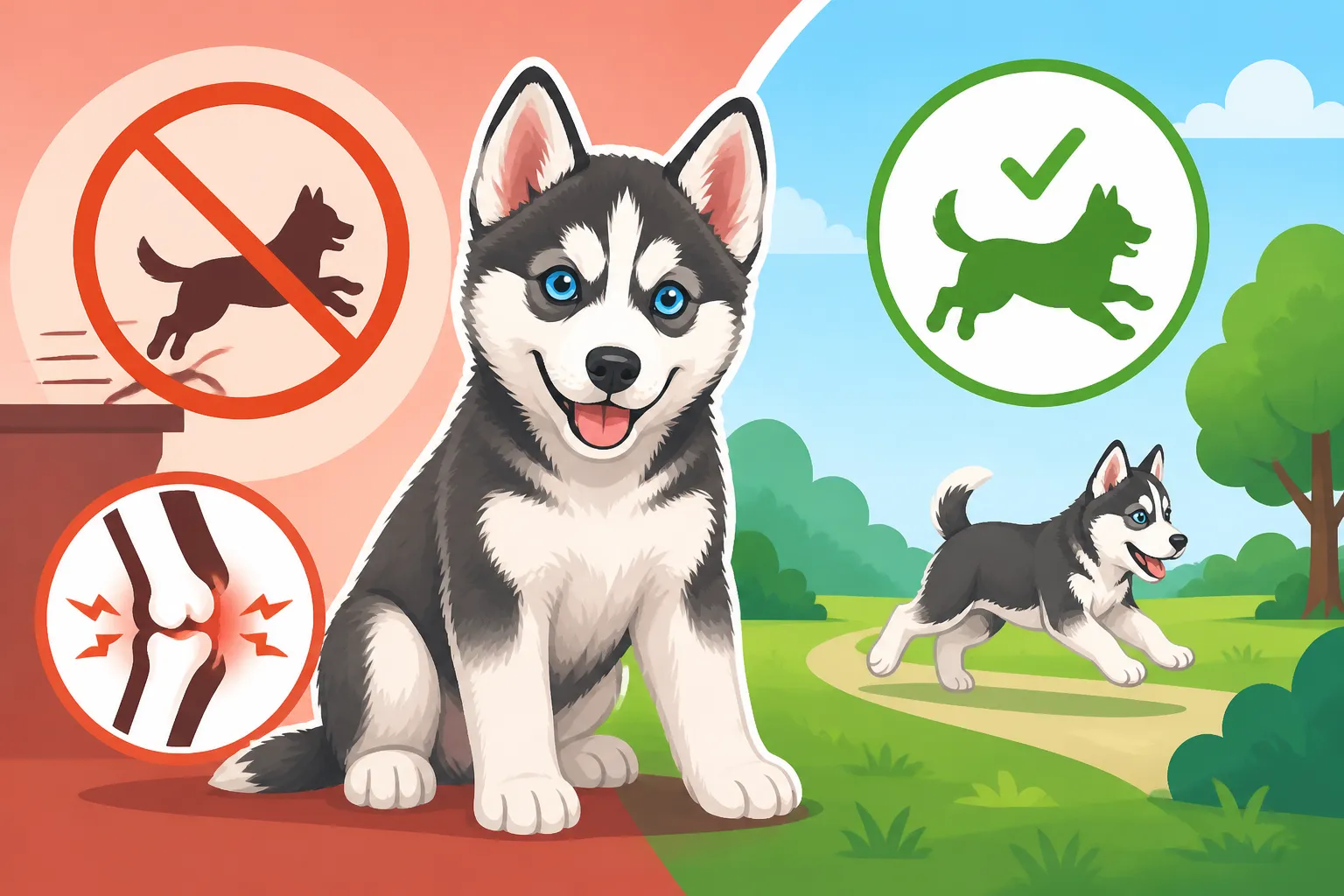
There's a long list of activities that, while great for adult huskies, are simply too much for developing puppies. These include anything with repetitive hard impacts, sudden stops, or high jumps. Avoid long-distance running, especially on hard surfaces like pavement or concrete. Do not take your husky puppy jogging with you for miles. Their soft joints cannot absorb the shock, and the repetitive motion is a recipe for disaster. Intense, sustained fetch sessions where they are repeatedly sprinting and slamming on the brakes should also be avoided. The same goes for agility training with high jumps, dock diving, or any other sport that requires extreme athleticism.
Activities like jumping off high furniture, or even repeatedly jumping up and down to greet you, should be discouraged. While a single jump might not cause damage, repeated stress over time can accumulate. Even activities like extended hikes on rough, rocky terrain can be too much for young joints, as the constant navigating of uneven ground can twist and strain delicate structures. It's about protecting their future athleticism, not stifling their natural instincts. Patience now will pay off in a sound adult dog.
Avoiding Repetitive Strain
Beyond high-impact, another major concern is repetitive strain. Even low-impact activities, if done repeatedly for long durations, can be problematic. Think of a puppy endlessly running in circles, or retrieving a ball for 20 minutes straight. This monotonous, repetitive motion can stress specific joints and muscles without allowing for varied movement or recovery. For instance, while light harness work is a hallmark of the breed, putting a young husky into a heavy pulling harness and having them pull significant weight or go for long distances before their skeletal system is mature is a serious mistake. Whether Harness Work Damages a Young Husky's Joints is a common question, and the answer is usually yes if started too early or without proper conditioning.
Instead, aim for variety. Mix up short walks with play, mental games, and rest. If you're doing a structured activity, keep it brief and incorporate different movements. A puppy should never be forced to continue an activity if they're showing signs of fatigue. Always prioritize allowing them to rest and recuperate. This isn't just about preventing acute injury, but also about avoiding the subtle, cumulative damage that can lead to problems like early onset arthritis or joint instability as they age.
Spotting the Signs of Over-Exercising or Injury
Even with the best intentions, sometimes a puppy overdoes it, or an unseen injury occurs. It's crucial for husky owners to become adept at recognizing the subtle cues their puppy might be giving. Huskies are stoic by nature, often hiding discomfort, so keen observation is your superpower.
Subtle Behavioral Cues
Your husky puppy might not yelp or limp dramatically right away, especially if they're still in the throes of excitement. Instead, look for more subtle changes in their behavior. Are they typically the first one to greet you at the door, but today they're a little slower to get up? Do they hesitate before jumping onto the couch (if allowed) or climbing stairs? Perhaps they're lying down more often than usual during playtime, or not engaging as readily with toys or other dogs. A decrease in appetite, or a general lethargy that seems out of character, can also be a red flag.
Another sign can be a change in their typical happy-go-lucky husky demeanor. They might become a bit grumpy, less tolerant of handling, or even show mild aggression if you touch a sensitive area. Excessive licking of a particular joint or paw could also indicate discomfort. Remember, a husky puppy often tries to "power through" pain, especially if it means continuing to play. So, paying close attention to these small shifts in their usual patterns is vital.
Physical Symptoms and Lameness
More overt signs, of course, include physical symptoms and lameness. A noticeable limp is the most obvious, but sometimes it's more of a subtle "off" gait – a slight favoring of one leg, a stiff trot, or an unwillingness to bear full weight on a limb. Watch how they get up and lie down; a puppy in pain might move stiffly or grunt. Swelling, warmth, or tenderness around a joint are definite indicators of inflammation or injury. Check their pads for cuts or bruises after walks, and gently palpate their legs, watching for any reaction.
Pay attention to their energy levels. While some fatigue after play is normal, an inability to bounce back after a short rest, or being unusually tired for an entire day, is not. If your puppy is panting excessively, struggling to breathe, or seems overheated, especially in warmer weather, it could be a sign of overexertion or heat stress, which is very dangerous for double-coated breeds like huskies. Remember that Siberian Husky Weight and Joint Health are intrinsically linked, so ensure your pup isn't carrying extra pounds, which adds strain.
When to Seek Veterinary Advice
If you observe any of the subtle or overt signs mentioned above, it's always best to err on the side of caution and consult your veterinarian. Don't wait to see if it "gets better on its own," especially with puppies. Early intervention for growth plate injuries can make a significant difference in the outcome. Be prepared to describe the onset of symptoms, any recent activities, and how your puppy's behavior has changed. Your vet might perform a physical exam, observe your puppy's gait, and potentially recommend X-rays to assess the growth plates and joint structures.
Even if it turns out to be nothing serious, peace of mind is invaluable. A vet can also offer guidance on appropriate activity levels for your specific puppy, considering their individual growth rate and any predispositions. It's a proactive step in ensuring your husky puppy grows into a robust, pain-free adult. Issues like hip or elbow dysplasia, while often genetic, can be exacerbated by inappropriate exercise, so understanding Whether a Siberian Husky Needs Hip X-Rays as they mature, or at least having open conversations with your vet, is part of responsible ownership.
Building a Lifetime of Healthy Exercise Habits
Raising a husky puppy isn't just about surviving the puppy stages; it's about setting them up for a lifetime of health and happiness. Proper exercise habits established early on will serve them well into their senior years. This means focusing on more than just physical exertion.
The Importance of Mental Stimulation
For a Siberian Husky, a tired mind can be just as important, if not more important, than a tired body, especially during puppyhood. These dogs are intelligent and need a job to do. Without mental challenges, they can become bored, destructive, and restless, regardless of how much physical exercise they get. This is particularly true when physical exercise is limited due to growing bones. Engaging their brains helps to satisfy that inherent husky drive without putting stress on their developing joints.
Incorporate regular, short training sessions throughout the day. Teach them new tricks, work on obedience commands, or practice impulse control. Use puzzle toys and food dispensers that require them to think and work for their meals – retailers like Chewy or Amazon offer a huge variety. Even something as simple as scattering their kibble in the yard and letting them "hunt" for it can be a great mental workout. Puzzle Feeders a Siberian Husky Cannot Beat can be an absolute lifesaver for channeling their energy. Sniff walks, where they are allowed to explore and follow scents at their own pace, are also incredibly enriching. These activities build confidence, reduce anxiety, and strengthen your bond, all while protecting their growing bodies.
Balancing Exercise with Rest and Recovery
Just like human athletes, puppies need ample rest to recover and grow. Sleep is crucial for their physical and mental development. A husky puppy should be spending a significant portion of their day sleeping – often 18-20 hours! Don't mistake a puppy crashing after a play session for a dog that needs more exercise. It likely means they just had exactly the right amount. Creating a consistent routine that includes structured play, training, and plenty of undisturbed nap times is key.
Provide a comfortable, quiet space where your puppy can retreat and relax. A crate, if properly introduced, can be an excellent den for rest and recovery. This balance prevents overstimulation and allows their bodies to repair and grow properly. Remember, a growth spurt demands energy, and much of that vital development happens during sleep. Forcing a tired puppy to continue playing or walking can be counterproductive and lead to behavioral issues as well as physical injury.
Nutrition's Role in Joint and Bone Health
You can provide all the perfectly timed exercise in the world, but without proper nutrition, your husky puppy's bones and joints won't develop optimally. A high-quality diet formulated specifically for puppies of medium-to-large breeds is essential. These diets are designed to support steady growth, not rapid growth, which can put undue stress on developing skeletons. Avoid free-feeding and closely monitor their weight. An overweight puppy is at a significantly higher risk for joint problems. Feeding a Siberian Husky puppy on less food than you think is often true, as their metabolism can be very efficient. Consult your vet or a canine nutritionist to ensure your puppy is getting the right balance of nutrients, vitamins, and minerals.
Calcium and phosphorus levels, in particular, need to be carefully balanced. Too much or too little can be detrimental to bone development. Avoid supplementing with extra calcium unless specifically directed by your vet. Some owners opt for fresh food diets; if you're exploring options like Ollie, ensure they are specifically balanced for growth. Regularly assess your puppy's body condition – you should be able to feel their ribs easily, but not see them prominently. For a good reference, check out The Weight a Siberian Husky Hits at Six Months. A healthy weight helps reduce stress on growing joints and ensures they have the best possible foundation for an active life.
| Age Range | Recommended Activities | Activities to Avoid (or severely limit) | General Duration/Frequency |
|---|---|---|---|
| 8 weeks – 4 months | Self-directed play (chasing toys, gentle wrestling) | Forced running, long walks, jumping from heights, hard impacts | Several 5-10 minute sessions daily, puppy-led breaks |
| Short, supervised potty breaks (leashed exploration) | Agility, prolonged fetch, steep stairs | ||
| Mental games, short training sessions | Repetitive activities | ||
| 4 months – 12 months | Gradual increase in structured leash walks (soft surfaces) | Sustained jogging/running, high jumps, hard pavement runs | 5 minutes per month of age (e.g., 6 months = 30 min walk) |
| Moderate, varied play with other dogs (supervised) | Heavy pulling/harness work, competitive sports | Multiple short sessions per day, building endurance slowly | |
| Swimming, light hiking on even trails | |||
| 12 months+ | Longer runs, sustained hiking, structured harness sports | Overexertion in heat, sudden increase in intensity without conditioning | Gradually increase duration and intensity based on individual fitness |
| Agility (low impact, focus on technique before height/speed) | |||
| Any activity suitable for a well-conditioned adult husky |
Disclaimer
This article is for general informational purposes only and does not constitute professional advice. Laws, prices and regulations vary by location and change over time. Consult a qualified professional for guidance on your specific situation.