Glaucoma as a Siberian Husky Emergency
One of the most terrifying things a Siberian Husky owner can experience is waking up to find their beloved dog with a suddenly painful, swollen, or cloudy eye. This isn't just a minor irritation; it can be a true veterinary emergency. This comprehensive guide will walk you through understanding glaucoma in Siberian Huskies, how to recognize its urgent signs, and what crucial steps you need to take to protect your dog's vision and comfort.
Recognizing the Urgent Signs of Glaucoma in Your Siberian Husky
It's heartbreaking to see your Husky in pain, and when that pain involves their eyes, it feels even more serious. Glaucoma can strike quickly, and recognizing the early warning signs is absolutely critical for saving your dog's vision. Don't second-guess yourself if something seems off with your Husky's eyes; it's always better to be safe.
Sudden Onset of Eye Pain and Discomfort
The most immediate and distressing sign you'll likely notice is that your Siberian Husky is in pain. Unlike some subtle health issues, glaucoma often announces itself with unmistakable discomfort. Your Husky might be squinting one or both eyes, often holding them partially or completely closed. It's not just a blink; it's a persistent, strained closure that indicates significant pain. You might also observe your Husky rubbing their face on the carpet, pawing at their eye, or trying to rub their head against furniture in an attempt to alleviate the pressure. This pain stems directly from the rapid increase in intraocular pressure (IOP) within the eye, which is incredibly uncomfortable, akin to a severe headache or migraine focused directly in the eyeball. They may become withdrawn, refusing to play, or even snap if you try to examine their face, which is very out of character for such a usually friendly breed. Any sudden change in behavior coupled with eye discomfort should immediately raise a red flag.
When you see these signs, it's important not to assume it's just conjunctivitis or a minor irritant. While those can cause discomfort, the intensity of pain associated with acute glaucoma is often far greater. If your Husky typically has bright, clear eyes, and suddenly one is shut tight and they're acting miserable, you need to consider it an emergency. Time is literally vision when it comes to glaucoma, and every minute counts. Remember, Siberian Huskies are stoic dogs by nature, often hiding pain until it becomes severe, so if they're showing clear signs of discomfort, it's already significant.
Visible Changes in the Eye's Appearance
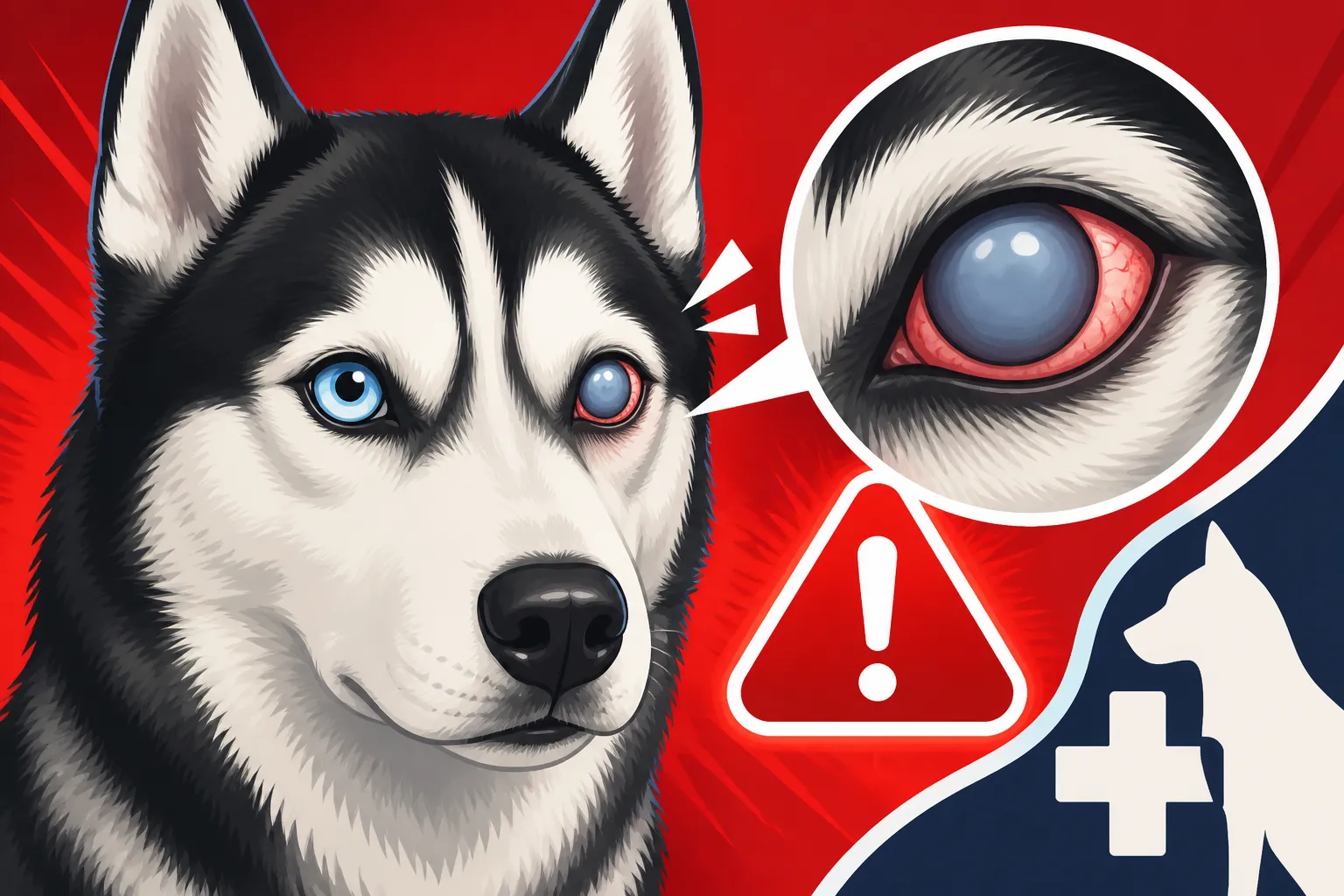
Beyond the pain, glaucoma causes distinct physical changes in the eye itself that you can often spot. One of the most common is a cloudy or hazy appearance to the cornea, the clear outer layer of the eye. This cloudiness can range from a subtle blueish tint to a dense, opaque white or grey fog that makes it difficult to see the iris or pupil underneath. This corneal edema occurs because the high pressure forces fluid into the cornea. You might also notice that the affected eye appears larger or bulging compared to the healthy eye. This enlargement, known as buphthalmia, happens when the sustained high pressure physically stretches the eyeball itself.
Another crucial visible sign is redness in the white part of the eye (sclera) and around the eyelids. This isn't just a light flush; it can be a deep, angry red, indicating inflammation and engorgement of the blood vessels due to the extreme pressure. The pupil of the affected eye might also appear dilated and unresponsive to light, or it might be irregular in shape. Sometimes, a greenish tint can be observed in the pupil area. If you look closely, you might even see some prominent blood vessels on the surface of the sclera. These visible changes, particularly the cloudiness and redness, are direct physical manifestations of the internal crisis occurring within the eye due to dangerously elevated intraocular pressure. These are not signs you can afford to wait to see if they resolve on their own.
Behavioral Indicators of Vision Loss
While eye pain and physical changes are often the first things noticed, behavioral shifts due to rapidly diminishing vision are also key indicators of an acute glaucoma attack. Your Siberian Husky, who normally navigates your home or backyard with ease, might suddenly seem disoriented or clumsy. They might bump into furniture, misjudge steps, or become hesitant to jump on or off things they previously had no issue with. This is especially noticeable in dim lighting conditions, where even a healthy dog's vision is reduced, but a dog losing sight due to glaucoma will be even more profoundly affected.
You might observe them startling more easily, perhaps when approached from the side of the affected eye, because their peripheral vision is compromised. They might also appear less engaged in activities that rely on sight, like playing fetch, or they might struggle to locate a dropped treat. A Husky with severe glaucoma might even withdraw from social interaction, as their inability to see clearly makes them feel vulnerable and anxious. If you have two Huskies, you might notice the healthy one trying to guide or protect the one struggling with its vision. For more general insights into their well-being, consider reading about Siberian Husky Lifespan and What Shortens It. Any uncharacteristic hesitation or disorientation, particularly when combined with other eye symptoms, strongly suggests significant vision impairment and requires immediate veterinary attention.
Understanding What Glaucoma Is and Why It's a Husky Emergency
Glaucoma isn't just a term for eye problems; it's a specific, debilitating condition characterized by increased pressure inside the eye. For Siberian Huskies, it's a particularly grave concern due to their genetic predisposition, making it a true emergency that demands immediate action.
The Mechanics of Increased Intraocular Pressure IOP
At its core, glaucoma is a disease of elevated intraocular pressure, or IOP. Imagine your dog's eye as a tiny, perfectly balanced sphere filled with a clear fluid called aqueous humor. This fluid is constantly produced and drained, maintaining a healthy pressure within the eye, much like a well-regulated plumbing system. This stable pressure is vital for the eye's shape and function, especially for nourishing the lens and cornea. In glaucoma, this delicate balance is shattered. Either too much aqueous humor is produced, or more commonly, the drainage angle—the area where the fluid exits the eye—becomes blocked or damaged.
When the fluid can't drain properly, it builds up, causing the pressure inside the eye to skyrocket. This isn't just uncomfortable; it's actively damaging. The most vulnerable structure is the optic nerve, which transmits visual information from the eye to the brain. This nerve is extremely sensitive to pressure. Sustained high IOP compresses the delicate nerve fibers, cutting off their blood supply and eventually leading to irreversible damage and cell death. The longer the pressure remains high, the more extensive the damage, and the greater the likelihood of permanent blindness. This rapid and severe damage is precisely why glaucoma in a Siberian Husky is not a "wait and see" situation but a race against time to save sight. For general information, understanding Siberian Husky Eye Disease and the Annual Exam is a good first step.
Primary Glaucoma: A Genetic Predisposition in Huskies
Siberian Huskies are unfortunately one of the breeds genetically predisposed to a form of glaucoma known as primary glaucoma. This means the condition isn't caused by another underlying disease but rather by an inherited anatomical defect in the eye's drainage system. Specifically, Huskies are prone to primary angle-closure glaucoma, where the drainage angle itself is structurally abnormal or gradually narrows over time, leading to a sudden, acute blockage. This genetic link is crucial for owners to understand because it means even a perfectly healthy Husky, with no history of trauma or other illness, can suddenly develop this devastating condition.
The genetic component makes regular screening and awareness paramount. While other breeds might get glaucoma due to secondary causes, a Husky often faces an inherent flaw that can activate at any time, though it typically manifests in middle-aged dogs, usually between 3 and 7 years old. If one eye develops primary glaucoma, the other eye is at a very high risk of developing it later, often within months to a couple of years. This bilateral, but often asynchronous, presentation is a hallmark of primary glaucoma in predisposed breeds like the Siberian Husky. Knowing this genetic risk empowers owners to be vigilant and to prioritize early detection through specialized eye exams.
Secondary Glaucoma and Its Underlying Causes
While primary glaucoma is a major concern for Siberian Huskies due to genetics, it's also important to understand secondary glaucoma. Secondary glaucoma occurs when another eye disease or condition causes the increased intraocular pressure. It's not about an inherited drainage defect, but rather a consequence of another problem. Common culprits include severe inflammation inside the eye (uveitis), often caused by infections, autoimmune diseases, or trauma. This inflammation can clog the drainage angle with inflammatory cells and debris.
Another significant cause of secondary glaucoma is a dislocated lens, a condition where the lens of the eye shifts from its normal position. If the lens moves forward, it can physically block the drainage pathway. Advanced cataracts, particularly if they cause inflammation, can also contribute to secondary glaucoma. Tumors within the eye, although less common, can also impede fluid drainage. Even trauma to the eye from an injury can lead to inflammation and subsequent pressure buildup. Differentiating between primary and secondary glaucoma requires a thorough veterinary ophthalmological exam, as the underlying cause dictates some aspects of the treatment plan. It's why annual eye check-ups are so vital for Huskies; they help catch subtle changes that might lead to secondary glaucoma. For comprehensive information on ocular health, you might want to look at The Three Eye Diseases a Siberian Husky Faces.
The Critical Window for Intervention and Treatment
When a Siberian Husky is suffering from glaucoma, the clock is ticking rapidly. The pressure inside the eye can climb to dangerously high levels within hours, causing irreversible damage to the optic nerve. This means that immediate action, from the moment you suspect something is wrong, is absolutely crucial.
Immediate Actions at Home Before the Vet Visit
Discovering your Husky with a painful, cloudy eye is incredibly alarming, but panicking won't help your dog. The most important thing you can do at home is to call your veterinarian or an emergency veterinary clinic immediately. Do not wait for normal business hours if it's after hours. Clearly describe the symptoms you're seeing: pain, squinting, redness, cloudiness, pupil changes, and any behavioral shifts. Emphasize that you suspect glaucoma and that your Siberian Husky is a predisposed breed. The vet office needs to understand the urgency to triage appropriately.
While you're on the phone or on your way, try to keep your Husky as calm and comfortable as possible. Avoid touching the affected eye, as it will likely be extremely painful. Keep them in a quiet, dimly lit room, as bright light can exacerbate discomfort for eyes under high pressure. If your vet has previously prescribed any emergency eye drops for a different condition, do not administer them unless specifically instructed by the veterinarian, as the wrong drops can actually worsen glaucoma. Your primary goal is to get your Husky to a professional as quickly and safely as possible; this is a situation where only a vet can provide effective intervention.
Emergency Veterinary Assessment and Diagnosis
Once you arrive at the emergency vet or veterinary ophthalmologist, a swift and thorough assessment is paramount. The first and most critical step is measuring the intraocular pressure (IOP) using a specialized instrument called a tonometer. This device gently touches the surface of the eye to get a reading, which is usually quick and relatively painless for the dog (though they might be a bit squirmy due to pain). Normal IOP in dogs typically ranges from 10-25 mmHg; in acute glaucoma, readings can easily soar above 40, 50, or even 60 mmHg. This immediate measurement confirms the diagnosis of glaucoma.
Beyond IOP, the vet will perform a comprehensive eye exam. This includes examining the cornea for cloudiness (edema), checking the pupil's size and light responsiveness, and looking for signs of inflammation or hemorrhage. They will also assess vision, though this can be difficult in a painful, stressed dog. If possible, they will look at the optic nerve at the back of the eye, which can show signs of swelling or damage. They might also use a gonioscope, a special lens, to examine the drainage angle to determine if it's open or closed, which helps differentiate between primary and secondary glaucoma. This entire process is geared towards understanding the severity of the attack and formulating an immediate treatment plan to bring the pressure down. For details on regular checks, you might find Why Siberian Huskies Need Their Eyes Checked Yearly helpful.
Initial Medical Management to Reduce Pressure
The immediate goal of treatment is to rapidly reduce the intraocular pressure to a safe level, ideally within hours, to minimize damage to the optic nerve. This typically involves a combination of topical eye drops and oral medications. Common eye drops include prostaglandin analogs (like latanoprost), which work by increasing the outflow of aqueous humor, and beta-blockers (like timolol) or carbonic anhydrase inhibitors (like dorzolamide), which decrease fluid production. These drops are usually administered frequently, sometimes every 15-30 minutes initially, as prescribed by the vet.
In addition to topical medications, systemic drugs are often given, such as intravenous mannitol or oral carbonic anhydrase inhibitors (like methazolamide). Mannitol is a powerful osmotic diuretic that draws fluid out of the eye, providing a very rapid, though temporary, drop in IOP. Pain relief is also a critical component of initial management. Non-steroidal anti-inflammatory drugs (NSAIDs) or other analgesics will be prescribed to make your Husky more comfortable. This multi-pronged approach aims to quickly lower the pressure, alleviate pain, and begin to address any inflammation. The vet will monitor the IOP closely over the first few hours to ensure the treatment is effective and adjust medications as needed. This immediate aggressive medical intervention is often the only chance to save your Siberian Husky's sight during an acute glaucoma attack. For information on specific values, consider reading Glaucoma Pressure Readings in a Siberian Husky.
Long-Term Treatment Options and Prognosis
While immediate treatment addresses the acute crisis of glaucoma, managing this condition in a Siberian Husky is a lifelong commitment. The prognosis largely depends on the severity of the initial attack, how quickly treatment was initiated, and the specific type of glaucoma. Even with successful intervention, vigilance is always necessary.
Ongoing Medical Therapy for Chronic Glaucoma
For many Siberian Huskies diagnosed with primary glaucoma, daily medical therapy will be required for the rest of their lives, even if surgery is performed. This usually involves a regimen of eye drops administered multiple times a day. The specific drops and frequency will depend on how well the eye responds to treatment and how consistently the intraocular pressure can be maintained within a healthy range. Medications typically include those that decrease aqueous humor production (like carbonic anhydrase inhibitors such as dorzolamide or brinzolamide, and beta-blockers like timolol) and those that increase aqueous humor outflow (like prostaglandin analogs such as latanoprost, though these are often avoided if uveitis is a concern).
It's absolutely crucial that you administer these drops exactly as prescribed, without missing doses, even if your Husky's eye appears normal. Consistency is key to preventing future pressure spikes and further damage. Regular follow-up appointments with a veterinary ophthalmologist are also non-negotiable, typically every 3-6 months, or more frequently if the pressure is difficult to control. During these visits, the IOP will be re-measured, and the eye will be re-evaluated for any signs of disease progression or medication side effects. Remember that if one eye has primary glaucoma, the other eye is at high risk, so preventative treatment for the healthy eye may also be recommended to delay or prevent its onset.
Surgical Interventions to Preserve Sight
When medical management alone cannot adequately control the intraocular pressure, or if the prognosis for vision with medication is poor, surgical options may be considered. There are several surgical procedures aimed at either improving fluid drainage or reducing fluid production. One common procedure is cyclocryotherapy or laser cyclophotocoagulation, where parts of the ciliary body (the tissue that produces aqueous humor) are intentionally destroyed using freezing or laser energy. This reduces the amount of fluid produced, thereby lowering the pressure.
Another option is a gonioimplantation shunt, where a tiny tube is surgically implanted to create a new drainage pathway, diverting fluid from inside the eye to a small reservoir under the conjunctiva. These surgeries can be complex and are typically performed by a board-certified veterinary ophthalmologist. While they offer a chance to preserve vision and reduce pain, they are not always a permanent cure and may still require ongoing medication. The success rate varies, and complications can occur. The decision for surgery is a serious one, weighing the potential benefits against the risks and the overall quality of life for your Siberian Husky. For more insights, refer to Saving Sight in a Siberian Husky Glaucoma Case.
Managing an Eye with Irreversible Blindness
Sadly, despite the best efforts, some Siberian Huskies will experience irreversible blindness in the affected eye due to the rapid and severe damage caused by glaucoma. In these cases, the focus shifts from saving vision to pain management and ensuring your dog's comfort and quality of life. An eye that is blind and persistently painful due to uncontrolled high pressure can be a constant source of distress for your Husky.
In such situations, enucleation (surgical removal of the eye) is often the most humane option. While it sounds drastic, removing a chronically painful, blind eye can bring immense relief to your dog, allowing them to live a much more comfortable life free from constant suffering. Huskies adapt remarkably well to having one eye or even being fully blind. Another option, though less common for severe pain, is an intraocular prosthesis, where a silicone ball is placed in the eye socket after the internal contents of the eye are removed. This preserves the cosmetic appearance but offers no vision. The decision to remove an eye is made in consultation with your veterinary ophthalmologist, always with your Husky's comfort and well-being as the top priority.
Living with a Siberian Husky Diagnosed with Glaucoma
Receiving a glaucoma diagnosis for your Siberian Husky can be overwhelming, but with the right approach, many Huskies can still live full, happy lives. It requires dedication, adaptation, and a deep understanding of their needs.
Adjustments for a Vision-Impaired or Blind Husky
If your Siberian Husky has suffered vision loss due to glaucoma, whether in one eye or both, you'll need to make some adjustments at home to help them navigate safely and confidently. The key is consistency and minimizing change. Keep furniture in the same place. If you rearrange, do so gradually and guide your Husky around new obstacles until they've mapped out the changes. Baby gates can be useful to block off dangerous areas like stairs or to keep them safe in specific rooms.
Consider using different textured mats or rugs to delineate safe paths or signal approaching obstacles. For example, a rougher mat might mean "stairs coming up." Use scents as markers for important locations like their food bowl or doggy door. When approaching your vision-impaired Husky, always speak to them first to avoid startling them. Gentle touches, rather than sudden grabs, are also important. Outside, always keep them on a leash, especially if they are completely blind, as their strong prey drive and desire to run could lead them into dangerous situations if they cannot see. Even a fenced yard needs to be thoroughly checked for escape routes, and supervision is paramount. You can explore how Huskies cope in situations like this by reading Keeping a Blind Siberian Husky Safely Contained.
Supporting Your Husky's Quality of Life
A vision-impaired or blind Siberian Husky can still enjoy a fantastic quality of life. The most important thing is to maintain their routine as much as possible, as predictability provides comfort and security. Continue to engage them in activities they enjoy, adapting them as necessary. Scent work, puzzle toys, and interactive feeders can be excellent for mental stimulation, tapping into their keen sense of smell. Regular walks on a leash in familiar areas are still vital for physical exercise, just be mindful of uneven terrain or obstacles.
Many blind Huskies enjoy playing with toys that make noise, like crinkly balls or squeakers, which they can locate by sound. Spending quality time with your Husky, offering plenty of cuddles, and speaking to them frequently will reinforce your bond and provide reassurance. Introduce them to new environments gradually and with constant verbal guidance and encouragement. Their other senses, especially hearing and smell, will become incredibly heightened, and you'll be amazed at how well they adapt. Your unwavering love and patience are the most powerful tools in supporting your Husky through this change. For insights into their later years, consider Caring for a Siberian Husky Past Ten.
Financial Considerations and Pet Insurance
Glaucoma treatment can be incredibly expensive, encompassing emergency vet visits, specialized ophthalmologist consultations, ongoing medications, and potentially costly surgeries. An initial emergency visit with tonometry, examination, and immediate pressure-reducing medications can easily run into several hundred dollars. If surgery is required, such as laser cyclophotocoagulation or shunt placement, costs can range from $2,000 to $5,000 or more per eye, not including post-operative care and follow-up medications. Lifetime management with daily eye drops can also add up, costing hundreds of dollars a year.
This is where pet insurance can be a literal lifesaver. Companies like Healthy Paws offer comprehensive pet insurance plans that can cover a significant portion of these unexpected veterinary expenses. However, it's crucial to understand that pet insurance typically does not cover pre-existing conditions. This means if your Husky has already been diagnosed with glaucoma, or even showed symptoms prior to enrollment, that eye condition will likely be excluded from coverage. Therefore, enrolling your Siberian Husky in a robust pet insurance plan when they are young and healthy is highly recommended. It provides a financial safety net against unforeseen illnesses like glaucoma and many others. Make sure to thoroughly review policy details, waiting periods, and exclusions. Planning ahead can make a world of difference in your ability to afford the best possible care for your beloved Husky. You can learn more about this by researching What a Siberian Husky Insurance Policy Excludes or Enrolling a Siberian Husky Before the Eye Exam.
Proactive Steps for Siberian Husky Eye Health
Given the Siberian Husky's predisposition to primary glaucoma, taking proactive steps for their eye health isn't just a good idea – it's essential. Early detection and preventative measures can make a significant difference in preserving their vision.
Regular Veterinary Eye Exams
Regular veterinary check-ups are the cornerstone of proactive eye care for your Siberian Husky. While a general vet can perform a basic eye exam during annual wellness visits, it's highly recommended that Huskies, especially those from lines with a known history of glaucoma, have yearly examinations by a board-certified veterinary ophthalmologist. These specialists have advanced equipment and expertise to detect the most subtle changes that could indicate early glaucoma or other hereditary eye diseases.
During these specialized exams, the ophthalmologist will perform tonometry to measure intraocular pressure (IOP), often comparing it to previous readings to identify trends. They will also perform a thorough external and internal examination of the eye, looking for anatomical abnormalities in the drainage angle (gonioscopy), changes to the optic nerve, or signs of inflammation that could lead to secondary glaucoma. These exams are particularly important as your Husky approaches middle age, when primary glaucoma is most likely to manifest. Establishing a baseline when they are young and healthy allows for easier identification of problems later on. Regular check-ups are not just for reactive treatment, but for proactive surveillance. It's truly an investment in your Husky's long-term vision. For general guidance on vet visits, refer to Siberian Husky Vet Visits by Life Stage.
Knowing Your Husky's Family History
Understanding your Siberian Husky's genetic background is an incredibly powerful tool in preventing and managing hereditary conditions like primary glaucoma. Responsible breeders are transparent about the health history of their breeding lines and should be able to provide information on the eye health of your puppy's parents and grandparents. If there's a history of glaucoma in the lineage, you'll know your Husky is at a higher risk and can be more vigilant with screening.
Don't hesitate to ask your breeder directly about any instances of glaucoma in their dogs. They should also be performing annual eye certifications through organizations like the Orthopedic Foundation for Animals (OFA) Eye Certification Registry, which screens for a variety of canine eye diseases. While primary glaucoma doesn't always show up on these certifications until later in life, a breeder's commitment to regular screening of their breeding stock indicates a responsible approach. If you adopt a Husky from a rescue, try to gather as much history as possible, though this can sometimes be limited. Knowing the risks allows you to work with your vet to tailor a preventative and monitoring plan specific to your dog. Learning about Reading a Siberian Husky Puppy's Health Paperwork can help you understand the documents provided by a responsible breeder.
What to Discuss with Your Breeder
When choosing a Siberian Husky puppy, a thorough discussion with the breeder about eye health is non-negotiable. Beyond asking generally if the parents are "healthy," specifically inquire about glaucoma and other eye conditions prevalent in the breed. A reputable breeder should be open and honest about any known instances of primary glaucoma in their lines and what steps they are taking to minimize its occurrence, such as not breeding affected dogs or dogs with a close family history of the disease.
Ask to see current OFA Eye Certification documents for both the sire and dam. These certifications should be updated annually. While these certifications primarily screen for conditions that appear earlier or more clearly, they demonstrate the breeder's commitment to eye health. Discuss the average age of onset for glaucoma in their lines, if any. Understand that even with careful breeding, genetic conditions can sometimes appear, but a responsible breeder will stand by their puppies and offer support and information. This upfront conversation and review of health testing is crucial for ensuring you're bringing home a puppy with the best possible genetic foundation, and it highlights why Health Testing Before You Buy a Siberian Husky is so important.
Disclaimer
The information provided in this article is for educational and informational purposes only and does not constitute veterinary advice. Always consult with a qualified veterinarian or veterinary ophthalmologist for any health concerns or before making any decisions about your Siberian Husky's medical care. Glaucoma is a medical emergency, and prompt professional attention is critical for a positive outcome.