Siberian Husky Intelligence and Independence
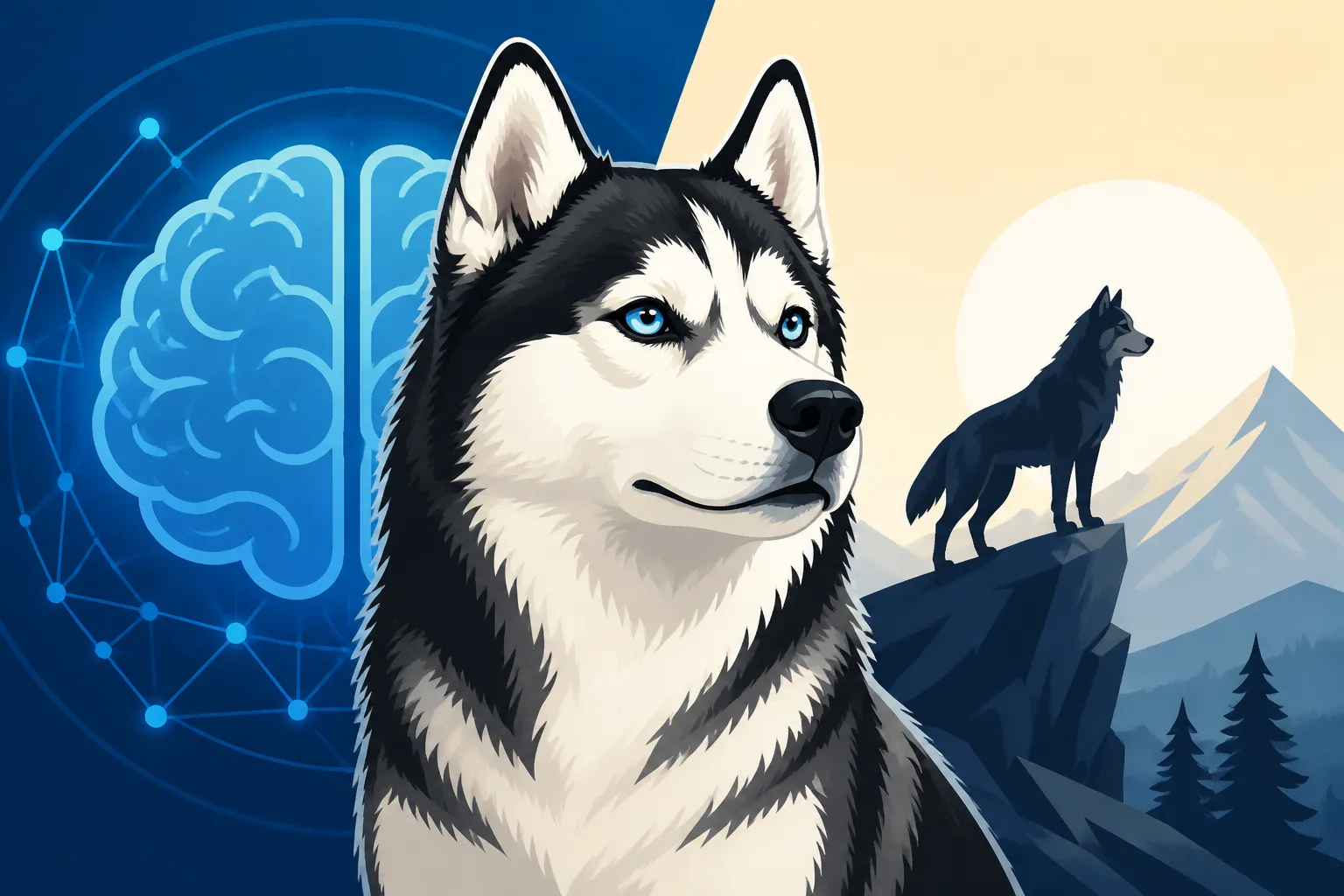
If you’ve ever lived with a Siberian Husky, you've probably heard someone say they're "stubborn" or "dumb." But here's the real talk: that common perception couldn't be further from the truth. What people often mistake for stubbornness or a lack of intelligence in a Siberian Husky is actually a profound, inherent independence and a very different kind of cleverness born from their ancient purpose. This guide is here to unravel the fascinating mind of the Siberian Husky, showing you why their unique intellect and strong will make them such captivating, albeit challenging, companions.
The Roots of Husky Independence: A Breed History Lesson
To truly understand the Siberian Husky’s intelligence and independence, we have to go back to where it all began. These aren't your typical companion dogs bred over centuries to live in a human household and simply follow commands. Oh no, Huskies come from a lineage that demanded self-reliance, critical thinking, and a profound understanding of their environment. They weren't just pets; they were partners in survival, and that heritage is etched deeply into their DNA.
Bred for Self-Sufficiency
Imagine living with the Chukchi people of Siberia, in one of the harshest environments on Earth. Survival wasn't just about food and shelter; it was about efficient travel, and for that, you needed dogs that could pull sleds across vast, icy expanses. These dogs weren't simply told what to do; they had to make crucial decisions on the fly. A musher couldn't always see the treacherous ice ahead, nor could they feel the shifting snow beneath the sled. The lead dogs, often Siberian Huskies, needed to assess the terrain, conserve their energy, and choose the safest, most efficient path.
This isn't about blind obedience; it's about intelligent problem-solving. A Husky that blindly followed every command, even if it meant plunging the team into a crevasse, wouldn't have survived. The dogs had to be smart enough to override a human command if it meant self-preservation or the safety of the team. This kind of nuanced decision-making, where the dog's judgment was often more valuable than a human's, built a foundation of incredible self-sufficiency. It meant these dogs learned to trust their instincts and their own assessment of a situation, making them far from "stubborn," but rather, deeply discerning. They learned that their own judgment was often their best asset.
Pack Dynamics and Leadership
While they were bred to work in teams, the structure of those teams and their relationship with humans was distinct. In a traditional working pack, Huskies understood a hierarchy, but it wasn't one of absolute dominance by a single human. It was a partnership, where each member, human and canine, had a role. The dogs looked to the musher for direction, certainly, but they also communicated their own needs and observations. This dynamic fostered a sense of self-worth and agency within the dogs. They weren't just cogs in a machine; they were integral, thinking components.
For us modern Husky owners, this translates into a dog who views you as a partner, not necessarily a benevolent dictator. They'll respect you, yes, but they also expect to be heard and understood. They might challenge a command not out of malice, but because they have a different idea, or perhaps they've assessed the situation and found a more efficient (in their eyes) way to achieve the goal. Understanding Siberian Husky Temperament and What the Standard Says helps clarify why they are built this way, emphasizing their friendly, gentle, but always alert and outgoing nature. They're thinkers, and they expect you to be one too.
Intelligence for Survival, Not Obedience
The type of intelligence valued in a Siberian Husky was purely functional: how to survive and thrive in a harsh environment. This meant excellent navigational skills, the ability to conserve energy, and a sharp awareness of their surroundings. They needed to identify potential dangers, locate resources, and work cooperatively with their team. What they didn't need was to sit perfectly still for five minutes while being ignored or perform intricate parlor tricks on demand.
Their intelligence is less about rapid-fire obedience to complex commands and more about adaptive learning and problem-solving. They learn quickly, but they also weigh the value of performing a task. If there's no clear benefit to them, or if their powerful prey drive kicks in, they might decide that chasing a squirrel or exploring an interesting scent is a much more rewarding use of their time. This isn't a flaw in their intelligence; it's a direct reflection of what their intelligence evolved to achieve. When you bring one home, you're not just getting a dog; you're getting a canine anthropologist, a living echo of a bygone era.
Unpacking the "Stubborn" Label: It's Just Smart Independence
So often, when a Husky doesn't do what we want, owners get frustrated and label them "stubborn." But I promise you, it's rarely true stubbornness in the way we usually think about it. Instead, it’s a brilliant, highly intelligent creature weighing its options, assessing the situation, and often making a choice that makes perfect sense to them, even if it utterly baffles us. It's a fundamental misunderstanding of how their minds work, and once you grasp it, you can work with it rather than constantly battling against it.
The Husky's Decision-Making Process
Imagine you've asked your Husky, Flurry, to come inside from the yard. You call, you cajole, maybe you even offer a treat. Flurry might look at you, then look at the interesting leaf blowing across the lawn, then look back at you. In that moment, Flurry isn't being stubborn; Flurry is performing a cost-benefit analysis. "Is coming inside right now more rewarding than investigating this fascinating leaf? Does that treat really outweigh the joy of this outdoor adventure?" Often, the answer is no. Their decision-making process is rooted in what serves their immediate interest and genetic programming, which includes a strong desire to roam and explore. This is why Why a Siberian Husky Cannot Be Trusted Off Leash is such a critical concept for new owners to understand.
This isn't to say they are disobedient; it's that their obedience isn't automatic. They consider the request, the environment, their mood, and the potential reward. If the reward isn't compelling enough, or if something else in the environment holds more allure, they'll often prioritize their own agenda. It takes a lot of consistent, high-value motivation to make your agenda consistently more appealing than their natural instincts. This is why you need to be ten steps ahead in the mental game.
Motivation: What Works (and What Doesn't)
Forget traditional, compliance-based training methods for a Husky. Yelling, punishment, or trying to physically force a Husky to comply will likely backfire spectacularly. They are immensely sensitive and will shut down, become resistant, or simply decide you're not worth listening to. What works? High-value motivation, endless variety, and making them believe it was their idea all along.
Think about what truly motivates a Husky. For many, it's food – but not just any kibble. We're talking pieces of cooked chicken, cheese, or even specialty high-value training treats you might find on Chewy. Beyond food, it's often the thrill of the chase, a vigorous game of tug, or the chance to run. You need to become the most exciting thing in their environment. If you want them to Teaching a Siberian Husky to Come Back, that recall has to be associated with an absolute jackpot reward every single time, especially in distracting environments. It's less about commanding and more about negotiating and enticing. They're intelligent enough to know when they're being bribed, and they'll happily take the bribe if it's good enough!
Short Attention Spans and Repetition Fatigue
Another factor often mistaken for a lack of intelligence is their tendency to get bored quickly. Huskies are bright, but they thrive on novelty. Ask them to do the same "sit" command 20 times in a row, and you'll quickly see their interest wane. Their eyes will glaze over, they might yawn, or they'll simply walk away. This isn't because they don't understand; it's because they've learned it, and now it's boring.
Their minds are like sponges, soaking up new information quickly, but they need constant mental engagement to stay focused. Training sessions need to be short, energetic, and varied. Mix it up! Introduce new challenges, change locations, or incorporate games. If you're struggling to keep their attention, remember that their ancestors were constantly assessing new terrain and making dynamic decisions. A static, repetitive task just doesn't align with their inherent drive. This is precisely why Keeping Siberian Husky Sessions Short is a universally accepted rule for successful Husky training.
The Cleverness Behind the "Naughty" Behavior
Let's be honest, Huskies can be a handful. They can be escape artists, they can be destructive, and they can certainly challenge your patience. But often, these behaviors, which we label as "naughty," are actually demonstrations of their incredible intelligence, resourcefulness, and problem-solving skills. They're not trying to be bad; they're simply being Huskies, and often, they're finding clever ways to meet their own needs.
Escape Artistry and Problem Solving
"My Husky escaped again!" is a phrase heard in almost every Husky household. And it's not because they're unaware of boundaries; it's because they're masters of finding weaknesses in them. They'll study a fence, test its limits, and if they find a way over, under, or through, they'll take it. This requires observation, planning, and often, significant physical effort.
They are notorious for Siberian Huskies That Dig Under Fences or Siberian Huskies That Open Gates and Doors. They'll learn how latches work, how to pry boards, or how to scale seemingly impossible heights. I once heard of a Husky who learned to open a specific type of gate latch by watching his owner, then patiently waited until he was alone to execute his escape. This isn't a dull-witted dog; this is a canine Houdini, a true escape artist who views every barrier as a puzzle to be solved. They don't want to run away from you, necessarily; they want to run and explore. It's that powerful The Roaming Instinct Bred Into Every Siberian Husky that drives them.
Communication: More Than Just Howls
Huskies are famous for their vocalizations. They howl, they 'talk,' they grumble, they whine, and they have an entire repertoire of sounds that are distinctly Husky. This isn't just noise; it's a rich and complex form of communication. They use different tones and pitches to express joy, frustration, boredom, demands, or even just to have a conversation.
If you pay close attention, you'll learn to distinguish their "I want to play" howl from their "I'm bored and lonely" whine or their "let's go outside, right now!" excited chatter. They're communicating their thoughts, feelings, and intentions very clearly. Why Your Siberian Husky Howls and Talks delves deeper into this unique aspect of their breed. Many owners find themselves having full-on conversations with their Huskies, responding to their varied vocalizations. This complex communication style is another hallmark of a highly intelligent and emotionally aware animal.
Environmental Awareness and Resourcefulness
A Husky is rarely oblivious to its surroundings. They are keenly aware of changes in their environment, from the smallest rustle in the bushes to the arrival of a new person or car down the street. This hyper-awareness stems from their need to be constantly vigilant in their ancestral lands. They notice everything, and they often use this information to their advantage.
For instance, if your Husky is left alone and decides to engage in Siberian Husky Destruction When Left Alone, they might not just chew the nearest object. They might find the softest pillow, the most interesting-smelling shoe, or the item most likely to get your attention when you return. This isn't random; it's often a calculated response to boredom or anxiety, an attempt to self-soothe or to signal their distress. Similarly, their resourcefulness comes out when they figure out how to open a cupboard for a snack, or cleverly position themselves under a vent for maximum cool air in summer. These aren't accidental actions; they are often the result of observation and clever experimentation.
Training a Siberian Husky: Adapting to Their Intellect
Given their unique blend of independence and intelligence, training a Siberian Husky requires a very different approach than many other breeds. You can't rely on brute force or endless repetition. Instead, you need to engage their minds, make them partners in the process, and consistently prove to them that listening to you is the most rewarding choice they can make.
The Importance of Positive Reinforcement
Because Huskies are sensitive and independent thinkers, positive reinforcement is not just the best method; it’s practically the only effective method. They don't respond well to punishment or harsh corrections. These tactics will erode trust, foster resentment, and make them even less likely to cooperate. Instead, focus on rewarding the behaviors you want to see.
This means finding what your individual Husky considers truly rewarding. For some, it's a high-value treat, for others, it's a favorite toy or a quick game. Use these rewards generously when they perform correctly. A clicker can be an incredibly useful tool, marking the exact moment they do something right, followed immediately by that fantastic reward. Remember, you're not just rewarding the behavior; you're building a positive association with listening to you. Consistency is key here; every interaction is a training opportunity. When you buy treats or toys from a place like Chewy, make sure they're exciting and new sometimes to keep that motivation high.
Keeping Training Engaging and Novel
As we discussed, Huskies get bored easily. This means your training sessions need to be short, fun, and varied. Aim for 5-10 minute bursts of training several times a day, rather than one long, arduous session. Keep the energy high, and mix up the commands and activities. If you're working on "sit," don't do it 20 times in a row. Do "sit," then "down," then a quick game of fetch, then "stay," then "sit" again.
Changing the training environment can also inject novelty. Practice in the living room, then the backyard, then a quiet park. This helps them generalize commands, understanding that "sit" means "sit" regardless of distractions, but also keeps their sharp minds engaged. For an independent thinker, the challenge is part of the reward. Motivating a Siberian Husky That Ignores You often comes down to this kind of dynamic, unpredictable engagement that makes them feel like they're solving a puzzle with you.
Harnessing Their Drive for Activities
One of the best ways to work with a Husky's intelligence and independence is to channel their natural drives into productive activities. These dogs were bred to work, specifically to pull. Ignoring this innate drive is a recipe for boredom and destructive behaviors. Instead, embrace it!
Consider activities like canicross (running with your dog), bikejoring (cycling with your dog pulling), or skijoring (skiing with your dog pulling). These activities tap into their core instincts, provide immense physical and mental stimulation, and build a powerful bond between you and your Husky as you work together as a team. Giving a Siberian Husky a Job in Harness is not just about exercise; it's about fulfilling their purpose. Even if you're not into competitive sports, long hikes, exploring new trails, or engaging in scent work games can be incredibly satisfying for their intelligent noses and minds. Puzzle toys, especially the more complex ones, available at stores like Chewy, can also provide excellent mental stimulation, challenging their problem-solving abilities in a constructive way.
| Training Tactic | Description | Husky Response |
|---|---|---|
| Positive Reinforcement | Rewarding desired behaviors with high-value treats, praise, or play. Focus on making good choices appealing. | High engagement, builds trust, fosters willingness to learn, and makes them active participants in training. They associate you with good things. |
| Force/Aversive Methods | Using physical corrections, harsh words, or tools like shock collars to suppress unwanted behaviors. | Shuts down, becomes resistant, fearful, or even aggressive. They lose trust in you and may become more "stubborn." Can lead to behavioral issues and avoids compliance. Why Force Training Fails on a Siberian Husky is a concept many discover the hard way. |
| Short, Varied Sessions | Keeping training periods brief (5-10 minutes) and mixing up commands, locations, and rewards to maintain interest. | Sustained attention, quicker learning, prevents boredom and repetition fatigue. Keeps their intelligent minds challenged and engaged, making training a fun game rather than a chore. |
| Long, Repetitive Drills | Repeating the same command numerous times in one session without variation or high rewards. | Rapidly loses interest, may walk away or ignore you. Their intelligence allows them to quickly grasp a concept, but their independence means they won't perform it if it's boring or lacks sufficient motivation. |
| Channeling Instincts | Engaging them in activities that utilize their natural drives, such as pulling (canicross, bikejoring), scent work, or agility. | High satisfaction, mental and physical fulfillment, reduces destructive behaviors, strengthens bond. They feel purposeful and use their energy constructively. |
| Ignoring Natural Drives | Expecting them to be content with minimal exercise or lack of mental stimulation, especially ignoring their drive to run and explore. | Leads to boredom, frustration, and destructive behaviors like chewing, digging, or escaping. They will find their own jobs, which often conflict with human expectations. |
Living with a Highly Independent, Intelligent Husky
Owning a Siberian Husky is a commitment to a unique partnership. It means understanding that their intelligence and independence are not flaws, but integral parts of who they are. Successfully living with a Husky means adapting your lifestyle, your expectations, and your approach to meet their specific needs, rather than trying to force them into a mold they were never designed for.
Setting Clear Boundaries and Expectations
Because Huskies are so smart, they will quickly figure out what they can and cannot get away with. This means you, as their human partner, need to be incredibly consistent and clear with your boundaries. If "no jumping on the couch" means no jumping on the couch sometimes, your Husky will quickly learn that "no" is negotiable. This isn't them being disrespectful; it's them using their intelligence to test the limits and see what the real rules are.
Establish rules from day one and stick to them, every single time. This consistency, coupled with positive reinforcement for following the rules, helps them understand the structure of their world. It gives their intelligent minds a clear framework within which to operate. They thrive on knowing what's expected, even if their independent streak occasionally prompts them to see if the rules have changed today.
Providing Mental Stimulation
Physical exercise is non-negotiable for a Siberian Husky, but mental stimulation is just as, if not more, important. A physically tired Husky might still have a buzzing brain, ready to invent new forms of mischief. Their intelligence demands constant engagement.
Think outside the box for mental challenges. Scent games, where you hide treats and have them sniff them out, are fantastic for engaging their powerful noses and problem-solving skills. Puzzle toys, especially the more advanced ones, can keep them occupied for significant periods. Learning new tricks, even silly ones, keeps their minds sharp and makes training fun for both of you. Rotate toys frequently to keep things novel. If you only provide physical exercise, their brains will find ways to entertain themselves, which might include redecorating your home or devising new escape routes. When choosing mentally stimulating toys or treats, consider browsing through the wide selection on Chewy to find items that will truly challenge and engage your Husky.
Embracing Their Unique Personality
Ultimately, living with a Siberian Husky means embracing their independence and celebrating their intelligence, even when it presents challenges. They are not dogs that will live to please you; they are dogs that will live with you, as partners, on their own terms. They will make you laugh with their antics, frustrate you with their selective hearing, and constantly surprise you with their cleverness.
Their independence fosters a strong sense of self and an enduring spirit. Their intelligence means they are always observing, learning, and strategizing. This makes them incredibly dynamic and interesting companions, but they are not for the faint of heart or those who want a dog that simply conforms. They ask you to step up, to be creative, consistent, and to appreciate them for the magnificent, ancient, and undeniably intelligent creatures they are. They are a constant adventure, and understanding their brilliant, independent minds is the first step to a truly fulfilling life together.
Disclaimer
This article is for general informational purposes only and does not constitute professional advice. Laws, prices and regulations vary by location and change over time. Consult a qualified professional for guidance on your specific situation.