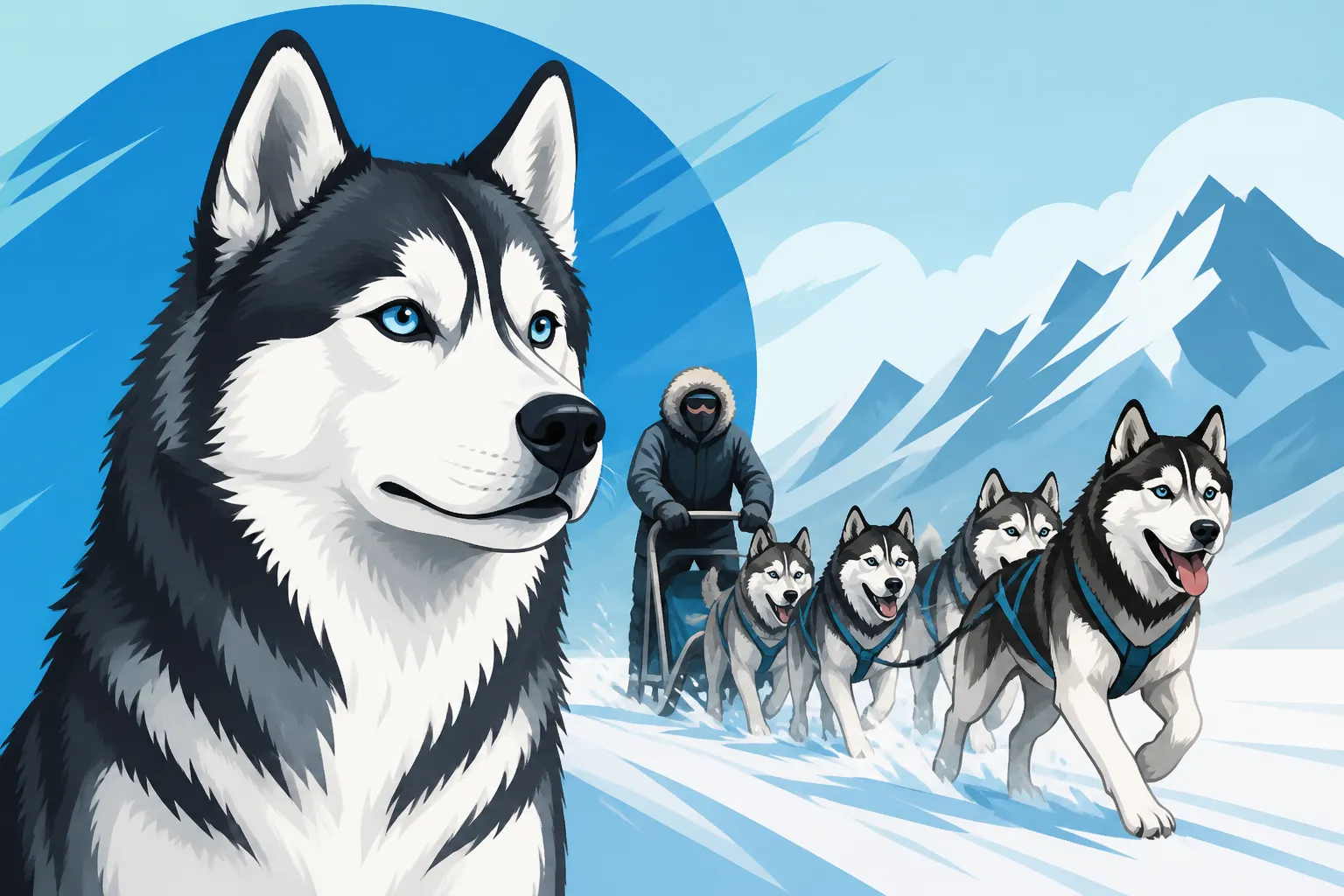
Leonhard Seppala’s Record With Siberian Huskies
Many folks know the romanticized tale of the 1925 Serum Run to Nome, often picturing one famous dog. But the true story of Leonhard Seppala and his unparalleled Siberian Huskies is far richer and more profound, extending well beyond that single, iconic event. This guide aims to shed light on the extraordinary record of a man who didn't just race dogs, but whose vision and dedication fundamentally shaped the Siberian Husky breed as we know it today.
The Dawn of a Dynasty: Seppala's Early Years and Vision
Imagine a time when Alaska was still wild, a land of gold rush dreams and vast, unforgiving snowscapes. This was the world Leonhard Seppala entered, a world where dog sledding wasn't just a sport, but a vital mode of transportation, a lifeline in the harsh arctic. His story is one of a quiet man with an uncanny connection to dogs, a man who saw beyond the initial skepticism and recognized the true potential of a fledgling breed.
Arriving in Alaska and Recognizing Potential
Leonhard Seppala, a Norwegian immigrant, arrived in Nome, Alaska, in 1900, initially drawn by the promise of gold. However, it wasn't long before he found his true calling: dog sledding. He started working for the Northern Commercial Company, transporting goods and mail by dog team. In these early days, the dominant sled dogs were often larger, heavier breeds, built for raw power but perhaps lacking the speed and endurance required for long-distance racing.
It was around 1908 that a Russian trader brought the first Siberian Huskies to Nome, initially referred to by some as "Siberian Rats" due to their smaller stature compared to the local freighting dogs. Many mushers dismissed them as too small and delicate. But Seppala, with his keen eye for canine athletes, saw something different. He observed their incredible metabolism, their boundless energy, their efficient gait, and their undeniable resilience in the face of brutal cold. He began to experiment with these smaller, faster dogs, and quickly discovered they were perfectly suited for the challenging, endurance-based races that were gaining popularity, like the famed All-Alaska Sweepstakes. He understood that speed combined with endurance, rather than sheer brute force, was the key to victory over vast distances, and these newly imported Siberians possessed that in spades.
Forging a Bond: Training Methods and Early Successes
Seppala's success wasn't just about the dogs themselves; it was profoundly rooted in his revolutionary approach to training and his deep bond with his animals. Unlike some mushers of the era who employed harsher methods, Seppala believed in a gentle but firm hand, built on mutual respect and understanding. He understood the independent, intelligent nature of the Siberian Husky. He didn't try to break their spirit; instead, he channeled their natural instincts, patiently teaching them discipline while fostering their innate desire to run and work as a cohesive team.
His training methods focused on building stamina, developing clear commands, and creating an almost telepathic connection with his lead dogs. He spent countless hours on the trail, learning each dog's personality, strengths, and weaknesses. This intimate knowledge allowed him to arrange his teams for optimal performance, often placing a dog that might seem less dominant on paper in a crucial position because he knew their heart and drive. These methods quickly bore fruit. Seppala's teams, comprised largely of these agile Siberian Huskies, began to dominate the local racing circuit. He won the prestigious The All-Alaska Sweepstakes and the Siberian Husky multiple times between 1915 and 1917, solidifying his reputation as a master musher and proving beyond a shadow of a doubt that the "Siberian Rats" were not only legitimate but superior competitors. His meticulous approach to conditioning, nutrition, and team dynamics set a new standard for dog sled racing, a standard that many still admire today.
The Apex of Achievement: The 1925 Serum Run and Beyond
While Seppala had already established himself as a legend in the mushing world, it was the dire circumstances of 1925 that truly cemented his place in history and brought the Siberian Husky to international prominence. It was a race against time, a battle against nature, and a testament to the extraordinary capabilities of his dogs.
The Critical Role in the Race for Life
The winter of 1925 brought a terrifying diphtheria outbreak to Nome, Alaska. With a blizzard raging and the nearest antitoxin hundreds of miles away, the only hope was a desperate dog sled relay. This was not a race for glory, but a life-or-death mission, and only the most experienced mushers and toughest dogs could undertake it. Seppala, with his seasoned team led by the incomparable Togo, was called upon for the longest and arguably most perilous leg of the journey. The journey covered by Seppala and Togo was a staggering 264 miles through some of Alaska's most treacherous terrain.
While other teams ran critical legs, Seppala made the audacious decision to cut across the perilous ice of Norton Sound, a shortcut that saved precious time but risked everything. The ice was unstable, constantly shifting, and could break apart at any moment. It was a gamble of the highest order, dependent entirely on the unerring instinct and courage of his lead dog, Togo. The Diphtheria Outbreak That Called Out the Huskies created an urgent need for swift action. Togo, then a magnificent 12-year-old, led his team through whiteout conditions, navigated treacherous ice floes, and even guided the team to safety when they became stranded on a drifting chunk of ice. The sheer physical and mental fortitude required for Which Leg Seppala's Siberian Huskies Ran cannot be overstated. Seppala later recounted how Togo instinctively knew when to pull the sled onto solid ground and how to navigate the near-zero visibility conditions, displaying an intelligence and bond with his musher that was truly remarkable. It's a poignant reminder that How Old the Lead Husky Togo Was in 1925 did not diminish his incredible abilities.
Post-Run Recognition and the Breed's Future
In the immediate aftermath of the Serum Run, the world was captivated by the heroism of the sled dogs and their mushers. News of the "Great Race of Mercy" spread like wildfire, and the Siberian Husky breed, once a relative unknown, was suddenly in the spotlight. Seppala, now a national hero, embarked on a tour of the lower 48 states with Togo and other members of his team. This The 1926 Siberian Husky Tour of American Cities brought the beauty and athletic prowess of the Siberian Husky to a wider audience, enchanting crowds and sparking a fascination with the breed.
However, a curious twist of fate occurred. While Seppala and Togo completed the most arduous and longest leg, it was the team led by Balto, running the final leg into Nome, that ultimately garnered the most public fame. The media latched onto Balto as the face of the heroic effort, leading to statues and widespread recognition. Despite this, Seppala remained dedicated to his dogs and the integrity of the breed. He played a crucial role in establishing the Siberian Husky in America, working towards its recognition by the American Kennel Club. In 1930, the AKC Recognition of the Siberian Husky in 1930 formally acknowledged the breed, largely due to the efforts of Seppala and other early proponents who saw the value in preserving these incredible working dogs. He continued to advocate for the working traits of the breed, ensuring that its reputation as a resilient, intelligent, and capable sled dog was maintained.
A Lasting Legacy: Seppala's Impact on the Siberian Husky
Leonhard Seppala wasn't just a musher; he was a foundational figure in the history of the Siberian Husky. His hands-on experience, coupled with his deep understanding of genetics and environment, allowed him to cultivate a breed line that became the blueprint for countless huskies that followed. His influence is still palpable in the breed today, from their physical characteristics to their innate temperament.
Breeding Philosophy and Genetic Contributions
Seppala's breeding philosophy was simple yet profound: prioritize working ability, health, and temperament above all else. He was a keen observer of dog locomotion, endurance, and spirit. His goal was to produce dogs that could cover vast distances efficiently, withstand extreme cold, and possess the intelligence and drive to follow complex commands in challenging conditions. He wasn't breeding for fancy show ring aesthetics; he was breeding for function and survival.
His most famous dogs, like Togo, Scotty, and Fritz, became the genetic cornerstones of the breed. Togo, in particular, was exceptional, siring many offspring that went on to be successful sled dogs and foundation stock. Seppala carefully selected breeding pairs based on proven performance on the trail, ensuring that desirable traits like stamina, good feet, dense coats, and a cooperative yet independent nature were passed down. Many modern Siberian Huskies can trace their lineage back to Seppala's kennels, a testament to his foresight and rigorous selection process. The deep history and resilience of The Chukchi Origins of the Siberian Husky were truly understood and preserved through his work. Today, many dedicated breeders still strive to maintain these original working qualities, ensuring the legacy of Seppala's lines continues, often seeking out dogs from specific Seppala Siberian Sleddog lines.
Shaping the Breed Standard and Public Perception
The success of Seppala's teams, especially during the Serum Run, undeniably shaped the public's perception of the Siberian Husky from a "Siberian Rat" to a noble, courageous, and highly capable breed. His experiences influenced what was eventually enshrined in the official breed standard. The emphasis on moderate size, efficient gait, dense double coat, and an alert, friendly, and outgoing temperament can all be seen as reflections of the qualities he valued and perfected in his own dogs.
He showcased the breed's intelligence and their unique combination of independence and willingness to work within a team. This helped define the Siberian Husky as more than just a powerful animal; it was a loyal companion capable of incredible feats. While modern Siberian Huskies might not all be pulling sleds, their innate drive, intelligence, and often mischievous yet loving personalities are direct links to the dogs Seppala championed. It's why many owners today appreciate their husky's ability to live long, healthy lives, a reflection of the robust genetics Seppala sought to preserve. For example, Why Siberian Huskies Outlive Most Medium Breeds can be partially attributed to the strong genetic foundations laid by breeders like Seppala who focused on natural vigor. His efforts ensured that the breed's core identity—that of an adaptable, resilient, and affectionate sled dog—was preserved for future generations, influencing What the AKC Standard Asks of a Siberian Husky.
Dispelling Myths and Celebrating True Grit
The 1925 Serum Run is a pivotal moment, but like all historical events, its narrative can sometimes overshadow the full truth. It's important to understand the nuances of the story to truly appreciate Seppala's record and the contributions of all the dogs involved.
Togo's True Heroism vs. Balto's Fame
It's a common misconception that Balto was the sole hero of the 1925 Serum Run. While Balto and musher Gunnar Kaasen did indeed complete the final, highly publicized leg into Nome, bringing the antitoxin to the waiting town, the lion's share of the credit for the most difficult and dangerous part of the relay belongs to Leonhard Seppala and his lead dog, Togo. The public, eager for a hero, quickly elevated Balto to celebrity status, often overlooking the immense distance and treacherous conditions faced by Togo and Seppala.
Togo's team covered an incredible 264 miles, nearly double that of any other team, including the most perilous stretch across Norton Sound. Balto's team, while performing admirably, covered a much shorter distance, albeit the one that ended in the spotlight. This isn't to diminish Balto's role; every musher and dog team played a vital part in the relay. However, it's crucial to acknowledge the incredible feat achieved by Seppala and Togo. The media's focus on Balto was largely due to him running the last leg into the populated town, making for a dramatic finish that reporters could easily capture. This is Why Balto Became the Famous Siberian Husky in the public imagination, leading to the unfortunate situation where many still wonder Whether the Wrong Siberian Husky Got the Credit. For those who truly understand the physical demands and risks of long-distance mushing, Togo's name resonates with the unparalleled achievement.
The Enduring Spirit of Seppala's Huskies
The qualities that Leonhard Seppala prized and meticulously bred into his Siberian Huskies—their incredible endurance, their efficient gait, their dense double coats, their keen intelligence, and their friendly yet independent spirit—are still the hallmarks of the breed today. When you see a Siberian Husky joyfully pulling a sled, or perhaps just pulling you enthusiastically down the street, you are seeing the direct lineage of Seppala's dedication.
His legacy is not just in the historical records but in the very DNA of the breed. Modern Siberian Husky owners benefit from the strong, healthy lines he helped establish. Today, we have the convenience of pet supply retailers like Chewy to ensure our huskies get the best nutrition and care, a luxury Seppala could only dream of for his hard-working dogs. Whether your husky is a competitive sled dog or a beloved family pet, that inherent drive and joyful spirit for which they are known is a direct echo of the dogs Seppala trained and loved. The breed continues to thrive globally, a living tribute to a man who understood and championed these magnificent animals, setting a standard that still influences the best practices in breeding and training. You can still find breeders today focused on preserving the working qualities, often referring to Seppala Siberian Sleddogs as a Separate Line, honoring his specific contributions. These dogs embody the essence of what Seppala worked so tirelessly to create: an athletic, intelligent, and spirited companion for life's great adventures. Many owners find their Siberian Huskies thrive on modern, high-quality dog food easily available through stores like Chewy, a stark contrast to the more rudimentary diets of Seppala's era, highlighting how far pet care has come while the breed's spirit remains constant.
Here's a quick comparison of the famed dogs of the 1925 Serum Run:
| Dog Name | Musher | Miles Covered (Approx.) | Key Contribution | Public Fame |
|---|---|---|---|---|
| Togo | Leonhard Seppala | 264 | Longest, most dangerous leg across Norton Sound. | Later recognized for true heroism, initially overshadowed. |
| Balto | Gunnar Kaasen | 53 | Final leg into Nome, delivered serum to town. | Widely famous immediately after, statues erected. |
Today, we can access almost anything for our Siberian Huskies, from premium kibble to specialized gear, through convenient online retailers like Chewy. It's a testament to how far we've come in pet care, built on the foundations of understanding these incredible animals, an understanding pioneered by figures like Seppala.
Disclaimer
This article is for general informational purposes only and does not constitute professional advice. Laws, prices and regulations vary by location and change over time. Consult a qualified professional for guidance on your specific situation.