Why a Siberian Husky Will Not Protect the House
Many first-time Siberian Husky owners, drawn in by their stunning looks or wolf-like appearance, mistakenly believe these majestic dogs will act as formidable guard dogs, standing sentinel over their homes. The reality, however, is often a rude awakening when an unexpected visitor is greeted with tail wags rather than warning growls. This guide will delve deep into the historical origins and intrinsic temperament of the Siberian Husky to explain precisely why they are not equipped for home protection, and what their unique behaviors truly mean for your household security.
The Genetic Code: Why Your Husky Wasn't Bred to Guard
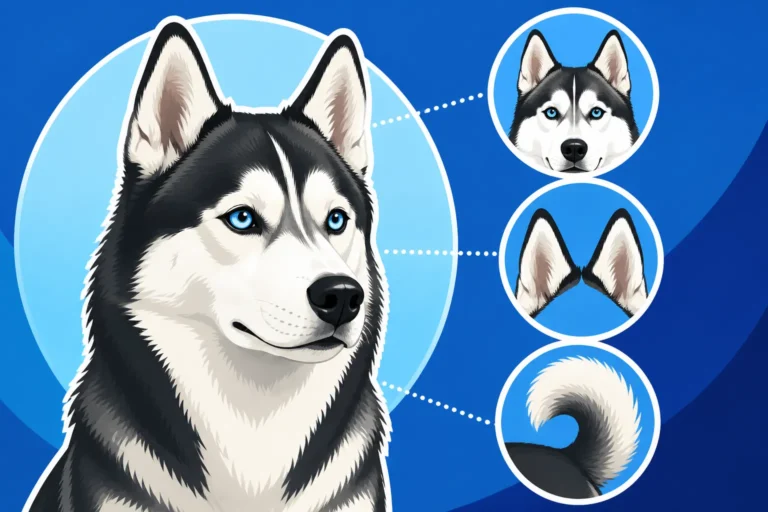
It’s easy to look at a Siberian Husky, with their striking eyes, thick coat, and powerful build, and assume they’d be a natural protector. They certainly look imposing enough to deter an unwanted guest, right? But to understand why this isn’t the case, we need to go back to their roots and the very purpose for which they were originally bred. Their job was never to stand guard, and that lineage runs deep.
Origins as a Working Breed
The ancestors of today's Siberian Huskies were bred by the semi-nomadic Chukchi people in northeastern Asia thousands of years ago. Their survival depended on a symbiotic relationship with these dogs, who were primarily used for pulling light loads over vast distances in extremely harsh, cold conditions. Speed, endurance, and efficiency were paramount, but so was a particular temperament. The Chukchi needed dogs that could live and work closely with humans, often sleeping inside their dwellings to stay warm. This close companionship fostered an incredible tolerance and even friendliness towards people. They needed dogs that would cooperate with each other in a team, and with their human handlers, not challenge them or be suspicious of newcomers.
This selective breeding meant that any strong territorial instinct or aggressive tendencies towards strangers would have been actively bred out of the line. A dog that bit a fellow tribe member or fought with other dogs in the team would not have been a valuable asset, and certainly wouldn't have been kept for breeding. This is a crucial distinction when comparing them to breeds like German Shepherds or Rottweilers, who were specifically developed for guarding livestock, herding, or personal protection, tasks that explicitly require suspicion and a protective drive. So, while your husky may look like a formidable wolf, their historical blueprint is far more about collaboration than confrontation. If you’re curious about their fascinating past, you can learn more in The Chukchi Origins of the Siberian Husky.
Survival Through Pack Mentality, Not Suspicion
Life for the ancient Siberian Husky was about surviving together as a pack, both canine and human, against the elements. This included being accepting and non-aggressive towards other dogs, as they frequently worked and lived in large groups. Furthermore, the Chukchi tribes were interconnected, meaning dogs would often move between families or be temporarily handled by different people. A dog that was suspicious of every new face, or aggressively possessive of its family or territory, would have been a liability.
Their survival depended on being adaptable and friendly, ensuring they could always find a place within the community. This open, amiable nature became a hallmark of the breed's temperament. They learned that good things – food, warmth, care – came from people, regardless of who those people were. This isn't to say they don't form deep bonds with their immediate families; they absolutely do. But that bond is expressed through companionship and joy, not through a need to fiercely protect property or people from perceived threats. This ingrained pack mentality, which prioritizes social harmony and collaboration, stands in stark contrast to the instincts required for a dedicated guard dog. Their inherent disposition, detailed further in Siberian Husky Temperament and What the Standard Says, is simply not geared towards guarding your home.
More Friend Than Foe: Understanding the Siberian Husky Temperament
One of the most charming, yet sometimes frustrating, aspects of the Siberian Husky temperament is their general friendliness. While it makes them wonderful companions, it's also the primary reason they fall short in the home protection department. They simply don't see the world through a lens of suspicion or territorial defense.
The Open-Door Policy: Welcoming Strangers
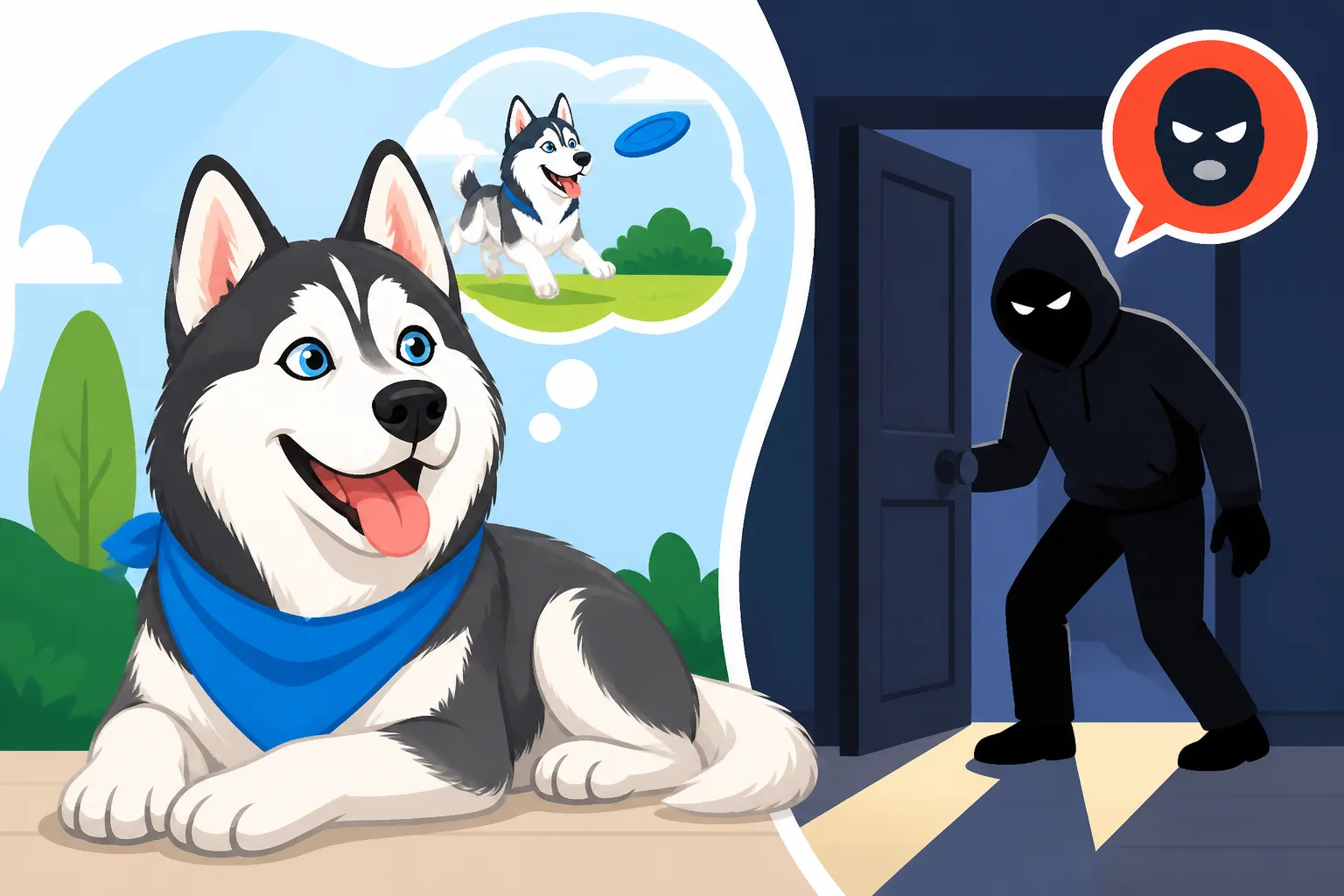
If you're expecting your husky to greet a stranger at the door with a menacing growl or a defensive stance, prepare to be surprised. More often than not, they’ll treat an unfamiliar face as a long-lost friend, a potential playmate, or someone who might offer a head scratch or a treat. Imagine the scene: the doorbell rings, and instead of a protective bark, your husky launches itself at the door, tail wagging furiously, ready to enthusiastically slobber all over the unsuspecting delivery driver. This isn't a sign of poor training; it's a deeply ingrained breed characteristic.
They lack the inherent suspicion that fuels the protective instincts of traditional guard breeds. To a Siberian Husky, a new person is simply another member of the extended human "pack" that might offer an interesting interaction. They don’t differentiate between welcomed guests and potential intruders based on intent. For a true guard dog, every stranger is a potential threat until proven otherwise. For a husky, every stranger is a potential friend until proven otherwise. This is why when you read discussions about the breed, you'll often find phrases like "they'd lead a burglar to the silver" – a humorous but accurate depiction of their welcoming nature. This friendly disposition is so common that it’s explicitly mentioned when asking Whether Siberian Huskies Are Friendly With Strangers.
Loyalty Redefined: Companionship, Not Protection
Siberian Huskies are loyal, make no mistake. They form deep, loving bonds with their families, showering them with affection and enjoying their company immensely. However, their loyalty manifests differently than in breeds known for protection. A husky's loyalty is expressed through companionship, shared adventures, and joyful interaction, not through an instinct to stand guard or aggressively defend. They want to be with you, not necessarily for you in a protective capacity.
This means that while they might be devoted to you, their amiability extends broadly to people in general. They are not one-person dogs and rarely exhibit the kind of fierce possessiveness over their human companions or territory that would make them effective protectors. In fact, if an opportunist were to open your gate, a husky, driven by their innate desire to explore and run, might very well see it as an invitation to a grand adventure rather than a breach to be defended. They're more likely to run off with a friendly stranger who offers a game of chase than to hold their ground and protect your home. It’s a different kind of bond, one that prioritizes freedom and connection over territorial defense, a distinction often highlighted when discussing Siberian Husky Loyalty Against Retriever Loyalty.
Vocalizations vs. Vigilance: Why a Husky's Noise Isn't Guarding
Siberian Huskies are definitely not quiet dogs. They have a rich vocabulary of sounds, from dramatic howls to conversational yips and chirps. This vocal nature can sometimes lead owners to believe they are being vigilant, but a closer look reveals that their noises are almost always for communication or expression, rather than an aggressive warning to a perceived threat.
The Howls and Yips: More Communication Than Warning
If you've spent any time around a husky, you know they are masters of vocal expression. They howl like wolves, yip with excitement, groan with contentment, and even "talk" in a series of expressive murmurs and grumbles. These sounds are often a form of communication, whether they're expressing boredom, demanding attention, reacting to another dog's distant bark, or even mimicking a siren. For example, a fire truck siren wailing down the street might set off a chorus of howls from your husky, not because they perceive a threat to your home, but because it's an auditory stimulus that triggers their ancestral instinct to respond to pack calls.
When a visitor arrives, a husky's vocalizations are typically more of an announcement ("Look! Someone's here! Isn't this exciting?") rather than a deterrent ("Stay away from my property!"). They might let out a dramatic, drawn-out howl as someone approaches the door, but this is usually an expression of high anticipation or excitement, not a sign of aggression. Their body language, typically loose and wiggly, further confirms their friendly intentions. It’s a vital distinction to make, as their unique vocal habits are a significant part of their charm but are rarely, if ever, indicative of protective instincts, as explored further in Why a Siberian Husky Howls and Talks.
The "Alert Bark": A Brief Announcement, Not a Deterrent
While howling is their signature sound, huskies can bark. However, their barks are usually sharp, short, and to the point – an "alert bark" that simply announces "something is happening!" They might bark once or twice at a squirrel in the yard, a leaf blowing by the window, or a car pulling up the driveway. But unlike traditional guard dogs, whose barks are often deep, sustained, and accompanied by a stiff, vigilant posture, a husky's bark is rarely followed by continued aggression or a defensive stance.
More often, after that initial "alert," their curiosity takes over. They'll crane their neck, sniff the air, and watch the perceived stimulus with interest, often wagging their tail. They're telling you something's there, but they're not necessarily planning to do anything about it themselves, beyond perhaps inviting the "thing" in for a game. They certainly aren't going to stand their ground against an intruder in the way a trained protection dog would. In essence, they're the neighborhood watch equivalent of someone pointing out a suspicious car, not the one who confronts the driver. This limited protective barking is precisely why many question Whether a Siberian Husky Would Warn You of an Intruder effectively.
Realistic Home Security: What to Expect From Your Siberian Husky
So, if your beautiful, wolf-like Siberian Husky isn't going to be your personal bodyguard, what can you realistically expect in terms of home security, and more importantly, what steps should you take to ensure your home is protected? It's crucial to manage expectations and understand that their strengths lie elsewhere.
The Best Defense: Your Husky as a "Visual Deterrent" (Barely)
I hear it all the time: "But they look so tough! Surely that's enough to scare someone off?" And I get it, you're hoping their imposing appearance and impressive vocalizations might at least act as a visual deterrent. It’s a natural assumption, especially for those new to the breed. The truth is, their wolf-like appearance might give a moment's pause to someone unfamiliar with the breed. A quick glance at a large, often blue-eyed, dog might make a casual opportunist think twice. But this is purely superficial. Anyone who knows even a little about Siberian Huskies will know that their fearsome looks are usually just a facade for a friendly, playful nature.
An intruder who is familiar with dog breeds, or who simply offers a friendly word or an outstretched hand, is unlikely to be deterred by a husky. They won't challenge, they won't defend, and they certainly won't physically engage with an unknown person entering your home. In fact, their innate curiosity and friendly disposition could lead them to inadvertently assist an intruder by distracting them with playful nudges or even trying to elicit a game. This can be a frustrating realization for owners who envisioned a protective canine companion, but it's vital to accept your husky's true nature rather than placing an unfair burden of expectation on them. If you’re ever worried about leaving them alone, especially if they are prone to destructive behaviors when bored, investing in an escape-proof, heavy-duty crate, perhaps from a trusted retailer like Chewy, can provide a secure space for them and peace of mind for you.
Actual Security Measures for Husky Owners
Given that your Siberian Husky is unlikely to be your first line of defense against intruders, it's absolutely essential to invest in robust, reliable security measures for your home. This means focusing on physical security, just as you would if you didn't have a dog at all. Think high-quality locks on all doors and windows, a monitored alarm system, and potentially security cameras. These measures will provide far more protection than any husky ever could.
Furthermore, a critical aspect of home security for husky owners often involves containing the husky itself. These dogs are notorious escape artists; they can dig under fences, climb over them, and even figure out how to open gates and doors. You need a yard with a truly secure perimeter, which often means at least a six-foot fence with an L-footer or buried wire to prevent digging. Otherwise, your "guard dog" might be out exploring the neighborhood the moment a door is ajar, not standing vigilant. Siberian Huskies That Open Gates and Doors and The Roaming Instinct Bred Into Every Siberian Husky are excellent resources to understand the challenges of keeping these clever dogs contained.
Don't rely on your husky to deter or defend your property. Instead, channel their immense energy into positive outlets like exercise and training. A well-exercised, mentally stimulated husky is a happy husky, and less likely to engage in destructive behaviors born of boredom. Stock up on interactive puzzle toys and durable chew items, readily available on platforms like Chewy, to keep their minds engaged when you can't be actively playing with them. When out and about, ensure they are always on a secure leash and harness because their recall is notoriously unreliable if a chase instinct kicks in. Learning What New Siberian Husky Owners Underestimate can help you prepare for the unique challenges and joys of this incredible breed, ensuring you focus on their strengths as companions and athletes, rather than expecting them to be something they're not.
| Trait | Siberian Husky | Traditional Guard Dog (e.g., German Shepherd) |
|---|---|---|
| Origin Purpose | Sledding, companionship, endurance | Herding, protection, police/military work |
| Stranger Alert | Often friendly, curious, may greet enthusiastically | Suspicious, wary, may bark deeply or posture defensively |
| Territoriality | Low to non-existent | High |
| Prey Drive | High (towards small animals) | Varies, often moderate (can be directed in training) |
| Vocalizations | Howls, "talks," yips; alert barks are brief | Deep, sustained barks; growls |
| Response to Threat | May bark, then investigate or withdraw | Confronts, deters, may physically intervene |
| Trainability | Independent, can be stubborn, requires motivation | Eager to please, highly trainable for specific tasks |
Disclaimer
This article is for general informational purposes only and does not constitute professional advice. Laws, prices and regulations vary by location and change over time. Consult a qualified professional for guidance on your specific situation.