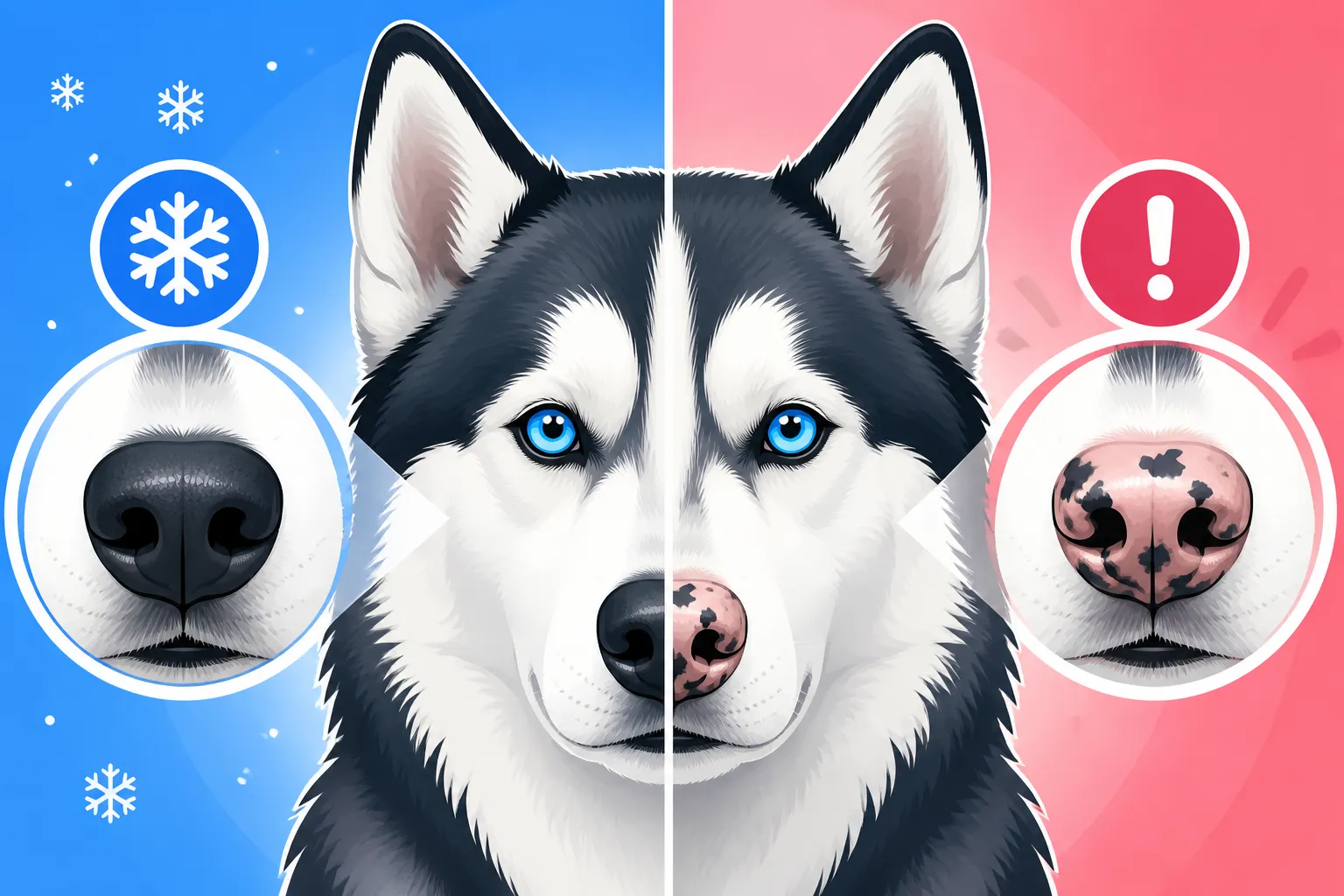
Snow Nose Against Real Husky Pigment Loss
It can be quite alarming to notice your Siberian Husky’s perfectly dark nose starting to fade, especially if you’re not sure what’s causing it. Many Husky owners fret when their beloved companion's nose turns pinkish, fearing a serious health issue. This guide will help you understand the difference between the common, harmless phenomenon known as "snow nose" and other more serious forms of pigment loss, giving you the clarity and peace of mind you need to care for your furry family member.
What Exactly is "Snow Nose" in Huskies?
Let's start with the good news first: "snow nose" is, for the vast majority of Siberian Huskies, a completely benign and natural occurrence. It's not a disease, it doesn't hurt your dog, and it doesn't indicate a lack of health. It’s simply a temporary change in pigmentation that often coincides with the seasons, making it a topic of much discussion among Husky enthusiasts.
The Science Behind the Seasonal Change
At its heart, "snow nose" is about melanin, the pigment responsible for skin and hair color. A dog's nose leather, like their skin, contains melanocytes, which are cells that produce melanin. For many Huskies, these melanocytes become less active when temperatures drop. Think of it like a dimmer switch for color. The enzyme primarily responsible for melanin production, called tyrosinase, is temperature-sensitive. When it gets colder, this enzyme doesn't work as efficiently, leading to a decrease in melanin production. This reduction in pigment is what causes that characteristic pinkish or brownish fading on the nose.
This isn't unique to Siberian Huskies, though it's particularly common and noticeable in them. Other breeds, like Golden Retrievers, Bernese Mountain Dogs, and some Poodles, can also experience similar seasonal depigmentation. It’s a fascinating biological quirk that highlights how even small environmental shifts can affect a dog's appearance. It's simply how some dogs' bodies respond to the changing seasons, a charming, albeit sometimes concerning for new owners, aspect of their unique physiology.
Normal Appearance and Timing
A typical snow nose starts as a darkening of the nose leather during warmer months, then gradually fades to a lighter, often pinkish-brown or liver color, as winter approaches. The change isn't usually sudden; you might first notice it as a lighter streak down the center of the nose, or a general dulling of the black. It can happen to a pure black nose, a liver-colored nose, or even a bi-colored nose, softening the edges of the pigment.
The timing can vary. Some Huskies will show a dramatic change with the first frost, while others might have a more subtle, gradual shift over several weeks. Come spring and summer, when temperatures rise, the nose often darkens again, returning to its original color. It’s a cycle that can repeat year after year throughout your dog’s life. Some Huskies might retain a small amount of lighter pigment even in summer, never quite returning to jet black, and that's perfectly normal too. There's no fixed rule, and each dog's pattern can be slightly different. It’s a cosmetic phenomenon that causes no discomfort or health issues for your beloved companion.
Is Snow Nose a Health Concern?
No, absolutely not. This is perhaps the most important takeaway for concerned owners. Snow nose is purely cosmetic. It does not indicate illness, pain, or any underlying health problem. Your Husky's sense of smell remains unaffected, their nose is still healthy, and they are not experiencing any discomfort from the color change. There's no treatment required because there's nothing to "fix." It’s simply a natural variation in their appearance.
While it’s natural to worry when you see changes in your pet, especially if you’re a new Husky owner, this is one instance where you can relax. Embrace the unique charm of your Husky's "winter nose"! Of course, if you ever see other symptoms accompanying the pigment loss—like crusting, cracking, bleeding, or if your dog seems to be in pain—then that's a different story and warrants a vet visit. But for simple, seasonal lightening, rest assured your Husky is just fine.
Other Causes of Pigment Loss: When to Worry
While snow nose is harmless, it's crucial to understand that not all pigment loss is benign. There are several other conditions that can cause a Siberian Husky’s nose to lose its color, some of which do require veterinary attention. Differentiating these from snow nose is key to ensuring your dog's health and well-being. This is where observation and careful consideration of other symptoms become incredibly important.
Vitiligo: An Autoimmune Condition
Vitiligo is an autoimmune skin condition where the immune system mistakenly attacks and destroys melanocytes, the cells responsible for producing pigment. Unlike snow nose, which is usually seasonal and affects the entire nose somewhat evenly, vitiligo typically causes irregular patches of white skin and hair. On the nose, this can manifest as patches of depigmentation that don't follow a seasonal pattern. While it’s not common, Siberian Huskies can be affected by vitiligo. It's often seen on the nose, lips, eyelids, and other areas of the body, creating a striking patchwork appearance.
The good news about vitiligo is that, like snow nose, it’s generally considered a cosmetic condition. It doesn't usually cause pain or discomfort, and the affected areas are otherwise healthy. However, because it’s an autoimmune issue, it's always wise to discuss it with your veterinarian. They might want to monitor for other, more systemic autoimmune issues, though these are rare. If you're seeing patchy, non-seasonal pigment loss, especially spreading to other areas like the eyelids or lips, it's worth a diagnostic check to confirm it's vitiligo and not something else. It can sometimes be associated with other autoimmune conditions, such as those that might lead to uveodermatologic syndrome and the Siberian Husky, a more serious condition affecting both eyes and skin pigment.
Zinc-Responsive Dermatosis
Now, this is a condition where pigment loss can be a symptom of an underlying nutritional issue, and it's particularly relevant for Siberian Huskies. Zinc-responsive dermatosis is a genetic condition where a dog's body either doesn't absorb zinc properly from its diet or has an increased requirement for zinc. Without adequate zinc, the skin, especially around the face, eyes, and muzzle, can become crusty, scaly, and lose pigment. If you’ve seen a Siberian Husky crusting around the muzzle, this might be a possibility.
The pigment loss associated with zinc-responsive dermatosis often looks different from snow nose. Instead of a uniform fading, you might see localized patches of pink or grey skin, sometimes accompanied by thickening, redness, or even oozing lesions. The skin around the nose, mouth, and eyes is commonly affected, but it can also appear on the ears, elbows, and hocks. Crucially, dogs with this condition will also show other symptoms like lethargy, loss of appetite, and a dull, poor coat. This is definitely a condition that needs veterinary intervention. A diagnosis usually involves a skin biopsy, and treatment involves zinc supplementation, often for life. For more detailed information, consider reading about Zinc-Responsive Dermatosis in the Siberian Husky. This is a prime example of a non-cosmetic pigment loss issue that needs professional help.
Pemphigus Foliaceus and Other Immune-Mediated Skin Diseases
Beyond vitiligo, there are other, more serious autoimmune skin conditions that can cause pigment loss. Pemphigus foliaceus is one such condition where the immune system attacks the connections between skin cells, leading to pustules, crusts, and erosions. While pigment loss might not be the primary symptom, secondary depigmentation can occur in affected areas. Unlike snow nose, these conditions are painful, itchy, and debilitating. The skin changes are widespread, often starting on the face, ears, and paws, and are usually symmetrical. You might see crusting pustules on a Siberian Husky's ears, for instance.
Other immune-mediated diseases, or even chronic infections, can also lead to secondary pigment changes. The key differentiating factors here are the presence of other symptoms: pain, itching, redness, inflammation, hair loss, and the development of lesions beyond simple color change. If your Husky's nose is not just losing color but is also scabbing, bleeding, or appears sore, it's not snow nose. These conditions often require a skin biopsy for definitive diagnosis and involve long-term management with immunosuppressive medications. For more context on such conditions, you might want to look at Pemphigus Foliaceus in the Siberian Husky.
Trauma and Infection
Sometimes, pigment loss can be a result of something as simple as an injury or a skin infection. A cut, scrape, or even a persistent lick or rub on the nose can damage the melanocytes in that area, leading to temporary or even permanent depigmentation. This would typically be localized to the site of the trauma, rather than a generalized fading like snow nose.
Similarly, certain fungal or bacterial infections can cause inflammation that disrupts melanin production. Once the infection is treated and the skin heals, pigment may return, but sometimes it doesn't fully. If you notice any discharge, swelling, or odor accompanying the pigment loss, an infection could be at play. A veterinarian can easily diagnose and treat most skin infections with antibiotics or antifungals. This type of pigment loss is usually distinguished by its sudden onset and the presence of other signs of inflammation or injury.
Diagnostic Steps and When to See Your Vet
Given the various reasons for a Husky's nose to lose color, it's natural to feel a bit overwhelmed. The good news is that careful observation at home can often give you strong clues. However, when in doubt, a trip to the vet is always the safest bet. It’s better to rule out something serious than to ignore a treatable condition.
Observing the Changes at Home
Before you even pick up the phone to call your vet, take some time to be a detective for your Husky. Here's what you should observe:
- Timing and Seasonality: Does the pigment loss appear and disappear with the seasons? Is it more prominent in winter and less so in summer? This is the strongest indicator of snow nose.
- Appearance of the Depigmentation: Is it a uniform fading across the entire nose, or are there distinct, irregular patches? Uniform fading points towards snow nose; patchy, uneven loss might suggest vitiligo or another issue.
- Other Skin Changes: Is the skin on the nose smooth and healthy, or do you notice crusting, scaling, redness, swelling, cracks, or bleeding? Are there any pustules or erosions? The presence of any of these strongly suggests something other than snow nose. Look closely at surrounding areas too, like the lips and eyelids; Whitening Lips and Eyelids in a Siberian Husky can offer more insights into generalized pigment loss.
- Behavioral Changes: Is your Husky rubbing their nose excessively, pawing at it, or showing any signs of discomfort or pain when the area is touched? Are they lethargic, losing appetite, or showing other systemic signs of illness? Snow nose is asymptomatic; other conditions are not.
- Progression: Has the pigment loss remained stable for a while, or is it actively worsening or spreading to other parts of the body?
Take photos of the changes over time. This visual record can be incredibly helpful for your vet to assess the situation accurately.
The Vet's Examination and Tests
If your home observations suggest something more than just snow nose, or if you’re simply unsure, it's time for a professional opinion. Your veterinarian will start with a thorough physical examination, paying close attention to the nose and surrounding skin. They'll ask you detailed questions about the onset, progression, and any other symptoms you've noticed.
Depending on their initial assessment, your vet might recommend several diagnostic tests:
- Skin Scrapings: To check for mites or other external parasites that could cause skin irritation and secondary pigment loss.
- Fungal Culture: To rule out fungal infections, such as ringworm, which can cause patchy hair loss and skin changes.
- Blood Work: A complete blood count and chemistry panel can give an overview of your dog’s general health and identify any systemic issues. They might also check thyroid levels, as thyroid imbalance can sometimes manifest in skin and coat changes, so asking for Thyroid Blood Panels for a Siberian Husky can sometimes be relevant.
- Skin Biopsy: This is often the most definitive diagnostic tool for immune-mediated skin diseases like vitiligo or pemphigus. A small tissue sample is taken from the affected area and sent to a specialized lab for microscopic examination. This allows pathologists to identify specific cellular changes indicative of various conditions.
Don't be surprised if your vet wants to be thorough. Diagnosing skin conditions can sometimes be a process of elimination, and getting an accurate diagnosis is crucial for effective treatment.
Managing True Pigment Loss Conditions
Once a specific cause for pigment loss (other than snow nose) has been identified, your vet will discuss a treatment plan.
- Zinc-Responsive Dermatosis: This is typically managed with lifelong oral zinc supplementation. The dosage will be carefully determined by your vet, as too much zinc can also be harmful. While diet can play a role, for true zinc-responsive dermatosis, food alone is rarely enough. Zinc Supplementation for a Siberian Husky can be a valuable resource here. Regular monitoring may be required to ensure appropriate zinc levels and to adjust medication as needed.
- Vitiligo: Since vitiligo is primarily cosmetic, treatment isn't always necessary. However, if desired for aesthetic reasons, topical immunosuppressants might be tried, though results can be inconsistent. The main concern with vitiligo is sun protection, as depigmented skin is more susceptible to sunburn.
- Immune-Mediated Skin Diseases (e.g., Pemphigus): These conditions usually require systemic immunosuppressive medications, such as corticosteroids (prednisone) or other immune-modulating drugs. Treatment often starts with a higher dose to get the disease under control and then tapers to the lowest effective dose for long-term management. These dogs require careful monitoring for side effects of medication and regular vet check-ups.
- Trauma/Infection: Treatment focuses on addressing the underlying injury or infection. This might involve antibiotics, antifungals, or wound care. Once the primary issue is resolved, pigment may return, or the area may remain depigmented, especially if the melanocytes were severely damaged.
It’s important to remember that managing chronic conditions can incur significant costs. This is where pet insurance can be a real lifesaver. Companies like Healthy Paws offer comprehensive plans that can help cover the costs of diagnostics, medications, and ongoing veterinary care for conditions like zinc-responsive dermatosis or pemphigus. Having pet insurance like Healthy Paws can truly alleviate the financial burden, allowing you to focus on your Husky's health without added stress. Before you buy a Siberian Husky, understanding potential health costs and how insurance like Healthy Paws can help is a smart move.
Preventing and Living with Pigment Loss
Whether your Husky has harmless snow nose or a more significant pigment loss condition, there are ways to manage it, protect their skin, and ensure they live a happy, healthy life. Prevention, especially against sun damage, becomes important for depigmented areas.
Sun Protection for Depigmented Areas
For any area of depigmented skin, including noses affected by snow nose (if it's particularly pale), vitiligo, or healed lesions, sun protection is crucial. Skin without pigment is highly susceptible to sunburn and, over time, can be at an increased risk of developing skin cancer.
Here are some ways to protect your Husky:
- Timing Walks: Schedule walks and outdoor play during early mornings or late evenings when the sun's intensity is lower. Avoid peak sun hours, typically between 10 AM and 4 PM.
- Shade: Ensure your Husky always has access to ample shade when outdoors. This could be trees, an awning, or a dog house.
- Pet-Safe Sunscreen: Yes, there's sunscreen for dogs! Look for products specifically formulated for pets, free of zinc oxide (which is toxic if ingested by dogs) and PABA. Apply a thin layer to the depigmented areas, like the nose and ear tips, before extended sun exposure. Reapply as directed. Always do a patch test first to ensure no allergic reaction.
- Protective Gear: While less common for the nose, some companies make hats or visors for dogs that can offer some facial sun protection.
Nutritional Support and Supplements
For true pigment loss conditions, particularly zinc-responsive dermatosis, nutritional support and specific supplementation are vital. As mentioned, zinc supplements are often necessary. It's crucial to follow your vet's guidance precisely, as giving too much zinc can be toxic, leading to copper deficiency and other health problems. Never self-prescribe supplements.
Beyond specific medical conditions, a high-quality, balanced diet is always beneficial for overall skin and coat health, which indirectly supports pigment integrity. Some owners ask about Why a Balanced Diet Does Not Fix Husky Zinc Loss; this is because the issue isn't typically a lack of zinc in the food, but a problem with absorption. Omega-3 fatty acids, found in fish oil, can support skin barrier function and reduce inflammation, which can be helpful for general skin health. However, these are supportive measures, not cures for underlying conditions. Always discuss any dietary changes or supplements with your veterinarian to ensure they are appropriate and won't interfere with any medications or existing health issues.
The Emotional Aspect for Owners
It’s completely normal to feel concerned or even a bit sad when your Husky’s beautiful dark nose changes color. We bond with our dogs, and their appearance is part of what makes them unique to us. But remember, whether it's snow nose, vitiligo, or a resolved issue, your Husky is still the same loving, playful companion. Their health, happiness, and personality are what truly matter.
Embrace their unique look! A pinkish winter nose is part of the charm for many Siberian Huskies. For conditions like vitiligo, the patchwork look can be quite striking and beautiful in its own way. The most important thing is to understand the cause, address any health concerns, and provide the best care possible. Your Husky doesn't care about the color of their nose, and neither should you, beyond ensuring it's healthy. It's just another unique trait in a breed full of them, from their striking blue eyes to their endless energy. Understanding potential health challenges and ensuring a long, happy Siberian Husky Lifespan and What Shortens It is always the goal. And don't forget the importance of general health checks; remember to schedule that Siberian Husky Eye Disease and the Annual Exam annually.
Comparison Table: Snow Nose vs. Other Pigment Loss
To help you quickly distinguish between snow nose and other common causes of pigment loss, here's a handy comparison table:
| Feature | Snow Nose | Vitiligo | Zinc-Responsive Dermatosis | Pemphigus Foliaceus | Trauma/Infection |
|---|---|---|---|---|---|
| Appearance | Uniform fading (pink/brown) | Irregular, patchy white areas | Crusting, scaly, reddened, hair loss, patchy | Pustules, crusts, erosions, general inflammation | Localized redness, swelling, scabs, oozing |
| Timing/Seasonality | Often seasonal (winter onset) | Non-seasonal, progressive | Non-seasonal, progressive | Non-seasonal, often rapid onset | Acute onset after incident |
| Other Symptoms | None (cosmetic only) | None (cosmetic only, unless other autoimmune link) | Lethargy, poor appetite, poor coat, pain | Itching, pain, fever, widespread skin lesions | Pain, swelling, discharge, odor |
| Affected Areas | Nose | Nose, lips, eyelids, generalized body | Nose, mouth, eyes, ears, elbows, hocks | Face, ears, paws, generalized body | Site of injury/infection |
| Primary Cause | Temperature-sensitive melanin production | Autoimmune destruction of melanocytes | Genetic malabsorption of zinc | Autoimmune attack on skin cell adhesion | Physical injury or microbial invasion |
| Veterinary Action | Not usually required | Diagnosis for confirmation, monitoring | Immediate diagnosis and lifelong treatment | Immediate diagnosis and long-term treatment | Diagnosis and targeted treatment |
| Example Brand Support | N/A | Healthy Paws (for diagnostics/monitoring) | Healthy Paws (for ongoing medication/vet visits) | Healthy Paws (for extensive treatment) | Healthy Paws (for vet visits/meds) |
Disclaimer
The information provided in this article is for general informational purposes only and is not a substitute for professional veterinary advice. Always consult with a qualified veterinarian for any health concerns or before making any decisions related to your pet's health and treatment.