Why Husky Breeders Rarely Bother With PennHIP
It can be incredibly confusing when you're diligently researching Siberian Husky breeders, trying to ensure your future companion comes from the healthiest lines, and you keep hearing about hip evaluations like OFA and PennHIP. You might find plenty of OFA certificates, but rarely a PennHIP one. This guide will walk you through why Siberian Husky breeders typically don't bother with PennHIP evaluations and what that means for you as a prospective owner.
Understanding Hip Evaluation Methods for Dogs
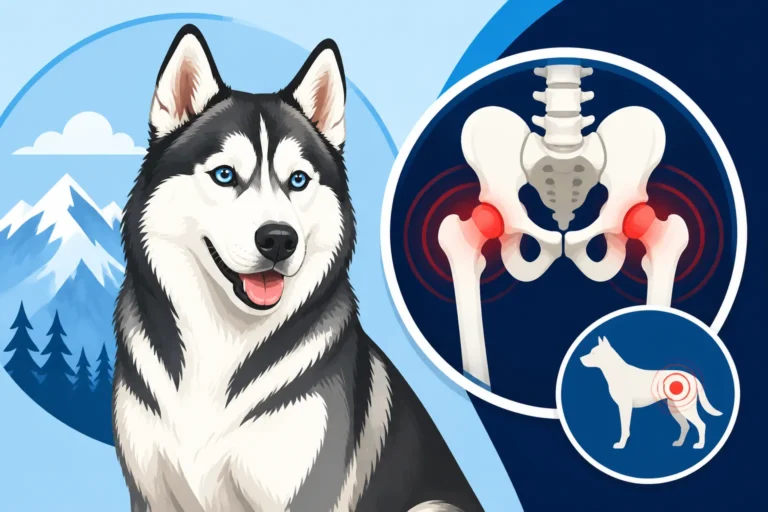
Before we dive into why Huskies are different, let's clarify what these hip evaluations are all about. Both the Orthopedic Foundation for Animals (OFA) and the PennHIP method are designed to assess a dog's hips for the likelihood of developing hip dysplasia, a debilitating joint condition. But they go about it in slightly different ways, and understanding those differences is key to grasping why breeders choose one over the other for certain breeds.
The Orthopedic Foundation for Animals OFA Certification
OFA is probably the most widely recognized and utilized hip evaluation system in North America. It involves a single X-ray, typically taken when the dog is at least 24 months old, which is then reviewed by three independent veterinary radiologists. They look for signs of hip dysplasia and grade the hips as Excellent, Good, Fair (all considered passing), Borderline, or Mild, Moderate, or Severe Dysplasia (all considered failing). The results are publicly searchable, which is a huge plus for transparency. Many breed clubs, including the Siberian Husky Club of America, recognize OFA as the primary standard for hip health.
For many years, OFA has been the gold standard, and breeders have incorporated it into their regular health screening protocols. When you're looking at a puppy's paperwork, you'll often see the parents' OFA numbers listed right there. It’s a familiar process for vets and breeders alike, and it offers a clear, universally understood grading system. We have a detailed guide on Reading a Siberian Husky's OFA Hip Result that can help you understand the specifics of these certifications.
The PennHIP Evaluation Method
PennHIP, developed at the University of Pennsylvania, takes a different approach. It uses three distinct X-ray views to measure hip laxity – how loose the hip joint is. This measurement, called the distraction index (DI), is considered a quantitative measure and can be performed on dogs as young as 16 weeks, offering an earlier prediction of hip health. The idea is that excessive laxity is a primary precursor to hip dysplasia. The PennHIP results provide a DI score and compare it to other dogs of the same breed, indicating where the dog falls within the breed's laxity range.
While PennHIP is often lauded for its objectivity and its ability to detect hip laxity earlier, it requires specific training and certification for veterinarians to perform the procedure. Not every vet clinic is equipped or certified to do PennHIP evaluations, making it less accessible in some areas. The cost also tends to be higher than OFA due to the multiple X-rays and specialized training involved.
Why Siberian Huskies Have a Low Incidence of Hip Dysplasia
This is the absolute crux of why PennHIP isn't a common sight in the Siberian Husky world. Unlike many larger breeds like German Shepherds, Labradors, or Golden Retrievers, Siberian Huskies have a remarkably low incidence of hip dysplasia.
Breed Characteristics and Historical Development
Siberian Huskies were developed by the Chukchi people in northeastern Asia to be efficient, medium-sized sled dogs, capable of covering vast distances with light loads in harsh, cold environments. Their build reflects this purpose: they are athletic, lean, and renowned for their endurance and powerful, coordinated gait. Their lighter bone structure, incredible musculature, and deep-seated, well-formed hip joints are all natural defenses against the kind of stress that can lead to hip dysplasia in heavier, more powerful breeds.
Think about it: a dog bred to pull for hundreds of miles over frozen terrain would quickly be culled from the breeding pool if it couldn't sustain peak physical condition. Nature, and the careful selection by the Chukchi, ensured that only the soundest dogs passed on their genes. This history has gifted the Siberian Husky with naturally robust hips. It's a fundamental aspect of Why Siberian Huskies Hip Scores Beat Most Breeds.
OFA Statistics and Breed-Specific Data
The statistics bear this out quite clearly. If you look at the OFA database, the percentage of Siberian Huskies diagnosed with hip dysplasia (Mild, Moderate, or Severe) is astonishingly low. For many years, it hovered around 2-3%, which is significantly lower than breeds where hip dysplasia can affect 20-30% or even higher. This low rate is a testament to the breed's inherent soundness.
For example, a quick check of the OFA statistics for Siberian Huskies often shows over 90% of evaluated Huskies receiving "Excellent," "Good," or "Fair" ratings. This starkly contrasts with breeds where breeders must be hyper-vigilant with every available screening method to avoid propagating the condition. When the problem is already rare, the perceived need for a more intensive, expensive, and specialized screening method like PennHIP diminishes.
Here's a simplified comparison of OFA results for Huskies versus a breed prone to hip dysplasia:
| Breed | OFA Hips: Excellent (%) | OFA Hips: Good (%) | OFA Hips: Fair (%) | OFA Hips: Dysplastic (%) |
|---|---|---|---|---|
| Siberian Husky | ~30-40% | ~40-50% | ~5-10% | ~2-4% |
| German Shepherd Dog | ~10-15% | ~20-25% | ~5-10% | ~15-20% |
Note: These percentages are illustrative and can vary slightly based on specific reporting periods, but the trend of significantly lower dysplasia in Huskies remains consistent.
This table really highlights the difference. For a German Shepherd breeder, missing a potential problem is a huge risk, so a more sensitive test like PennHIP might be incredibly valuable. For a Siberian Husky breeder, with such an overwhelmingly positive baseline, the added benefit of PennHIP becomes less clear.
Practical Considerations and Breeder Priorities
Beyond the biological realities of the breed, there are practical reasons why Siberian Husky breeders tend to stick with OFA and rarely venture into PennHIP. Breeding healthy dogs is already a significant investment of time, money, and emotional energy.
Cost and Accessibility of PennHIP Evaluations
Let's be realistic: breeding is expensive. Health testing is a major part of that cost. PennHIP evaluations typically cost more than OFA evaluations, often by a significant margin. This is partly due to the requirement for specific certification for the veterinarian and the need for three separate radiographic views, sometimes requiring deeper sedation.
Moreover, finding a PennHIP-certified veterinarian can be a challenge, especially for breeders in rural areas. They might have to travel long distances, adding to the expense and logistical complexity. For a breed that already has excellent hip health statistics with the more accessible and widely accepted OFA method, it simply doesn't make financial or logistical sense for most breeders to invest in the additional cost and effort of PennHIP. It's a calculation of benefit versus burden.
Meeting Breed Club Standards and Buyer Expectations
The Siberian Husky Club of America (SHCA), like most national breed clubs, sets recommendations for health testing. These recommendations usually align with OFA for hips and elbows, along with yearly eye exams (CERF/OFA Eye). Breeders who are members of their national club and local clubs strive to meet or exceed these standards. For many, simply fulfilling the OFA requirement for hips is considered sufficient and responsible breeding practice, especially given the breed's low dysplasia rate.
Prospective puppy buyers, too, are generally educated to look for OFA certifications. When a breeder presents excellent OFA results, it satisfies the common understanding of "hip-tested" parents. There's less market demand for PennHIP results for Huskies because the breed's hip health isn't generally a major concern compared to other breeds. Therefore, breeders prioritize the tests that are widely recognized, recommended by their parent club, and expected by educated buyers. If a breeder is working towards a Siberian Husky CHIC Certification, OFA hips are a required component.
When PennHIP Might Still Be Considered for a Siberian Husky
While it's rare, there are specific circumstances where a Siberian Husky breeder might opt for PennHIP, usually as an additional tool rather than a replacement for OFA.
Addressing Specific Concerns Within a Bloodline
Even with a generally healthy breed, isolated cases or individual lines can sometimes have a higher-than-average incidence of certain issues. If a breeder has historical data or anecdotal evidence of hip laxity or even mild dysplasia appearing in their specific breeding lines, they might decide to use PennHIP. The early detection capability of PennHIP, allowing assessment as young as 16 weeks, could be beneficial in making breeding decisions sooner.
This isn't about the breed as a whole having a problem, but rather a breeder being exceptionally diligent about a potential weak spot in their particular lineage. They might use PennHIP to get a more nuanced understanding of joint laxity that might not be as obvious on a standard OFA radiograph, especially if they're aiming to tighten up their breeding program's hip scores even further.
Breeders Striving for Comprehensive Health Screening
Some breeders are simply driven to do everything possible to ensure the health of their puppies, going above and beyond even the national breed club recommendations. These breeders might choose to perform both OFA and PennHIP evaluations to get the most complete picture of hip health possible. It’s an extra layer of reassurance and a way to gather more data on their breeding stock.
This level of comprehensive testing is often seen in breeders who are very passionate about health genetics and perhaps participate in extensive research programs. For them, the additional cost and effort are justified by the desire for the most thorough health data available. When you see a breeder going to this extreme, it's often a good sign of their dedication to the breed's long-term health, though it's important to remember that OFA alone is perfectly sufficient for the vast majority of Siberian Huskies.
Remember, even with low rates of hip issues, other health concerns can crop up. Having pet insurance from providers like Healthy Paws can be a smart move to cover unexpected vet bills, no matter how carefully a breeder screens their dogs. It's an investment in peace of mind for those unforeseen circumstances that can arise with any living creature. Thinking about a puppy's health paperwork, including these certifications, is vital for your future dog's wellbeing. You can learn more in our guide on Reading a Siberian Husky Puppy's Health Paperwork.
Final Thoughts on Breeder Practices
Ultimately, the choice to use PennHIP or not comes down to a breeder's priorities, the specific needs of their lines, and the overall statistical health of the Siberian Husky breed concerning hips. Given the breed's historically excellent hip health, the standard OFA evaluation remains a perfectly adequate and responsible screening tool for most Siberian Husky breeders. Don't let the absence of PennHIP evaluations worry you unduly if the OFA results are consistently good or excellent. Focus on finding a reputable breeder who performs the recommended health clearances and can speak intelligently about the health history of their lines.
Disclaimer
Please note that this information is for educational purposes only and should not replace professional veterinary advice. Always consult with a qualified veterinarian or a certified veterinary specialist for any health concerns or before making decisions about your dog's care or breeding practices.