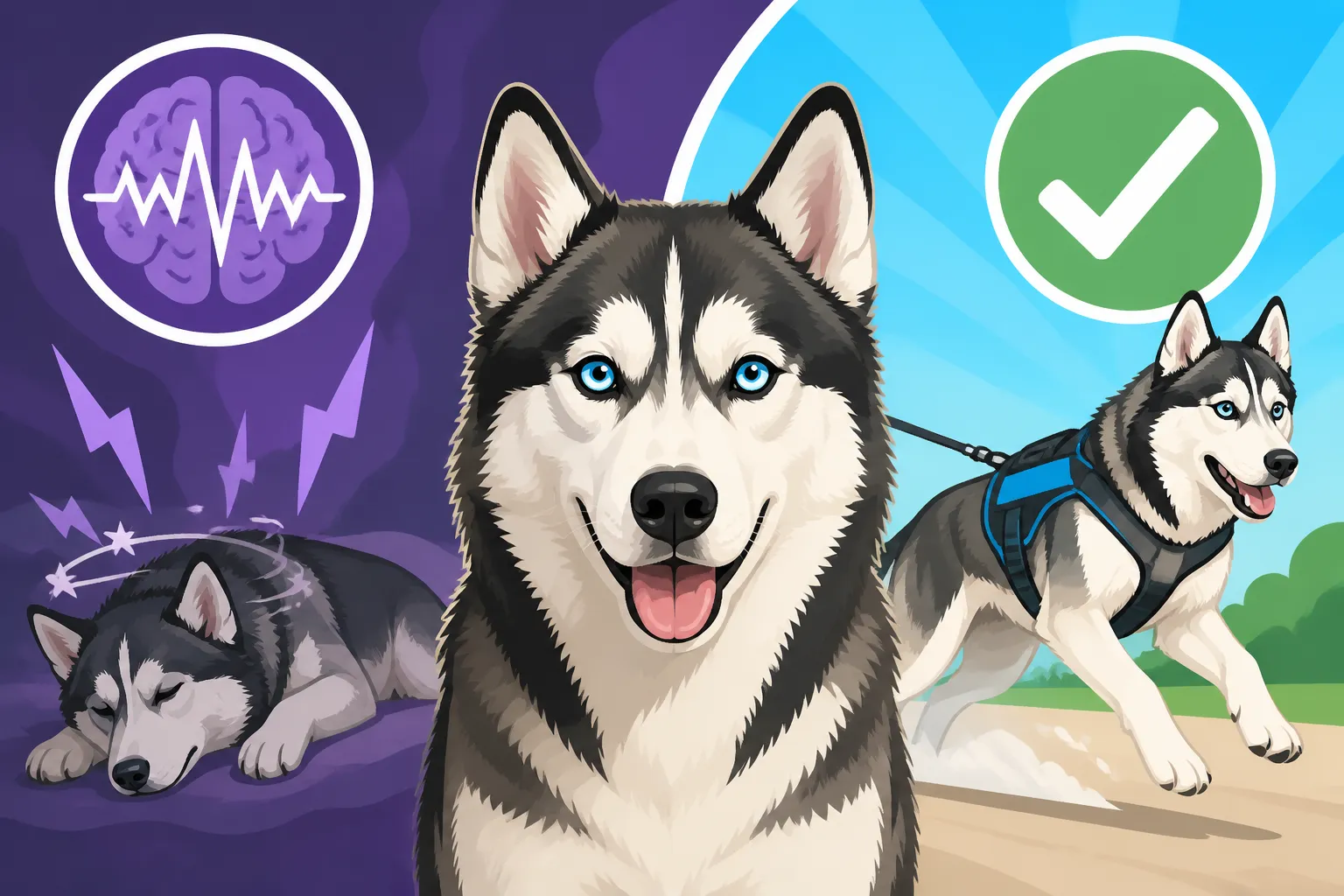
Whether an Epileptic Siberian Husky Can Still Work
It's absolutely heartbreaking when your beloved Siberian Husky, who lives for running and working, is diagnosed with epilepsy. You might feel a wave of despair, wondering if their days of joyfully pulling a sled, tearing through trails, or even just enjoying an energetic hike are over. This guide aims to tackle that tough question head-on, exploring whether an epileptic Siberian Husky can still lead a fulfilling, active life, and what "work" might look like for them, all while prioritizing their health and safety.
Understanding Siberian Husky Epilepsy and Its Impact
The diagnosis of epilepsy in a Siberian Husky can be incredibly unsettling. You've probably witnessed a seizure firsthand, and it's a terrifying experience that leaves you feeling helpless. For a breed known for its incredible athleticism and boundless energy, the idea of a neurological condition that interrupts their very being is a hard pill to swallow.
What Idiopathic Epilepsy Means for a Husky
When we talk about epilepsy in dogs, especially in a breed like the Siberian Husky, we're often referring to what veterinarians call "idiopathic epilepsy." This fancy term essentially means that there's no identifiable cause for the seizures. It's not due to a brain tumor, a head injury, or a metabolic issue; it's just something that happens. For Huskies, it's often believed to have a genetic component, meaning it can be passed down through generations.
Seizures in Huskies, as with many breeds prone to epilepsy, often begin when they are relatively young, typically between six months and six years of age. Watching your vibrant, active dog suddenly lose control, convulse, and then be disoriented is incredibly distressing. Many owners describe a sense of dread leading up to a seizure, often noticing subtle changes in their Husky's behavior right before an episode, like seeking comfort or appearing anxious. This emotional burden on the owner is significant, and it's completely normal to feel overwhelmed and frightened when your Husky receives this diagnosis. Understanding that it's an inherited condition in Siberians doesn't make it any easier to watch, but it does help explain why it happens, even if there's no direct "fix." For more in-depth information, you might find our article on Siberian Husky Seizures and Idiopathic Epilepsy helpful in understanding the condition.
The Different Types of Seizures in Huskies
Not all seizures look the same, and knowing what to watch for can help you communicate crucial information to your vet. When your Siberian Husky has a seizure, it can manifest in several ways, each with its own characteristics.
The most commonly recognized type is the generalized seizure, often called a "grand mal" seizure. This is where your Husky will typically lose consciousness, fall to their side, and exhibit rhythmic paddling of all four limbs, jaw chomping, salivation, and possibly involuntary urination or defecation. These can be truly frightening to witness due to their dramatic nature.
Then there are focal seizures, also known as partial seizures. These are more localized and might affect only a part of the body. Your Husky might twitch one side of their face, repeatedly lick their lips, or have muscle contractions in just one limb. Sometimes, a focal seizure can progress into a generalized seizure.
Psychomotor seizures are another type, often harder to identify. These involve strange, repetitive behaviors that seem out of character. Your Husky might suddenly start running in circles, snapping at invisible flies, or hiding. They might appear confused or dazed during these episodes. These can sometimes be mistaken for behavioral issues if you're not aware they can be seizure activity.
Regardless of the type, seizures typically follow three phases:
- Pre-ictal phase (aura): This is the period leading up to the seizure. Your Husky might become restless, anxious, seek attention, or try to hide. This can last from minutes to hours.
- Ictal phase: This is the actual seizure itself, lasting from a few seconds to several minutes.
- Post-ictal phase: After the seizure, your Husky will often be disoriented, confused, restless, or even temporarily blind. They might wander, bump into things, or seem excessively tired. This phase can last from minutes to days.
Keeping a detailed log of what you observe during each phase is incredibly important for your veterinarian to properly diagnose and manage the condition. You might also want to read about The Age Siberian Husky Seizures Usually Begin to better understand the typical onset.
Initial Diagnosis and Management Considerations
When your Husky first experiences a seizure, the first step is always to rule out other potential causes. Your veterinarian will likely recommend a thorough physical examination, blood work (to check organ function, blood sugar, electrolytes), and potentially urine tests. They'll be looking for issues like liver shunts, kidney disease, low blood sugar, exposure to toxins, or even certain infections that can mimic seizure activity. Sometimes, advanced imaging like an MRI might be recommended to rule out brain tumors or other structural abnormalities in the brain, though this is an expensive step many owners consider carefully.
Once other causes are ruled out, and idiopathic epilepsy is suspected, the focus shifts to management. This isn't about "curing" epilepsy, as it's typically a lifelong condition, but about controlling the frequency, severity, and duration of seizures. The goal is to improve your Husky's quality of life and minimize risks.
Starting anticonvulsant medication is usually the next step. Common medications include phenobarbital, potassium bromide, and levetiracetam, often used alone or in combination. Finding the right medication and dosage can be a bit of a balancing act, often requiring several adjustments and blood tests to ensure therapeutic levels are maintained and side effects are minimized. Your vet will explain the potential side effects, which can include drowsiness, increased thirst and urination, and changes in appetite. Consistency is key with these medications; missing doses can lead to breakthrough seizures. For more detailed information on treatment, our article on Medication for a Siberian Husky With Epilepsy can provide valuable insights.
This initial phase of diagnosis and medication adjustment can be stressful and expensive, but it's crucial for your Husky's long-term well-being. Having pet insurance, like a policy from Healthy Paws, can certainly help alleviate some of the financial burden associated with these ongoing tests and medications, allowing you to focus on your Husky's health rather than worrying about the bills.
Evaluating Work Capacity for an Epileptic Siberian Husky
The big question on every working Husky owner's mind is: can my dog still work? The answer isn't a simple yes or no. It's a nuanced discussion that centers entirely on your individual dog, their specific condition, and the type of "work" you envision.
Factors to Consider Before Returning to Work
Before you even think about putting your epileptic Siberian Husky back in a harness or engaging in strenuous activity, there are several critical factors that need to be carefully evaluated with your veterinarian. Ignoring these could put your dog at serious risk.
First and foremost are seizure frequency and severity. If your Husky is having frequent seizures (e.g., more than once a month) or severe grand mal seizures that are difficult to control, engaging in demanding physical work is likely out of the question. The goal with medication is to achieve "controlled" epilepsy, meaning a significant reduction in seizures, ideally to less than one every few months, or to a level that minimizes their impact on daily life. If seizures are still happening regularly, or are particularly violent, the risk of injury during a work-related activity is simply too high.
Next, consider your Husky's response to medication. Some Huskies respond beautifully to anticonvulsants, becoming seizure-free or having only very mild, infrequent episodes with minimal side effects. Others might experience significant side effects like sedation, ataxia (wobbliness), or increased thirst and urination, which can greatly impair their physical performance and focus. If the medication makes your Husky too drowsy to concentrate or too uncoordinated to run safely, then "working" in the traditional sense is clearly not appropriate.
The type of work your Husky does is also a massive consideration. There's a world of difference between a competitive sled dog running long distances in challenging terrain and a pet Husky enjoying light hiking on a leash. Highly strenuous activities, competitive sports, or tasks that require intense focus and coordination carry far greater risks for an epileptic dog. Conversely, gentler activities that are easily supervised and can be stopped immediately if a seizure occurs might still be feasible.
Finally, and perhaps most importantly, is the owner's capacity for monitoring and emergency response. Are you able to recognize the pre-ictal signs of a seizure? Do you have an immediate plan if a seizure occurs mid-activity? Can you carry emergency medications, like rectal diazepam, with you and administer them safely if needed? Your ability to remain vigilant, adapt, and act quickly is paramount. You need to be prepared for the worst-case scenario at all times, which adds a significant layer of responsibility to any "working" activity.
Risks Associated with Working an Epileptic Husky
It's easy to want your Husky to get back to what they love, but we must be realistic about the inherent risks involved in working an epileptic dog. These risks are not to be taken lightly.
The most obvious danger is the risk of injury during a seizure. Imagine your Husky having a grand mal seizure while in harness, pulling a bike or sled, or even just during a brisk run in a park. They could fall, get tangled in equipment, injure themselves against obstacles, or even be hit by traffic if the seizure occurs near a road. A seizure in cold weather could lead to hypothermia, and a seizure near water could result in drowning. The unpredictability of seizures means that even if they are infrequent, the potential for severe injury is always present.
Furthermore, overheating and stress are known seizure triggers for many dogs with epilepsy. Siberian Huskies are a northern breed, highly susceptible to overheating, especially during strenuous activity or in warmer climates. High-intensity exercise significantly raises body temperature and can also be a major stressor. This combination can lower the seizure threshold, making an episode more likely. Our article on Seizure Triggers in a Working Siberian Husky delves deeper into this important topic. Even something as simple as a sudden loud noise or an unexpected encounter with another dog could trigger a seizure if your Husky is prone to stress-induced episodes, highlighting why environments must be carefully managed.
Lastly, the side effects of seizure medication can significantly impact performance. While these medications are vital for controlling epilepsy, they aren't without drawbacks. Many anticonvulsants can cause drowsiness, lethargy, or a lack of coordination (ataxia). These effects can reduce your Husky's stamina, focus, and overall physical capability, making them less effective and potentially unsafe in a working role. A dog that is too sedated to concentrate on commands or too wobbly to maintain balance on a trail is not a safe or effective working partner.
Adaptations for Working Huskies with Epilepsy
If, after careful consideration with your vet, you decide that some form of "work" is still appropriate for your epileptic Siberian Husky, significant adaptations will be necessary. This isn't about pushing boundaries, but about creating a safe and enriching experience within their limitations.
Modified workloads are essential. This means saying goodbye to competitive racing or long-distance expeditions. Instead, think about shorter distances, slower paces, and less demanding terrain. Perhaps a leisurely walk through a familiar, quiet trail with you by their side, rather than an off-leash sprint in a busy dog park. For a breed like the Husky, even a short, structured "pull" on a light cart or scooter on flat, controlled ground might be an option, but only under strict supervision and with immediate access to veterinary care.
Environmental control becomes paramount. Avoid extreme temperatures at all costs. This means no working in the heat of summer, and even in winter, monitoring closely for signs of overheating due to exertion, which can still happen even in cold air. Choose quiet, predictable environments, free from sudden loud noises or chaotic stimuli that could trigger stress and potentially a seizure. Early morning or late evening walks are often best. You can also read more about Heat Stroke Risk in a Siberian Husky to understand how critical temperature management is.
If your Husky is used to working in a team, team dynamics might need adjustment. A calm, reliable canine partner who can provide stability and support, or even alert you to unusual behavior, could be beneficial. However, avoid pairing them with overly excitable or competitive dogs that might increase stress.
Above all, constant supervision and emergency protocols must be in place. Never leave an epileptic Husky unsupervised in a "working" environment. Always carry your phone, your vet's number, and any emergency seizure medication (like rectal diazepam). Know exactly where the nearest emergency vet clinic is. This level of vigilance is demanding, but it's the price of safety. It's also wise to have a robust pet insurance plan, such as one from Healthy Paws, which can cover emergency visits and the ongoing costs of medication, providing peace of mind should a seizure occur while out and about. Remember, the focus shifts from "what can my Husky achieve?" to "what can my Husky safely enjoy?"
| Aspect | Traditional Working Role (Healthy Husky) | Adapted Working Role (Epileptic Husky) |
|---|---|---|
| Activity Level | High intensity, long duration, competitive sledding, bikejoring, canicross | Low to moderate intensity, short duration, leisurely walks, light recreational pulling, scent work |
| Environment | Varied terrain, potentially challenging weather, team settings, public trails | Controlled, familiar, quiet trails, flat surfaces, mild temperatures, individual or calm partner |
| Supervision | Often part of a team, can work independently in certain tasks | Constant, direct, vigilant supervision; never unsupervised off-leash |
| Medication | Not applicable | Strict adherence to medication schedule, emergency meds always on hand |
| Risk Tolerance | Higher, pushing limits for performance | Very low, safety is paramount; immediate cessation if any risk arises |
| Goal | Performance, competition, endurance | Enrichment, mental stimulation, safe exercise, quality of life |
Alternative Roles and Quality of Life
When a diagnosis of epilepsy changes everything, it's natural to feel like your Husky's "purpose" is gone. But that's just not true. Their purpose shifts, and it's up to us, as their dedicated owners, to help them find new ways to thrive and contribute.
Re-evaluating the Definition of "Work"
For a Siberian Husky, "work" isn't just about pulling a sled. It's about having a job, engaging their incredible minds, and expending their energy in a fulfilling way. If high-impact, strenuous activities are off the table due to epilepsy, we need to broaden our definition of what "work" truly entails.
Think about activities that offer mental stimulation rather than purely physical exertion. Scent work, for example, is fantastic. Huskies have amazing noses, and teaching them to find hidden treats or specific scents can be incredibly engaging and tiring without being physically demanding or stress-inducing. This can be done safely indoors or in a controlled outdoor space.
Trick training is another wonderful option. Huskies are intelligent, even if they're famously independent. Teaching them new tricks like "spin," "bow," or even more complex sequences keeps their minds active and strengthens your bond. The sense of accomplishment they get from learning something new is profound.
For some calm, well-controlled epileptic Huskies, therapy dog work could even be a possibility, assuming their seizures are extremely well-controlled and they possess a naturally gentle temperament. Visiting nursing homes or hospitals could provide immense joy to others, and the lower physical demands might suit them. However, this is a niche role and depends heavily on the individual dog and their seizure management.
Light, supervised hiking on a leash in familiar, quiet areas can still be a wonderful way for them to explore and get some exercise. Just ensure the trails are easy, weather conditions are mild, and you're constantly monitoring for any signs of fatigue or stress. Remember, it's about making their life rich and enjoyable, not just about pushing their physical limits. Even if your Husky can't run marathons, there are still plenty of ways to ensure they get How Much Exercise a Siberian Husky Really Needs for their overall well-being.
Prioritizing the Husky's Well-being
Ultimately, the most important "work" your Siberian Husky can do is to simply be your beloved companion. Their well-being must always take precedence over any performance goals or what we think they should be doing. Living with an epileptic dog means a shift in perspective.
This means being incredibly vigilant about their comfort and happiness. Are they showing signs of pain or discomfort? Are the medications causing side effects that diminish their quality of life? Are they still enjoying their walks and activities, or do they seem stressed or lethargic? These are questions you'll constantly be asking yourself. This involves careful observation and open communication with your veterinary team. They are your partners in navigating this journey.
Sometimes, the most loving decision is to accept that certain activities are no longer safe or beneficial for your Husky. While it can be heartbreaking to hang up the sled harness for good, witnessing your dog thrive in alternative, safer pursuits can be incredibly rewarding. The strong bond you share provides all the "work" and purpose your Husky truly needs. The journey of caring for an epileptic Husky is a long one, and you'll become incredibly attuned to their subtle cues. Many Huskies with epilepsy go on to live long, happy lives with proper management, especially when their owners prioritize their health and happiness above all else. This focus on long-term health is key to Caring for a Siberian Husky Past Ten, even with a chronic condition like epilepsy.
Disclaimer
The information provided in this article is for general informational purposes only and is not a substitute for professional veterinary advice. Always consult with a qualified veterinarian regarding any medical condition or treatment for your Siberian Husky.