Whether a Husky Guarantee Covers Juvenile Cataracts
Bringing home a Siberian Husky puppy is a time of immense joy and excitement, but it also comes with a lot of questions about their future health. One of the most heartbreaking issues a new owner might face is the diagnosis of juvenile cataracts, and naturally, your mind goes straight to that breeder guarantee you received. It's a truly stressful situation, wondering if the financial burden of treatment falls on you or if your breeder will step up. This guide will thoroughly explore whether breeder guarantees typically cover juvenile cataracts, what to look for in your contract, and what other options you have to protect your furry family member.
Understanding Breeder Guarantees for Genetic Conditions
When you bring a new puppy home, especially a purebred like a Siberian Husky, a reputable breeder will almost always provide some form of health guarantee. These guarantees are meant to offer peace of mind, ensuring you're getting a healthy puppy and giving you recourse if certain health issues arise early on. However, not all guarantees are created equal, and genetic conditions like juvenile cataracts can sometimes fall into a tricky gray area.
The Standard Health Guarantee vs. Genetic Issues
Most standard health guarantees cover general health for a short period, often the first 48 to 72 hours after you take the puppy home. This initial window allows you to have your new Husky checked by your own veterinarian to ensure they are free of contagious diseases or readily apparent congenital defects. If a major health issue is found during this initial vet check, a reputable breeder will usually offer a replacement puppy or a refund.
Beyond this initial period, many breeders extend their guarantee to cover genetic health conditions, typically for one or two years, sometimes even longer for specific severe conditions. These longer-term guarantees are where conditions like Juvenile Cataracts in the Siberian Husky become relevant. The intent is generally to protect buyers from debilitating, inherited diseases that might not manifest until the puppy is a bit older. However, the terms of these genetic guarantees are absolutely critical. They often specify which conditions are covered, when they must be diagnosed, and what recourse the owner has (e.g., a replacement puppy, a partial refund, or veterinary expense contributions, often capped).
Common Exclusions You Might Encounter
It's a tough truth, but many breeder guarantees come with explicit exclusions. These might include:
- Environmental Factors: Conditions attributed to diet, injury, or neglect are almost never covered.
- Preventable Illnesses: If you fail to vaccinate your puppy or provide proper parasite prevention, any resulting illness typically won't be covered.
- Non-Life-Threatening Conditions: Minor issues, even if genetic, that don't severely impact the dog's quality of life might be excluded. This can be subjective, and what one breeder considers minor, an owner might find significant.
- Conditions Not Diagnosed by a Specialist: Many guarantees require a diagnosis by a board-certified specialist (e.g., a veterinary ophthalmologist for eye conditions) to be valid, not just your general vet.
- Failure to Follow Protocol: If the guarantee requires you to notify the breeder within a certain timeframe, return the dog, or submit specific veterinary records, failure to do so can void the guarantee.
- Purchaser's Negligence: Things like not providing proper veterinary care or feeding an inappropriate diet can be used to void a guarantee.
- Spay/Neuter Clauses: Some guarantees are only valid if the puppy is spayed or neutered by a certain age, especially if the puppy was sold as a pet, not for breeding.
The frustration often stems from these exclusions, particularly when you're facing something as serious as vision impairment in your beloved Husky puppy. It makes you feel like you're navigating a minefield when all you want is help for your dog.
Why Juvenile Cataracts Present a Unique Challenge
Juvenile cataracts are particularly difficult because they are often genetic, but their onset can vary, and the breeder's understanding of their own lines might not always be perfect. This can create a disconnect between the guarantee's wording and the reality of diagnosis.
The Genetic Basis and Early Onset of Juvenile Cataracts
Juvenile cataracts in Siberian Huskies are often inherited, meaning they are passed down from one or both parents. These aren't the kind of cataracts that develop in old age due to normal aging processes; they appear in young dogs, sometimes as early as a few months old, though often within the first two to three years. The specific genetic mutation (or mutations) responsible can be complex, and not all forms of juvenile cataracts are easily detectable through a simple DNA test, unlike some other genetic diseases.
The challenge lies in the unpredictable nature of genetic expression. Two parents who carry a recessive gene might produce a litter where some puppies are affected, and some are clear carriers or completely clear. Even if both parents have healthy eyes at the time of breeding, they could still be carriers, or one could develop cataracts later that went undiagnosed. This is why specialized eye exams are so crucial for breeding dogs.
For an owner, noticing When a Siberian Husky Cataract First Appears can range from a subtle cloudiness you spot yourself to your vet pointing out changes during a routine exam, or even your dog starting to hesitate in dim light. The key is that these are not typically present at birth but develop as the puppy grows.
The Timing of Diagnosis and Breeder Clauses
This varying onset can directly conflict with the typical timeframe of a breeder's genetic health guarantee. If a breeder offers a two-year guarantee on genetic conditions, and your Husky develops juvenile cataracts at 2.5 years old, you might be out of luck, even though it's clearly a juvenile onset condition. This is a common point of contention and a source of deep frustration for owners.
Many guarantees also have strict reporting requirements. You might need to notify the breeder immediately upon diagnosis, provide full veterinary records from the specialist, and sometimes even allow the breeder to have the dog examined by their chosen veterinarian. Failure to adhere to these clauses, no matter how emotionally overwhelmed you might be by the diagnosis, can render your guarantee null and void.
It's also worth noting that some guarantees might only cover blinding cataracts or those requiring immediate surgery, leaving owners of Huskies with milder, non-blinding cataracts without recourse, even though the condition is still present and requires ongoing monitoring. Understanding How Common Cataracts Are in Siberian Huskies and their potential progression is vital here.
The Critical Importance of Health Testing and Documentation
This is where prevention and due diligence on the buyer's part become paramount. A strong breeder guarantee is only as good as the health testing that stands behind the breeding pair.
What Responsible Breeders Should Provide
A truly responsible Siberian Husky breeder will go far beyond a general health guarantee. They will actively participate in health screening programs established for the breed. For eye health, this means regular examinations by a board-certified veterinary ophthalmologist. This isn't just a quick look; it's a thorough exam to detect a range of inherited eye diseases, including various forms of cataracts, progressive retinal atrophy (PRA), and corneal dystrophy.
The results of these exams should be publicly accessible through databases like the Orthopedic Foundation for Animals (OFA). A breeder should be able to provide you with OFA Eye Certificates for both parents, indicating they are "clear" or "normal" for eye diseases at the time of their last examination. These certifications should be renewed annually, as some conditions can develop over time. This is especially important for juvenile cataracts, as a clear exam at 8 weeks doesn't guarantee a lifetime of clear vision.
You should definitely be looking for breeders who are testing for Siberian Husky Eye Disease and the Annual Exam as part of their standard practice. When you're looking at Reading a Siberian Husky Puppy's Health Paperwork, these certifications are non-negotiable. If a breeder tells you they "know their lines are clear" without providing verifiable documentation, it's a major red flag.
Verifying Health Clearances Yourself
Don't just take a breeder's word for it. You can and should verify the health clearances yourself. The OFA website (ofa.org) allows you to search for dogs by registered name or registration number. You can look up the parents of your puppy and see their history of health clearances. Look for:
- Annual Eye Exams (CERF/OFA Eye): These should be current. A passing result means the dog was free of observable inherited eye disease at the time of the exam.
- CHIC Number: The Canine Health Information Center (CHIC) program, co-sponsored by the OFA and the AKC Canine Health Foundation, aims to provide a reliable method for owners and breeders to research and maintain information on the health of companion animals. A dog with a CHIC number has had all the recommended health screenings for its breed, even if some results weren't perfect. For Siberian Huskies, this includes eye exams. You can learn more about What Siberian Husky CHIC Certification Requires and why it matters.
Even with meticulous health testing, no guarantee is absolute. Genetic conditions can be complex, and testing protocols evolve. However, choosing a breeder who prioritizes and performs comprehensive health testing significantly reduces the risk of juvenile cataracts and other inherited health issues. It also demonstrates a commitment to the breed's health that usually correlates with a more supportive breeder if problems do arise.
Financial Planning: Beyond the Breeder's Guarantee
Even with a top-notch breeder and a seemingly solid guarantee, unexpected health issues can still arise. Or, you might find that your guarantee doesn't cover juvenile cataracts in the way you hoped. This is why having a plan for veterinary expenses is crucial when owning a Siberian Husky.
The Role of Pet Insurance
Pet insurance has become an invaluable tool for many pet owners, providing a financial safety net for unexpected illnesses and accidents. When it comes to conditions like juvenile cataracts, pet insurance can be a lifesaver, covering a significant portion of diagnostic tests, veterinary specialist visits, and potential treatments like Cataract Surgery on a Siberian Husky.
There are several pet insurance providers out there, and it's essential to compare their plans carefully. Some reputable providers, like Healthy Paws, offer comprehensive coverage that can include hereditary and congenital conditions, which is exactly what juvenile cataracts fall under. However, like all insurance, there are caveats:
- Waiting Periods: All pet insurance policies have waiting periods, meaning there's a certain amount of time after you enroll before coverage begins for accidents or illnesses. For illnesses, this can be 14-30 days. It's critical to enroll your puppy as soon as you bring them home, well before any symptoms of cataracts might appear.
- Pre-Existing Conditions: No pet insurance policy covers pre-existing conditions. If your Husky is diagnosed with juvenile cataracts before your policy's waiting period ends, or before you even enroll, it will be considered pre-existing and won't be covered. This underscores the urgency of getting a policy in place early.
- Hereditary vs. Congenital: Be sure to understand if the policy specifically covers hereditary (passed down genetically) and congenital (present at birth, though not always immediately apparent) conditions, as many do.
- Deductibles and Reimbursement Levels: You'll choose a deductible (the amount you pay before insurance kicks in) and a reimbursement level (e.g., 70%, 80%, 90% of covered costs). A provider like Healthy Paws often offers a range of options to fit different budgets and needs.
- Annual Limits: Some policies have annual limits on how much they'll pay out.
While a breeder guarantee offers some protection, pet insurance provides broader coverage for the myriad of things that can go wrong during your Husky's life. It complements, rather than replaces, a breeder's commitment to health. Consider getting pet insurance for your Siberian Husky from an early age; it can be incredibly beneficial.
Budgeting for Unexpected Vet Bills
Beyond insurance, simply having an emergency fund for your Husky's health needs is a smart move. Even routine care and preventative measures can add up, and a complex condition like juvenile cataracts can quickly run into thousands of dollars for diagnostics, specialist consultations, and surgery.
- Cost of Diagnosis: An initial ophthalmologist visit, special eye drops, and diagnostic tests (like electroretinography if PRA is suspected) can be hundreds of dollars.
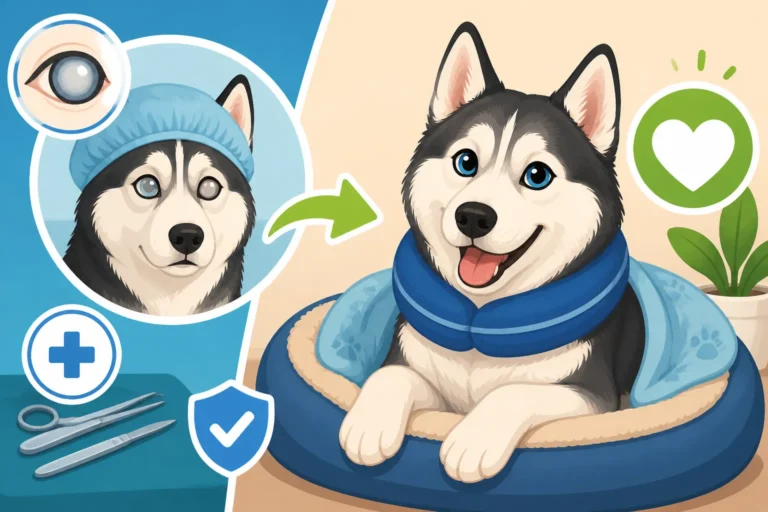
- Cataract Surgery: This is a specialized procedure performed by a veterinary ophthalmologist and can cost several thousand dollars per eye. This often includes pre-surgical evaluations, the surgery itself, and post-operative medications and follow-up appointments.
- Long-Term Care: Even if surgery isn't an option or is delayed, managing vision impairment, protecting the remaining vision, and monitoring for secondary issues like glaucoma can involve ongoing costs for medications and vet visits. You might find yourself researching Whether a Siberian Husky Cataract Can Be Left Alone and the costs associated with monitoring.
Thinking about the full Costing Out a Siberian Husky From Puppy to Senior helps put these potential expenses into perspective. It's not about being pessimistic, but realistic. Siberian Huskies are generally healthy dogs, but like all breeds, they have predispositions, and being financially prepared for those possibilities is a crucial part of responsible ownership.
The question of whether a Husky guarantee covers juvenile cataracts really boils down to the specific language in your contract and the diligence of your breeder. Always read your guarantee thoroughly, ask specific questions about genetic eye conditions, and perform your own verification of health clearances. And perhaps most importantly, consider pet insurance as a vital layer of protection for your beloved Siberian Husky's health journey.
Disclaimer
The information provided in this article is for general informational purposes only and does not constitute veterinary advice. Always consult with a qualified veterinarian or veterinary specialist for any health concerns or before making any decisions about your pet's health or treatment.