What Siberian Huskies Destroy Around a House
Living with a Siberian Husky often means navigating a whirlwind of energy, intelligence, and an unparalleled knack for turning your carefully curated home into their personal playground. Many owners quickly discover that their beloved floof, when bored or under-exercised, possesses a surprising talent for demolition, leaving behind a trail of chewed furniture, excavated yards, and general chaos. This guide aims to thoroughly explore why Siberian Huskies are prone to destructive behaviors and, more importantly, equip you with the knowledge and strategies to protect your home and your sanity.
The Root Causes of Siberian Husky Destruction
It's easy to get frustrated when your Husky has redecorated your living room with sofa stuffing, but understanding why they do it is the first step toward finding solutions. These aren't malicious acts; they're often deeply ingrained breed traits or symptoms of unmet needs.
High Energy and Insufficient Exercise
Siberian Huskies were bred to run, and I mean really run. Imagine pulling a sled across miles of frozen tundra day in and day out. That's the genetic legacy your fluffy companion carries. When that immense energy doesn't have a productive outlet, it has to go somewhere, and unfortunately, "somewhere" often becomes your household belongings. A quick walk around the block simply isn't enough for most Huskies; they need intense, sustained physical activity to truly tire them out.
Without proper exercise, a Husky becomes a canine coiled spring, brimming with unspent potential. This pent-up energy manifests as restless pacing, incessant whining, and, most commonly, destructive chewing and digging. Think of it as their way of creating their own "job" when you haven't provided one. It's not stubbornness; it's instinct. For a deeper dive into their activity needs, consider reading about How Much Exercise a Siberian Husky Really Needs.
The Instinct to Dig and Chew
Digging and chewing are not just random acts of naughtiness; they are fundamental, deeply rooted canine behaviors, especially pronounced in a breed like the Siberian Husky. Their ancestors dug dens for shelter, hunted small prey by digging, and explored their environment through their mouths. Your Husky, despite living in a cozy home, still feels these ancient urges. Chewing helps puppies relieve teething pain and adult dogs maintain dental health, but it's also a major stress reliever and a way to burn mental energy.
When left unsupervised or without appropriate chew toys, anything within reach becomes fair game. This often means furniture legs, remote controls, shoes, and even walls can suffer. Similarly, their digging instinct doesn't just apply to the backyard; many a Husky has tried to "dig" through carpet, bedspreads, or even the back of a sofa. This innate desire to excavate is a big reason why A Siberian Husky That Wrecks the Yard is such a common complaint among owners.
Separation Anxiety and Boredom
While related, separation anxiety and boredom are distinct issues that can both lead to widespread destruction. Boredom usually stems from a lack of physical or mental stimulation. A Husky left alone for hours with nothing to do will invent its own entertainment, which often involves tearing things apart. They're intelligent dogs, and their minds need to be engaged as much as their bodies.
Separation anxiety, on the other hand, is a more intense emotional response to being left alone. Dogs with separation anxiety aren't just bored; they're genuinely distressed, anxious, or even panicked. Their destructive behaviors, which can include incessant howling, inappropriate urination/defecation, and frantic attempts to escape, are often efforts to reunite with their owners or to relieve their intense stress. This is a serious issue that often requires professional intervention, as traditional obedience training alone rarely solves it. Understanding Siberian Husky Separation Behavior is crucial for addressing this.
Inside the Home: Common Targets of Husky Mayhem
When a Siberian Husky decides to redecorate, no part of your interior is truly safe. Their strong jaws and relentless determination can make short work of items you might think are indestructible.
Furniture and Soft Furnishings
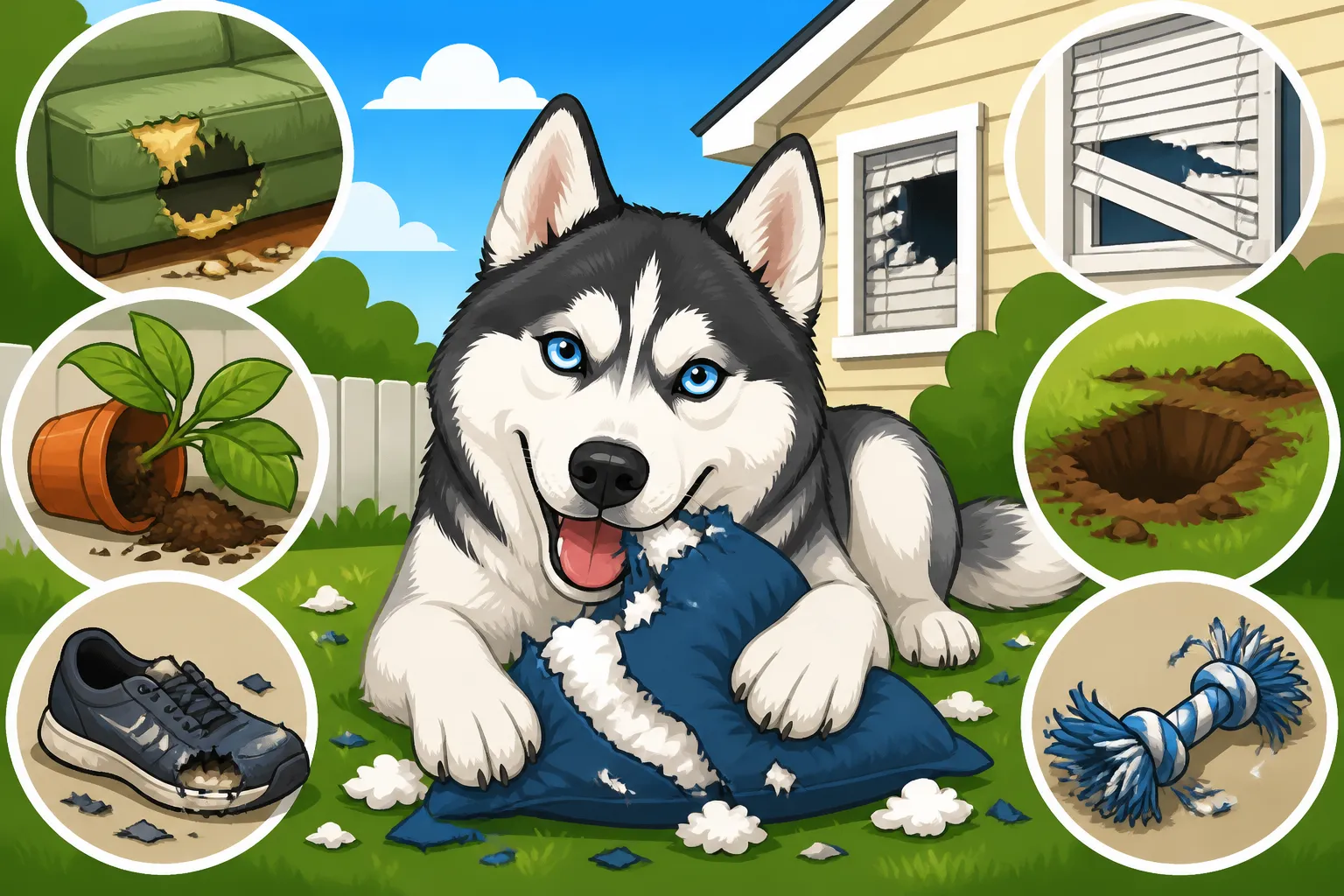
This is often the first casualty in a Husky household. Sofa cushions become fluffy snowdrifts as the stuffing is meticulously removed. Table legs bear teeth marks, chairs might lose their rungs, and even sturdy wooden cabinets can suffer. The appeal for Huskies is multi-fold: the texture of upholstery, the satisfying crunch of wood, and the sheer fun of dissecting something large and interesting.
I've seen countless photos of once-pristine couches reduced to skeletons, all thanks to a Husky left alone for "just an hour." The fabric, the foam, the wooden frame – it's all part of the challenge. Armchairs, decorative pillows, even pet beds themselves often don't stand a chance. Many owners find themselves looking into "Husky-proof" furniture, which often means metal or very hard, dense wood that's less appealing to chew. Trying to address A Siberian Husky That Destroys Furniture is a common initial challenge for new owners.
Walls, Doors, and Trim
You might think walls are beyond reach, but a bored or anxious Husky can be incredibly resourceful. Drywall offers a satisfying tearing experience, leading to holes that range from small gouges to full-on excavations. Door frames and baseboards are prime targets for chewing, especially for dogs attempting to "chew their way out" of a room or expressing frustration.
Many a Husky has been known to scratch at doors, trying to get to their owner, leaving deep gouges in the paint and wood. Others might jump and claw at windowsills, or even dig at the carpet where it meets the wall. These behaviors are often linked to a strong desire to escape or an attempt to alleviate anxiety, resulting in significant repair costs. For more specific advice, check out Replacing Doors a Siberian Husky Has Scratched Through.
Flooring and Carpets
The digging instinct we discussed earlier doesn't stop at the garden gate. Inside, carpets can suffer from relentless digging, resulting in pulled threads, bald patches, and even holes. Area rugs are often bunched up, chewed on, or dragged around the house. For homes with hardwood or laminate flooring, while digging might not cause immediate holes, persistent clawing can lead to significant scratches and damage, especially in high-traffic areas or spots where the Husky habitually paces when stressed.
This can be incredibly frustrating, particularly with expensive carpeting or newly installed floors. The constant wear and tear from their nails, even without intentional destruction, can also contribute to the need for early replacement. Choosing Flooring That Survives Siberian Husky Nails is a key consideration for many Husky owners.
Personal Belongings and Dangerous Objects
Beyond the structural elements of your home, Huskies have a keen interest in your stuff. Shoes are a classic target, offering interesting textures and, often, your scent, which can be comforting or engaging. Clothing, books, eyeglasses, remote controls, cell phones – anything left within reach can become a new chew toy. This isn't just annoying; it can be dangerous if your Husky ingests small parts or toxic materials.
Consider common household items: chargers, headphones, children's toys, decorative items. These are often made of plastics, rubber, or fabrics that are easy for a Husky to shred and potentially swallow. Ingesting foreign objects can lead to serious gastrointestinal issues, requiring emergency vet visits and potentially costly surgery. Pet insurance plans, like those offered by Healthy Paws, can be a lifesaver in such situations, helping to cover unexpected medical bills from these kinds of accidents.
Outside the Home: Yard and Fence Challenges
The destruction a Siberian Husky can wreak isn't confined to the four walls of your house. Their love for the outdoors, combined with their strong instincts, means your yard and fence are often high-risk areas.
Excavating Gardens and Landscaping
If you have a beautifully manicured garden, prepare for a challenge. Huskies love to dig. They'll dig to bury treasures, to find cool spots in the summer, to chase underground critters, or simply because it's fun. This means flowerbeds can be annihilated, vegetable patches turned into lunar landscapes, and prized shrubs uprooted. They can also create surprisingly large and deep holes, posing tripping hazards for humans and potentially leading to escape routes.
Keeping a Husky out of specific garden areas often requires physical barriers like sturdy fencing around delicate plants or raised garden beds. Even then, a determined Husky might just see it as another challenge to overcome. The key is to provide acceptable digging outlets or to ensure their energy is so well spent that they have less inclination to excavate your prize-winning roses.
Breaching Fences and Gates
This is perhaps the most notorious trait of the Siberian Husky: their Houdini-like ability to escape. A standard four-foot fence is often merely a suggestion to a Husky. They are expert climbers, jumpers, and diggers. Many can clear a six-foot fence with surprising ease, especially if motivated by something interesting on the other side. If they can't go over, they'll go under. Burying fence wire against a digging Siberian Husky is often a necessary step to secure a yard, creating an "L-footer" or simply burying mesh to prevent them from tunneling out.
Gates are another common point of failure. Huskies are intelligent and can often figure out simple latches or push open a gate that isn't fully secured. Their persistence is remarkable. If they are confined to a yard, and it's not adequately secured, you will quickly find yourself dealing with Siberian Husky Deaths From Trauma and Escape statistics becoming a real concern. This isn't just about property damage; it's about their safety.
Damaging Outdoor Structures
Beyond fences, other outdoor elements can fall victim to a Husky's energy. Dog houses, sheds, deck supports, and even the siding of your home can be chewed or scratched. Lawn furniture, especially anything made of plastic or wicker, can be easily torn apart. Sprinkler heads are often seen as curious objects to investigate with their mouths, leading to broken systems and water waste.
Even seemingly robust structures like wooden decks can show signs of wear, either from chewing on support beams or constant scratching at the surface. The instinct to "den" or chew is strong, and if their outdoor space isn't stimulating enough, or they're left alone for extended periods, they'll find ways to engage with their surroundings, sometimes at your expense.
Proactive Strategies to Prevent Destruction
Preventing destruction is far easier and less costly than repairing it. A multi-faceted approach addressing their physical, mental, and emotional needs is essential for any Husky owner.
Exercise and Mental Stimulation are Key
This cannot be overstated: a tired Husky is a good Husky. Aim for at least 1-2 hours of vigorous exercise daily. This isn't just a casual walk; it means running, hiking, dog park visits (if appropriate), or engaging in dog sports like canicross or bikejoring. These activities tap into their natural desire to run and pull, leaving them physically exhausted and mentally content. Many owners find that two runs a day for a Siberian Husky is the minimum to keep them happy and non-destructive.
Beyond physical exertion, mental stimulation is equally important. Huskies are intelligent problem-solvers. Puzzle feeders, like those found on Chewy, are excellent for making them "work" for their food, engaging their minds and slowing down mealtime. Training sessions, even short ones, can be mentally tiring. Learning new tricks, practicing obedience cues, or even scent work can provide valuable mental enrichment. A mentally stimulated Husky is less likely to invent destructive games.
Indestructible Toys and Chews
Invest in high-quality, durable toys designed for power chewers. Avoid plush toys or anything easily shredded if your Husky is prone to gutting them. Look for toys made of tough rubber (like Kongs), Nylabones, or even certain types of dense wood chews. Rotate toys to keep them interesting, and consider stuffing Kongs with peanut butter, yogurt, or wet food and freezing them for a long-lasting challenge.
Ensure your Husky always has access to appropriate chews. This redirects their natural chewing instinct away from your furniture and shoes. Offer a variety of textures and hardness to keep them engaged. If your Husky destroys toys quickly, finding Puzzle Feeders a Siberian Husky Cannot Beat might be a good next step. When choosing treats for training, opt for high-value options like those from Ollie, which can also serve as a reward for choosing appropriate chew items.
Effective Crate Training and Containment
Crate training isn't cruel; for many Huskies, it's a vital safety and management tool. A properly introduced and positive crate experience provides a safe den-like space where your Husky can relax without the opportunity to destroy your home or ingest dangerous objects when unsupervised. It's especially crucial for managing Siberian Husky Destruction When Left Alone.
The key is selecting the right crate. Huskies are notorious escape artists, so a flimsy wire crate might not suffice. Look for heavy-duty models designed for strong breeds. Remember, the crate should never be used for punishment. It should be a positive place, filled with comfy bedding (if they don't destroy it immediately) and an engaging chew toy. Gradually increase the time your Husky spends in the crate, always ensuring they've had plenty of exercise beforehand. Some owners have even had to look for Crates a Siberian Husky Cannot Break Out Of due to their ingenuity.
Behavior Modification and Training
Consistent training and behavior modification are paramount. Teach your Husky basic commands like "leave it" and "drop it" to interrupt destructive behavior. Positive reinforcement methods work best with independent breeds like Huskies. Reward appropriate chewing on their toys and redirect them calmly when they target household items. For more guidance on their unique learning style, explore Training an Independent Siberian Husky.
If separation anxiety is suspected, consult with a professional dog trainer or veterinary behaviorist. They can help diagnose the issue and create a specific behavior modification plan, which might include desensitization and counter-conditioning protocols, and sometimes medication. Addressing the underlying anxiety is critical, as simply crating a dog with severe separation anxiety can exacerbate their panic.
Repairing the Damage and Managing Costs
Despite your best efforts, destruction can still happen. Knowing how to repair common damage and understanding the financial implications is part of owning a Siberian Husky.
DIY vs. Professional Repairs
The approach to repairs largely depends on the extent of the damage and your own DIY skills. Small chew marks on furniture legs might be sanded and re-stained. Minor holes in drywall can often be patched. Scratches on floors can sometimes be buffed out or covered with area rugs. There are numerous online tutorials and hardware store resources available for these types of basic home repairs.
However, for significant damage – a shredded sofa, a gaping hole in a wall, or extensive floor damage – professional help might be necessary. This can quickly add up. A handyman might charge by the hour, while specialized contractors for flooring or upholstery will have higher rates. Consider the long-term wear and tear, and factor in the cost of The Yearly Cost of Owning a Siberian Husky to budget for potential repair funds.
Understanding Insurance Limitations
Homeowner's or renter's insurance policies generally cover accidental damage to your property. However, damage caused by your own pets can be a tricky area. Most standard policies exclude damage caused by animals owned by the insured. This means if your Husky chews through your wall or scratches your floors, your policy is unlikely to cover the repair costs. Some policies might offer specific pet damage riders, but these are not universal and come with an added premium.
It's crucial to review your policy carefully and understand what is and isn't covered. Don't assume your insurance will bail you out. For injuries or damage your Husky causes to others' property or to a person outside your household, your liability coverage might kick in, but even then, breed restrictions can apply. For instance, some insurers may have restrictions related to specific breeds, so it’s worth researching Homeowners Carriers and the Siberian Husky when looking for coverage.
Budgeting for the Unexpected
Owning a Siberian Husky means anticipating a certain level of wear and tear, and potentially, outright destruction. It's wise to set aside a "Husky fund" specifically for repairs, replacement items, or unexpected vet bills related to ingested objects. This fund can also cover the cost of upgrading your fencing, purchasing heavy-duty crates, or investing in professional training if behavioral issues arise.
| Common Husky Destruction | Potential Repair/Replacement Cost (Estimate) | Preventative Strategy |
|---|---|---|
| Shredded Sofa Cushions | $200 – $1,000+ (re-upholstery or new sofa) | Exercise, durable chews, crate training |
| Chewed Door/Wall Trim | $50 – $300 (per damaged section) | Redirection, bitter sprays, exercise |
| Drywall Holes | $100 – $500 (patching and painting) | Mental stimulation, exercise, crate |
| Scratched Hardwood Floors | $500 – $3,000+ (sanding/refinishing) | Nail trims, durable flooring, exercise |
| Excavated Garden/Lawn | $100 – $500+ (re-planting, topsoil) | Dedicated digging area, fence, exercise |
| Breached Fence/Gate | $100 – $1,000+ (reinforcement, new gate) | L-footer, taller fence, secure latches |
| Ingested Objects | $500 – $5,000+ (vet emergency, surgery) | Supervision, put away valuables, appropriate toys |
Remember, the initial cost of a Siberian Husky puppy is just the beginning. The ongoing costs, including food, vet care, and the potential for property damage, contribute significantly to Costing Out a Siberian Husky From Puppy to Senior. Being prepared financially allows you to address issues promptly and maintain a happy, healthy home for both you and your adventurous Husky.
Disclaimer
The information provided in this guide is for general informational purposes only and does not constitute professional veterinary, training, or financial advice. Always consult with a qualified veterinarian, certified dog trainer, or insurance professional for advice tailored to your specific situation.