The Roaming Instinct Bred Into Every Siberian Husky
Many Siberian Husky owners find themselves in a constant battle with their dog's unwavering desire to explore beyond the confines of their yard or leash. It’s a deeply frustrating experience, filled with worry and endless searches, as these beautiful dogs seem to vanish into thin air, driven by an almost magnetic pull towards the horizon. This guide will delve into the powerful roaming instinct that is inherent in every Siberian Husky, helping you understand its origins, the real-world dangers it poses, and, most importantly, how to manage it effectively to keep your adventurous companion safe.
Understanding the Deep Roots of the Roaming Instinct
Before we can even begin to talk about containment or training, it’s crucial to grasp that a Siberian Husky's urge to roam isn't a flaw in their personality, nor is it a sign of disobedience in the way we might perceive it in other breeds. It's a fundamental part of who they are, woven into their very genetic fabric by centuries of purposeful breeding. To fight against it without understanding its depth is like trying to stop the tide.
The Ancient Purpose: Covering Vast Distances
Imagine the ancestral home of the Siberian Husky: the vast, unforgiving expanses of Siberia. These dogs weren't bred to sit on a couch or patrol a small suburban backyard. They were vital working partners to the semi-nomadic Chukchi people, pulling light loads over immense distances at a steady trot, often for days on end, across open tundra. Their survival, and that of their human companions, depended on their ability to travel efficiently and tirelessly. This meant they needed an innate drive to cover ground, to ignore distractions for the sake of the journey, and to conserve energy while maintaining a keen awareness of their surroundings.
This ancient job shaped their physical attributes – their incredible endurance, efficient metabolism, and dense double coat – but it also profoundly influenced their mental and behavioral traits. The instinct to move, to travel, to explore new territories, was not just encouraged; it was essential. There were no fences or leashes in the traditional Chukchi lifestyle; instead, there was an understanding of their dogs' drives and a reliance on their incredible stamina and directional sense. When a modern Husky "escapes," they're not necessarily running away from you; they're often running towards the feeling of their ancestors, fulfilling a deeply ingrained purpose to traverse.
Genetic Hardwiring: Not Just "Stubbornness"
What often gets labeled as "stubbornness" in a Siberian Husky is frequently misinterpreted independence and a strong sense of self-preservation, combined with that deep-seated roaming drive. They are intelligent, yes, but their intelligence isn't always geared towards pleasing their human in the same way a retriever's might be. Instead, their intellect often serves their own agenda, which frequently involves exploring. This means they are brilliant problem-solvers when it comes to figuring out how to get out of an enclosure or away from a perceived constraint.
Consider a Husky who has just slipped past you at the door or found a weakness in the fence. Their immediate instinct isn't usually to look back and wait for you to call them. It's to capitalize on the moment of freedom, to stretch their legs, and to see what lies beyond. This isn't disrespect; it's instinct. It’s a behavioral trait honed over generations, making them supremely capable of finding and utilizing weaknesses in barriers, or simply outrunning any attempt to recall them once they've engaged their "travel mode." Understanding this genetic hardwiring helps owners shift from frustration to a more practical approach: accepting the drive and focusing on prevention and safe outlets.
The Many Ways a Siberian Husky Acts on This Instinct
If you've ever owned a Siberian Husky, you know that their roaming instinct isn't a theoretical concept; it's a very real, often terrifying, part of daily life. They don't just "wander off" passively; they actively seek out and exploit opportunities for freedom, demonstrating incredible ingenuity in the process.
The Art of the Escape: Climbing, Digging, Unlatching
Siberian Huskies are master escape artists. Their athletic build, keen intelligence, and unwavering determination combine to make almost any standard containment a temporary challenge, rather than a permanent barrier. It's not uncommon to hear tales of Huskies scaling fences that would contain most other breeds. A six-foot fence, often considered the gold standard for many dog breeds, can be little more than a suggestion to a motivated Husky. They are excellent climbers, using their strong legs and paws to find purchase and pull themselves over. Some can even climb chain-link fences like a ladder, a truly astonishing feat to witness.
Beyond climbing, digging is another primary escape method. Their powerful forelegs and an instinct to dig dens or seek cooler earth make them formidable excavators. Siberian Huskies That Dig Under Fences are a common headache for owners, as they can tunnel under fence lines with remarkable speed, disappearing from sight in minutes. An L-footer or buried wire along the fence line becomes an absolute necessity, not just a nice-to-have. Then there are the clever ones who figure out latches, gates, and even simple door handles. They observe, they learn, and they experiment. It’s a constant arms race between a Husky’s escape ingenuity and an owner’s security measures. This is why standard recommendations often fall short for this breed, requiring creative and robust solutions. Stopping a Siberian Husky From Escaping the Yard often means thinking several steps ahead of your dog.
The Lure of the Horizon: Why They Keep Going
Once a Husky has successfully executed an escape, their inherent roaming instinct kicks into high gear. They don't usually run in frantic circles; they run with purpose, often in a relatively straight line, covering ground quickly. This isn't because they're lost; it's because they're exploring. The sheer joy of movement, the call of new scents, and the unlimited potential of the open road are powerful motivators. They are built for endurance, so a mile or two is barely a warm-up for them. Stories abound of Huskies being found many miles from home, still trotting along, seemingly none the worse for wear.
This incredible drive means that once they're out, they can travel How Far a Loose Siberian Husky Travels in a surprisingly short amount of time. The sense of adventure overrides almost everything else. They're often so focused on the journey that they become oblivious to shouted commands or familiar calls. It’s not that they don’t hear you; it’s that the instinct to explore is a stronger, more primal pull at that moment. This is a critical point for owners to understand: once the roaming instinct takes hold, it dramatically impacts their responsiveness, making recall incredibly difficult.
The Thrill of the Chase: Ignoring Recall for the Hunt
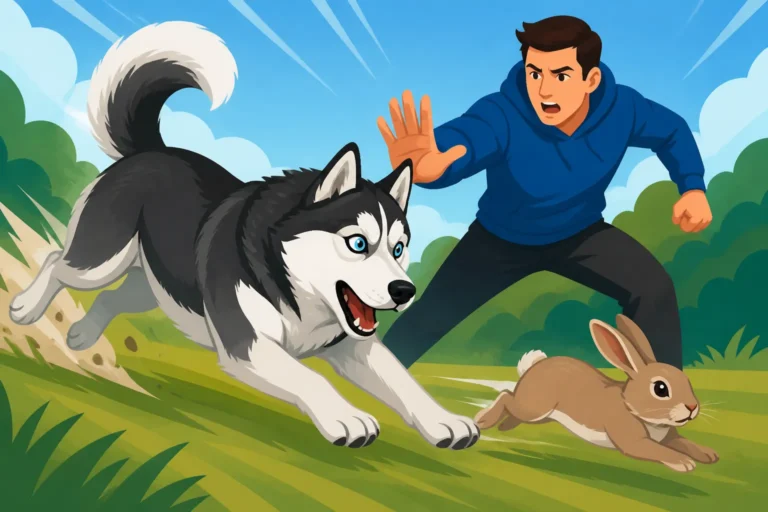
Adding another layer of complexity to the roaming instinct is the Siberian Husky's strong prey drive. Bred to be efficient hunters and survivors in harsh environments, they possess an acute sense of smell and a natural inclination to chase small, fast-moving objects. A squirrel, a rabbit, a cat, or even a blowing leaf can trigger this instinct, transforming a casual stroll into a full-blown pursuit. This is why Siberian Husky Prey Drive Around Small Animals is such a significant concern for many owners.
When a Husky is engaged in a chase, their focus narrows entirely on the fleeing object. All training, all commands, all attachment to their human often vanishes in that moment. The thrill of the hunt, combined with the innate desire to run, creates a powerful feedback loop that is incredibly hard to break. This is why the common advice to "just train a strong recall" often falls short for this breed. While a good recall is absolutely vital for safety, it needs to be understood within the context of their prey drive and roaming instinct. For most Huskies, the promise of a treat or praise simply doesn't outweigh the primal satisfaction of a chase once they've spotted quarry. This is why most Siberian Husky owners will tell you Why a Siberian Husky Cannot Be Trusted Off Leash in an unfenced area, no matter how well-trained they appear to be.
Real-World Consequences of a Roaming Husky
While the sight of a Siberian Husky joyfully running free might seem idyllic in theory, the reality of a loose Husky is often fraught with danger and severe consequences, not just for the dog, but for the community and the owner as well. It’s a heavy burden of responsibility that comes with owning such a high-drive breed.
Safety Hazards for Your Husky
The world outside your secure yard is full of peril for an unsupervised Husky. The most immediate and terrifying threat is traffic. A Husky running with purpose, driven by instinct, often has little awareness of cars or busy roads. Their focus on the open road or a potential chase object can lead them directly into harm's way, resulting in tragic accidents. Even less direct dangers exist, such as encounters with aggressive wildlife or other dogs. A Husky, while appearing confident, can be injured in a fight or become disoriented in unfamiliar territory.
Furthermore, loose Huskies are susceptible to various health risks. Ingesting toxic substances, encountering parasites like ticks and fleas, or falling into dangerous environments like construction sites or abandoned wells are all very real possibilities. Extreme weather conditions also pose a threat; while bred for cold, prolonged exposure to severe heat or freezing temperatures without shelter can still be dangerous. Why an Escaped Siberian Husky Is a Health Risk extends beyond immediate injury to potential illness and prolonged suffering if they aren't quickly recovered.
Risks to the Community and Wildlife
A roaming Husky doesn't just pose a risk to itself. Their strong prey drive, while natural, can lead to devastating consequences for local wildlife, including deer, rabbits, squirrels, and even neighborhood cats. A Husky's natural hunting instincts are sharp, and they are incredibly efficient at catching small animals. This can be heartbreaking for owners of lost pets and damaging to local ecosystems.
Beyond wildlife, a loose Husky can also cause significant fear and distress within a community. While generally friendly to humans, a large, fast-moving dog can intimidate people, especially children, even if the dog has no aggressive intent. There's also the potential for property damage—a bored or curious Husky might dig up gardens, chew through irrigation lines, or knock over trash cans, leading to frustrated neighbors and potential complaints to animal control. The presence of a loose dog, even a friendly one, can erode community trust and lead to negative perceptions of the breed.
Legal and Financial Repercussions for Owners
The consequences of a roaming Husky aren't just emotional and behavioral; they can hit your wallet and involve legal troubles too. Most municipalities have leash laws and ordinances against unsupervised animals. A loose Husky can quickly lead to calls to animal control, resulting in fines, impoundment fees, and even mandated training or containment improvements. Animal Control Fines for a Loose Siberian Husky can add up quickly, especially if it becomes a repeat offense.
If your Husky causes an accident—such as chasing wildlife into traffic, or inadvertently tripping a person—you could be held liable for damages. This can range from veterinary bills for injured pets to medical bills for human injuries, and even property damage. Your homeowner's insurance policy might even have clauses regarding dog breeds, or deny claims related to incidents involving a roaming dog. The financial burden of finding and recovering a lost Husky, including search efforts, rewards, and impound fees, can also be substantial. What a Lost Siberian Husky Costs to Recover is far more than just a headache; it can be a significant financial drain. It's a sobering reminder that managing this instinct isn't just about your dog's safety; it's about responsible pet ownership on every level.
Mitigating the Roaming Instinct Through Proactive Management
Given the deep-seated nature of the Siberian Husky's roaming instinct and the dangers it presents, proactive management isn't just recommended—it's absolutely essential. This means a multi-faceted approach focusing on prevention, physical and mental enrichment, and consistent, breed-appropriate training. You can't train the instinct out of them, but you can manage it.
Fortifying Your Physical Boundaries
The first line of defense against the roaming instinct is a secure physical environment. For a Siberian Husky, this means going above and beyond standard fencing. A six-foot solid privacy fence is generally considered the minimum, but even that can be overcome by a determined climber. Many Husky owners opt for even taller fences, or utilize additions like "coyote rollers" along the top to prevent scaling. A Coyote Rollers on a Siberian Husky Fence can be a surprisingly effective deterrent, making it impossible for them to get a grip over the top.
However, height isn't the only concern. As discussed, Huskies are expert diggers. To prevent tunneling, you need to bury hardware cloth or chicken wire along the base of your fence, extending it at least 12-18 inches horizontally inward (an L-footer) to create a barrier they can't dig under. Some owners even lay down a concrete curb or large rocks along the fence line. All gates must be thoroughly secured with heavy-duty, Husky-proof latches, ideally with multiple locking mechanisms or carabiners that they can't manipulate. Regular inspection of your entire perimeter is crucial, as Huskies will patiently work on a weak spot until it becomes an escape route. Any time you make an upgrade, think of it as a game of chess against a very clever opponent.
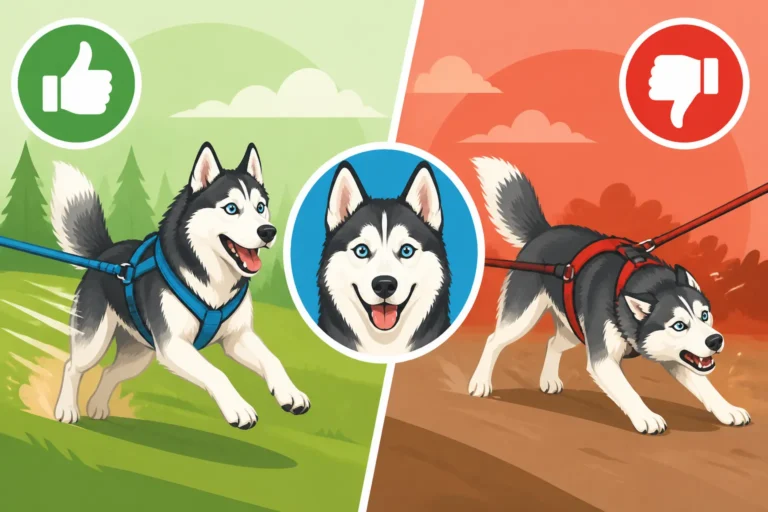
When you're out and about, a proper leash and collar or harness are non-negotiable. Many Husky owners swear by martingale collars or front-clip harnesses for better control, as these make it harder for a Husky to slip out compared to a standard flat collar. Always double-check your leash connection and ensure a secure fit, as a simple snap failure can have dire consequences.
Mental and Physical Exercise as a Countermeasure
A tired Husky is a less destructive and less escape-prone Husky. This breed needs an immense amount of physical exercise to be content, but not just any exercise. They need activities that engage both their bodies and their minds. Running, hiking, and especially harness sports like canicross, bikejoring, or urban mushing are ideal, as they tap into that innate drive to pull and cover ground. These activities fulfill their genetic programming in a safe, controlled manner. Two long, brisk walks a day might be enough for many breeds, but for a Husky, it's often barely a warm-up. Aim for at least 60-90 minutes of vigorous activity daily, broken into sessions if needed.
But physical exertion alone isn't enough; their intelligent minds also need stimulation. Puzzle toys, interactive feeders, scent work, and consistent training sessions can burn mental energy and reduce boredom, which is a major catalyst for escape attempts and destructive behavior. Consider enrolling in agility or obedience classes, not just for the training, but for the mental challenge and structured outlet it provides. A great resource for positive, reward-based training for dogs like Huskies is BAXTER & Bella, which offers comprehensive online programs. Their approach focuses on building a strong relationship and clear communication, which is vital for independent breeds. Ensuring your Husky has a "job" to do, even if it's just carrying a backpack on a hike, can make a huge difference in their overall contentment and reduce the urge to create their own "job" (i.e., escaping).
Training for Safety, Not Eradication
Accept that you cannot "train out" the roaming instinct, but you can train for safety within its parameters. The goal isn't to make your Husky a perfectly obedient off-leash dog in an open field (a highly unrealistic and dangerous expectation for most Huskies), but to ensure they are safe and manageable in controlled environments. A reliable recall, while challenging, is still your most critical safety tool. Start training Teaching a Siberian Husky to Come Back in a distraction-free, securely fenced area, using high-value treats and extreme enthusiasm. Gradually introduce mild distractions, but never risk calling them in an unsecured area where they might fail. For some Huskies, an emergency stop cue might be more achievable than a perfect recall in high-prey situations.
Leash manners are equally important. Given their pulling instinct, teaching them to walk politely on a leash, distinguishing between "pulling for sport" (in harness) and "walking nicely" (on a collar/harness for casual strolls), is key. Consistent, positive reinforcement training is vital for Training an Independent Siberian Husky. Forceful methods often backfire, leading to a Husky shutting down or becoming even more resistant. Remember, their independence means they'll weigh the reward against the effort or distraction; you need to make coming back, or staying with you, the most rewarding option available. Utilizing an online resource like BAXTER & Bella can provide structure and guidance, especially for owners navigating the unique challenges of a Husky's temperament.
Here's a quick comparison of common escape methods and corresponding prevention strategies:
| Escape Method | Prevention Strategy | Why It Works (or Fails) |
|---|---|---|
| Climbing/Jumping | 6-foot+ solid fence, "coyote rollers," angled extensions | Removes paw holds, makes vertical climb impossible, or deters jump. |
| Digging Under | L-footer (buried wire/concrete), large rocks, regular checks | Creates an impenetrable underground barrier. |
| Gate/Door Opening | Double-locking latches, carabiners, childproof door handles | Prevents manipulation with paws/mouth; requires human dexterity. |
| Slipping Collar | Martingale collar, properly fitted front-clip harness, double leashing | Prevents backing out of collar; redirects pulling force. |
| Outrunning Recall | Absolute no off-leash in unsecured areas, long-line training, high-value rewards | Acknowledges strong prey/roaming drive; builds conditional response. |
| Boredom/Anxiety | Ample physical and mental exercise, puzzle toys, companion dogs | Reduces destructive energy and escape motivation. |
Living Safely and Happily with a Roaming-Prone Breed
Living with a Siberian Husky and their inherent roaming instinct is a commitment to a particular lifestyle—one that prioritizes safety, secure environments, and understanding their unique needs. It's about accepting who they are and integrating that into your daily routine, rather than constantly fighting against their nature.
The Importance of Microchipping and ID
No matter how secure your fence or how diligent your supervision, accidents happen. Gates are left ajar, leashes snap, or a determined Husky finds a new weakness you hadn't anticipated. In these moments, your best chance of recovery is a proper identification system. Microchipping is not just recommended; it's virtually a necessity for a roaming-prone breed. A microchip, implanted painlessly under the skin, provides a permanent ID that can be scanned by any vet or animal shelter, linking your Husky directly back to you. Always ensure your microchip registration information is up-to-date with your current contact details.
Beyond the microchip, a visible ID tag on their collar is also crucial. This should include your name and phone number. Many owners opt for engraved tags or those with QR codes that link to more detailed information. Some even use GPS Collars Worth Buying for a Siberian Husky. These real-time tracking devices can be a lifesaver, allowing you to quickly locate your dog if they do manage to get out, potentially preventing them from traveling too far or getting into serious trouble. While no system is foolproof, a multi-layered approach to identification significantly increases the chances of a happy reunion should your adventurous Husky decide to go on an unplanned excursion.
Responsible Off-Leash Alternatives
Since conventional off-leash freedom in open spaces is generally ill-advised for Siberian Huskies, responsible owners seek out safe, controlled alternatives where their dogs can truly run and stretch their legs without risk. The best option is a truly secure, private, and professionally fenced area. Some dog parks offer separate, fully enclosed sections for larger dogs, but even then, vigilance is key. Always check the fence height and integrity, as some Huskies can clear fences that would contain most other breeds.
Another fantastic option is renting private, fenced sniffspot fields. These are privately owned yards or fields that can be booked by the hour, offering a safe and secure space for your Husky to run, sniff, and play without the risk of escape or encountering unknown dogs if that's a concern. These types of facilities often have higher, more robust fencing than typical dog parks. Long-line work in very large, open, and completely enclosed areas can also provide a sense of freedom while maintaining a physical connection to you. Remember, the goal is to give them appropriate outlets for their energy and instincts, not to deny them entirely.
Embracing Their Nature Safely
Ultimately, living with a Siberian Husky means embracing their unique nature, including their powerful roaming instinct. It's about understanding that their desire to run, explore, and sometimes be independent is not a personal affront, but a testament to their incredible heritage. Trying to force a Husky to be something they're not will only lead to frustration for both of you. Instead, channel their energy and intelligence into constructive activities.
This means providing consistent, enriching physical and mental exercise, maintaining impeccable containment, and committing to lifelong safety protocols. It also means educating yourself and others about the breed's characteristics, helping to ensure that these magnificent dogs find homes with owners who truly understand and appreciate them. Sadly, The Age Most Siberian Huskies Are Surrendered often aligns with when their independent and roaming behaviors fully mature, leading to heartbreak when owners aren't prepared for these traits. By taking these proactive steps, you can create a fulfilling life for your Siberian Husky where their ancient instincts are respected, and their safety is paramount.
Disclaimer
This article is for general informational purposes only and does not constitute professional advice. Laws, prices and regulations vary by location and change over time. Consult a qualified professional for guidance on your specific situation.