The Height a Siberian Husky Can Clear
One of the most heart-stopping moments for any Siberian Husky owner is looking out into a seemingly secure yard, only to find it empty. These dogs are notorious escape artists, and their athletic abilities often catch new owners off guard, making them wonder just how high their beloved furry Houdini can actually clear. This guide is dedicated to exploring the impressive jumping and climbing capabilities of Siberian Huskies, helping you understand the "why" behind their escapes and, more importantly, how to create a truly secure environment for these intelligent and agile dogs.
The Instinct Behind the Leap: Why Huskies Are Natural Climbers and Jumpers
It’s easy to feel personally offended when your Husky clears a fence you thought was perfectly adequate. "Don't they love me? Don't they know where their food comes from?" you might ask. But it's rarely about a lack of love or appreciation for their home. It's about instinct, pure and simple, woven into the very fabric of the breed.
A Legacy of Movement and Freedom
Siberian Huskies were bred for endurance, for covering vast distances efficiently in some of the harshest conditions on earth. Their ancestors weren't guarding static territories; they were moving, pulling sleds, and often foraging. This inherent drive for movement, for exploring what's beyond the immediate horizon, is deeply ingrained. When a Husky sees a fence, especially one that doesn't feel like an insurmountable barrier, their first thought isn't "I must stay," but often "What's on the other side? Can I get there?" It's a primal urge to roam and explore, a call from their ancient lineage that most pet owners simply aren't prepared for. This is part of The Roaming Instinct Bred Into Every Siberian Husky.
For a Husky, a fence isn't necessarily a wall; it's a challenge, a puzzle, or simply a temporary inconvenience. This isn't stubbornness, but rather a manifestation of their incredible physical and mental drive. They are problem-solvers by nature, and if the "problem" is being confined, they will often find creative solutions. This often manifests in digging, climbing, or even figuring out how to manipulate gates. Their bodies are perfectly adapted for agile movement, not just powerful pulling, meaning they can launch themselves with surprising grace and power.
Intelligence Applied to Escape
While often described as "stubborn" or "independent," Huskies are incredibly intelligent. The problem is, they often apply that intelligence to their own agendas, which frequently involve exploring. If a dog can figure out how to open a door latch, manipulate a gate, or find a weak spot in a fence, a Husky is probably going to be the one to do it. They observe, they learn, and they adapt. I've known Huskies who could unlatch complicated gate systems or even turn doorknobs! This isn't malicious; it's just them being resourceful.
Think of it this way: if a human wants to get over a wall, they'll look for handholds, weak points, or even bring tools. A Husky does the same, but with their teeth, paws, and powerful bodies. They’re constantly assessing their environment for escape routes. An open window, a momentarily unsecured gate, or even a loose piece of fencing material can become an opportunity. This ingenuity is fascinating, but also incredibly frustrating when you're trying to keep them safely contained. Training an Independent Siberian Husky often means learning to outwit them with equal intelligence.
Motivation: The Driving Force to Get Out
Beyond the pure instinct to roam, there are specific motivators that can push a Husky to clear a fence. These often boil down to unmet needs. A bored Husky is a destructive Husky, and a destructive Husky is often an escape-minded Husky. If they're not getting enough physical exercise, mental stimulation, or social interaction, that pent-up energy and intelligence will find an outlet, and often that outlet is out.
Imagine being stuck in a small room all day with nothing to do. You'd probably start looking for ways to entertain yourself, or even just to get out for a change of scenery. Huskies are no different. They need a job, or at least a fulfilling routine that mimics one. Lack of appropriate physical activity is a huge driver. A simple walk around the block isn't enough for most Huskies; they need to run, to pull, to expend that incredible energy. Without it, the fence becomes less of a barrier and more of an invitation.
Realistic Heights: What Fences Can a Siberian Husky Actually Clear?
When people ask about fence heights for a Siberian Husky, they often expect a simple number. But the reality is far more nuanced. While there are general guidelines, a Husky's ability to clear a fence depends on their individual athleticism, motivation, and the fence's construction.
The Six-Foot Fence as a Starting Point
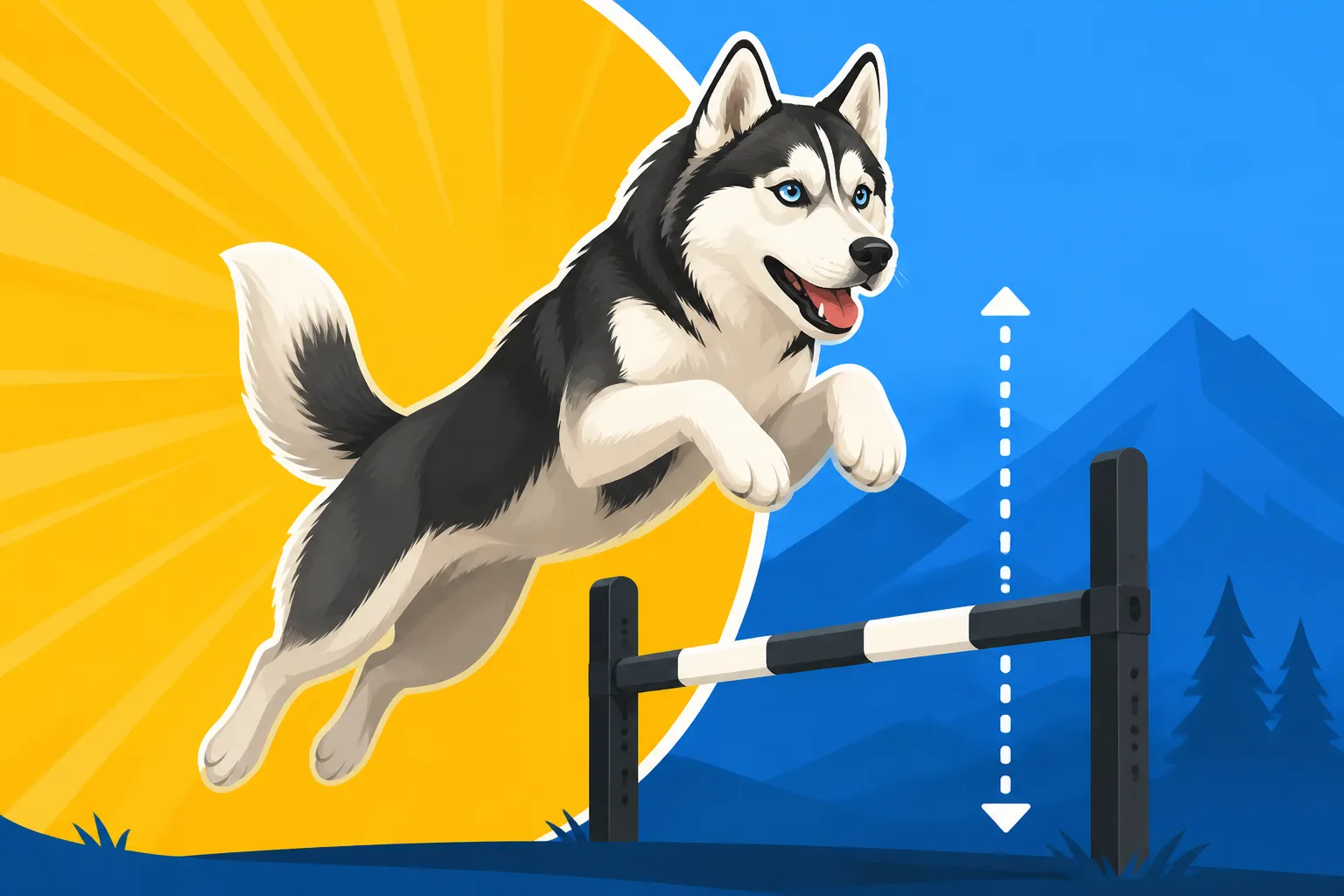
For many dog breeds, a six-foot fence is considered the gold standard for secure containment. For a Siberian Husky, it's often seen as a minimum. A healthy, motivated Husky can absolutely clear a six-foot fence with a running start, especially if there are any footholds or weaknesses in the structure. I've heard countless stories, and experienced a few myself, of Huskies leaping gracefully over fences that would deter most other dogs. This is why when people ask about fence requirements, the answer for a Husky always starts with "at least six feet, and even then, be prepared." This is crucial advice when considering The Six-Foot Fence a Siberian Husky Needs.
Consider the surface a Husky is jumping from. If there's a snowdrift piled up against the fence, a small hill, a dog house, or even a patio chair, that six-foot barrier suddenly becomes much shorter. They are incredibly opportunistic. Their powerful hind legs are like springs, designed for propulsion. They don't just "hop"; they launch. And once they're over, they're gone, driven by that desire to explore.
Pushing the Limits: When Six Feet Isn't Enough
While six feet is a common recommendation, it's far from foolproof. Some exceptionally athletic or determined Huskies can clear fences even higher, especially if they have a strong motivation or a good launch point. I've heard of Huskies scaling eight-foot fences, particularly if they are chain-link, which provides excellent toe-holds. For these determined dogs, a standard fence is merely a challenge waiting to be conquered. This often leads owners to look at more advanced solutions like Coyote Rollers on a Siberian Husky Fence to prevent them from getting purchase at the top.
The type of fence matters too. A solid privacy fence, while offering no footholds, might still be cleared if the dog can get enough leverage. Chain link is often easier for them to climb. My own experience taught me that a solid fence at eight feet is generally more secure than a chain-link at the same height, purely because it offers no grip. It's not just about the height, but the "climbability."
Overcoming Obstacles: Gates, Kennels, and More
It's not just the perimeter fences that pose a challenge. Huskies are infamous for their ability to bypass gates and even escape from kennels. A simple latch on a gate is often no match for a clever Husky who learns to nudge it open, or even jump high enough to release it with their nose or paw. I've known Huskies who could work complex child-proof latches designed for human toddlers, which is both impressive and terrifying when you rely on them for containment.
When it comes to kennels, a standard kennel run that might contain a Labrador can be merely a temporary inconvenience for a Husky. They can bend wire, dismantle panels, or climb over the top. Heavy-duty, welded wire kennels with secure tops are usually the only option that stands a chance against a determined Husky. Even then, they need to be firmly anchored to prevent digging out. Many owners opt for a Crates a Siberian Husky Cannot Break Out Of type of solution even for outdoor kennels, realizing the standard fare won't cut it. This ability to get over, under, or through obstacles is why Stopping a Siberian Husky From Escaping the Yard requires such a multi-faceted approach.
Factors That Fuel Their Aerial Ambitions
Understanding why your Husky jumps is key to preventing it. It's not usually out of spite, but a combination of their physical attributes, mental needs, and inherent drives.
Physical Prowess and Agility
Siberian Huskies are built for speed and endurance, and that includes incredible agility. Their lean, muscular bodies are designed for efficient movement, whether it's pulling a sled or launching themselves over an obstacle. They have powerful hindquarters that give them an impressive vertical leap, and their flexible spines allow for quick turns and adjustments mid-air. It's truly a sight to behold, even if it's terrifying when they're sailing over your fence.
Their athleticism isn't just about raw power; it's also about coordination. They can assess a jump, calculate the trajectory, and execute it with remarkable precision. This means that even a seemingly difficult jump might be well within their capabilities if they've decided they want to make it. This natural athletic ability is why physical barriers alone, without addressing their mental and physical needs, often fall short.
Boredom, Loneliness, and Lack of Exercise
As I mentioned before, a bored Husky is a problem waiting to happen. Huskies are working dogs; they thrive on activity and mental engagement. If they are left alone in a yard for hours on end with nothing to do, they will invent their own entertainment. And often, that entertainment involves trying to escape. This is a common theme that contributes to Siberian Husky Destruction When Left Alone. The energy they possess is immense, and if it's not channeled constructively, it will find a destructive outlet.
Think about How Much Exercise a Siberian Husky Really Needs. It's far more than a simple walk. They need vigorous activity, like running, pulling, or long hikes. Mental stimulation is equally important. Puzzle toys, training sessions, and interactive games can help tire them out mentally, making them less inclined to seek "adventure" over the fence. A Husky that is tired, both physically and mentally, is a Husky much more likely to stay put. If you find your Husky regularly testing your fence, it might be a sign they need more than just a quick romp in the yard.
The Allure of the Chase: Prey Drive and Roaming Instinct
Huskies possess a strong prey drive. A squirrel darting across the neighbor's yard, a rabbit hopping by, or even a cat sauntering past can trigger an irresistible urge to chase. This instinct can override any training or desire to stay within bounds. When that prey drive kicks in, the fence becomes irrelevant; the only thing that matters is the target. This strong drive is why Siberian Husky Prey Drive Around Small Animals is such a common topic among owners.
Coupled with this is their innate roaming instinct. These dogs were bred to travel miles, not to sit in a backyard. The world beyond the fence represents a vast, exciting landscape full of new smells, sights, and potential adventures. For a Husky, the grass is always greener on the other side, and they are more than willing to jump to find out. This combination of high prey drive and a powerful roaming instinct is why tools like invisible fences, which rely on a static shock, are often ineffective for Huskies. The drive to get out simply outweighs the discomfort, which is often discussed in articles like Why Invisible Fencing Does Not Hold a Siberian Husky.
Fortifying Your Perimeter: Practical Strategies for Containment
Given their incredible abilities, securing a yard for a Siberian Husky requires more than just a standard fence. It demands creativity, vigilance, and often, significant investment.
Increasing Fence Height and Structural Integrity
The first step for many is to increase the height of their fence. If you currently have a four-foot fence, consider upgrading to at least six feet. For particularly ambitious jumpers, even eight feet might be necessary, especially if the fence offers any toe-holds. Ensure the fence is constructed from sturdy materials that cannot be easily bent or broken. Wood fences should have no gaps or loose boards, and chain-link fences should be heavy gauge and securely attached to posts.
Beyond sheer height, think about the top of the fence. "Coyote rollers" or angled extensions can prevent a Husky from getting a firm grip on the top edge and hoisting themselves over. These are typically PVC pipes or mesh that spin, preventing purchase. You can find kits for these online, or create your own with supplies from a hardware store or an Amazon search. Remember, a determined Husky will test every inch of your perimeter, so don't overlook weak spots or easy footholds near the fence line, like sheds, woodpiles, or even large shrubs.
Preventing Digging and Climbing Aids
Huskies aren't just jumpers; they're expert diggers. A fence that goes straight into the ground is an open invitation for them to tunnel out. To counter this, you need to go under the fence. Burying fence wire, L-footers, or even concrete trenches along the fence line are effective ways to deter digging. An L-footer is essentially an extension of the fence that lays flat on the ground, preventing them from digging right up against the fence. This is a topic explored in detail in Burying Fence Wire Against a Digging Siberian Husky.
Another common mistake is leaving things near the fence that can serve as climbing aids. Any object your Husky can jump onto or use to boost themselves higher, such as trash cans, old tires, benches, or even dense bushes, should be moved away from the fence line. A few inches can make all the difference in whether they can clear a barrier. Be mindful of snowdrifts in winter, as they provide a natural ramp over fences. Keeping the area clear on both sides of the fence is paramount.
Supervised Outdoor Time and Mental Stimulation
While physical barriers are essential, they are only one part of the solution. Ultimately, a Husky that is left unsupervised in a yard, no matter how secure, will often find a way out if they are bored or under-exercised. Constant supervision during outdoor time is the safest approach, particularly if you are still assessing your dog's capabilities. Supervising a Siberian Husky in an Unfenced Yard might sound risky, but even in a fenced yard, eyes on your Husky are crucial.
Beyond supervision, ensuring your Husky gets ample physical and mental stimulation is non-negotiable. This means daily rigorous exercise, not just a casual stroll. Think runs, bikejoring, canicross, or long, brisk hikes. Mentally, engage them with training sessions, puzzle toys, and enrichment activities. A tired Husky is a content Husky, less inclined to plot an escape. Toys that challenge them, like those from popular pet supply retailers found on Amazon, can keep their minds busy.
Training and Management for the High-Flying Husky
Beyond physical barriers, thoughtful training and consistent management are critical to living safely with a Siberian Husky and their prodigious jumping abilities.
Building a Solid Recall and Boundary Training
While a perfectly reliable off-leash recall is an aspirational goal for many Husky owners (and one that's often difficult to achieve given their breed traits), working on a strong recall is still incredibly important. If your Husky does manage to escape, a strong recall can be the difference between a quick retrieval and a frantic search. Start training in a highly secure, distraction-free environment, using high-value treats and consistent positive reinforcement. The BAXTER & Bella online puppy school program, for example, offers structured lessons that can help lay a strong foundation for recall and other essential commands, emphasizing positive, reward-based methods that resonate well with independent breeds.
Boundary training, even if just within your property, can also be beneficial. This isn't about teaching them not to jump over the fence, but rather to understand that certain areas are "off-limits" without a human invitation. This involves teaching a "stay" or "wait" command at doorways and gates, reinforcing the idea that they don't get to make the decision to go out on their own. Practice consistently, even when there's no immediate escape risk, so these behaviors become second nature.
Harnessing Energy for Good: Structured Exercise
A Husky's boundless energy isn't a flaw; it's a feature. The key is to harness it for good rather than letting it manifest as destructive or escape-oriented behavior. Engaging your Husky in structured exercise that allows them to use their natural abilities is incredibly rewarding for both of you. Activities like canicross (running with your dog pulling you), bikejoring (cycling with your dog pulling your bike), or even just long, brisk jogs can make a world of difference. These activities tap into their sled dog heritage and provide the physical and mental workout they crave.
The goal isn't just to "tire them out" but to fulfill their instinctual need to move and work. A Husky that gets regular, appropriate exercise is less likely to be restless, bored, and looking for ways to clear your fence. Remember, a fifteen-minute walk won't cut it for most of these dogs. They need at least an hour or two of vigorous activity daily, tailored to their age, health, and individual energy levels. This is why many Husky owners invest in specialized harnesses and gear, often found on Amazon, designed for pulling sports.
The Role of Crating and Secure Indoor Spaces
When you can't actively supervise your Husky, a secure crate or a designated, Husky-proofed indoor space can be your best friend. Crating, when done correctly and humanely, provides a safe den for your dog and prevents them from practicing undesirable behaviors like fence-jumping or destructive chewing when you're not around. Ensure the crate is appropriately sized and made of durable materials that a determined Husky can't bend or break. Heavy-duty wire crates or even impact-resistant plastic crates are often necessary.
If crating isn't an option, or for longer periods, a secure indoor space like a laundry room or a part of the house blocked off with sturdy baby gates can work. Ensure there's nothing they can destroy, climb, or use to escape, such as open windows or weak doors. Provide plenty of appropriate chew toys and mental enrichment during these times. The aim is to create an environment where they are safe, comfortable, and unable to practice unwanted behaviors that could lead to an outdoor escape. The consequences of A Siberian Husky That Escapes a Kennel Run or even your yard can be dire, making prevention paramount.
Common Misconceptions About Husky Containment
There are a lot of myths and wishful thinking when it comes to containing Siberian Huskies. Understanding these misconceptions is crucial to avoiding costly and potentially dangerous mistakes.
"My Husky Doesn't Jump, He's Different"
I've heard this a hundred times, and while there's always an exception to every rule, the vast majority of Siberian Huskies possess the innate ability and often the drive to jump or climb fences. Just because your Husky hasn't jumped yet doesn't mean they won't. They might be testing the waters, or simply haven't had the right motivation or opportunity. It often takes only one time for them to realize they can do it, and then it becomes a learned behavior that's much harder to un-learn.
It's dangerous to assume your Husky is "different" and won't ever jump. Instead, assume they can and will try, and prepare your containment accordingly. It's better to over-prepare than to experience the heartbreak of a lost or injured dog. This breed is known for its escape artistry for a reason, and ignoring that fundamental trait puts your dog at risk.
Relying Solely on Invisible Fences
Electronic or "invisible" fences are popular for many breeds, but for Siberian Huskies, they are almost universally ineffective and potentially dangerous. These systems rely on a static correction (a shock) to deter a dog from crossing a boundary. While some dogs are deterred, many Huskies, especially if motivated by prey, boredom, or the roaming instinct, will simply take the shock to get to the other side. Once they're out, they often won't take another shock to get back in, leaving them stranded outside the safe zone.
Furthermore, an invisible fence does nothing to keep other animals or people out of your yard, leaving your Husky vulnerable. This is why for breeds like the Husky, most experienced owners and rescues will tell you that a physical, secure fence is non-negotiable. Why Invisible Fencing Does Not Hold a Siberian Husky is a concept many new owners learn the hard way.
Believing a Small Yard is Less Appealing to Escape
Some owners might think that a smaller yard is less interesting, and therefore their Husky will be less inclined to escape. This couldn't be further from the truth. A small, unstimulating yard can actually increase a Husky's desire to escape, as it offers even less for them to do. Boredom is a massive driver for escape attempts, and a tiny patch of grass with no real activity is a recipe for disaster.
The size of the yard matters far less than the quality of the environment and the amount of owner engagement. A large, empty yard is just as boring as a small, empty yard. What Huskies need is space for vigorous exercise with their owner, mental stimulation, and a secure environment that acknowledges their natural tendencies.
Table: Typical Husky Jumping & Climbing Scenarios
This table provides a realistic overview of common fence types and how a motivated Siberian Husky might interact with them, along with suggested counter-measures.
| Fence Type | Typical Height (Feet) | Husky Potential (Jump/Climb) | Risk Level | Suggested Counter-Measures |
|---|---|---|---|---|
| Picket Fence | 3-4 | Easy Jump | High | Upgrade to 6-8ft solid fence, ensure no gaps. Constant supervision. |
| Chain-Link | 4-6 | Easy Climb (with footholds) | High | Minimum 8ft, add coyote rollers/angled extensions. Bury L-footers. Ensure tight installation, no loose links. |
| Solid Wood | 6 | Moderate Jump (if motivated) | Medium-High | Ensure 8ft height, no gaps/loose boards. Remove objects near fence. Consider a buried L-footer for digging. |
| Vinyl/PVC | 6 | Moderate Jump (smooth) | Medium-High | Similar to solid wood, ensure 8ft. Smooth surface reduces climbing but doesn't eliminate jumping. Address digging. |
| Solid Masonry | 6 | Moderate Jump | Medium | Ideal, as it offers no footholds. Still consider 8ft. Address digging underneath with a deep foundation. |
| Invisible Fence | N/A | High (will take shock) | Very High | Do NOT rely on for Huskies. Always use a physical barrier. |
Living with a Jumper/Climber: Long-Term Management
Successfully coexisting with a Siberian Husky who views fences as mere suggestions is an ongoing commitment. It’s about more than just building a taller fence; it’s about a holistic approach to their care and training.
Constant Vigilance and Routine Checks
Even the most secure fence can become compromised over time. Weather, wear and tear, and your Husky's persistent testing can create weak spots. Make it a habit to regularly inspect your fence line for any signs of digging, loose boards, bent wires, or new footholds that might have appeared. Look for areas where the ground has been disturbed or where your Husky has been testing the fence. A tiny gap might seem insignificant to you, but to a determined Husky, it's an opportunity.
This vigilance also extends to your daily routine. Never leave gates propped open, even for a moment. Double-check latches. Ensure all family members and visitors understand the importance of securing entry and exit points. A moment of carelessness can lead to hours of frantic searching, a subject I know many owners dread, and which is often mentioned in articles like What a Lost Siberian Husky Costs to Recover.
Embracing Safe Leashed Activities
Since trusting a Husky off-leash, even in seemingly secure areas, is a risk many owners aren't willing to take, embracing leashed activities is key to their happiness and safety. This means long walks, hikes, runs, or even bikejoring on a leash or long line in appropriate, safe environments. A quality harness, like a no-pull front-clip harness or a dedicated pulling harness, can make these activities much more enjoyable and manageable. I often recommend looking for well-reviewed harnesses on Amazon, as a good fit is crucial.
A long line (a very long leash, often 30-50 feet) can allow them to explore and run in a large, open area while still being safely tethered to you. This gives them a sense of freedom and allows them to burn off energy, all while under your direct control. Just ensure the area is free of hazards and that you maintain a firm grip! This is far safer than hoping for a Whether Any Siberian Husky Is Reliable Off Leash.
The Value of Professional Guidance
If you're struggling to contain your Husky, or if their escape attempts are causing significant stress, don't hesitate to seek professional help. A certified professional dog trainer, particularly one with experience in independent, high-drive breeds like Huskies, can offer invaluable advice. They can assess your specific situation, provide tailored training strategies, and even help you evaluate your yard's security.
Sometimes, an outside perspective can identify issues you might have overlooked. They can also teach you techniques to better communicate with your Husky and channel their energy constructively. Organizations like BAXTER & Bella, while not hands-on, offer comprehensive online resources that can supplement in-person training and provide a wealth of knowledge on managing common Husky behaviors. Investing in professional guidance is an investment in your Husky's safety and your peace of mind.
Disclaimer
This article is for general informational purposes only and does not constitute professional advice. Laws, prices and regulations vary by location and change over time. Consult a qualified professional for guidance on your specific situation.