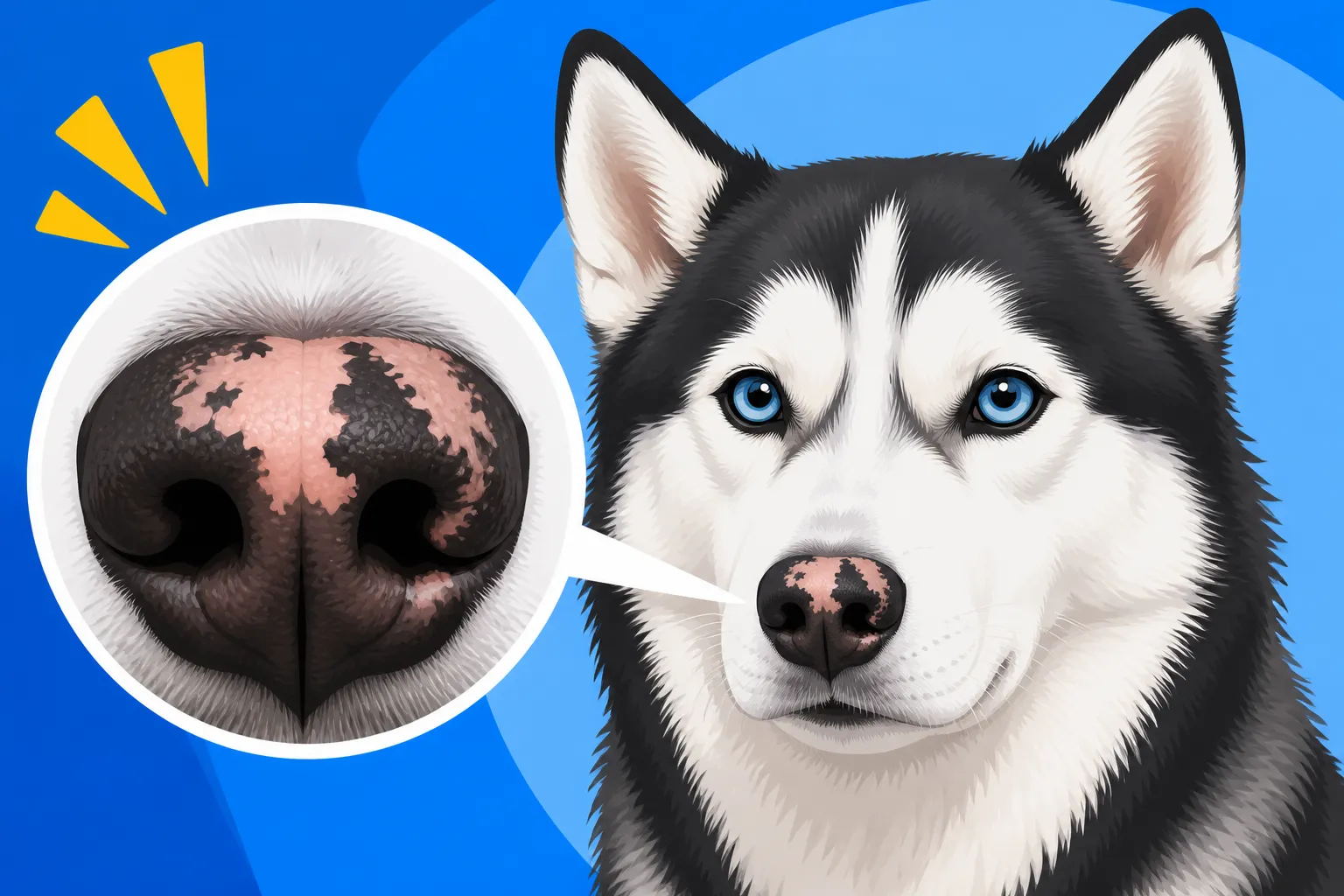
A Siberian Husky Losing Pigment on the Nose
It can be quite alarming to look at your beautiful Siberian Husky and suddenly notice that their striking black nose isn't so black anymore. Maybe it's developing pink patches, fading to a grayish hue, or even showing some crusting. This change can make any Husky parent immediately wonder if something serious is going on with their beloved companion. This guide is here to walk you through the various reasons your Siberian Husky might be losing pigment on their nose, helping you understand when it's a normal, harmless change and when it's time to get a professional opinion from your vet.
Understanding Normal Pigment Changes in a Siberian Husky's Nose
Before you panic, it's really important to know that not all pigment loss on a Siberian Husky's nose is a sign of trouble. Our Huskies, with their unique genetics, often experience several completely benign forms of nose discoloration that are nothing to worry about. They're just part of being a Husky!
"Snow Nose" or Seasonal Hypopigmentation
One of the most common reasons you'll see a Siberian Husky's nose change color is something lovingly called "snow nose" or "winter nose." This phenomenon is formally known as seasonal hypopigmentation. Essentially, your Husky's nose might start off a deep, rich black, but as the colder months set in, you'll notice it fades to a pinkish or brownish hue, or even a mottled gray. It’s like their nose is getting a temporary, lighter winter coat!
The science behind it is fairly simple: it's believed to be due to reduced activity of tyrosinase, an enzyme crucial for melanin production, which slows down in colder temperatures. Melanin is the pigment that gives their nose its dark color. When the enzyme isn't as active, less pigment is produced, and the nose appears lighter. You might notice the fading starts around the edges and gradually spreads, or it might appear as patchy areas.
The good news is that snow nose is entirely harmless and doesn't cause any discomfort to your Husky. It’s purely a cosmetic change. In many cases, once spring and summer roll around and the temperatures rise, the pigment often returns to its original dark color. Some Huskies might have a full return, while others might retain a slightly lighter nose year-round after their first experience with snow nose. It's just one of those charming quirks that makes our Huskies so special.
"Dudley Nose" and Puppy Pigment Development
Another type of pigment loss, or rather a lack of pigment from the start, is referred to as "Dudley nose." This isn't a seasonal thing; it's typically a genetic trait. A Dudley nose will appear uniformly pink, or a very light flesh color, and unlike snow nose, it generally doesn't darken with age or change with the seasons. It's simply an absence of pigment, similar to how some Huskies have lighter eye colors.
You might spot a Dudley nose on a Siberian Husky puppy. While many puppies are born with pink noses that gradually darken over the first few weeks, a Dudley nose will remain pink. It’s most commonly seen in Huskies with lighter coat colors, such as whites, reds, or some sables. For breeders, a Dudley nose is considered a fault in the show ring according to the AKC standard, which prefers a black nose, though a liver-colored nose is accepted on red Huskies.
From a health perspective, a Dudley nose is completely benign. It doesn't impact your Husky's health, sense of smell, or quality of life in any way. The only practical consideration is that a pink nose is more susceptible to sunburn, just like human skin. If your Husky spends a lot of time outdoors, especially during peak sun hours, consider applying a pet-safe sunscreen to their nose to prevent irritation or sun damage.
Age-Related Fading
Just like humans get gray hairs and wrinkles as they gracefully age, our Siberian Huskies can experience a similar phenomenon with their nose pigment. As a Husky enters their senior years, typically past the age of 7 or 8, you might notice a gradual lightening of their nose leather. This isn't usually dramatic, but rather a slow, subtle fading that results in a lighter, sometimes speckled, appearance.
This age-related fading is a natural part of the aging process. The cells responsible for producing melanin simply become less efficient over time. It's often accompanied by other signs of aging, such as a whitening around the muzzle or a slight dulling of their once vibrant coat. It’s a gentle reminder that our energetic companions are slowing down a little.
Again, this type of pigment loss is not indicative of any underlying health problem and doesn't require any medical intervention. It’s simply a cosmetic change that comes with wisdom and age. Enjoy these changes as part of your Husky's journey through life, knowing that they are still the same loving dog underneath. As your Husky ages, pay close attention to overall health changes. For tips on how to best support them, check out our guide on Caring for a Siberian Husky Past Ten.
Medical Conditions That Can Cause Nose Pigment Loss
While many cases of nose pigment loss are normal and nothing to worry about, there are indeed medical conditions that can cause more significant or concerning changes. These conditions often present with additional symptoms beyond just a change in color, and they definitely warrant a visit to your veterinarian.
Autoimmune Diseases Affecting the Nose
Some serious conditions that can cause your Husky's nose to lose pigment are autoimmune diseases. These are conditions where the body's immune system mistakenly attacks its own healthy cells. Two notable ones that can affect nose pigment are Uveodermatologic Syndrome (UDS) and Pemphigus Foliaceus. These aren't just about color; they involve actual skin lesions and inflammation.
Uveodermatologic Syndrome (UDS) is a particularly serious condition in Siberian Huskies. It's not just the nose that's affected; it's a multi-system autoimmune disease that typically impacts the eyes, skin, and sometimes the central nervous system. Early signs often involve acute eye inflammation, which can lead to blindness if not treated rapidly. This is why paying attention to any eye changes is critical. You might notice redness, cloudiness, sensitivity to light, or pain in one or both eyes. As the disease progresses, it can lead to pigment loss (vitiligo) and skin lesions on the nose, lips, eyelids, paw pads, and scrotum. These changes aren't just fading; they often involve crusting, oozing, and discomfort. Learning more about Why Husky Uveodermatologic Syndrome Threatens Sight can give you a deeper understanding of this challenging condition. You should also be aware of How Fast Husky Uveitis Must Be Treated because swift action can make a huge difference.
Pemphigus Foliaceus, another autoimmune skin disease, also causes crusting, scaling, and lesions, which can appear on the nose. Unlike UDS, it doesn't primarily affect the eyes. Instead, you'll often see crusts, pustules, and ulcers develop, particularly on the bridge of the nose, around the eyes, on the ears, and on the paw pads. These lesions can be itchy and painful, and your Husky might rub or scratch the affected areas, leading to secondary infections. If you notice symptoms like these on your Husky's ears, it could be a sign of Crusting Pustules on a Siberian Husky's Ears. A proper diagnosis is crucial for these conditions, which often involves a skin biopsy. For more information on diagnostics, consider reading Diagnosing Pemphigus in a Siberian Husky.
Zinc-Responsive Dermatosis
Siberian Huskies are genetically predisposed to a condition called Zinc-Responsive Dermatosis (ZRD). This isn't due to a lack of zinc in their diet, but rather an inability to properly absorb zinc from their intestines, even if they're eating a high-quality, balanced food. This malabsorption leads to a zinc deficiency in the skin, resulting in a range of dermatological issues. If you’ve wondered Why Siberian Huskies Absorb Zinc Poorly, this condition is the main culprit.
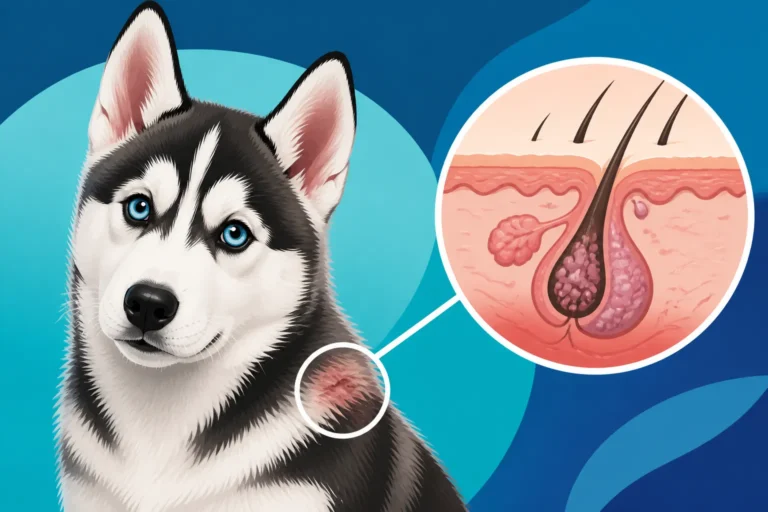
One of the key areas affected by ZRD is the skin around the face, particularly the muzzle and nose. You'll typically see characteristic crusting, scaling, and sometimes hair loss around the eyes, mouth, and on the bridge of the nose. This crusting can be quite thick and flaky, often accompanied by redness and inflammation. The nose leather itself can lose pigment and appear dry, cracked, or ulcerated. If you've seen Crusting Skin on a Siberian Husky's Face, this might be what you're dealing with. The paw pads can also become thick and cracked, and the ears might develop similar lesions.
Diagnosis often involves looking at the clinical signs and seeing how the dog responds to zinc supplementation. Sometimes a skin biopsy is performed to confirm the diagnosis. Treatment for ZRD almost always involves lifelong oral zinc supplementation. The dosage needs to be carefully managed by a vet, as too much zinc can also cause problems. You can learn more about appropriate levels in Zinc Doses Used in Siberian Huskies. It's also important to understand Whether a Husky Needs Zinc for Life once diagnosed.
Trauma, Sunburn, and Allergies
Sometimes, nose pigment loss can be due to more straightforward external factors that aren't systemic diseases. These causes are often localized and might only affect a small area of the nose. Knowing what to look for can help you address the issue quickly.
Trauma to the nose is a common culprit. If your Husky scrapes their nose on something rough, gets a cut, or even experiences a mild burn (perhaps from a hot surface or chemical irritant), the damaged tissue might heal without its original pigment. This often results in a white or pink scar-like area on the nose. While the initial injury might have been painful, once healed, the pigment loss itself isn't usually uncomfortable. It's just a mark left behind.
Sunburn is another concern, especially for Huskies with naturally pink noses (Dudley noses) or those who have already experienced some pigment loss due to snow nose or other conditions. Just like human skin, a dog's non-pigmented skin is vulnerable to the sun's harmful UV rays. A severe sunburn on the nose can cause redness, peeling, blistering, and in some cases, permanent pigment loss in the affected area. Long-term exposure to sun on depigmented skin can also increase the risk of skin cancer. If your Husky loves to sunbathe, consider providing shaded areas or even a pet-safe sunscreen for their nose.
Lastly, contact allergies can manifest on the nose, leading to irritation and subsequent pigment loss. This often happens when a Husky is sensitive to a material they frequently come into contact with. Common culprits include plastic food and water bowls, certain types of rubber toys, or even fabrics from bedding. The allergic reaction can cause redness, itching, swelling, and small bumps on the nose and surrounding muzzle area. If the irritation persists, the affected skin can lose its pigment. Switching to stainless steel or ceramic bowls is often the first step to rule out a plastic allergy. Observe your Husky closely to see if they rub their nose after contact with a particular item.
When to Be Concerned and Seek Veterinary Advice
It's natural to feel a bit lost trying to figure out if your Husky's nose changes are normal or something more serious. The key lies in observing the specific characteristics of the pigment loss and any accompanying symptoms. Knowing when to call the vet can save you a lot of worry and ensure your dog gets the care they need.
Differentiating Normal Fading from Serious Issues
The most important step is to observe your Siberian Husky's nose carefully. Is it just a color change, or are there other signs of discomfort or illness? Here's a quick guide to help you differentiate:
- Snow Nose/Dudley Nose/Age-Related Fading: These are characterized by a smooth, healthy-looking nose texture, with no redness, swelling, pain, itching, or discharge. The dog's general demeanor remains perfectly normal—they're eating, playing, and acting like themselves. The fading might be symmetrical or affect the entire nose.
- Concerning Pigment Loss: This type of pigment loss is usually accompanied by other symptoms. Look for crusting, scabs, sores, ulcers, bleeding, swelling, pain when touched, or discharge. The skin around the nose might appear inflamed or red. Your Husky might rub or scratch their nose excessively, seem lethargic, lose their appetite, or develop issues in other areas like their eyes or paw pads. These additional symptoms are red flags that warrant immediate veterinary attention. You might even notice Whitening Lips and Eyelids in a Siberian Husky which could indicate a broader issue.
To help you distinguish, here's a table comparing common benign changes with those that require veterinary attention:
| Feature | "Snow Nose" (Seasonal Hypopigmentation) | Concerning Pigment Loss (Medical Condition) |
|---|---|---|
| Appearance | Fading, pinkish, grayish, often symmetrical. Smooth texture. | Redness, crusting, sores, ulcers, scaling, swelling. Can be asymmetrical or localized. |
| Associated Symptoms | None (no pain, itching, discharge, changes in behavior). | Pain, itching, sensitivity, bleeding, discharge, lethargy, loss of appetite, eye issues, generalized skin changes. |
| Timing/Progression | Gradual fading, often in winter. May return to dark in summer. | Can be sudden or gradual. Often progressive, rarely resolves on its own without intervention. |
| Affected Areas | Primarily the nose leather (often central). | Nose, lips, eyelids, paw pads, sometimes other skin areas, eyes. |
| Underlying Cause | Melanin production changes, seasonal factors, genetics, age. | Autoimmune disease, zinc deficiency, trauma, allergies, infection, tumor. |
| Urgency for Vet | Low (observation recommended, good for general wellness check). | High (prompt veterinary evaluation needed). |
The Diagnostic Process
When you take your Siberian Husky to the vet for concerning nose pigment loss, be prepared for a thorough examination. Your vet will ask you about the history of the changes, how long they've been present, and any other symptoms you've noticed. They will meticulously examine your Husky's nose, mouth, eyes, ears, skin, and paw pads. This comprehensive check is crucial because many conditions affecting the nose also affect other parts of the body, such as Siberian Husky Eye Disease and the Annual Exam or Siberian Husky Thyroid and Autoimmune Disease.
Depending on their initial findings, your vet might recommend several diagnostic tests. These could include:
- Skin scrapes or fungal cultures: To rule out parasitic infestations or fungal infections.
- Blood tests: To check for underlying systemic illnesses, nutritional deficiencies (like zinc levels if ZRD is suspected, though a response to supplementation is often key), or autoimmune markers.
- Skin biopsy: This is often the definitive diagnostic tool for autoimmune diseases like Uveodermatologic Syndrome or Pemphigus Foliaceus. It involves taking a small sample of the affected skin under local or general anesthesia for microscopic examination by a veterinary pathologist.
These diagnostic steps are incredibly important for getting an accurate diagnosis, which then guides the most effective treatment plan. It’s also wise to consider that these investigations can become costly. This is where pet insurance, like a policy from Healthy Paws, can be an invaluable safety net. Knowing you have support for unexpected veterinary bills can alleviate a lot of stress during a challenging time.
Treatment Options and Management
Once a diagnosis is made, your vet will discuss the appropriate treatment options and management strategies tailored to your Husky's specific condition.
- For "Snow Nose," "Dudley Nose," or Age-Related Fading: No medical treatment is necessary. These are benign conditions. For pink noses susceptible to sunburn, pet-safe sunscreen or providing ample shade during peak sun hours is recommended.
- For Autoimmune Diseases (UDS, Pemphigus Foliaceus): These conditions often require immunosuppressive therapy. This typically involves medications like corticosteroids (e.g., prednisone), cyclosporine, or other immunosuppressants. The goal is to calm the overactive immune system. Treatment is often long-term, and doses may need to be adjusted over time based on your Husky's response. Regular follow-up appointments and blood work are essential to monitor the disease and manage potential side effects of medication. Support from a strong pet insurance provider like Healthy Paws can truly help manage these ongoing medication and vet visit costs.
- For Zinc-Responsive Dermatosis: The primary treatment is oral zinc supplementation, often for the rest of your Husky's life. Your vet will determine the correct dosage. It's a fine balance, as too much zinc can be toxic, so never supplement without veterinary guidance. While dietary changes, as explored in Diet Changes That Help Husky Zinc Absorption, can sometimes help, they rarely resolve ZRD on their own.
- For Trauma, Sunburn, or Allergies: Treatment focuses on addressing the root cause. This might mean protecting the nose from further injury, preventing sunburn, or identifying and eliminating the allergen (e.g., switching to stainless steel bowls for contact allergies). Topical medications or antibiotics might be prescribed for any secondary infections that have developed.
Managing these conditions can be a journey, but with accurate diagnosis and consistent veterinary care, many Huskies with underlying medical causes for pigment loss can lead full and comfortable lives. Always communicate openly with your vet about your Husky's progress and any new symptoms you observe.
Disclaimer
This article is intended for informational purposes only and does not constitute veterinary advice. Always consult with a qualified veterinarian for any health concerns or before making any decisions about your pet's medical care.