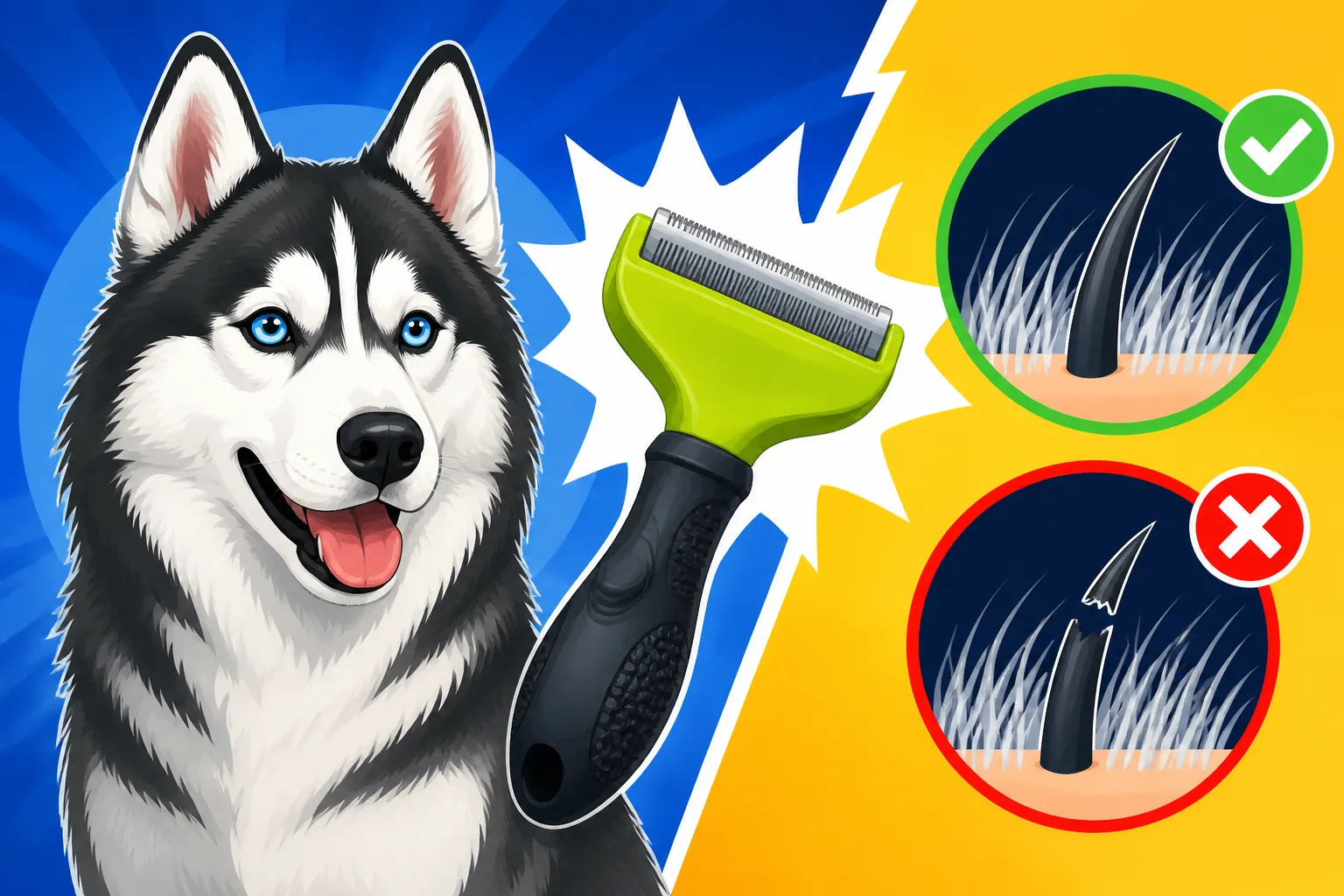
Whether a Furminator Cuts Siberian Husky Guard Hairs
Anyone who has lived with a Siberian Husky knows the sheer volume of fur that can suddenly appear, blanketing every surface during what we affectionately call "coat blow." It's tempting to reach for any tool that promises to tackle the seemingly endless shedding, but many Husky owners worry about whether popular de-shedding tools, like the Furminator, might actually harm their dog's unique double coat. This guide will dive deep into how a Husky's coat works, how tools like the Furminator interact with it, and what safer, more effective grooming strategies you can use to keep your furry friend comfortable and healthy without risking damage to their precious guard hairs.
Understanding the Siberian Husky's Double Coat
The Siberian Husky is a breed built for extremes, and nowhere is this more evident than in their incredible coat. It’s not just fur; it's a meticulously engineered system that protects them from harsh weather, both cold and surprisingly, heat. Understanding the two distinct layers is crucial before you even think about grabbing a grooming tool.
Guard Hairs: The Outer Layer
Think of the guard hairs as your Husky's first line of defense. These are the longer, coarser, and slightly stiffer hairs that form the outermost layer of their coat. They lie flat, creating a protective barrier that repels water, dirt, and snow, keeping the underlying skin dry and clean. These hairs are also responsible for the beautiful patterns and colors we see in Huskies, from striking black and white to warm reds and silvers. They’re designed to be durable and resistant, acting like a natural shield. Without these guard hairs intact, your Husky’s skin would be exposed to the elements, making them more susceptible to sunburn, skin irritations, and even colder temperatures than they are built for. Guard Hairs and Undercoat in a Siberian Husky explains this in more detail.
Undercoat: The Insulating Fluff
Beneath that resilient outer layer lies the true secret to the Husky’s adaptability: the dense, soft, woolly undercoat. This fluffy layer is incredibly thick and provides phenomenal insulation. In winter, it traps warm air close to the body, keeping them cozy even in sub-zero temperatures. In summer, it actually helps to keep them cool by preventing heat from penetrating down to the skin, and by allowing air to circulate. When a Husky "blows" their coat, it’s primarily this undercoat that’s coming out in massive quantities, usually twice a year during spring and fall, preparing them for the changing seasons. Spring and Fall Sheds in a Siberian Husky covers this seasonal event.
The Role of Each Layer in Husky Health
Both the guard hairs and the undercoat work in harmony to maintain your Husky's overall health and comfort. The guard hairs prevent external damage and provide UV protection, while the undercoat regulates body temperature. If either layer is compromised, your Husky can suffer. For instance, removing too much guard hair can expose their skin to harmful UV rays, leading to sunburn or even skin cancer over time. Stripping too much undercoat, or damaging it, can impair their ability to regulate temperature, making them prone to overheating in warm weather or feeling the chill more acutely in cold. This delicate balance is why proper grooming is about maintaining the integrity of both layers, not just getting rid of loose fur.
The Mechanics of a Furminator Tool
The Furminator has gained significant popularity as a de-shedding tool for many dog breeds. It's often marketed as the ultimate solution for reducing shedding, and for some breeds with different coat types, it can be quite effective. However, understanding how it achieves its results is critical when considering it for a Siberian Husky.
How It's Designed to Work
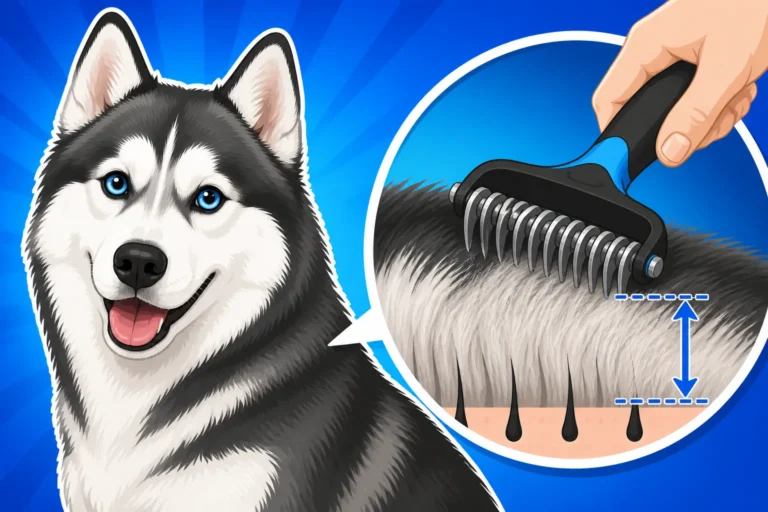
The Furminator features a stainless steel edge with very fine, short teeth that are designed to reach deep beneath the topcoat and grab loose undercoat hairs. The idea is that these teeth will pull out shedding undercoat that would otherwise end up on your furniture or clothes. When used correctly on a dog with a single coat or a very sparse undercoat, it can indeed remove a good amount of dead hair without impacting the healthy outer coat. It’s meant to essentially rake out the loose, dead fluff that’s ready to come out anyway, preventing mats and reducing shedding. Many people feel a sense of accomplishment watching the fur pile up, and assume it's simply doing its job as intended.
The Difference Between Undercoat Rakes and De-shedding Blades
This is where the distinction becomes crucial for a Siberian Husky. Traditional undercoat rakes have blunt, widely spaced teeth designed to gently separate and pull out loose undercoat without cutting any hair. They glide through the topcoat and snag only the dead, detached undercoat. A Furminator, on the other hand, utilizes a bladed edge. While it’s described as a "de-shedding tool," its mechanism is closer to a very fine-toothed razor or stripping knife. For a thick, double-coated breed like a Husky, these blades don't always distinguish between dead undercoat and healthy guard hairs. They can, and often do, cut through both. This isn't always immediately obvious, as the cut hairs are mixed in with the loose undercoat being removed.
Why It Feels Like It's "Working" on a Husky
When you use a Furminator on a Husky, you're going to get a lot of hair off, and that's precisely why many owners feel it's effective. The sheer volume of fur that comes off can be incredibly satisfying, making you feel like you're finally winning the battle against shedding. However, much of that volume might not just be loose undercoat. The fine blades are also cutting the tips of the guard hairs and pulling out healthy, attached undercoat. Because a Husky's coat is so dense, it's easy for the tool to snag and sever these vital hairs without the user realizing the damage is being done. It's a bit like taking a pair of scissors to a thick bush – you'll remove a lot of material, but you might be cutting healthy growth rather than just pruning dead leaves.
Why a Furminator Can Damage Guard Hairs
The design intended to remove dead undercoat can become a double-edged sword when applied to the unique structure of a Siberian Husky's coat. The potential for damage isn’t just theoretical; it’s a common frustration for many owners and professional groomers alike.
Cutting vs. Removing Loose Undercoat
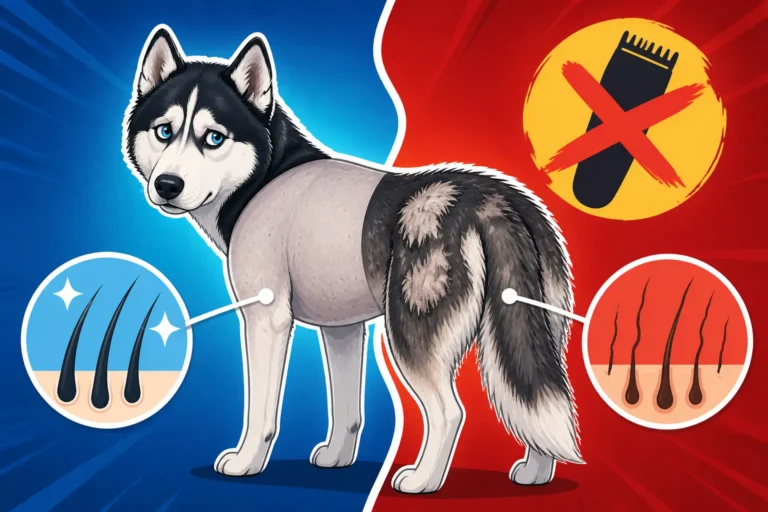
The fundamental issue lies in the difference between cutting hair and removing loose, dead hair. A healthy Siberian Husky's guard hairs are strong, resilient, and relatively long. They are meant to stay attached and provide protection. A Furminator's bladed teeth, however, don't just "rake" through the undercoat; they act like tiny shears, slicing through the guard hairs that get caught in their path. This isn't the same as simply pulling out already detached undercoat. Instead, it’s actively altering the structure of the outer coat. Imagine trimming your own hair with a dull razor – it pulls and breaks rather than giving a clean cut. The Furminator can have a similar effect on your Husky's guard hairs, weakening them and making them prone to breakage. This is precisely why we strongly advise against actions like shaving a Siberian Husky, as Why You Must Never Shave a Siberian Husky elaborates.
Visible Signs of Guard Hair Damage
How can you tell if a Furminator is damaging your Husky’s guard hairs? Keep a close eye out for a few tell-tale signs. Firstly, the coat might start to look duller or feel softer than usual, losing that coarse, protective texture characteristic of healthy guard hairs. This is because the guard hairs, which provide the sheen and rigidity, are being cut and broken. You might also notice an increase in frizz or a generally "ragged" appearance, as the ends of the guard hairs become blunt and damaged rather than tapering naturally. In extreme cases, repeated use can lead to thin spots or a patchy look in the topcoat, where the protective barrier has been significantly compromised. The coat simply won't lay flat as it should, making your Husky look unkempt despite your best efforts.
Long-Term Consequences for the Coat
The long-term effects of guard hair damage extend beyond aesthetics. As we discussed, the guard hairs are crucial for protection. If they are consistently cut or weakened by tools like the Furminator, your Husky becomes more vulnerable to environmental factors. Their skin could be exposed to direct sunlight, leading to uncomfortable sunburn, especially on areas with thinner coats. They might also lose some of their natural waterproofing, meaning they get soaked to the skin more easily in rain or snow. Furthermore, the damaged guard hairs can lose their ability to shed dirt and debris effectively, potentially leading to skin irritation or matting if not carefully managed. Essentially, you're disrupting a natural system that has evolved over thousands of years to keep them healthy and comfortable in diverse conditions, making your grooming efforts counterproductive.
Safer and More Effective Grooming Tools for Huskies
Managing a Siberian Husky's impressive coat doesn't have to involve damaging tools. There are plenty of safer, more effective methods and tools that respect the integrity of their double coat while still helping you win the shedding battle.
Undercoat Rakes and Slicker Brushes
For regular de-shedding, especially during "coat blow," the undercoat rake is your best friend. These tools have long, blunt teeth designed to reach deep into the undercoat without cutting the guard hairs. They simply pull out the loose, dead fluff, leaving the healthy topcoat and attached undercoat intact. You can find excellent quality undercoat rakes on platforms like Amazon or through pet supply specialists like Chewy. Look for ones with rotating teeth, as these can be particularly gentle and effective.
A slicker brush is also valuable, particularly for detangling any superficial mats or removing surface debris, and for smoothing the topcoat after using the rake. While not primarily a de-shedding tool for the undercoat, it helps keep the outer layer neat and prevents tangles that could lead to bigger problems. Regular, gentle brushing with these tools, especially during the intense Siberian Husky Coat Blow and the Six Weeks It Lasts, will make a world of difference.
High-Velocity Dryers
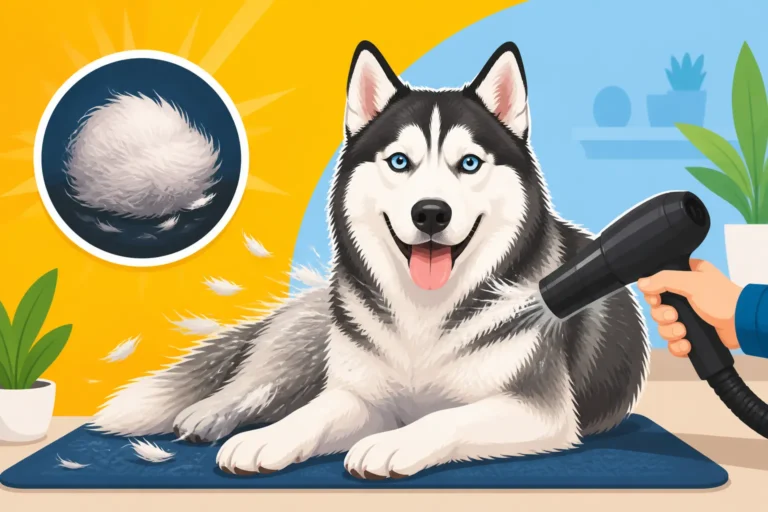
One of the most underutilized and yet most effective tools for managing a Husky's coat is a high-velocity dryer, sometimes called a force dryer. These powerful dryers don't use heat; instead, they use a strong stream of air to literally "blow" the loose undercoat out of your Husky's coat. It’s incredibly efficient and far more gentle than any brush or rake, as it avoids direct contact with the skin and doesn't cut hair.
Imagine a mini wind tunnel for your dog – it gets right down to the skin, lifting and separating the fur, allowing all that dead undercoat to just fly out. This method is fantastic for reducing shedding, preventing mats, and keeping the coat airy and clean. You can do this outdoors or in a designated grooming area, and you'll be amazed at the clouds of fur that emerge. A High-Velocity Dryer for a Siberian Husky Coat dives into the benefits and how to use one effectively.
Professional Grooming Options
Sometimes, the sheer volume of a Husky's coat, especially during a heavy blow, is just too much to handle at home. This is where professional groomers who are experienced with double-coated breeds become invaluable. Many groomers offer specific "de-shedding packages" that involve specialized baths, high-velocity drying, and professional undercoat raking. They have the right equipment, the expertise, and the patience to tackle even the most challenging coat blow.
A professional can efficiently remove vast amounts of dead undercoat without damaging the precious guard hairs, leaving your Husky feeling much lighter and more comfortable. They understand the nuances of the coat and know how to work with it, rather than against it. This can be a huge relief, especially if you're struggling to keep up with the shedding yourself. Professional De-Shedding for a Siberian Husky is a great resource if you're considering this route.
Dietary Considerations for Coat Health
Beyond tools, what your Husky eats plays a significant role in the health and quality of their coat. A well-nourished dog will naturally have a healthier, shinier coat that sheds more predictably. Look for high-quality dog foods that list real meat as the first ingredient and contain a good balance of omega fatty acids (like salmon oil or flaxseed). These essential fats are crucial for skin and coat health, promoting a strong, lustrous coat and reducing excessive dryness or flakiness.
Some owners explore fresh food diets from brands like Ollie, which focus on providing whole, minimally processed ingredients that can contribute to overall vitality, including coat quality. Discussing your Husky's diet with your vet to ensure they're getting all the necessary nutrients is always a good idea. A healthy diet from the inside out will make your grooming efforts much more rewarding. Feeding a Siberian Husky on an Efficient Metabolism discusses how their unique diet needs affect their health.
Here's a quick comparison of common grooming tools for your Siberian Husky:
| Tool | Primary Function | Suitable for Huskies? | Risk of Guard Hair Damage | Pros | Cons |
|---|---|---|---|---|---|
| Undercoat Rake | Removes loose undercoat | Yes | Low | Gently removes dead fur; preserves guard hairs; effective during coat blow. | Requires patience; can be time-consuming; need to ensure proper technique. |
| Slicker Brush | Detangles surface fur, smooths | Yes | Low | Good for general grooming; helps distribute natural oils; removes surface debris. | Not designed for deep undercoat removal; can pull if not used gently. |
| Pin Brush | General brushing, detangling | Yes | Low | Gentle on longer fur; good for overall coat health. | Less effective at removing dense undercoat compared to a rake. |
| High-Velocity Dryer | Blows out loose undercoat | Yes | Very Low | Extremely effective for de-shedding; stimulates skin; dries quickly; no direct cutting or pulling of fur. | Can be noisy; requires a dedicated space (e.g., outdoors); initial investment in the dryer. |
| Furminator | "De-shedding" (bladed tool) | No (generally advised against) | High | Appears to remove a lot of fur quickly. | Can cut and damage guard hairs; alters coat texture; compromises natural protection; can irritate skin. |
| Clippers/Shaving | Removes entire coat | No (absolute no-go) | Very High | None for Husky health (only for medical necessity). | Destroys double coat; impacts temperature regulation; high risk of sunburn; coat may grow back incorrectly. |
Disclaimer
This article is for general informational purposes only and does not constitute professional advice. Laws, prices and regulations vary by location and change over time. Consult a qualified professional for guidance on your specific situation.