Teaching a Siberian Husky the Difference Between Pull and Walk
If you've ever owned a Siberian Husky, you know the struggle: that moment you clip on the leash, and suddenly your arm feels like it's attached to a small, furry freight train. Their instinct to pull is powerful, and it can make a simple walk feel like a battle of wills. But what if you could teach your Husky that there's a time for polite walking and a time for unleashing that incredible pulling power? This guide is all about showing you how to establish those clear boundaries so both you and your Husky can enjoy every outing, whether it's a casual stroll or an energetic harness sport.
Understanding the Husky's Instinct to Pull
Let's be real, your Siberian Husky isn't pulling on the leash out of spite. They're doing it because it's literally what they were bred to do for thousands of years. It's in their DNA, a deep-seated instinct that's hardwired into their very being. Trying to fight it without understanding it is like trying to stop the tide.
The Deep Roots of the Pulling Drive
To truly grasp why your Husky is such a powerhouse on the leash, we have to look back to their origins. The Chukchi Origins of the Siberian Husky are fascinating and tell a story of survival in one of the harshest environments on Earth. These dogs were developed by the Chukchi people in northeastern Siberia to pull light loads over vast distances at a fast pace. Their entire physical structure – strong shoulders, deep chest, efficient gait – and their mental fortitude were selected for this purpose. When you hook up your Husky to a leash, even for a casual walk around the block, their ancestral memory kicks in. They feel that attachment and their body says, "Okay, time to go! Mush!" It’s not disobedience; it's a highly functional, ingrained behavior.
Think about it from their perspective: they see open space, they feel the tension, and their brain registers "work time." This isn't the same as a retriever who was bred to carry things gently, or a shepherd dog bred to work closely with a handler. Huskies were bred to cover ground, often with minimal direct guidance beyond directional cues, relying on their own judgment and drive. This powerful drive to move forward against resistance is what makes them magnificent working dogs, but also challenging pets if not properly managed.
Why "Heeling" Isn't Natural for a Husky
Many traditional dog training methods focus heavily on the "heel" command, where a dog walks politely beside its owner with a loose leash. For many breeds, this comes fairly naturally with practice. For a Siberian Husky? Not so much. While they absolutely can learn to walk on a loose leash, it's an acquired skill that often goes against their genetic grain.
Their natural gait is a ground-covering trot, and they're most comfortable out in front, setting the pace. Expecting a Husky to constantly monitor your position and pace their stride to yours requires a lot of cognitive effort and goes against their strong desire to explore and move. It's like asking a marathon runner to always walk at a leisurely pace during their training. They can do it, but it's not their preferred mode of locomotion. This is why you often see Huskies who might walk nicely for a few steps, then surge ahead the moment a scent catches their nose or another dog comes into view. Their focus is outward, on the environment and the path ahead, not primarily on the handler's knee.
When Pulling Becomes a Problem
While pulling is natural for a Husky, uncontrolled pulling can turn a pleasant walk into a real nightmare. It's not just annoying; it can be dangerous for both you and your dog. If your Husky is constantly dragging you, you risk falls, especially on uneven terrain or ice. I've had more than a few close calls myself, feeling like my shoulder was going to be dislocated just trying to keep up.
Beyond the physical strain, uncontrolled pulling can lead to negative associations with walks. If every outing is a struggle, you might find yourself dreading leash time, which means your Husky gets less exercise and mental stimulation. This, in turn, can lead to other behavioral issues, like destructive tendencies indoors or excessive howling, simply because they're not getting their needs met. A dog that pulls constantly can also put undue strain on their own neck and throat if you're using a collar, potentially leading to injuries. It prevents proper communication on the leash, making it harder to guide them away from hazards or teach them better manners. It's a lose-lose situation that needs a clear strategy to overcome.
The Foundation of Dual-Purpose Training
The key to harmonious walks and thrilling harness sports with your Siberian Husky lies in teaching them a clear distinction between "walk mode" and "pull mode." This isn't about eradicating their pulling instinct; it's about channeling it appropriately. You're giving them permission to be a Husky, but on your terms.
Clearly Defined Cues for Each Activity
Imagine if your boss told you to "work" but sometimes meant "write a report," and other times meant "organize the office party." You'd be confused, right? It's the same for your Husky. You need distinct, unambiguous cues for when they are allowed to pull and when they are expected to walk politely. This means a different verbal command for each.
For "walk mode," you might use a cue like "Let's Go," "Walk Easy," or simply "Heel" if that's your goal. This cue should always be associated with a loose leash, a calm pace, and your Husky staying beside or slightly behind you. For "pull mode," you could use traditional mushing commands like "Hike," "Go," or "Mush." These commands should instantly signal to your Husky that it's time to lean into the harness and apply power. The consistency of these verbal cues, paired with the appropriate gear and activity, is paramount. If you sometimes say "Go" for a walk, and other times for pulling, you're setting your Husky up for confusion and failure.
Separate Equipment for Separate Jobs
This is perhaps the most critical component of dual-purpose training. You absolutely cannot expect your Husky to understand the difference between pulling and walking if you use the same equipment for both. This would be like asking a chef to use the same tool for chopping vegetables and stirring soup – it might work, but it's not ideal and leads to mixed signals.
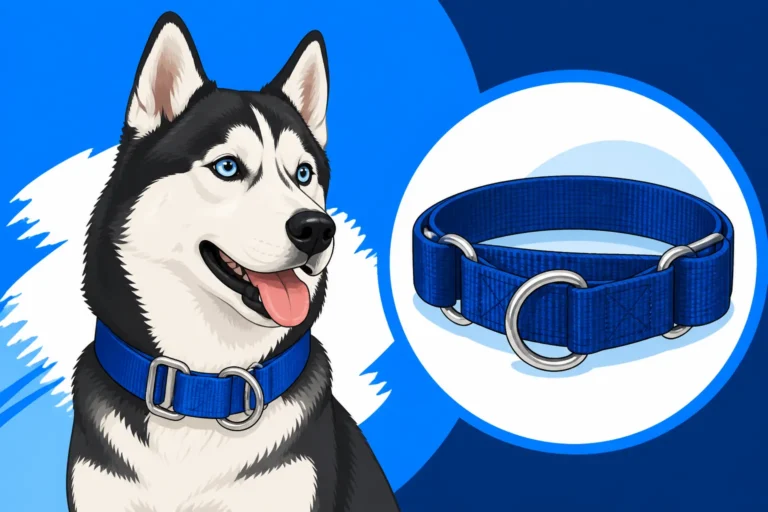
For "walk mode," where you want a loose leash, a Front-Clip Harnesses on a Siberian Husky is often a game-changer. When your Husky pulls, the leash attachment on their chest gently redirects them to the side, making pulling uncomfortable and less efficient without causing pain. Brands like the Balance Harness or the Easy Walk harness, widely available on Amazon, are popular choices. Some owners also find success with a martingale collar for walking, which tightens slightly to prevent slipping out, but still, the front-clip harness offers better control against pulling.
For "pull mode," you need a purpose-built harness designed for sledding, canicross, bikejoring, or scootering. These harnesses distribute pressure evenly across the chest and shoulders, allowing your Husky to pull safely and efficiently without restricting their breathing or movement. They are typically Y-shaped or H-shaped, often with a padded neck and chest, and the leash attachment point is on their back, allowing for maximum forward drive. When your Husky wears this harness, they know it's time to work. The distinction is visual and tactile, reinforcing your verbal cues. This physical difference in gear is key to communicating your expectations clearly.
Consistency is Key, Especially with Huskies
Ah, consistency – the bane of many a Husky owner's existence, but the absolute cornerstone of successful training. These dogs are incredibly intelligent but also notoriously independent thinkers. If you're not consistent, they'll quickly figure out the loopholes and decide what rules apply (or don't apply) at any given moment.
This means every single time you go for a walk, you must enforce the "walk easy" rules. If you use a front-clip harness for polite walking, never use it for pulling. If you use a pulling harness for work, never take them on a casual stroll in it. Siberian Huskies That Come Only When It Suits you are often the result of inconsistent training. Family members also need to be on board with the same cues and equipment. If one person lets the Husky pull on a regular collar during a walk, while another tries to enforce a loose leash with a front-clip harness, your Husky will just learn that rules are arbitrary and not worth bothering with.
It's not just about the equipment; it's about your reaction. If they pull on their walking gear, you must stop, wait for the leash to slacken, or redirect them. If you allow them to pull just "this one time" because you're in a hurry, you've just undermined all your hard work. Huskies thrive on routine and clear expectations, even if they sometimes push those boundaries. Your unwavering consistency is what builds their understanding and trust in the system you're putting in place.
Teaching Loose-Leash Walking (No Pulling)
Now that we understand the "why" and the foundational principles, let's dive into the practical "how" of teaching your Husky to walk politely when they're not supposed to be pulling. This takes patience, repetition, and a good sense of humor, because a Husky's brain is always looking for the next adventure.
Choosing the Right "Walking" Gear
As mentioned, the right gear can make a world of difference when teaching loose-leash walking. For a Siberian Husky, traditional flat collars are often ineffective because of their dense coat and strong necks. They can easily pull through them, or you might find yourself needing to tug hard, which is both uncomfortable for the dog and unproductive for training.
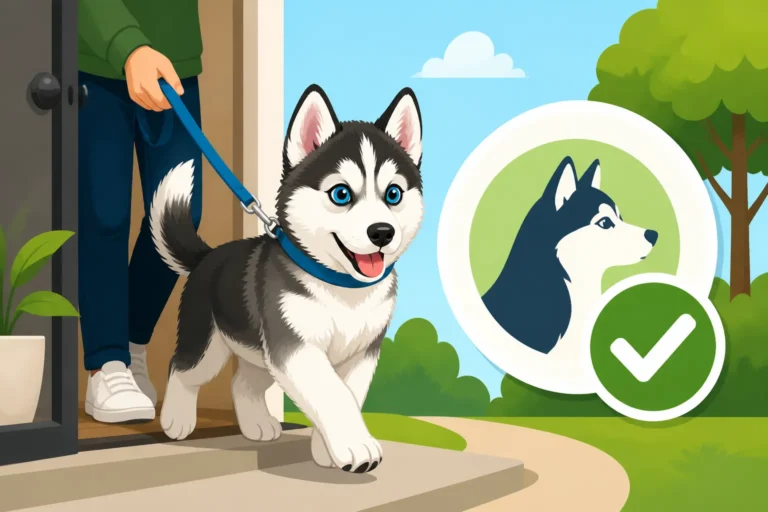
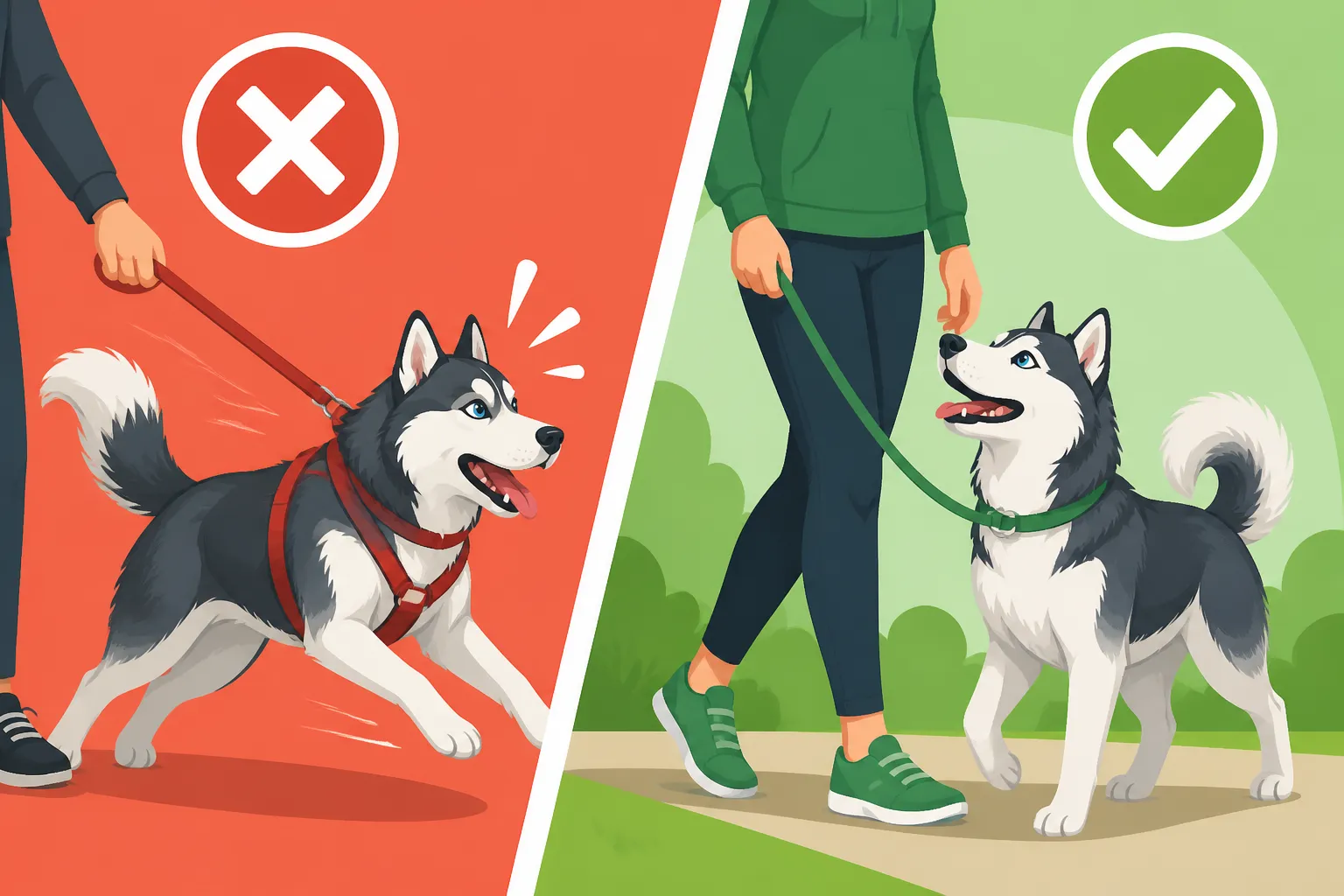
Many Husky owners find success with front-clip harnesses. These harnesses have a leash attachment ring on the dog's chest. When your Husky pulls, the leash applies pressure to their chest, causing them to turn gently to the side instead of moving forward. This redirection naturally discourages pulling without causing pain or discomfort. It makes the act of pulling self-correcting and less rewarding. Popular options include the Ruffwear Front Range harness or the SENSE-ation harness, often found on Amazon. Another effective tool can be a head halter (like a Gentle Leader or Halti), which gives you more control over your dog's head, and thus, their direction. However, some Huskies object strongly to head halters initially, so it requires careful, positive introduction. The key is to find equipment that helps you communicate "no pulling" effectively and gently, without causing your Husky to feel restrained or punished, which can lead to aversion.
The "Tree" Method and Red-Light/Green-Light
These are two of my favorite, most effective methods for teaching a Husky not to pull. They're simple, clear, and don't involve any harsh corrections.
The "Tree" Method (also known as "Be a Tree"): This is wonderfully straightforward. The moment your Husky puts tension on the leash, you stop dead in your tracks. Literally, become a tree. Do not move, do not speak, do not pull back. Just stand there. Your Husky will likely be confused, pull harder, or look back at you. The second—and I mean the second—the leash slackens, even for a brief moment, you start walking again. Repeat, repeat, repeat. It teaches them that pulling gets them nowhere, but a loose leash means forward motion. This method can feel incredibly slow at first, especially with an excited Husky, but it's incredibly effective at building that muscle memory.
The Red-Light/Green-Light Method: This is similar but adds a verbal cue. As you walk, say "Green Light!" and encourage a loose leash. The instant the leash tightens, say "Red Light!" and stop. When the leash slackens, say "Green Light!" again and resume walking. You can also incorporate changes in direction with the "Green Light" command to keep them engaged. This method reinforces the idea that your movement is contingent on their loose-leash behavior. Pair this with positive reinforcement – a treat or praise – the moment they offer a loose leash in "Green Light" mode. Consistency is key here. Every tug equals a stop, every slack leash equals movement. It's a clear consequence that your intelligent Husky will quickly pick up on.
Reinforcement and Managing Distractions
Once you've established the basic understanding of loose-leash walking, the next step is to reinforce that behavior and manage the endless distractions that call to a Husky's curious nature. Motivating a Siberian Husky That Ignores You requires understanding what truly drives them.
Positive reinforcement is your best friend. Huskies, despite their independent streak, respond incredibly well to high-value rewards. This means super tasty treats (small pieces of cooked chicken, cheese, or hot dogs often work wonders) and enthusiastic verbal praise. Every time your Husky walks with a loose leash, mark the behavior (a quick "yes!" or a clicker if you use one) and immediately give a treat and praise. Timing is everything; they need to associate the reward directly with the loose-leash walking.
Managing distractions is an ongoing process. Start training in low-distraction environments like your quiet street or backyard. As your Husky improves, gradually introduce more challenging environments: a park during off-peak hours, then a busier street, and eventually places with other dogs or people. If your Husky starts to pull towards a distraction, revert to the "Tree" or "Red Light" method. Don't let them "win" by getting to the distraction while pulling. You can also use redirection techniques: if they start to focus too intently on something, use your high-value treat to get their attention back to you, ask for a "look" or a "sit," and then reward. Remember, the goal isn't to prevent them from ever seeing anything interesting, but to teach them that they get to explore it after they demonstrate polite walking.
Introducing the "Pull" Cue and Harness Work
Once your Husky understands that polite walking happens on a different harness with different rules, you can enthusiastically introduce them to the joy of pulling in their dedicated pulling gear. This is where their instincts truly shine, and where you'll see your Husky light up with purpose.
Selecting Appropriate Harness Sport Gear
Just as you wouldn't run a marathon in dress shoes, your Husky shouldn't pull heavy loads in a regular walking harness. Proper gear is crucial for their safety, comfort, and performance in harness sports. The goal is to distribute the pulling force evenly and efficiently across their body, avoiding strain on their neck or back.
The most common types of pulling harnesses are X-back or H-back harnesses. These are designed to allow full range of motion in the shoulders and a deep, unrestricted chest, with the pulling attachment point at the base of the spine. They come in various styles suitable for specific activities like sledding, canicross (running with your dog), bikejoring (biking with your dog), or scootering. For example, a canicross harness will often have a lower attachment point for pulling, designed to fit snugly with the runner's belt, while a sledding harness might be more robust for heavier loads.
When choosing, look for harnesses made from durable, weather-resistant materials with ample padding, especially around the neck and chest. Fit is paramount: the harness should not rub, restrict breathing, or impede shoulder movement. You'll want to take accurate measurements of your Husky to ensure a proper fit. Brands like Neewa, Non-Stop Dogwear, or Hurtta make excellent sport-specific harnesses, many of which can be found through specialty pet retailers or on Amazon. Remember, this gear is an investment in your Husky's well-being and your shared enjoyment of these activities.
Starting with Basic "Gee" and "Haw" Cues
Mushing commands, or directional cues, are essential for any harness sport. "Gee" typically means "turn right," and "Haw" means "turn left." These aren't just for professional sled dogs; they're incredibly useful for recreational harness work too, allowing you to guide your Husky through trails and around obstacles.
Start teaching these in a low-distraction environment without any pulling resistance first. Put your Husky in their pulling harness and attach a long line. Walk with them, and as you approach a turn, say "Gee!" and gently guide them to the right with the leash, rewarding them as they turn. Do the same for "Haw!" and turning left. Make it a fun game. Practice these turns repeatedly. The Cues a Siberian Husky Needs in Harness extend beyond just turns; "Whoa" for stop and "Come Gee" or "Come Haw" for a 180-degree turn are also valuable.
Once they start to understand the concept of turning on cue, you can incorporate a very light resistance. You might have them pull a very small, empty plastic sled or even just a lightweight bungee line attached to your waist. The key is to make these early experiences positive and rewarding. Always use high-value treats and enthusiastic praise when they respond correctly. Huskies are smart and pick up on patterns quickly, especially when there's a clear reward for their cooperation.
Gradual Introduction to Weight or Resistance
You wouldn't ask a novice weightlifter to bench press 300 pounds on their first day, and you shouldn't ask your Husky to pull a heavy rig right away either. The introduction to weight or resistance must be gradual and carefully managed to build their strength, stamina, and confidence without causing injury or burnout.
Start with very light resistance. This could be as simple as an empty canicross belt attached to your waist, providing just enough tension for them to feel the pulling sensation. A small, empty plastic sled on grass or dirt also works well. The goal is to get them comfortable with the feeling of leaning into the harness and moving forward against a light, consistent resistance. Keep these initial sessions short – just a few minutes of active pulling – to prevent fatigue and keep their enthusiasm high.
As your Husky gains confidence and strength, you can slowly increase the resistance. This might mean adding a light backpack to the sled, moving to slightly tougher terrain, or extending the duration of your sessions. For bikejoring or scootering, the bike or scooter itself provides sufficient initial resistance. Always monitor your Husky for signs of fatigue, discomfort, or loss of interest. Look for their tail carriage, their breathing, and their willingness to continue. Never force them to pull if they're not enjoying it or appear uncomfortable. The most important thing is to keep it fun and positive, allowing them to truly embrace their natural talents and build a love for harness work. The Age a Siberian Husky Can Start in Harness is also important to consider; typically, waiting until they are fully grown (around 18-24 months) protects their developing joints.
Overcoming Common Challenges in Dual Training
Even with the best intentions and the clearest methods, training a Siberian Husky is rarely a straight line. There will be bumps, detours, and moments where you question if your dog actually has selective hearing. It's all part of the Husky experience!
When Your Husky Mixes Up the Cues
One of the most common frustrations in dual training is when your Husky, despite your best efforts, seems to mix up "walk" and "pull" cues. You're trying to have a polite loose-leash walk, and suddenly they're in full mushing mode, dragging you down the street. Or you get them in their pulling harness, and they're wondering why you're not rewarding them for walking nicely beside you.
This usually comes down to a few factors:
- Inconsistent Handlers: Is everyone in the household using the exact same verbal cues and equipment for each activity? If not, that's your first place to troubleshoot.
- Lack of Distinction in Environment: Are you doing both types of activities in very similar locations? Try to create more distinct environments initially. For instance, walk politely around the neighborhood, but go to a specific trail or park for harness work.
- Insufficient Reinforcement: Are you making the correct behavior more rewarding than the incorrect one? If pulling on a walk occasionally gets them to what they want (like sniffing a bush), that's reinforcing the wrong behavior.
To fix it, go back to basics. Drastically reduce distractions. If they mix up the cues during a walk, immediately stop, reset, and go back to a less stimulating area. Use your most high-value treats for correct behavior. For instance, if you're trying to walk politely and they pull, immediately stop the walk. If you're doing harness work and they're not pulling, add more encouragement and make it incredibly exciting, perhaps even using a flirt pole or a toy to get them engaged in forward motion initially. Sometimes, going back to very short, clear training sessions for each activity separately can help cement the distinction.
Maintaining Enthusiasm for Both Activities
Huskies are intelligent, but they can also get bored easily if something isn't stimulating enough. You need to keep both loose-leash walking and harness work fresh and engaging to maintain their enthusiasm.
For polite walking, vary your routes. Introduce new sights, sounds, and smells. Incorporate short bursts of training games like "find it" (tossing a treat into the grass for them to sniff out) or practicing quick "sits" and "downs" along the way. Keeping a Siberian Husky Interested in Training often means making it a partnership, not just a command-and-obey session. You can also work on Teaching a Siberian Husky to Heel on One Side for structured walks, which adds another dimension to the training.
For harness work, keep sessions at an appropriate length to prevent burnout. Don't push them to the point of exhaustion, especially when they're first learning. Vary the terrain – a flat path one day, gentle hills another. If you're doing bikejoring, try different routes. Sometimes, working with another dog (if you have one and they're compatible) can be incredibly motivating for a Husky, tapping into their pack drive. The key is to keep it fun and challenging, ensuring that both types of outings offer mental and physical stimulation that meets their breed-specific needs.
The Importance of a Strong "Recall" for Safety
While this guide focuses on on-leash manners, it’s impossible to talk about training a Siberian Husky without stressing the critical importance of a rock-solid recall. Even if you're diligently teaching them the difference between pulling and walking, a Husky's independent nature and strong prey drive mean that one wrong move, one slipped leash, or one open gate can lead to them being gone in a flash. Why a Siberian Husky Cannot Be Trusted Off Leash is a lesson many owners learn the hard way.
A strong recall isn't just a convenience; it's a safety net. It means that if, for whatever reason, your Husky does get off-leash, you have a better chance of getting them back before they encounter traffic, get into a fight, or disappear completely. Start recall training early, in a secure, fenced area, using high-value treats and making it the most fun game ever. Use a unique, enthusiastic recall word, and make sure everyone uses it. Gradually introduce distractions and practice in different environments.
Always carry your highest-value treats when practicing recall. Make coming to you the most rewarding thing your Husky can do. A long line (a 30- to 50-foot leash) can be an invaluable tool for practicing recall in open, safe areas while maintaining control. Brands like BAXTER & Bella offer excellent online resources for positive reinforcement training, including recall, which can be a huge help for new Husky owners. Don't underestimate the need for this skill; it could literally save your Husky's life.
| Feature | "Walk Mode" for Polite Walking | "Pull Mode" for Harness Work |
|---|---|---|
| Primary Goal | Loose-leash walking, staying beside handler, no pulling | Efficient, sustained pulling, forward momentum |
| Typical Gear | Front-clip harness, martingale collar, head halter | X-back or H-back pulling harness, specific for sport |
| Leash Attachment | Front of chest (harness), under chin (head halter), neck (collar) | Back of dog, usually near base of tail (harness) |
| Verbal Cues | "Let's Go," "Easy," "Heel," "Walk" | "Hike," "Go," "Mush," "Gee" (right), "Haw" (left) |
| Reinforcement | Treats, praise for loose leash, stopping when pulling | Treats, praise, continued forward motion, enjoyment of task |
| Environment | Varied, everyday walks, urban or suburban areas | Trails, open fields, specific routes for harness sports |
| Handler Focus | On dog's position relative to handler, leash tension | On dog's direction, pace, and sustained effort |
| Pace | Handler's pace, leisurely to brisk | Dog's natural trotting/running pace, often faster |
| Dog's Instinct | Learned suppression of natural pulling drive | Channeling and encouraging natural pulling drive |
The Long-Term Benefits of a Clear Distinction
Investing the time and effort into teaching your Siberian Husky the difference between pulling for work and walking politely is more than just about avoiding arm strain. It's about creating a harmonious relationship, respecting your dog's instincts, and opening up a world of activities you can enjoy together.
A Happier, More Understood Husky
When you provide clear boundaries and channels for your Husky's natural drives, you're not stifling them; you're actually fulfilling them. A Husky that understands when it's okay to pull and when it's not is a Husky whose needs are being met on a deeper level. They are no longer constantly frustrated by being told "no" to an instinctual behavior, but rather, they get designated times to fully embrace that urge.
This clear communication reduces stress for both of you. Your Husky isn't guessing what you want; they know what each piece of equipment and each cue means. This leads to a more confident and mentally balanced dog. You're acknowledging their heritage and providing an outlet for their energy and intelligence, which is crucial for a breed as capable as the Siberian Husky. A truly understood Husky is a happier Husky, and that joy is infectious.
Enjoyable Outings for Both of You
Imagine actually enjoying your daily walks again. No more dreading the pull, no more sore shoulders. When your Husky understands "walk easy," those neighborhood strolls become pleasant experiences where you can both relax and observe the world around you. You can confidently navigate crowded areas, knowing your Husky will respond to your cues. This drastically increases the quality of your time together.
Then, when you switch to the pulling harness, you unleash that incredible power and witness your Husky in their element. Whether you're canicrossing through a park, bikejoring on a trail, or even just letting them pull a small cart, you're tapping into their ancient purpose. Canicross and Bikejoring With a Siberian Husky are fantastic ways to bond and provide intense exercise. These separate activities provide a rich and varied life for your Husky, engaging different aspects of their physical and mental capabilities. The joy of seeing your dog perform a task they were literally born to do, with enthusiasm and skill, is an incredibly rewarding experience for any Husky owner.
Strengthening Your Bond Through Structure
At its heart, this training isn't just about commands and equipment; it's about communication and trust. By establishing clear structures and consistent expectations, you are building a stronger, more respectful bond with your Siberian Husky. They learn to trust that you will provide outlets for their energy and instincts, and you learn to trust that they will respond to your guidance.
This kind of dual-purpose training fosters a deeper understanding of your Husky's unique temperament – their independence, their intelligence, and their immense drive. It moves beyond simply managing their behavior to actively collaborating with them. When you take the time to teach them these distinctions, you're not just training a dog; you're developing a partnership with a magnificent animal that respects your leadership and thrives under your guidance. It's a journey that requires commitment, but the rewards—a well-adjusted, joyful Husky and a lifetime of shared adventures—are truly immeasurable.
Disclaimer
This article is for general informational purposes only and does not constitute professional advice. Laws, prices and regulations vary by location and change over time. Consult a qualified professional for guidance on your specific situation.