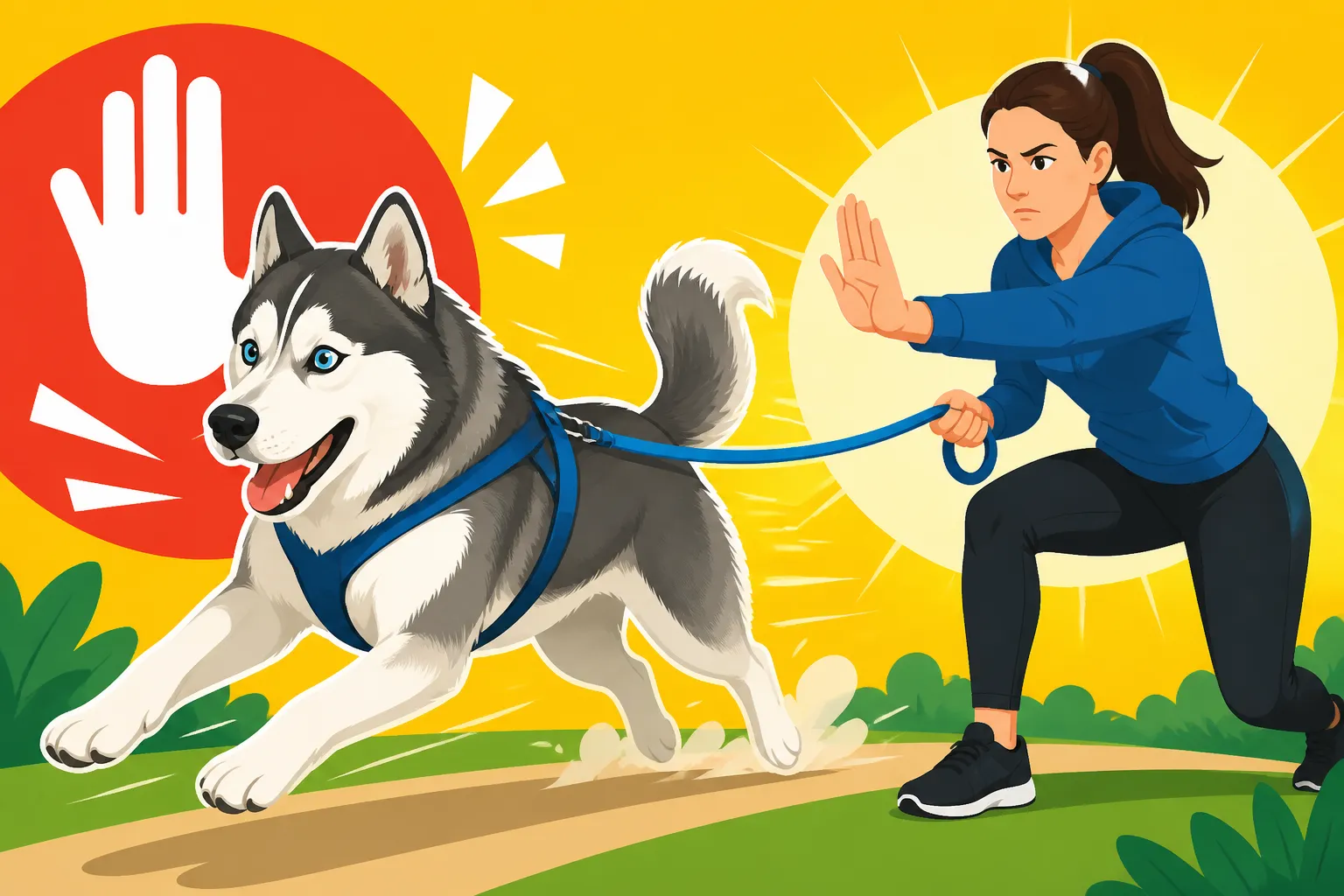
An Emergency Stop Cue for a Siberian Husky
The independent spirit and boundless energy of a Siberian Husky are what we love most about them, but let's be honest, that same free-spirited nature can turn into a heart-stopping emergency when they catch sight of a squirrel or a rabbit. Trying to recall a Husky mid-chase often feels like shouting into the wind, leaving you with that gut-wrenching fear of them bolting into danger. This guide is all about giving you a crucial tool: a rock-solid emergency stop cue, designed to cut through distractions and keep your adventurous companion safe when it matters most.
Understanding the Siberian Husky's Drive and Why a Regular "Stay" Isn't Enough
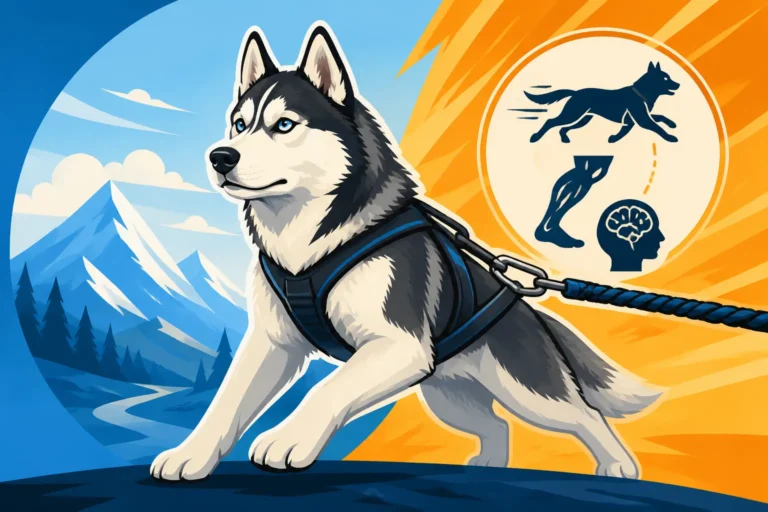
Bringing a Siberian Husky into your life means embracing a dog whose very essence is rooted in independence and action. They were never bred to be biddable, heel-at-your-side companions in the traditional sense. Their lineage traces back to the nomadic Chukchi people of Siberia, who relied on these dogs to pull sleds over vast, unforgiving distances. These dogs needed to think for themselves, to make decisions on the trail, and to possess an unwavering stamina that often overshadowed a need for constant human direction. This historical context is vital when we talk about training, especially when it comes to something as critical as an emergency stop.
The Instinct to Bolt and Chase
That deep-seated history translates directly into the modern Siberian Husky's incredibly strong prey drive. It's not a flaw; it's an ingrained part of who they are. They see something move – a rabbit, a squirrel, a leaf blowing just right – and their ancient instincts kick in. Their brain shifts from "companion mode" to "hunter mode," and suddenly, your voice, your treats, and all your training can vanish into the background noise. This isn't stubbornness; it's hardwired behavior. Many a Husky owner has experienced that sickening lurch when their seemingly well-behaved dog, happy and sniffing in the park, suddenly locks onto a distant target and is gone in a flash, deaf to every desperate cry. It’s a terrifying moment that every Husky parent dreads, highlighting Why Siberian Husky Recall Fails at the Worst Moment.
The frustration is real. You've spent hours working on recall, practicing "come" in the yard, rewarding every return. Yet, the moment a high-value distraction appears, all that effort seems to dissipate. It's a testament to the power of their chase instinct. This isn't about blaming your dog; it's about acknowledging the formidable force you're working with. Understanding that this drive is a fundamental part of their breed, rather than a personal slight, is the first step in approaching training with the right mindset and tools. We need a strategy that bypasses the rational brain and taps into something more primal – a conditioned reflex that demands an immediate halt.
Why "Stay" Just Doesn't Cut It
Most of us teach our dogs a "stay" command, right? It's a cornerstone of basic obedience. We ask them to sit, then "stay," and they hold that position for a few seconds, maybe a minute, while we walk a few feet away. This is wonderful for polite manners, for waiting at the door, or for holding position during a quick photo op. However, an emergency stop is an entirely different beast. A "stay" typically implies holding a specific position in a relatively controlled environment, and often with the understanding that the owner will return or give a release cue soon. It's a request for patience and composure.
An emergency stop, on the other hand, isn't about polite waiting. It's about an immediate, absolute, full-body halt, often from a dead run, at a significant distance from you, and under circumstances of extreme distraction or potential danger. Imagine your Husky galloping towards a busy road, or heading straight for another dog that isn't friendly. "Stay" might cue them to pause and look at you, but it likely won't override the powerful momentum and mental fixation of a full-speed chase. What you need is a cue that acts like slamming on the brakes – an involuntary, unthinking response that prioritizes stopping above all else. This isn't a command they get to choose to obey; it needs to be an automatic reaction to a critical sound or word.
Building Your Husky's Emergency Stop Cue
Creating an effective emergency stop cue for a Siberian Husky requires a very specific approach, one that leans heavily on high-value rewards and meticulous proofing. It's not a casual command; it's a life-saving reflex. You're essentially programming a "stop" button that can override even the most compelling distractions, so the setup and execution need to be flawless.
Choosing the Right Word or Sound
The very first step is selecting your emergency stop cue. This isn't a word you'll use in everyday conversation. It needs to be unique, sharp, and consistent. Think of it like a secret code word between you and your Husky that only means "stop everything, right now." Common words like "no," "stop," or "wait" are usually poor choices because we use them too often in various contexts, which dilutes their power and specificity. If your Husky hears "stop" when they're chewing on a shoe, and then hears it when they're bolting for a rabbit, the context is too different, and the urgency can be lost.
Good options include distinct words like "FREEZE!", "HALT!", "ANCHOR!", or even a specific, sharp whistle or a unique clap sequence. The key is that this sound or word should never be used for anything else. If you decide on "FREEZE!", that word should only ever come out of your mouth when you mean "stop immediately, no matter what." Ensure that every member of your household knows this rule and commits to using the exact same cue, in the exact same tone, for this specific purpose. Consistency across all handlers is paramount for your Husky to understand its critical meaning.
High-Value Rewards and Association
This is perhaps the most crucial element in building a truly reliable emergency stop: the reward. For a Siberian Husky, whose motivation can sometimes be fleeting or specific, the reward for this cue needs to be absolutely, mind-blowingly, undeniably the best thing they have ever tasted. Forget regular kibble or a stale biscuit. We're talking about tiny bits of cooked chicken, cheese, hot dogs, or whatever your Husky considers the absolute pinnacle of deliciousness. This cue needs to predict a jackpot.
Start in a quiet, low-distraction environment, like your living room or a calm backyard. Say your chosen emergency cue ("FREEZE!") and immediately, within a fraction of a second, shove a handful of these amazing treats into your Husky's mouth. Don't ask them to do anything first. The goal here is classical conditioning: the sound of "FREEZE!" predicts the super-treats. Repeat this many, many times over several short sessions throughout the day. Your Husky should begin to associate that specific sound with an immediate, overwhelming reward, not contingent on them performing an action yet, but simply on hearing the cue. Food Rewards a Siberian Husky Will Work For are critical here.
Once they show an excited reaction just to the sound of the cue (ears perk up, eyes dart to your treat hand), you can introduce the "stop" aspect. In that same low-distraction environment, let your Husky wander a few feet. As they're moving, say "FREEZE!" in a clear, sharp tone, and simultaneously toss a handful of those high-value treats at their feet, encouraging them to stop and eat. The act of hearing the cue and immediately finding amazing food where they are reinforces the idea of stopping in place. This isn't about making them sit or lie down; it's simply about halting their forward momentum. Repeat, repeat, repeat, always ending on a high note and keeping sessions short and positive. A good training system, such as those promoted by BAXTER & Bella, emphasizes this kind of positive reinforcement.
Introducing Distractions and Distance Gradually
Now comes the hard part: proofing the cue in the real world. You can't expect your Husky to perform perfectly in a busy park if you've only practiced in the kitchen. This phase requires immense patience and a meticulous approach. Start by gradually introducing very low-level distractions in a highly controlled environment. Think of it as a ladder, slowly climbing rung by rung.
Begin in your secured backyard, perhaps with a family member gently walking by at a distance, or a very slow-moving toy. Give your "FREEZE!" cue, and again, reward heavily the moment they stop. The next step is to introduce a long line. A 30-foot or 50-foot long line, easily found on Amazon, is an invaluable tool here. Practice in a securely fenced, low-distraction area – perhaps a quiet corner of a dog park during off-peak hours, or a rented private field (services like Sniffspot can be excellent for this). Let your Husky explore on the long line. When they get a little distance, say your cue. If they don't immediately stop, gently but firmly apply pressure to the long line to halt their forward movement, then immediately reward them as if they had stopped perfectly. The line acts as your physical backup, ensuring they never fail to stop. This is a critical step, as discussed in Starting Long Line Work With a Siberian Husky.
As your Husky consistently responds to the cue on the long line in low-distraction environments, slowly increase the challenge. Introduce more significant distractions – another dog walking by further away, a person jogging, the sound of traffic in the distance. Always keep them on the long line for safety. The goal is for them to understand that "FREEZE!" means stop, no matter what captivating sight or smell is in front of them. This process takes weeks, if not months, and should never be rushed. Each successful stop, especially under distraction, adds another layer of reliability to this vital safety cue.
Practicing and Maintaining the Emergency Stop
Building an emergency stop cue for a Siberian Husky is an ongoing journey, not a destination. It requires consistent, careful practice and a realistic understanding of your Husky's innate drives. This isn't just another trick; it's a life insurance policy, and as such, it deserves dedicated attention and respect.
The "Set Up to Succeed" Philosophy
One of the most profound mistakes we can make in training, especially with a high-drive breed like the Siberian Husky, is to put them in situations where they are likely to fail. When it comes to an emergency stop, failure is simply not an option, because in a real emergency, failure could mean catastrophe. This means that every practice session for your emergency stop cue must be meticulously orchestrated to ensure your Husky's success. Never practice this cue in a genuinely dangerous or uncontrolled environment where you cannot physically enforce the stop if necessary.
Always maintain control of the environment. In the early stages, this means a completely fenced yard. As you progress, it means using a long line in a secure, empty field – perhaps through services like Sniffspot, which provides private, safe spaces for dogs to run. The goal is to build such a strong, positive association with the cue and its rewards that your Husky develops an almost involuntary reflex. If you ever find your Husky ignoring the cue during practice, it's a sign that you've pushed too far, too fast, or the distraction level is too high. Reset to an easier environment, rebuild confidence, and then try again, more gradually. Your Husky should never get the chance to practice ignoring this crucial command. Each successful response reinforces the behavior; each ignored cue weakens it.
What to Do When the Cue Fails and How to Avoid It
Despite your best efforts, there might be moments during training when your Husky hesitates or appears to ignore the emergency stop cue. It's crucial not to get frustrated or, worse, to punish them. Punishment will only teach your Husky to fear the cue or to avoid you when they hear it, which is the absolute opposite of what you want for a life-saving command. Instead, view it as feedback that you've over-faced them.
If your Husky is on a long line and starts to bolt, give your "FREEZE!" cue. If they don't respond instantly, immediately use the long line to gently but firmly stop their forward momentum. The moment their body halts, even if it was due to the line, lavish them with praise and deliver that high-value reward. You're rewarding the act of stopping, no matter how it was achieved. This helps reinforce the association: "Cue means stop, and stopping (however it happens) gets me amazing things." This is where the long line from Amazon becomes indispensable. Your aim is to prevent them from ever truly practicing running through the cue. By consistently enforcing the stop (with the line) and immediately rewarding, you're constantly strengthening the neural pathway between the cue and the desired behavior. A positive reinforcement trainer who understands independent breeds can be invaluable here; look for Trainer Rates for a Siberian Husky That Bolts for professional guidance if you're struggling.
Consistency, Realism, and Safety
Even with a perfectly trained emergency stop cue, it's vital to remain realistic about the Siberian Husky. Their roaming and prey drive are incredibly powerful. While this cue can be a lifesaver, it does not mean your Siberian Husky should be trusted off-leash in an unfenced or uncontrolled environment. Huskies are escape artists, and even the best-trained dog can have an off day or encounter a distraction so overwhelming that it momentarily overrides training. For their safety and the safety of others, always assume they are never 100% reliable off-leash. This is why Why a Siberian Husky Cannot Be Trusted Off Leash is a widely accepted truth in the Husky world.
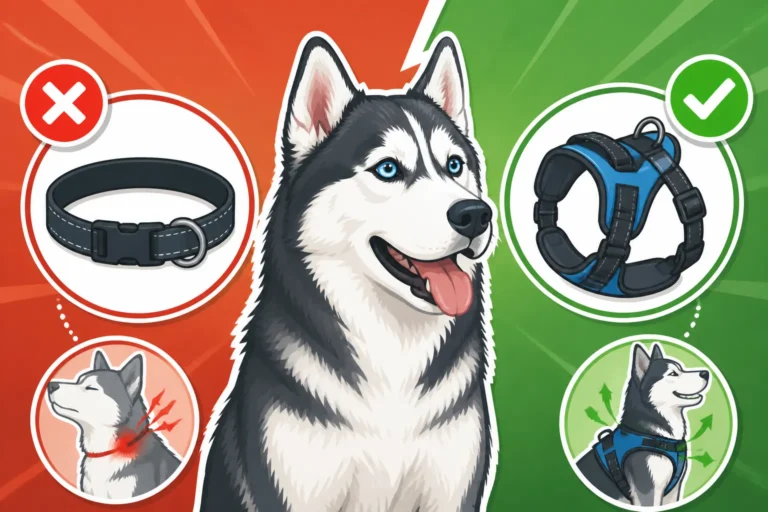
The emergency stop cue is precisely that: for emergencies. It's an extra layer of protection, a final failsafe when all else has gone awry. Continue to use secure leashes and sturdy harnesses, ensuring they can't slip out. Regular practice of the emergency stop, using those super high-value treats (think Rewards That Beat the Siberian Husky Chase Instinct), will keep it sharp. Don't let it gather dust, but also don't overuse it in casual settings, as this will diminish its urgency. Consider integrating a GPS collar into your Husky's routine, as discussed in GPS Collars Worth Buying for a Siberian Husky, for another crucial layer of safety. This multi-layered approach to safety—preventive measures coupled with a reliable emergency cue—is the most responsible way to enjoy life with your adventurous Siberian Husky.
| Feature | Regular "Stay" / "Come" | Emergency Stop Cue |
|---|---|---|
| Purpose | General obedience, polite waiting, returning to handler | Immediate, absolute halt in dangerous situations |
| Cue Word | Common, often used | Unique, sharp, reserved only for this purpose |
| Reward Value | Good treats, praise | EXTREMELY high-value treats (highest possible) |
| Distraction | Low to moderate | High (e.g., prey drive, other dogs, traffic) |
| Response Time | Expected quickly, but allows for thought | Instant, reflexive, no hesitation |
| Practice Env. | Varied, everyday situations | Controlled, safe, gradually increasing challenge |
| Consequences | Minor disappointment if ignored | Potentially life-saving if obeyed, dangerous if ignored |
Disclaimer
This article is for general informational purposes only and does not constitute professional advice. Laws, prices and regulations vary by location and change over time. Consult a qualified professional for guidance on your specific situation.