Training an Independent Siberian Husky
Oh, the independent Siberian Husky! If you've ever owned one, you know that "independent" is often a polite way of saying "stubborn" or "selective listener." It's incredibly frustrating when you're trying to teach your beautiful, intelligent Husky something, and they look at you like you're speaking a foreign language, only to perform a perfect sit-stay for a dropped crumb. This guide is all about navigating that unique Husky mindset, offering realistic strategies to build a strong bond and train your independent companion effectively.
Understanding the Siberian Husky Mindset: Why They're "Stubborn"
Many new Siberian Husky owners quickly find themselves scratching their heads, wondering why their seemingly intelligent dog just won't "get it" or, more accurately, choose to get it. It's not that your Husky is unintelligent; quite the opposite. They are incredibly smart, but their intelligence is paired with a deep-seated independence that sets them apart from many other breeds. This isn't a flaw; it's a feature, hardwired into their very being.
The Historical Roots of Independence
To truly understand why your Siberian Husky might seem to march to the beat of their own drum, you have to look back at their history. These dogs were bred by the Chukchi people in Siberia, not as companions to dote on, but as essential working animals. Their primary role was to pull light loads over vast, often monotonous distances, often without direct human supervision. Imagine miles and miles of frozen tundra; a dog that constantly looked back at its handler for instructions would be inefficient and easily distracted from the trail. They needed to make decisions on their own, conserve energy, and stay focused on the task at hand, even if it meant navigating tricky ice or poor visibility without a human telling them precisely where to go. This inherent self-reliance is why you might feel like your Husky is constantly weighing the pros and cons of your requests. They're not being defiant just to be defiant; they're simply acting on centuries of selective breeding that favored dogs who could think for themselves.
This instinct means that your Husky often assesses a command based on its immediate relevance or reward, rather than an innate desire to please. They'll perform if the motivation is high enough, or if they genuinely see the value in it. It's a deep part of The Chukchi Origins of the Siberian Husky and understanding this heritage is the first step toward effective training.
"What's In It For Me?" The Husky Motivation
This is the golden question every Husky owner eventually learns to ask. Unlike some breeds that live to please their owners, the Siberian Husky operates on a more transactional basis. They are willing to work, but they need a compelling reason. "Good boy" and a pat on the head might work for a Golden Retriever, but for a Husky, it's often met with a skeptical glance. They want to know what tangible benefit they receive for expending energy or foregoing an interesting scent or chase. This isn't greed; it's efficiency. Their metabolism is incredibly efficient, and their ancestors had to conserve energy for survival and work.
This means you need to become an expert at finding what truly motivates your individual Husky. Is it a high-value treat like boiled chicken or cheese? Is it a favorite squeaky toy? Is it access to a preferred activity, like a quick game of fetch or permission to sniff a particularly intriguing bush? The better you understand your Husky's personal economy of rewards, the more successful your training will be. You'll often find that what works one day might be ignored the next, which is just another layer of the Husky charm! It requires you to be creative and flexible.
For instance, my own Husky, Luna, will perform a perfect recall for a piece of hot dog in a training class, but if we're out on a long line in a field with interesting smells, only a prime piece of jerky or the chance to chase a flung stick will get her attention. You need to always be the casino with the best payouts.
Intelligence vs. Compliance
It’s crucial to distinguish between intelligence and compliance when evaluating your Husky. Siberian Huskies are undeniably intelligent. They can learn commands quickly, figure out complex puzzles, and even outsmart their human companions when it comes to opening gates or breaking out of crates. However, their intelligence doesn’t automatically translate into eager obedience. They often understand what you want them to do, but they'll make an independent decision on whether they want to do it at that precise moment.
This intellectual independence is why consistency is so paramount. If you only enforce a command sometimes, your Husky quickly learns that it’s optional. They’ll also remember what they got away with yesterday. For example, if you sometimes let them pull on the leash to greet another dog, they'll assume that's an acceptable behavior to try again later, even if you're trying to teach a loose-leash walk. It's not that they don't understand the "loose leash" cue; it's that they've learned there are situations where pulling gets them what they want. Their smarts work against you if you're not absolutely clear and consistent with your expectations.
Think of it like a brilliant teenager who knows exactly what homework needs to be done but chooses to play video games instead because the immediate reward is greater. Your Husky is often doing the canine equivalent.
Building a Foundation of Trust and Respect: The Human-Dog Bond as Key
With a breed as independent as the Siberian Husky, traditional "domination" or force-based training methods often backfire spectacularly. They might shut down, become anxious, or even become more determined to ignore you. Instead, the most effective approach is to build a strong bond based on trust, mutual respect, and positive reinforcement. This bond isn't just about cuddles (though those are great!); it’s about your Husky viewing you as a reliable, fair, and ultimately beneficial leader in their lives.
The Importance of Consistency and Predictability
For a Husky, consistency isn't just a good idea; it's absolutely vital. They thrive on knowing what to expect from their environment and from you. If your rules change from day to day, or even from person to person within the household, your Husky will quickly become confused and, more often than not, revert to making their own decisions. This includes everything from feeding schedules to walk times to the enforcement of commands.
A consistent routine helps your Husky feel secure and understand their place in the household. It reduces anxiety and provides a framework for learning. For example, if "sit" always means "sit" and always results in a reward, your Husky will eventually develop a habit of offering a sit. If sometimes "sit" is optional, and other times you get angry when they don't, they learn that your cues are unreliable. Everyone in the family needs to be on the same page, using the same commands and enforcing the same rules. It’s hard work, especially with such a smart and observant breed, but it pays off exponentially. A predictable environment builds trust, as they learn that you are a stable force in their world, not a chaotic one.
Positive Reinforcement and High-Value Rewards
As we touched on earlier, Huskies need motivation. Positive reinforcement is the only way to go. This means rewarding desired behaviors immediately and consistently. Punishment, scolding, or harsh corrections will only damage your bond and make your Husky less likely to engage with you. They won't understand why they're being punished, only that interaction with you sometimes results in an unpleasant experience. Instead, focus on making training a fun, rewarding game for them.
The key here is "high-value rewards." For many breeds, a standard dog biscuit or a cheerful "good job!" is enough. For a Husky, you need to bring out the big guns. Think small pieces of cooked chicken, cheese, hot dogs, or specially made soft training treats. These treats should be reserved only for training sessions, making them extra special and exciting. Vary your rewards to keep things interesting. Sometimes it's food, sometimes it's a quick game with a favorite toy, sometimes it's a burst of praise combined with a vigorous ear scratch. Food Rewards a Siberian Husky Will Work For delves deeper into finding those motivators. A clicker can also be a fantastic tool to mark the exact moment of a desired behavior, followed immediately by the high-value reward. BAXTER & Bella, for example, offers excellent online training resources that emphasize positive reinforcement and clicker training, which can be invaluable for Husky owners seeking structured guidance.
Becoming the Most Interesting Thing in Their World
This might sound like a tall order when your Husky is surrounded by a world of fascinating scents, potential wildlife, and endless exploration, but it's crucial for gaining their attention and cooperation. If you are boring, predictable, and your rewards are lackluster, why would your Husky choose to engage with you over the infinitely more exciting squirrel across the park? You need to make yourself exciting!
This involves interactive play, unexpected treats, and engaging training sessions. Don't just stand there barking commands; move, be animated, change up your voice, and make everything a game. Carry a variety of high-value treats and toys on walks. Practice unexpected recalls in varied environments. When your Husky looks at you, even for a second, reward that attention! Build a strong relationship through play, exploration, and adventure that always involves you. The stronger your bond, and the more they associate you with good things, the more willing they will be to listen, even when their independent streak is screaming otherwise. This is about being a partner, not just a commander.
Mastering Recall with an Independent Thinker: The Eternal Challenge
Ah, recall. The holy grail of Husky training, and often the source of endless frustration for owners. If there's one command that defines the challenge of training an independent Siberian Husky, it's getting them to reliably come back to you when called. Their instinct to run and explore is so powerful, so deeply ingrained, that it often overrides any desire to comply, especially if there's something more interesting out there.
The Myth of the Off-Leash Husky
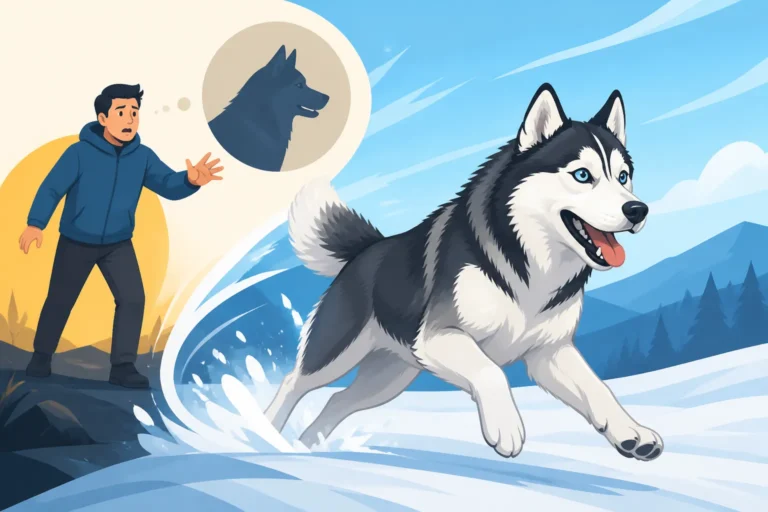
Let's be brutally honest: for the vast majority of Siberian Huskies, the idea of being reliably off-leash in an unfenced, uncontrolled environment is a dangerous fantasy. This isn't to say no Husky can ever achieve it, but it requires an extraordinary amount of dedication, a very specific temperament in the individual dog, and usually, a controlled environment. Why a Siberian Husky Cannot Be Trusted Off Leash really lays out the cold, hard truth. Their prey drive is high, their instinct to roam is strong, and their ability to tune out distractions can be legendary. One whiff of an interesting scent or a glimpse of a squirrel can trigger an immediate, irreversible chase response. Once that happens, your calls will often fall on deaf ears.
This isn't a moral failing on your part or your Husky's; it's simply who they are. Accepting this reality is vital for their safety and your peace of mind. It means understanding that dog parks need to be truly secure, that hikes require long lines, and that your backyard fence needs to be Husky-proof. Don't set your Husky up for failure by expecting them to be something they're not. Instead, focus on safe, secure ways for them to exercise and explore, always with a backup plan for their inherent wanderlust.
Starting Recall Training Early and Often
Even if you accept that off-leash reliability is a long shot, impeccable recall training is still one of the most important commands you can teach your Siberian Husky. It's a safety net, a life-saving skill that can prevent them from bolting into traffic or chasing after wildlife. The key is to start early, practice constantly, and make it the most rewarding thing your Husky can ever do.
Begin recall training in a quiet, enclosed area with minimal distractions. Start with your Husky on a long line, perhaps 15-20 feet, to give them a sense of freedom while maintaining control. Say your recall cue enthusiastically (choose a unique word, like "Come!" or "Here!"), and as soon as your Husky takes a step toward you, start backing up and praising, making yourself exciting. When they reach you, lavish them with their absolute highest-value reward – a piece of cheese, a toy, enthusiastic praise. Make it a party! Never call your Husky to you for something unpleasant, like a bath or to end a fun activity, unless you immediately give them a reward and then release them. You want "come" to always mean "good things happen here." Gradually increase distractions and the length of the long line, but always ensure success. If you call them and they ignore you, you've asked for too much too soon, and you've just taught them that "come" is optional. Teaching a Siberian Husky to Come Back elaborates on these crucial steps.
The Emergency Stop Cue
Beyond the regular recall, it's incredibly helpful to train an "emergency stop" cue. This is a command, usually a unique word like "Freeze!" or "Stop!", that means your Husky should drop whatever they are doing and lie down instantly, regardless of distractions. This command should be reserved for true emergencies and always practiced separately from your standard recall. The idea is to associate it with an even higher level of reward and urgency.
You train this by starting in a low-distraction environment. With your Husky on a long line, ask for a "down" from a distance. As they drop, run to them with the ultimate jackpot reward, showering them with praise. Practice this many, many times. The goal is that when you use this word, your Husky's immediate response is to hit the dirt, knowing that the most amazing reward is about to appear. This cue is not for everyday use; its power comes from its rarity and the incredible payoff associated with it. If your Husky is about to bolt into a dangerous situation, this could be the command that saves their life. It helps to have a reliable way to interrupt Why a Siberian Husky Look Stubborn Rather Than Slow when their independent decision-making takes over in a crisis.
Leash Manners: Channeling the Pulling Instinct
Walking a Siberian Husky can feel like a full-body workout if you haven't mastered leash manners. Their very purpose was to pull, so asking them not to pull is asking them to go against generations of selective breeding. This doesn't mean it's impossible, but it does mean you need the right tools, consistent training, and realistic expectations.
Harnesses: Tools for Control vs. Encouraging Pull
Choosing the right walking equipment for a Siberian Husky is crucial. Many owners instinctively reach for a standard back-clip harness, which distributes pressure across the chest and shoulders. While comfortable for the dog, this type of harness actually encourages pulling, as it allows them to lean into their natural sled dog instincts with maximum leverage. It's like giving a sled dog a better hitch! For actual pulling sports like canicross or bikejoring, these harnesses are perfect. But for loose-leash walking, they can be counterproductive.
Instead, consider a front-clip harness (like the popular Easy Walk harness or a balance harness with a front clip option). These harnesses have a leash attachment point on the dog's chest. When your Husky pulls, the leash redirects their momentum to the side, turning them back towards you and making it uncomfortable to pull straight ahead. This makes pulling less rewarding and helps them learn to walk beside you. Another option is a head halter (like a Gentle Leader or Halti), which gives you steerage from the head, similar to a horse halter. These can be very effective but require careful introduction to prevent negative associations. It's essential to understand Harness Against Collar for a Siberian Husky before making a choice, and always ensure any equipment is properly fitted to prevent rubbing or discomfort.
Teaching "Loose Leash Walking" and "Pull" Cues
The most effective way to manage a Husky's pulling instinct is to teach them two distinct cues: "loose leash walking" (which means no pulling) and a "pull" cue (which means it's okay, even encouraged, to pull in a harness). This gives their natural instinct an appropriate outlet without making every walk a tug-of-war.
For "loose leash walking," start in a low-distraction area. Every time your Husky walks with a loose leash, mark the behavior (with a clicker or verbal cue like "Yes!") and immediately reward with a high-value treat. If they start to pull, immediately stop walking. Don't say anything, just become a tree. The moment the leash loosens, even for a second, praise, reward, and start walking again. Your Husky will quickly learn that pulling gets them nowhere, but a loose leash keeps the walk moving and gets them treats. Practice frequently and be patient; this takes time and consistency.
For the "pull" cue, put a separate pulling harness on your Husky (a specific one for sports, not your walking harness). Introduce a command like "Mush!" or "Go!" when you want them to pull. This teaches them that pulling is only acceptable when they're wearing the special harness and hear the special cue. Teaching a Siberian Husky to Pull in Harness can provide even more detail on how to introduce this. Using different equipment for different activities helps them differentiate between expectations.
Walking Multiple Huskies
If you're lucky enough to have more than one Siberian Husky, walking them together can be an exhilarating, if challenging, experience. Their pack mentality can amplify their pulling power, making it feel like you're being dragged by a small sled team. The key here is to first ensure both dogs have excellent individual leash manners before attempting to walk them together. Trying to fix individual pulling issues while walking two dogs at once is a recipe for disaster.
Once they're proficient individually, you can introduce walking them together. Use a coupler or a double-ended leash to manage both dogs. Again, consistency is paramount. If one dog pulls, stop both dogs. Reward both dogs when the leashes are loose. It can be incredibly helpful to have another person assist you initially, with each person handling one dog on a separate leash, working on the "loose leash" principle simultaneously. Gradually, you can transition to one person handling both. Remember to use high-value treats for both dogs, ensuring they both see the benefit of walking nicely as a team. This also helps with Siberian Huskies With Other Dogs in terms of cooperative behavior.
Addressing Destructive and Escaping Behaviors: Managing Independence Gone Wrong
The independent nature of a Siberian Husky, combined with their intelligence, high energy, and problem-solving skills, often manifests in ways that can be challenging for owners: escape artistry and destructive behaviors. These aren't necessarily malicious acts; they're often boredom-driven, instinctual, or a result of their desire to explore and be active.
Preventing Escapes: Fencing and Supervision
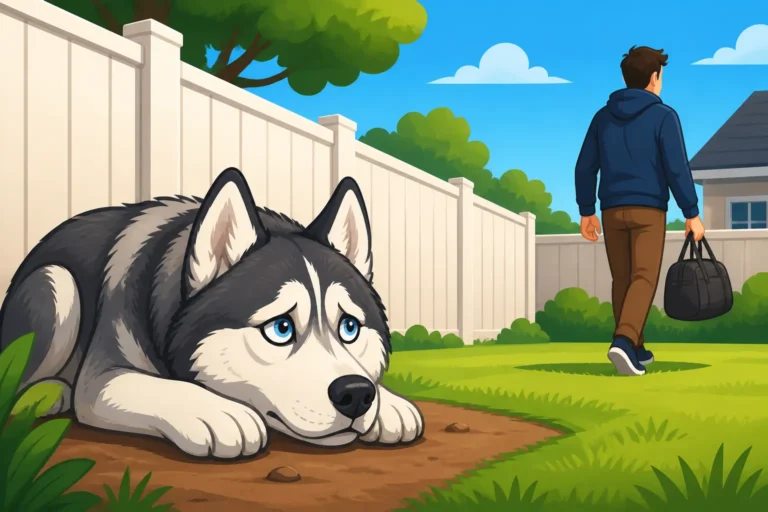
Siberian Huskies are legendary escape artists. They can jump, climb, dig, and even figure out latches with astonishing ingenuity. Their roaming instinct is incredibly powerful, and a standard four-foot fence often presents no challenge at all. Stopping a Siberian Husky From Escaping the Yard is something every Husky owner needs to master. A minimum six-foot fence is highly recommended, and even then, many Huskies can clear it with a running start or by scaling chain link like a ladder. The fence should be solid or have mesh too small for them to get a foothold.
Crucially, you need to think about what's under the fence too. Huskies are champion diggers. Burying fence wire (an L-footer or "dig guard") or concrete along the perimeter of your fence is essential to prevent them from tunneling out. For gates, simple latches are no match. Consider double-bolting mechanisms or carabiners that they can't easily manipulate. Never leave a Husky unsupervised in a yard, especially if it's not absolutely escape-proof. Many Huskies will seize any opportunity, even a momentary lapse, to explore beyond their boundaries. A GPS tracker on their collar can be a lifesaver, but prevention is always better than recovery.
Managing Destructive Chewing and Digging
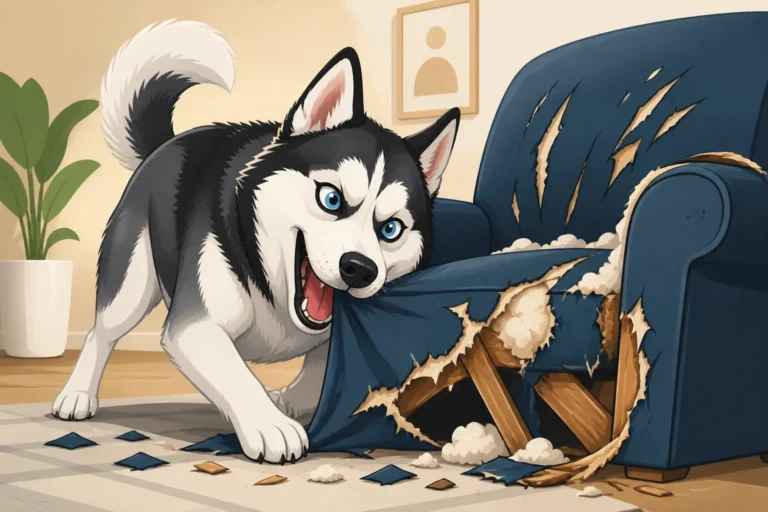
A bored or under-exercised Husky is a destructive Husky. Their powerful jaws, combined with their need for mental and physical stimulation, mean they can quickly chew through furniture, drywall, or personal belongings. Digging is another natural instinct, whether it's to create a cool spot in the dirt on a warm day or simply for the sheer enjoyment of excavating.
The primary solution for both issues is sufficient exercise and mental stimulation. A tired Husky is a good Husky. This means daily vigorous exercise – not just a stroll around the block, but running, hiking, or dog sports. Mentally, they need puzzle toys, interactive feeders (like those found on Amazon that make them work for their food), and regular training sessions to keep their brains engaged. When you can't actively supervise them, provide appropriate chew toys. Offer a variety of textures and challenges to keep them interested. Rotate toys to prevent boredom. If they are digging in the yard, consider designating a "digging spot" (a sandbox or a specific corner) and encouraging them to dig there by burying treats or toys, redirecting the instinct to an acceptable area. If they are a true "bar bender" or "crate destroyer," Choosing a Crate a Siberian Husky Cannot Bend is essential for their safety and your peace of mind when you cannot supervise.
Dealing with Separation-Related Behaviors
While not all Huskies suffer from severe separation anxiety, their pack-oriented nature and high energy can sometimes lead to destructive behaviors or excessive howling when left alone. This isn't necessarily anxiety in the clinical sense, but often boredom or frustration at being confined.
To mitigate this, ensure your Husky gets plenty of exercise before you leave. A good, long run or a vigorous play session can make them more inclined to nap while you're gone. Create a safe, comfortable "den" for them, whether it's a sturdy crate or a designated room. Provide long-lasting, engaging chew toys or puzzle feeders that will keep them occupied for a while. Start with short absences and gradually increase the duration, always making your departure and return low-key and calm. Avoid making a big fuss when you leave or come back, as this can heighten their anticipation and anxiety. For more significant issues, a professional trainer or veterinary behaviorist can help differentiate between boredom and true separation anxiety and develop a tailored plan.
Keeping Training Fun and Engaging: Beating Boredom and Repetition
Siberian Huskies get bored easily. Repetitive drills or long, monotonous training sessions will quickly lead to them "tuning you out." Their independent spirit means they need to feel like they're participating in something interesting, rather than just being ordered around. The key to success with a Husky is to keep training sessions short, varied, and genuinely enjoyable for both of you.
Short, Varied Training Sessions
Forget those half-hour obedience classes where you do the same "sit, stay, come" routine over and over. For a Husky, training sessions should be brief – five to ten minutes at most – and packed with variety. Break up your training throughout the day rather than doing one long session. Practice a few commands, then play a quick game of fetch, then work on a new trick, then go for a sniff walk. This keeps their minds fresh and prevents them from getting mentally fatigued or bored.
Think of it as micro-training. Sneak in commands while you're waiting for coffee to brew, during commercials, or when you're preparing dinner. Ask for a "sit" before opening the door, a "down" before they get their meal, or a "stay" while you put on your shoes. This integrates training into daily life, making it less of a chore and more of an interactive partnership. Keeping a Siberian Husky Interested in Training is all about this dynamic approach. Remember, every positive interaction is an opportunity to reinforce your bond and their learning.
Utilizing Their Instincts: Scent Work and Puzzles
Siberian Huskies have incredibly keen noses and a natural desire to work and solve problems. Capitalize on these instincts! Scent work, even at an amateur level, is fantastic for mental stimulation. Hide treats around the house or yard and let your Husky "hunt" for them using their nose. Start easy and gradually make it more challenging. This taps into their primal foraging drive and provides immense mental satisfaction.
Puzzle toys and interactive feeders are also invaluable. Rather than just putting food in a bowl, make your Husky work for it. There are many excellent options available on Amazon, from snuffle mats to dispenser toys, that require them to nudge, roll, or manipulate the toy to get their kibble or treats. These aren't just toys; they're brain games that tire a Husky out mentally, which is just as important as physical exercise. These activities fulfill their independent problem-solving nature in a constructive way, making them less likely to invent their own "puzzles" (like disassembling your couch).
Harness Sports as a Training Outlet
Siberian Huskies were bred to pull, and denying them that outlet can lead to frustration and unwanted behaviors. Harness sports like canicross (running with your dog pulling you), bikejoring (cycling with your dog pulling), scootering, or even just recreational pulling with a cart or sled, are fantastic ways to channel their natural instincts. These activities provide intense physical and mental exercise and give your Husky a "job," which is incredibly fulfilling for them.
When engaged in a harness sport, your Husky isn't being asked to suppress their natural urge to pull; they're being encouraged to do it. This provides a release and often makes them much more amenable to loose-leash walking or other obedience training when they're not in their pulling harness. It teaches them to work with you as a team, strengthening your bond in a unique way. Introducing these sports also teaches them specific cues like "Gee" (right) and "Haw" (left), which further engages their minds. Think of it as specialized training that builds confidence and focus, which can then spill over into other areas of their lives.
Socialization for the Independent Husky: Other Dogs and People
Siberian Huskies are generally friendly, but their independence can sometimes translate into selective social skills. They might be boisterous with other dogs or aloof with strangers. Proper, ongoing socialization is key to ensuring they are well-adjusted and comfortable in various situations, even if they'll never be the life of every party.
Early and Ongoing Positive Exposures
Socialization isn't just for puppies; it's an ongoing process throughout a Husky's life. From a young age, expose your Siberian Husky puppy to a wide variety of sights, sounds, people, and other well-mannered, vaccinated dogs in a positive and controlled manner. Puppy classes are excellent for this. Continue these exposures throughout their adolescence and adulthood. Take them to different parks, busy urban areas, quiet rural spots, and introduce them to people of all ages, shapes, and sizes.
The goal is not necessarily for your Husky to love every single dog or person they meet, but for them to be comfortable, calm, and neutral in their presence. Reward calm behavior around novel stimuli. For instance, if you're sitting on a bench at a park and your Husky calmly watches people pass by without barking or lunging, reward that! Avoid forcing interactions if your Husky is showing signs of discomfort; instead, create distance and make the experience positive from afar. A well-socialized Husky is generally more confident and less likely to react negatively out of fear or over-excitement, making them a more pleasant companion in public.
Managing Prey Drive
A significant aspect of Husky independence is their strong prey drive, a remnant of their hunting ancestors. This means that small, fast-moving animals – squirrels, rabbits, cats, and even small dogs – can trigger an intense chase response. Siberian Husky Prey Drive Around Small Animals is not something that can be "trained out" of them; it's an instinct that must be managed responsibly.
If you have small pets in your home (cats, rabbits, etc.), early and careful introduction and management are absolutely critical. Never leave a Husky unsupervised with smaller animals, even if they seem to get along. Use gates, crates, and leashes to ensure safety. Outdoors, always assume your Husky will chase if given the opportunity. This reinforces the need for secure fencing and diligent leash handling. Work on a strong "leave it" command and an emergency stop cue, practicing it around distractions from a safe distance. While you can’t remove the instinct, you can teach your Husky to focus on you and disengage from prey under specific conditions and with high rewards.
Understanding Husky Greetings
Siberian Huskies often have a unique way of interacting with other dogs and people. They can be very playful and boisterous, sometimes to the point of being overwhelming for more reserved dogs. They might jump, nip playfully, or body-slam as part of their play style. While this is normal Husky behavior, it's important to teach them appropriate manners, especially when interacting with unfamiliar dogs or people.
When meeting new people, teach your Husky to keep four paws on the floor and offer a polite "sit" for attention. When meeting other dogs, observe their body language closely. If your Husky is too much, intervene and redirect them. Not every dog appreciates a full-speed, open-mouthed greeting. On the flip side, some Huskies can be aloof with strangers, preferring to ignore them rather than solicit attention. This is also perfectly normal and acceptable; they don't owe everyone their affection. Respect their boundaries while ensuring they are always calm and non-reactive in public settings.
When to Seek Professional Help: Recognizing Limits
Even the most dedicated Siberian Husky owner can hit a wall. There are times when their independent streak, combined with complex behavioral issues, might be beyond your ability to manage alone. Recognizing when to seek professional help isn't a sign of failure; it's a responsible choice that can lead to a happier, healthier relationship with your Husky.
Finding a Trainer Experienced with Primitive Breeds
If you decide to seek professional help, it is absolutely crucial to find a trainer who has extensive experience with "primitive breeds" or Nordic breeds like Siberian Huskies. Many trainers use methods that work wonderfully for Labs or Golden Retrievers but are completely ineffective, or even detrimental, for a Husky. A trainer who understands the Husky mindset – their independence, their motivation, and their unique challenges – will be far more equipped to help you.
Avoid trainers who advocate for harsh corrections, choke chains, prong collars as primary training tools, or "alpha" theory (dominance-based training). These methods typically break a Husky's spirit or make them more resistant, rather than fostering cooperation. Look for trainers who emphasize positive reinforcement, force-free methods, clear communication, and building a strong relationship. Ask about their experience with Huskies specifically. A good trainer will be a partner, guiding you to understand your Husky better and giving you the tools to continue training effectively. Finding a Trainer Who Has Worked With Huskies is a critical step for success.
Recognizing When You're Out of Your Depth
There's no shame in admitting you're struggling. Huskies can present unique and formidable challenges. If you're consistently feeling frustrated, overwhelmed, or finding that your Husky's behaviors are becoming dangerous (e.g., aggression, extreme escape attempts, severe destruction), it's time to call in the cavalry. These issues rarely resolve themselves and can escalate over time.
Signs you might be out of your depth include:
- Despite consistent effort, you see no improvement in a problem behavior.
- The behavior is causing significant stress for you or your family.
- Your Husky's safety (or the safety of others) is at risk due to their behavior.
- You're feeling a breakdown in your bond with your Husky.
A qualified professional can offer an objective perspective, identify underlying causes of behavior, and develop a personalized training plan that you might not have considered. They can teach you new communication techniques and help you rebuild confidence.
Behavioral Consultations vs. Basic Obedience Classes
When seeking professional help, understand the difference between a group obedience class and a private behavioral consultation.
Group Obedience Classes: These are fantastic for basic manners, socialization in a controlled environment, and building your general handling skills. They teach fundamental commands like sit, stay, come, and loose-leash walking. Most Huskies benefit greatly from these, especially if the class uses positive reinforcement and the instructor understands the breed. However, they may not be sufficient for complex behavioral problems.
Private Behavioral Consultations: If your Husky has specific, challenging behaviors like severe reactivity, aggression, intense separation distress, or chronic escape artistry that hasn't responded to basic training, a one-on-one consultation with a certified professional dog trainer (CPDT-KA) or a veterinary behaviorist (DACVB) is usually the more appropriate route. These sessions delve deep into the root causes of the behavior, take into account your Husky's individual history and environment, and provide a customized modification plan. A veterinary behaviorist, being a veterinarian, can also rule out any underlying medical conditions that might be contributing to behavioral issues.
Ultimately, training an independent Siberian Husky is a marathon, not a sprint. It requires patience, consistency, creativity, and a deep understanding of their unique personality and heritage. But the rewards – a strong, trusting bond and a well-adjusted companion – are absolutely worth every effort.
| Training Aspect | Common Husky Challenge | Effective Training Approach | Key Takeaways |
|---|---|---|---|
| Motivation | "What's in it for me?" attitude, easily bored | High-value rewards (food, toys), varied activities. | Be more interesting than the environment. |
| Consistency | Tests boundaries, remembers exceptions | Everyone in the household uses same cues & rules, always. | Predictability builds trust and reliable habits. |
| Recall | Strong prey drive, roaming instinct | Start early in low-distraction, proof heavily on long line, make it a party. | Off-leash reliability is rare; prioritize safety with fences and long lines. |
| Leash Walking | Bred to pull, powerful strength | Front-clip harness/head halter, teach "loose leash" vs. "pull" cues, consistency. | Give them an appropriate outlet for pulling (harness sports). |
| Escaping | Digging, climbing, problem-solving | Minimum 6ft fence, L-footers, secure latches, constant supervision, GPS tracker. | Never underestimate a Husky's determination to explore. |
| Destruction/Boredom | High energy, intelligent, needs mental stimulation | Ample exercise (physical & mental), puzzle toys (e.g., from Amazon), chew toys. | A tired Husky is a good Husky; fulfill instincts constructively. |
| Socialization | Can be boisterous or aloof, high prey drive | Early and ongoing positive exposures, manage prey drive, teach appropriate greetings. | Aim for calm neutrality, not necessarily universal adoration. |
| Professional Help | Unique breed traits, specific issues | Seek trainers experienced with primitive breeds, positive reinforcement methods only. | Don't hesitate to consult a CPDT-KA or DACVB for complex problems. |
Disclaimer
This article is for general informational purposes only and does not constitute professional advice. Laws, prices and regulations vary by location and change over time. Consult a qualified professional for guidance on your specific situation.