Leaving a Siberian Husky Alone in a Yard
It’s a common scenario: you need to leave for work or run errands, and your Siberian Husky is eyeing the door with that familiar independent glint. Many owners, especially those new to the breed, often wonder if leaving their Husky alone in the yard is a viable solution. The truth is, while a yard seems like a natural place for an active dog, a Siberian Husky's unique instincts and capabilities make it a far riskier proposition than most people realize. This guide will explore why leaving your Husky unsupervised outside can be fraught with peril, what makes them such expert escape artists, and alternative strategies to keep them safe and stimulated.
Understanding the Siberian Husky's Independent Nature and Drive
When we talk about leaving a dog alone in a yard, we often picture a docile pet sunbathing or casually patrolling its territory. With a Siberian Husky, you need to toss that image right out the window. Huskies were bred for endurance, for traveling vast distances, and for making decisions independently of their mushers. This isn't a breed that inherently values sticking close to home; their very essence is tied to exploration and movement.
The Roaming Instinct: A Deep-Seated Trait
From their Chukchi origins, Siberian Huskies were developed to cover miles of frozen terrain with minimal human direction. This deep-seated roaming instinct means that "home" isn't necessarily a boundary they feel compelled to respect. If there's an opening, a perceived adventure, or simply a change in wind direction, a Husky is wired to investigate. They aren't trying to escape you; they're simply following an internal compass that tells them to go. This is why you'll often hear us veteran owners say that a Siberian Husky cannot be trusted off leash, because that drive to run and explore almost always overrides any training, no matter how solid. For a deeper dive into this inherent drive, check out The Roaming Instinct Bred Into Every Siberian Husky.
Imagine you've left your Husky in the yard. To you, it's a safe, contained space. To them, it's a puzzle, a challenge, or merely a temporary stopping point before the real adventure begins. They don't have the same concept of property lines or fences as we do. If a squirrel darts past the fence, or another dog barks a few blocks away, their prey drive and wanderlust kick in, making the fence a mere suggestion.
Boredom and Lack of Stimulation
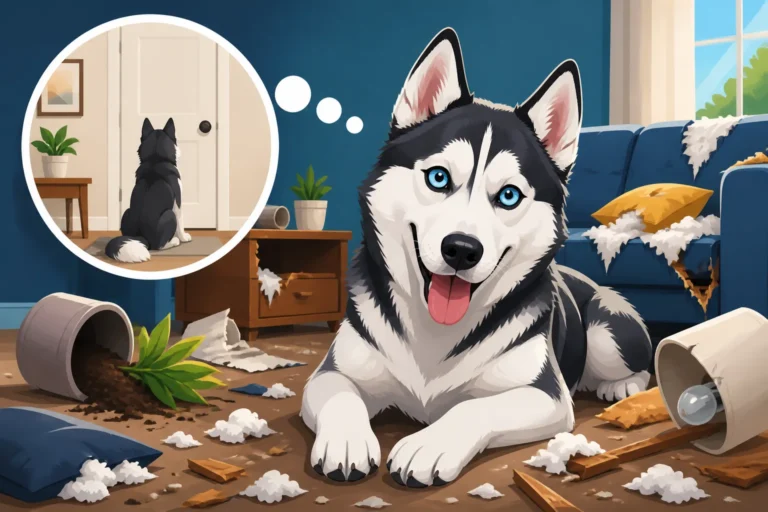
One of the biggest culprits behind Husky mischief – and escape attempts – when left alone in a yard is sheer boredom. These are highly intelligent, high-energy dogs. A static backyard, no matter how large, can quickly become monotonous without interaction or mental challenges. A bored Husky is a destructive Husky, and that destruction often targets the very barriers meant to contain them. They'll start digging, chewing, climbing, or figuring out how to open gates.
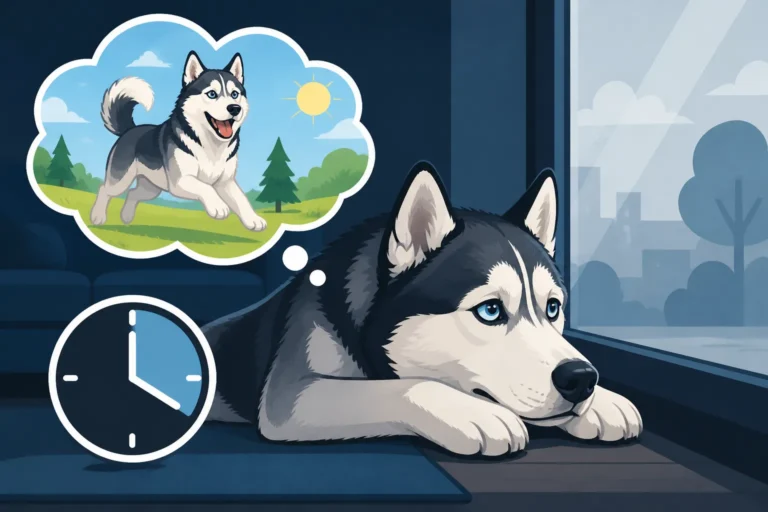
Consider a typical scenario: you leave your Husky for five hours. For the first 30 minutes, they might explore, sniff around, and do their business. After that, the novelty wears off. They've processed every scent, seen every bird. Now what? Their active minds and bodies crave engagement. Without it, that incredible intelligence turns to finding ways out of the enclosure, or through it, or under it. This isn't malice; it's instinct and unmet needs.
The Reality of Yard Security Against a Siberian Husky
Many owners believe their yard is "Husky-proof" because they have a six-foot fence. Sadly, a standard six-foot fence is often just a warm-up exercise for a determined Siberian Husky. Their athleticism, problem-solving skills, and sheer will to explore make them formidable escape artists.
Scaling, Digging, and Unlatching: The Husky Trilogy of Escape
Huskies are masters of three primary escape techniques:
- Scaling: They can jump incredibly high. A six-foot fence is often the bare minimum, and even then, some athletic Huskies can clear it, especially if there's anything nearby (a dog house, firewood, a snowdrift) that gives them a boost. They can also be surprisingly adept climbers, finding purchase in chain-link or even wooden planks. For more on this, read The Height a Siberian Husky Can Clear.
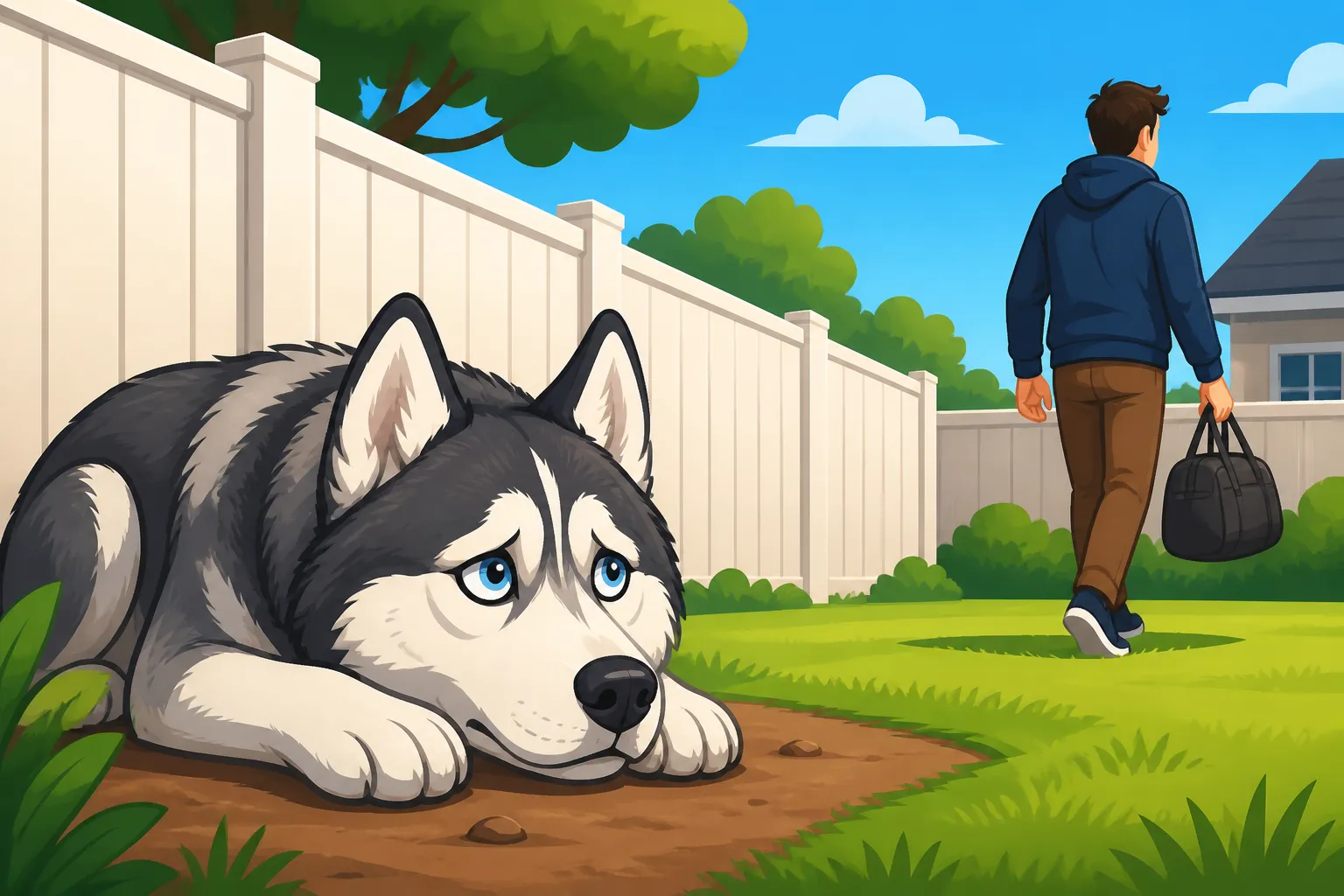
- Digging: It's in their DNA. Huskies were bred to dig snow dens for warmth and shelter. This natural inclination translates seamlessly to digging under fences. They can tunnel surprisingly quickly and effectively, especially if the ground is soft or if they've found a weak spot. A determined Husky can create a substantial escape route in a single afternoon. You'll want to check out Siberian Huskies That Dig Under Fences for more information.
- Unlatching: Huskies are problem solvers. They learn by observation and by trial and error. A simple gate latch might be child's play for a Husky who has watched you operate it a few times. Twist latches, simple slides, or even some lever handles can be manipulated by a clever snout or paw. They'll push, pull, chew, and jiggle until something gives. These smart cookies are often more resourceful than we give them credit for when it comes to Siberian Huskies That Open Gates and Doors.
| Escape Method | Husky Strategy | Owner Counter-Measure (Ideal) |
|---|---|---|
| Climbing | Jumping over, using objects as leverage, scaling fence posts | Minimum 6-foot fence, preferably 8-foot or angled top; remove nearby climbing aids |
| Digging | Tunneling under fence lines, creating weak spots | Burying fence wire (L-footer), concrete footing, large rocks along base |
| Unlatching | Manipulating gate latches, pushing open weak gates | Double-locking gates (carabiners, padlocks), self-closing hinges, complex latches |
| Bending/Chewing | Forcing weak points in fencing, chewing through wood | Sturdy, heavy-gauge materials (welded wire, solid wood panels); regular fence inspection |
The False Promise of Invisible Fences
Many new Husky owners, or those looking for a quick fix, consider invisible fences. While these can work for some breeds, they are almost universally ineffective and potentially dangerous for Siberian Huskies. An invisible fence relies on a static correction (a shock) to deter a dog from crossing a boundary.
Here’s why it fails a Husky:
- High Pain Tolerance: Huskies were bred for extreme conditions. A static correction that might deter a sensitive dog might barely register as an annoyance to a Husky, especially if the lure of a squirrel or an open field is strong enough. They’ll take the zap and keep running.
- One-Way Barrier: Once they've taken the correction to leave the yard, they've learned they can cross the boundary. The problem is, they then often won't cross back into the yard, fearing another correction. So, you end up with a loose Husky who is now afraid to come home.
- No Physical Barrier: The most critical point is that an invisible fence provides no physical barrier. It won't stop a child or another animal from entering the yard, nor will it prevent your Husky from bolting if truly motivated. For a more detailed explanation of why these systems don't work, refer to Why Invisible Fencing Does Not Hold a Siberian Husky.
The Dangers of Escape
When a Siberian Husky escapes, the dangers are immediate and severe. They can get hit by cars, become lost, injure themselves, or potentially injure other animals due to their high prey drive. An escaped Husky can also cause significant distress to neighbors, especially if they wander into yards with small pets or livestock. Why an Escaped Siberian Husky Is a Health Risk and Siberian Husky Prey Drive Around Small Animals both highlight these serious concerns.
Alternatives and Best Practices for Leaving Your Husky
Since simply turning your Husky loose in the yard isn't a safe long-term solution, what are the alternatives? The key is a multi-pronged approach that addresses their physical, mental, and safety needs.
Supervised Yard Time is Key
The absolute best practice is never to leave your Siberian Husky unsupervised in the yard. This means if they are outside, you are outside with them. Actively engaging them, watching for escape attempts, and providing direction. This might sound demanding, but it's the reality of owning a breed with such a powerful wanderlust.
If you absolutely must leave them for a short period, ensure your fencing is genuinely Husky-proof. This means an 8-foot fence, or a 6-foot fence with an inward-angled top to prevent climbing, and an L-footer (buried wire or mesh extending horizontally inward at the base of the fence) to prevent digging. Even with these measures, supervision is always the ideal. Consider installing Coyote Rollers on a Siberian Husky Fence as an extra deterrent for climbers.
Providing Ample Exercise Before You Leave
A tired Husky is a good Husky, but even a tired Husky still has that instinct to roam. However, adequate exercise before you leave can significantly reduce the likelihood of destructive boredom. A long walk, a vigorous run (if age and health permit), or a session of fetch can expend some of that boundless energy.
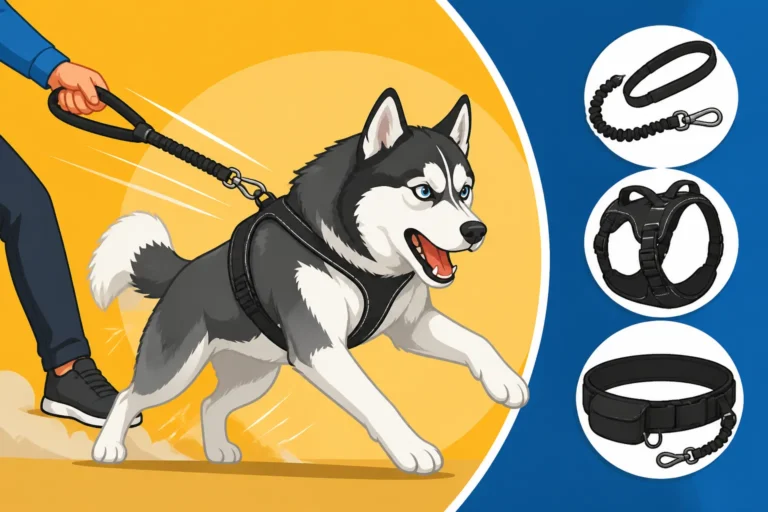
Aim for at least 60-90 minutes of vigorous activity before you need to leave them alone. This doesn't mean just letting them out to potty; it means intentional, heart-rate-raising exercise. Remember, a walk around the block isn't enough for this breed. They need to run. Consider activities like canicross or bikejoring if you have a suitable environment. How Much Exercise a Siberian Husky Really Needs is a great resource here.
Mental Stimulation and Enrichment
Physical exercise alone won't always cut it for these clever dogs. They need their brains worked too. Before you leave, provide them with mentally stimulating activities:
- Puzzle Toys: Fill puzzle toys or slow feeders with a portion of their meal or some high-value treats. Toys that require them to roll, chew, or manipulate parts to get food can keep them occupied for a good while. You can find a vast selection of these on Amazon.
- Chew Toys: Durable, appropriate chew toys can redirect destructive chewing away from your fence or garden furniture. Ensure they are safe and won't be easily destroyed and ingested.
- Scent Work: Hide treats around the yard (in safe, accessible spots) for them to sniff out. This taps into their natural foraging instincts and can be quite tiring mentally.
The Role of Crate Training
For many Husky owners, especially when they need to leave the house, crate training is not just a convenience, but a necessity. A properly introduced and comfortable crate provides a safe, secure den for your Husky indoors. This prevents them from escaping the yard, destroying your home, or getting into dangerous situations while you're away.
It's crucial that crate training is positive and gradual. The crate should be seen as a safe haven, not a punishment. Never force your Husky into a crate or use it for excessive periods. They should be able to comfortably stand, turn around, and lie down. If your Husky has separation anxiety, crating might still be challenging, but it's often safer than leaving them loose. For tips on managing anxiety in a crate, see A Siberian Husky That Panics in a Crate.
Professional Dog Walkers or Daycare
If your schedule means long periods away from home, consider professional help. A midday dog walker can break up the solitude and provide much-needed exercise and a potty break. Even 30 minutes of dedicated attention and walking can make a huge difference to a Husky's well-being.
Doggy daycare is another excellent option, offering supervised play, socialization, and constant mental and physical stimulation. This is particularly beneficial for younger Huskies with endless energy. Always vet daycares carefully to ensure they have staff experienced with active, strong breeds like Huskies and that their outdoor areas are secure.
Training for Independence and Boundaries
While a Husky's independence is innate, consistent training can help manage some behaviors. This isn't about eliminating their roaming drive, but about giving you more tools in your arsenal.
- Reliable Recall (Emergency Recall): Even if your Husky is contained, a strong recall is vital for any accidental escapes. Practice in a variety of environments, making coming back the most rewarding thing ever. Consider online resources like BAXTER & Bella, which offer comprehensive training programs that can be adapted for independent breeds like Huskies, helping you build a stronger bond and more reliable responses, even with their wanderlust. For more on developing this critical skill, look at Teaching a Siberian Husky to Come Back.
- Boundary Training (Supervised): Teach your Husky what "stay" or "wait" means at doorways and gates. This can prevent accidental dashes when someone comes to the door or when you're entering/exiting the yard.
Ultimately, leaving a Siberian Husky alone in a yard is a gamble. Their innate drive to explore, combined with their athletic prowess and intelligence, means that most yards are simply not sufficient containment for this breed when unsupervised. Prioritizing secure indoor containment (like a strong crate) or supervised outdoor time, coupled with ample exercise and mental stimulation, is the most responsible and safest approach for these magnificent dogs.
Disclaimer
This article is for general informational purposes only and does not constitute professional advice. Laws, prices and regulations vary by location and change over time. Consult a qualified professional for guidance on your specific situation.