Siberian Husky Coat Colors and Markings
Many aspiring Siberian Husky owners, and even those who've loved the breed for years, often find themselves captivated by their stunning appearance but confused by the vast array of coat colors and intricate markings. There's a lot of misinformation out there about what's "standard" versus "rare," leading to misunderstandings about what a healthy, well-bred Husky truly looks like. This comprehensive guide will unravel the official palette of Siberian Husky coat colors and distinct markings, helping you appreciate the true beauty and genetic diversity of these incredible dogs.
The Foundation: Understanding the Siberian Husky's Double Coat
Before diving into the dazzling array of colors and patterns, it's crucial to understand the very thing that makes a Siberian Husky so unique: its double coat. This isn't just fluffy hair; it's a marvel of natural engineering, perfectly designed for the harsh Arctic environments their ancestors faced. Every color and marking you see sits upon this fundamental structure, which plays a vital role in their health and comfort.
The Guard Hairs: Protection and Primary Color
The outer layer of a Siberian Husky's coat consists of what we call "guard hairs." These hairs are generally coarser, longer, and straighter than the underlying fur. Their primary purpose isn't just aesthetics; it's protection. They act as a weather-resistant shield, repelling water, snow, and dirt, and protecting the dog's skin from UV rays and minor abrasions. Think of it as their natural raincoat and sunscreen all in one.
The guard hairs are what give the Siberian Husky its primary visible color. Whether you see a striking black, a rich red, or a soft gray, it's the pigmentation in these outer hairs that dictates the overall hue. The quality and integrity of these guard hairs are paramount, which is why experts constantly warn against shaving a Siberian Husky. Why You Must Never Shave a Siberian Husky Removing this protective layer can lead to sunburn, improper regrowth, and a compromised ability to regulate body temperature. It's a fundamental part of what makes them a Siberian Husky.
The Undercoat: Insulation and Secondary Color
Beneath that protective layer of guard hairs lies the true secret to the Siberian Husky's adaptability: the dense, plush undercoat. This soft, downy fur is incredibly insulating, not just against extreme cold, but also surprisingly effective at insulating against heat. In winter, it traps warm air close to the body, keeping the dog toasty. In summer, it creates a barrier against external heat, allowing air to circulate and keep the skin cooler than you might expect.
The undercoat often has its own color, which can be different from the guard hairs. For instance, a black Siberian Husky might have a silver or even cream-colored undercoat. This secondary color can significantly influence the overall perceived shade of the dog. During seasonal shedding, known as "coat blow," this undercoat comes out in astonishing volumes, sometimes enough to stuff a small pillow. Managing this undercoat through regular brushing is essential for comfort and hygiene, and products found on sites like Chewy can be invaluable during these periods. Siberian Husky Coat Blow and the Six Weeks It Lasts
The Core Palette: Recognized Siberian Husky Coat Colors
The beauty of the Siberian Husky lies in the diversity within its breed standard. While they might not boast the same sheer number of colors as some other breeds, the variations within their recognized palette are stunning, ranging from stark contrasts to subtle blends. Understanding these core colors is key to appreciating the breed's natural elegance.
Black and White: The Classic Contrast
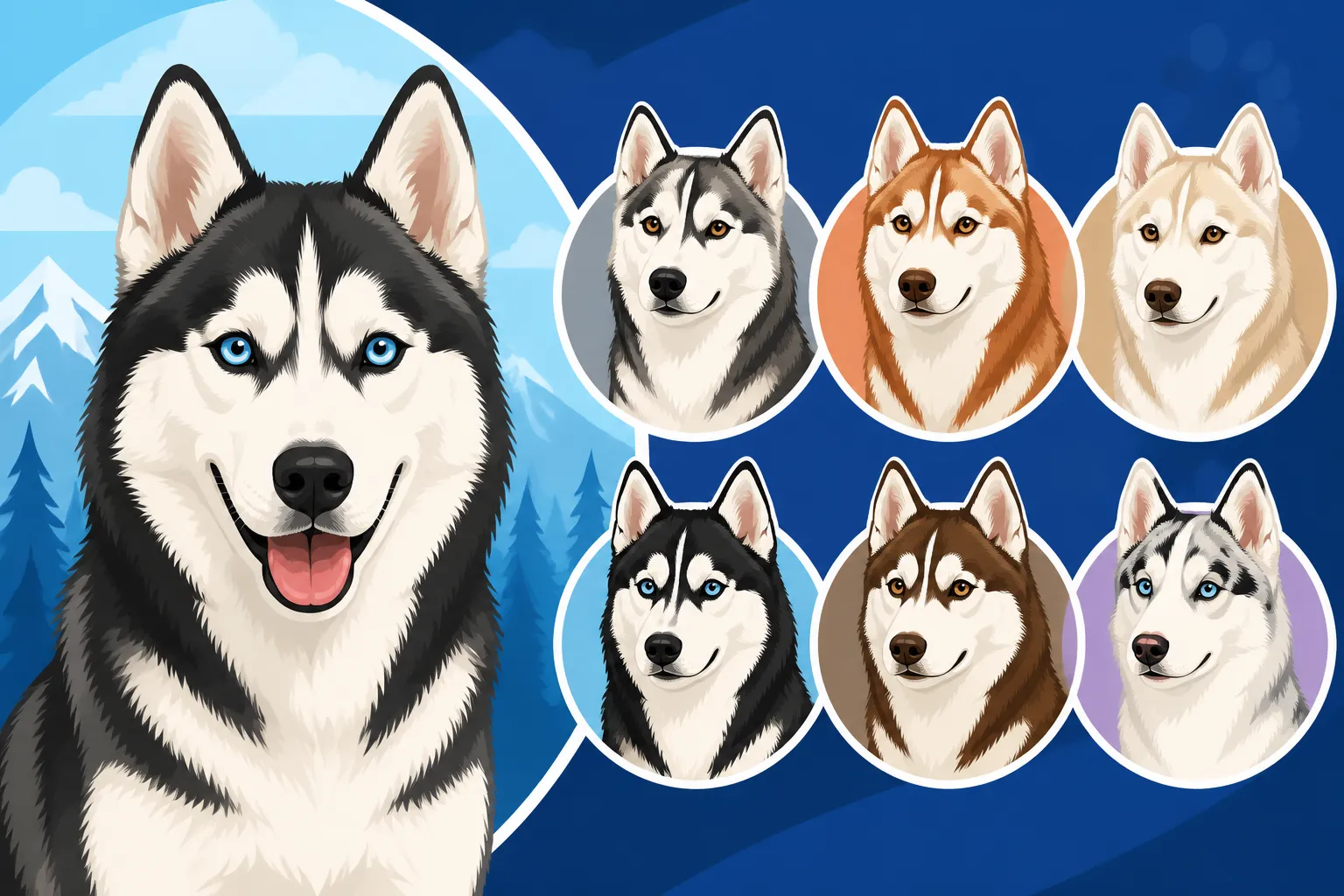
Perhaps one of the most iconic looks for a Siberian Husky is the striking black and white combination. This isn't just one shade; it encompasses a range from jet black, where the guard hairs are intensely dark, to a more diluted black, sometimes appearing almost charcoal or slate. The black is almost always paired with crisp white markings, usually on the legs, chest, belly, and face, creating a dramatic visual impact.
The amount of black can vary dramatically from dog to dog. You might see a Husky with a predominantly black body, perhaps with a "saddle" of black over its back, while others might have smaller black patches against a largely white canvas. What defines this category is the clear distinction and the absence of any red or brown tones in the dark areas. The black pigment usually extends to the nose and eye rims, providing a sharp, defined look that truly makes those famous eyes pop, whether they are blue, brown, or bi-colored.
Gray: A Spectrum of Shades
Gray Siberian Huskies are incredibly diverse, offering a spectrum that can sometimes be confusing. The most common is "wolf gray," which is often characterized by a rich blend of gray, tan, and sometimes a hint of fawn or red in the undercoat and banding of the guard hairs. This gives them that truly wild, untamed appearance, reminiscent of their wolf ancestors. Agouti and the Wolf-Gray Siberian Husky The hairs themselves are usually banded, meaning each individual hair has multiple colors along its shaft, which adds incredible depth and dimension to the coat.
Then there's silver gray, which tends to be a cleaner, colder gray with fewer or no fawn/reddish tones. These Huskies often have bright white markings that stand out against their cool gray fur. Regardless of the specific shade, gray Huskies typically sport black noses and eye rims. The beauty of a gray Husky often lies in its subtlety; a true appreciation comes from seeing the interplay of different shades as the dog moves in varying light, revealing the depth of their multi-toned coat.
Red and Copper: Warm Hues
For those who prefer warmer tones, the red and copper Siberian Huskies are absolutely breathtaking. This category spans from a light, almost ginger red to a deep, burnished copper that glows in the sunlight. Just like the black and grays, these warm hues are usually accompanied by white markings on the chest, legs, belly, and face, though sometimes the white can appear more cream-colored, blending softer with the red tones.
A distinguishing feature of red and copper Huskies is often their pigmentation. Instead of the typical black, their noses and eye rims are usually liver-colored, a rich brown that complements their warm coats perfectly. Red and Copper Siberian Huskies The intensity of the red can also vary with the season and sun exposure, sometimes deepening in summer months. These vibrant colors evoke images of autumn leaves and fiery sunsets, offering a softer yet equally striking aesthetic compared to their black and white counterparts.
Pure White: A Striking Absence of Color
A truly pure white Siberian Husky is a sight to behold and surprisingly rarer than many people assume. It's not an albino; true white Huskies possess pigmentation in their eyes (usually blue or brown) and typically have black noses and eye rims. The pure white coloration comes from a recessive gene that essentially masks all other potential coat colors, resulting in a solid white appearance across the entire body.
These Huskies stand out against any backdrop, looking almost ethereal. While some might have very faint, almost invisible cream or silver undertones, the ideal pure white Husky is devoid of any other distinct color. The All-White Siberian Husky Their pristine coats require a bit more attention to keep them looking their best, as dirt and grime tend to show more readily. The sheer elegance and striking contrast of a pure white Husky against its dark eye and nose pigmentation make it a truly memorable variation within the breed.
Here's a quick overview of these primary colors:
| Coat Color | Common Nose/Eye Rim Pigment | Typical Mask Presence | General Appearance |
|---|---|---|---|
| Black and White | Black | Yes, often defined | Striking contrast, from full black to black saddle |
| Gray | Black | Yes, varied | Wolf-like appearance, banded hairs, often with fawn/silver |
| Red and White | Liver | Yes, often lighter | Ranging from light copper to deep rust, often with white |
| Sable | Black | Yes, often heavy | Red-based with black tips, giving a smoky overlay |
| Pure White | Black | None or very faint | Solid white, not albino, with black pigment at nose/rims |
Patterns and Markings: Beyond the Solid Color
Beyond the base coat colors, Siberian Huskies are famous for their incredible range of patterns and markings. These aren't just random splashes; they are genetically determined and contribute immensely to the individuality and beauty of each dog. These patterns, especially on the face, are often what give Huskies their characteristic "wild" or "sly" expressions that so many people adore.
Piebald and Pinto: Patches of Color
When you see a Siberian Husky that looks like it's been painted with large, irregular splashes of color against a predominantly white background, you're likely looking at a piebald or pinto pattern. These terms are often used interchangeably, and they describe a dog where white is the dominant color, covering a significant portion of the body, with distinct, well-defined patches of another color (black, gray, or red) appearing irregularly.
The beauty of piebald and pinto Huskies lies in their uniqueness; no two are exactly alike. The patches can be large or small, symmetrically placed or completely random, creating a truly artistic canvas. Piebald and Pinto Siberian Husky Markings While the white areas may be vast, the colored patches must still be present and clearly defined for it to be considered a piebald pattern. These markings can sometimes lead to fascinating facial patterns, where a single patch might cover one eye or half of the face, adding to the dog's distinct charm.
Saddleback: Defined Color Areas
The saddleback pattern is another distinctive marking that defines a specific distribution of color on a Siberian Husky. In this pattern, a large, darker patch of color, often black or gray, covers the dog's back, extending from the shoulders down towards the tail, resembling a saddle. The rest of the dog, including the legs, chest, belly, and parts of the neck and head, is typically white.
The size and shape of the "saddle" can vary. Some Huskies might have a very expansive saddle that covers most of their torso, while others have a more defined, compact saddle. This pattern creates a beautiful contrast, highlighting the dog's muscular build and the clean lines of its silhouette. The white areas are usually bright, making the "saddle" stand out even more. It’s a very elegant pattern that is quite common and widely admired in the breed.
Agouti: Wild and Earthy Tones
The agouti pattern is perhaps one of the most misunderstood and fascinating coat types in Siberian Huskies, often confused with a darker wolf gray. An agouti Husky presents a multi-toned, earthy, and truly wild appearance. The key characteristic of agouti is that individual guard hairs are banded with multiple colors—typically black at the tip, followed by a red, tan, or fawn band, then black again closer to the skin. This banding gives the coat an incredible depth and a grizzled, "salt-and-pepper" effect that changes with movement and light.
What truly sets agouti apart from wolf gray is the overall impression and the distribution of color. Agoutis tend to have darker points: a dark mask, dark ears, a darker tail tip, and often dark markings on their legs. Their undercoats are frequently charcoal or dark gray. Agouti and the Wolf-Gray Siberian Husky This combination creates a rugged, primal look that is highly prized by those who appreciate the breed's ancestral heritage. It’s a complex and beautiful pattern that often takes a second look to fully appreciate its depth.
Special Color Variations and Their Nuances
While the core colors are well-defined, the Siberian Husky breed also presents a few variations and blends that add even more richness to their coat palette. These are recognized within the breed standard and showcase the subtle genetic dance that results in such striking individuals.
Sable: Red with Black Overlay
Sable is a truly beautiful and somewhat less common color variation that offers a sophisticated blend of red and black. At first glance, a sable Husky might appear red, but upon closer inspection, you'll notice that the guard hairs are tipped with black. This black tipping creates a smoky, shadowed effect over the red or copper base coat, giving the dog a unique depth and richness that’s often described as a "red with a black overlay."
The intensity of the black tipping can vary, from very subtle, almost imperceptible dusting to a more pronounced overlay that makes the red appear darker and more muted. Sable Huskies typically have black noses and eye rims, contrasting beautifully with their warm, complex coats. This color often presents with a very strong mask, further accentuating their features. Sable coats are a testament to the intricate genetic expressions within the breed, offering a distinct and elegant appearance.
Black: Not Just One Shade
When we talk about "black" in Siberian Huskies, it's important to understand that this isn't a monolithic color. There are nuances even within this category that differentiate one black Husky from another. A "jet black" Husky boasts an intense, deep black coat with minimal fading or lighter areas, making for a truly dramatic and glossy appearance. The guard hairs are saturated with pigment, and the undercoat might also be dark.
On the other hand, you can have a "dilute black" or "off-black" Siberian Husky. These dogs still appear black, but their coats might have a softer, slightly charcoal or slate-like tone rather than the intense depth of a jet black. The difference can sometimes be subtle, noticed more in certain lighting conditions. Regardless of the exact shade, a black Siberian Husky, when paired with bright white markings, creates one of the most iconic and recognizable looks of the breed, exuding power and elegance.
Copper: Richness and Depth
While often grouped with "red," copper Huskies deserve their own special mention for the sheer depth and vibrancy of their color. Copper is a more intense, darker shade of red, often described as having a warm, metallic sheen. It’s a color that truly catches the light, making the dog look radiant. These Huskies can range from a bright, coppery orange to a deep, rich penny-colored hue.
Like other red variations, copper Huskies typically have liver-colored noses and eye rims, which harmonizes beautifully with their warm coats. The white markings that accompany the copper can also sometimes have a creamy tint, softening the overall contrast compared to the stark white of black and white Huskies. Copper coats are particularly stunning against snowy landscapes or in bright sunlight, showcasing their natural glow.
Facial Masks and Accents: Defining Husky Expressions
One of the most captivating features of a Siberian Husky is its face. The intricate patterns and unique "masks" they wear are not just decorative; they define the dog's individual expression, giving each Husky a distinct personality even before you get to know them. These markings range from subtle highlights to dramatic, well-defined patterns that are instantly recognizable.
The Classic Mask: Common Patterns
The classic Siberian Husky mask is a signature trait, varying widely but always adding to their striking appearance. These masks are typically darker areas on the face that contrast with lighter fur, often forming distinct shapes around the eyes, muzzle, and forehead.
- Closed Mask: This is perhaps the most dramatic, where the darker color (black, gray, or red) covers most of the face, leaving only the muzzle, lower jaw, and sometimes a blaze between the eyes in white or a lighter shade. It gives the Husky a powerful, almost mysterious look.
- Open Mask: In an open mask, the darker color is less extensive, often forming "goggles" around the eyes and maybe a line extending up the forehead, but leaving more white or lighter fur on the cheeks and muzzle. This often results in a softer, more approachable expression.
- Spectacles: Some Huskies have what are charmingly called "spectacles," where distinct circles or rings of a lighter color (often white or cream) surround each eye, making them appear as if they're wearing glasses. This is a particularly endearing and common marking.
- Bar Mask: This mask features a distinct bar of color running from the forehead down the muzzle, often separating two lighter areas on the forehead. Siberian Husky Face Masks and Goggles These variations are a genetic lottery, making each Husky's face a unique work of art.
Goggles and Other Unique Face Markings
Beyond the classic mask types, Siberian Huskies can display an array of other facial accents that contribute to their unique charm. The "goggles" effect, for instance, goes beyond mere spectacles. In some cases, the lighter rings around the eyes are so pronounced and well-defined that they truly resemble a pair of snow goggles, perfect for a breed built for Arctic conditions. This marking often emphasizes the eyes, drawing attention to their captivating color.
Other unique facial markings can include specific blazes, which are white stripes running down the center of the forehead, sometimes splitting into an arrow shape. Some Huskies might have a "collar" marking, where a band of white circles the neck, sometimes extending up the cheeks. These intricate patterns not only make each Husky identifiable but also hint at their complex genetic heritage. The interplay of dark and light on their faces is one of the most beloved aspects of the breed, giving them their characteristic alert and intelligent expressions.
Eye and Nose Pigmentation: Finishing Touches
While coat colors and markings draw the initial gaze, the pigmentation of a Siberian Husky's eyes and nose are crucial finishing touches that complete their striking appearance. These elements are not just aesthetic; they often correlate with coat color and are essential markers of breed standard and overall health.
Eye Colors: Blue, Brown, and Bi-Eyes
The eyes of a Siberian Husky are legendary. While many breeds have a standard eye color, Huskies delight with a range of options, each adding to their mystique.
- Blue Eyes: Perhaps the most famous and distinctive, blue eyes in a Siberian Husky are intensely vibrant and often captivating. They are a common trait in the breed and, contrary to popular myth, do not indicate any vision problems or specific health conditions. The blue is often a clear, sky blue, though shades can vary.
- Brown Eyes: Just as beautiful and perhaps more common than blue, brown eyes can range from a light amber to a deep, dark chocolate. Brown eyes often give a Husky a warmer, softer expression.
- Bi-Eyed: One of the most intriguing variations is the bi-eyed Husky, meaning one eye is blue and the other is brown. This creates a uniquely asymmetrical and striking look. Bi-Eyed Siberian Huskies It’s entirely natural and doesn't affect their vision.
- Parti-Eyed (or Split Eye): Even rarer and more fascinating, a parti-eyed Husky has an iris that contains two distinct colors within the same eye, such as a swirl of blue and brown. Parti-Eyed Siberian Huskies This creates a marbled or fragmented appearance that is truly one-of-a-kind.
The diversity of eye colors in Siberian Huskies is a hallmark of the breed, a topic often discussed by enthusiasts. Siberian Husky Eye Colors and Heterochromia Each combination, whether matching or mismatched, contributes to the breed's allure and distinct charm.
Nose and Pad Pigmentation: Black, Liver, and Snow Nose
The color of a Siberian Husky's nose and paw pads is also an important aspect of their overall pigmentation and often aligns with their coat color.
- Black Pigment: For most black, gray, and white Huskies, the nose and paw pads will be a solid black. This provides a sharp contrast against lighter coats and complements darker ones. The eye rims are also typically black, creating a defined outline for their expressive eyes.
- Liver Pigment: In red and copper Siberian Huskies, the nose and paw pads are usually liver-colored, a rich brown that perfectly harmonizes with their warm coat tones. This is a genetic link, as the gene for red coat color often correlates with liver pigmentation in the nose and pads.
- Snow Nose (Winter Nose): A common and entirely normal phenomenon in Siberian Huskies is "snow nose," also known as "winter nose." This refers to a temporary loss of pigment on the nose, where the black or liver color fades to a pinkish shade, particularly during the colder months. Snow Nose Against Real Husky Pigment Loss The pigment usually returns in warmer weather, but sometimes it remains a lighter shade. It's not a health concern but a charming quirk of the breed. A Siberian Husky Nose That Loses Its Color
- Vitiligo: Occasionally, a Husky might experience vitiligo, a condition where patches of skin lose their pigment, including on the nose and around the eyes. This results in white or pink patches where there was once dark pigment. While visually striking, it is generally considered a cosmetic condition and typically doesn't impact the dog's health.
These seemingly small details in pigmentation collectively contribute to the Siberian Husky's stunning and varied appearance, making each individual dog uniquely beautiful.
Misconceptions and Unrecognized Variations
The internet and anecdotal stories are rife with claims about "rare" or "unusual" Siberian Husky coat types. While the breed is indeed diverse, it's important for prospective owners to understand what is truly recognized within the breed standard and what might be a misconception, a mixed breed, or simply a fault. This knowledge helps you appreciate the authentic beauty of the breed and avoid misinformation.
"Wooly" Coats: Beyond the Standard
One of the most common discussions surrounding non-standard Husky coats revolves around the "wooly" coat. A wooly Siberian Husky has a coat that is significantly longer, softer, and much fluffier than the standard double coat. While undeniably plush and appealing to some, it is considered a fault in the breed standard and can pose practical challenges for the dog.
The issue with a wooly coat isn't just aesthetic. The guard hairs are too long and soft, often lacking the coarse texture and protective qualities necessary to repel water and dirt effectively. This can lead to matting, especially behind the ears and in the "feathering" areas, making grooming a constant battle. More critically, a wooly coat often lacks the proper thermoregulatory function of a standard double coat. It can hold heat in summer, making the dog more prone to overheating, and in extreme cold, it can become waterlogged and lose its insulating properties. Wooly Coated Siberian Huskies While beautiful, a wooly coat means the dog isn't suited for the traditional working conditions of its ancestors and requires specialized care to manage.
"Merle" and Other Non-Standard Colors
Perhaps the most persistent and problematic misconception is the idea of a "merle" Siberian Husky. Merle is a specific genetic pattern that creates mottled patches of color and often affects eye color, producing blue or odd-colored eyes. While beautiful in breeds where it naturally occurs (like Australian Shepherds or Great Danes), merle does not exist in the purebred Siberian Husky gene pool.
Any dog advertised as a "merle Siberian Husky" is, without exception, a mixed breed. Responsible breeders of purebred Huskies do not produce merle-patterned dogs because the genes for merle are not present in the breed. Unfortunately, unscrupulous breeders sometimes cross Huskies with other breeds (like Australian Shepherds or Collies) to introduce the merle pattern, then market these mixed-breed puppies as "rare" or "designer" Huskies, often at inflated prices. Whether Merle Siberian Huskies Are Legitimate This practice can be detrimental, as merle genes, when doubled, can lead to serious health issues like deafness and blindness. Always be highly skeptical of any claims of "merle Huskies" – they are not purebred and often come from irresponsible breeding practices.
Other "rare" colors like "chocolate" or "lavender" are similarly outside the breed standard and usually indicate a mixed lineage. The recognized colors and patterns of the Siberian Husky are already incredibly diverse and beautiful, without needing to invent or introduce new ones from other breeds.
The Genetic Science Behind the Colors
Understanding the visible colors and markings of a Siberian Husky is enhanced by a basic grasp of the underlying genetics. While not all of us need to be canine geneticists, knowing a little about how these traits are inherited can demystify why puppies from the same litter can look so different and why certain color combinations arise. It’s a complex tapestry woven by dominant and recessive genes.
Basic Genetics of Coat Color Inheritance
Canine coat color is determined by a combination of genes at various loci (locations on a chromosome), with some playing a major role and others acting as modifiers. For Siberian Huskies, several key genes are at play:
- A Locus (Agouti Series): This locus controls the distribution of black and red pigments. Variations here lead to solid colors, sable, agouti, and tan points. The agouti gene is what gives some Huskies their "wild" wolf-like banded hairs.
- K Locus (Dominant Black): This gene determines whether a dog is solid black (dominant K), brindle (Kbr), or allows the A locus to be expressed (ky). In Huskies, it primarily contributes to whether a dog is solid black or allows other patterns to show.
- E Locus (Extension): This locus controls the presence and distribution of red pigment. For example, a dog with two copies of the recessive 'e' allele will be a clear red or yellow, regardless of what's at the A or K loci, as it prevents black pigment from being extended into the hair shaft. This is where red and copper Huskies get their color.
- B Locus (Brown/Black Pigment): This locus dictates whether the dog produces black pigment (dominant B) or brown/liver pigment (recessive b). This is why red Huskies often have liver noses and pads – they are genetically 'bb' (brown).
- S Locus (White Spotting): This series of genes is responsible for white markings, including piebald, pinto, and Irish spotting (common white on chest, feet, and face). Variations here dictate the extent and pattern of white on a Husky.
These genes, inherited from both parents, interact in complex ways to produce the final coat color and pattern we see. Understanding these basics explains why a particular pairing might produce a mix of black and white, gray, and red puppies, even if the parents look similar.
Predicting Puppy Coat Colors
Predicting the exact coat colors of a Siberian Husky litter can be a fascinating, though sometimes challenging, endeavor. Responsible breeders, with a deep knowledge of their dogs' pedigrees and genetic makeup, can often make educated guesses about potential colors and patterns based on the parents' known genetics and the colors of their ancestors.
For instance, if both parents carry the recessive gene for red (e/e at the E locus), then all their puppies will be red or copper. If one parent is solid black (dominant K) and the other is an agouti, the litter could be a mix. However, the presence of modifier genes and the sheer number of possible combinations mean that surprises are always possible, even for experienced breeders. Reputable breeders will be transparent about their dogs' genetic history and the likelihood of various colors, but they will never guarantee a specific "rare" color, especially if it falls outside the recognized standard. For owners looking for a specific look, discussing the genetic background of the sire and dam with a knowledgeable breeder is the best approach.
Caring for the Siberian Husky Coat, Regardless of Color
No matter the stunning color or intricate markings your Siberian Husky displays, one thing remains constant: the need for dedicated coat care. Their famous double coat is a marvel, but it requires regular attention to stay healthy, clean, and functional. Neglecting their coat can lead to matting, skin issues, and discomfort for your beloved companion.
Essential Grooming for All Coat Types
Regular brushing is the cornerstone of Siberian Husky coat care. This isn't just about making them look good; it's vital for their health and comfort. Their dense undercoat, especially during seasonal "blows" (which can happen twice a year, sometimes more), needs to be systematically removed to prevent matting and allow for proper air circulation to the skin. Siberian Husky Weekly Grooming Between Blows
You'll need a few key tools:
- Undercoat Rake: This is essential for getting deep into the undercoat and pulling out loose, dead fur without damaging the guard hairs.
- Slicker Brush: Useful for smoothing the topcoat and working out any smaller mats or tangles, particularly in areas like behind the ears or on the legs.
- Pin Brush: Great for general daily brushing and distributing natural oils.
- High-Velocity Dryer: While an investment, a good force dryer can save you hours of brushing during a coat blow by blasting out loose undercoat.
Aim for weekly brushing sessions, increasing to daily during periods of heavy shedding. Quality grooming tools and deshedding shampoos can be found readily from trusted pet supply retailers like Chewy, making it easier to manage the voluminous amounts of fur.
Protecting the Coat's Integrity and Health
Beyond brushing, several factors contribute to the overall health and integrity of your Siberian Husky's coat. A healthy coat is not just beautiful; it's a reflection of a healthy dog.
Firstly, reiterate the cardinal rule: never shave a Siberian Husky. This protective double coat is designed to insulate them from both heat and cold. Shaving it can lead to sunburn, a higher risk of skin cancer, improper regrowth that can ruin the coat's texture, and an inability to regulate their body temperature effectively. It's a disservice to the dog and their natural physiology.
Secondly, diet plays a massive role. A high-quality diet rich in essential fatty acids (like Omega-3 and Omega-6) is crucial for skin and coat health. Dull, dry, or brittle fur can often be a sign of nutritional deficiencies. Some Huskies, like those prone to Zinc-Responsive Dermatosis in the Siberian Husky, might even benefit from specific dietary supplements under veterinary guidance to maintain their coat and skin health.
Regular bathing should be kept to a minimum – only when truly necessary. Huskies are naturally clean dogs and frequent bathing can strip their coat of essential oils. When you do bathe them, use a dog-specific shampoo and conditioner, and ensure the coat is thoroughly dried, especially the undercoat, to prevent skin irritation or hot spots. Ultimately, a beautiful coat, regardless of its color or pattern, is a testament to diligent care and a healthy lifestyle.
Disclaimer
This article is for general informational purposes only and does not constitute professional advice. Laws, prices and regulations vary by location and change over time. Consult a qualified professional for guidance on your specific situation.