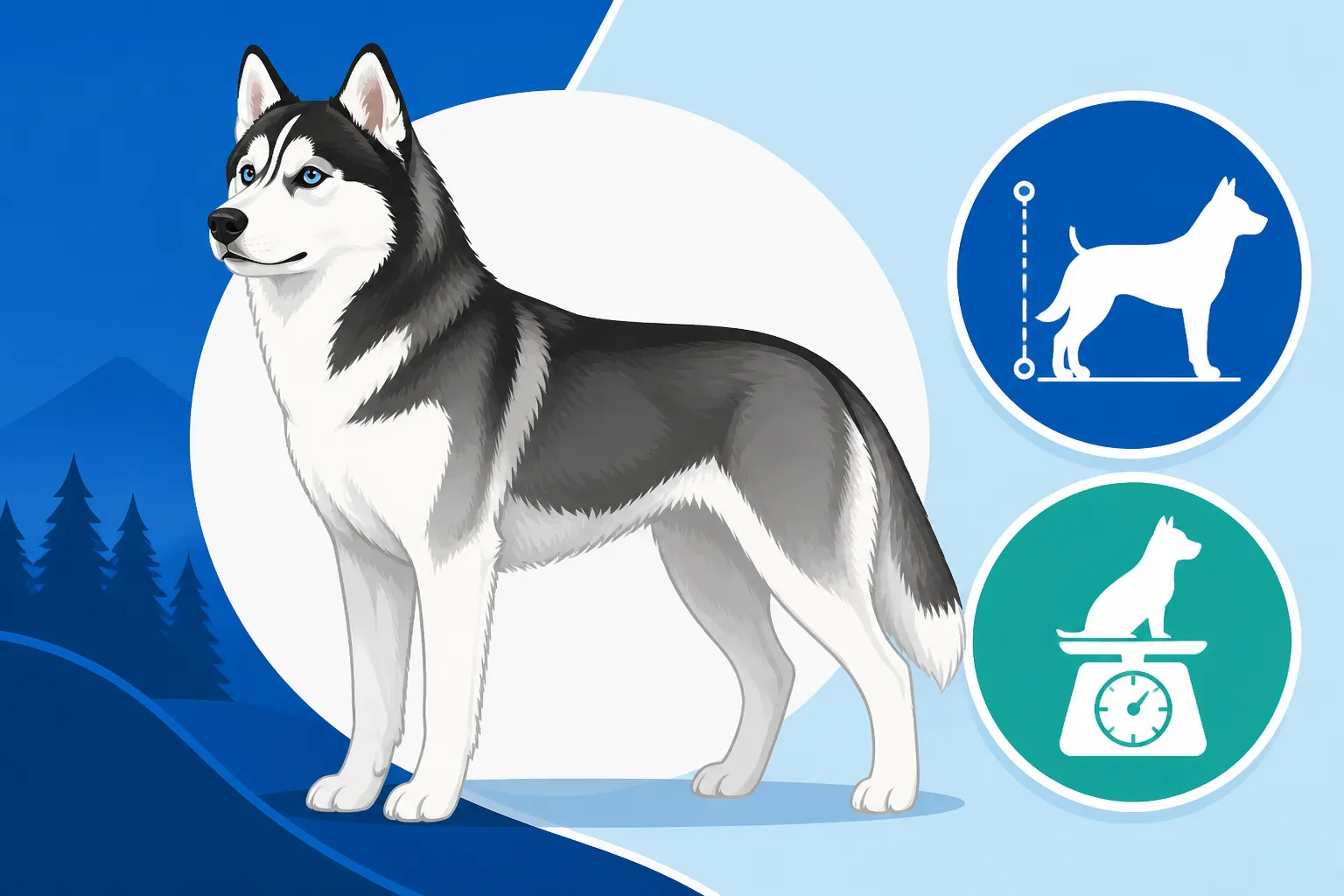
Siberian Husky Height and Weight in the Standard
It's completely natural to look at your beautiful Siberian Husky and wonder if they're "just right" in size. With their powerful, athletic build, it can be tricky to know if your dog fits the breed standard or if their unique proportions are just part of their charm. This guide will walk you through the official height and weight expectations for Siberian Huskies, delve into why these standards exist, and help you understand what a healthy, well-conditioned Husky truly looks like, regardless of whether they're destined for the show ring or your couch.
Understanding the AKC Breed Standard for Siberian Huskies
When we talk about the "breed standard," it's not just some arbitrary set of rules made up by a stuffy committee. For a working breed like the Siberian Husky, the standard is a blueprint that describes the ideal characteristics for a dog to perform its original function – in this case, pulling light loads over vast distances in arctic conditions. Every aspect, from coat type to temperament, and certainly height and weight, is described because it contributes to the dog's ability to do its job efficiently and without undue strain. It's a living document that guides ethical breeders in preserving the health, temperament, and working ability of the breed.
What the Standard Represents for Siberian Husky Size
The Siberian Husky standard, like all breed standards, aims to define the quintessential example of the breed. For size, this means specifying ranges that ensure the dog is neither too heavy to be agile nor too slight to have the necessary power and endurance. Picture a dog that needs to run for miles, often over challenging terrain, while staying warm and conserving energy. A body that's too bulky would be inefficient, prone to overheating, and slower. One that's too small might lack the muscle mass and stride length required for effective pulling. The standard isn't about creating perfect uniformity, but rather about promoting the functional ideal.
It’s easy to get caught up thinking your dog must fit these numbers exactly, but remember that the standard describes an ideal. Just like people, dogs have variations, and a wonderful, healthy pet might be a little over or under. The core purpose is to maintain a population of dogs that are fit for purpose, even if your individual dog's "purpose" is primarily to shed fur on your carpet and demand belly rubs. Understanding the standard helps you appreciate the heritage and unique design of your Siberian Husky Lifespan and What Shortens It.
Why Breeders Adhere to the Standard
Responsible breeders take the breed standard very seriously, especially for show lines, because it's their guiding light. They are striving to produce dogs that not only embody the breed's physical traits but also its inherent health and temperament. By breeding to the standard, they aim to avoid extremes that could lead to health problems. For instance, an overly large Husky might be more prone to joint issues, while a significantly undersized one might lack the robust constitution expected of the breed.
Beyond health, adhering to the standard helps maintain the breed's distinctive look and characteristics. It ensures that a Siberian Husky, whether in Alaska or Arizona, still looks and largely acts like a Siberian Husky. For breeders who participate in dog shows, the standard is quite literally the judging criteria. Dogs are evaluated on how closely they conform to this ideal, which includes their size. When you're looking for a puppy, seeing parents who fit the standard, and who have Health Testing Before You Buy a Siberian Husky, is a good indicator of a breeder's dedication.
Official Height Requirements for Siberian Huskies
The height of a Siberian Husky is measured from the highest point of the shoulders to the ground, also known as the withers. This measurement is crucial because it directly impacts the dog's stride and overall proportions, which are vital for a pulling dog. The standard aims for a balance between athleticism and strength, ensuring they're not too leggy or too squat for efficient movement.
Male Siberian Husky Height Expectations
According to the breed standard, mature male Siberian Huskies typically stand between 21 and 23.5 inches at the withers. This range allows for a powerful yet agile frame, designed for endurance. A male Husky at the upper end of this range will feel substantial, but should still possess the lithe, well-muscled body that defines the breed. If your male Husky is a bit taller, say 24 or 25 inches, they might be considered "oversized" in the show ring, but it doesn't necessarily mean they're unhealthy or poorly bred.
It's important to remember that puppies grow at different rates, and their final height isn't fully realized until they're typically between 12 to 18 months old. Watching your When a Siberian Husky Stops Growing can be an interesting process, full of awkward lanky stages. Don't panic if your young male seems to be shooting up; they might just be on the taller side of the healthy spectrum. The key is that they're growing proportionally and maintaining a healthy weight for their frame.
Female Siberian Husky Height Expectations
Female Siberian Huskies are generally smaller than their male counterparts, with the standard dictating a height range of 20 to 22 inches at the withers. This size difference is common across many dog breeds and contributes to the overall strength and genetic diversity of the breed. A female Husky within this range will still be robust and athletic, perfectly capable of performing the same tasks as males, albeit with a slightly lighter build.
Just like with males, a female outside this range isn't automatically "wrong." Many pet Huskies, particularly those from non-show lines, may be slightly taller or shorter and live perfectly healthy, happy lives. The breed standard sets an ideal, but nature often provides a bit of variation. What's most important is that your female Husky is well-proportioned, has good bone structure, and moves freely and gracefully, whether she's 19 inches or 23 inches tall.
Measuring Your Husky's Height Accurately
Measuring your Husky can be a bit of an art form, especially if they're squirmy! The goal is to get the measurement from the floor to the highest point of their shoulder blades (the withers) while they are standing squarely on all four paws. You'll need to use a measuring tape or, ideally, a yardstick or a special dog measuring wicket if you're serious about accuracy.
Have your Husky stand on a level surface. Gently place your hand on their shoulder blades to feel for the highest point. Then, using a level or a straight edge placed across their shoulders, measure down to the floor. It might take a few tries, perhaps with the help of a friend and some tasty treats, to get an accurate reading. Remember, getting an exact number isn't about making your dog conform, but about understanding where they fall within the general parameters of the breed. If you're ever in doubt, your veterinarian can take this measurement during a routine check-up.
Official Weight Requirements for Siberian Huskies
Weight for a Siberian Husky is a bit more nuanced than height. While there are ranges, the standard emphasizes "weight in proportion to height" and good condition. A well-conditioned Husky should be lean and muscular, with ribs palpable under the skin but not visibly protruding. This reflects their history as endurance athletes, where excess weight would hinder performance.
Male Siberian Husky Weight Expectations
For male Siberian Huskies, the breed standard suggests a weight range of 45 to 60 pounds. This weight, coupled with their height of 21 to 23.5 inches, defines a dog that is powerful yet agile. Think of an athlete – strong, lean, and efficient. A male Husky in peak physical condition, actively involved in activities like Canicross and Bikejoring With a Siberian Husky, might carry more muscle mass and be at the higher end of this range, or even slightly above it, without being considered overweight.
The key is often visual and tactile assessment rather than just the number on the scale. Can you easily feel his ribs when you run your hands along his sides? Does he have a distinct waist when viewed from above? If he's a big boy but still has that athletic physique, he's probably just a larger, well-muscled example of the breed. If his ribs are hard to find and he looks more like a furry barrel, then it's time to talk to your vet about Siberian Husky Weight and Joint Health.
Female Siberian Husky Weight Expectations
Female Siberian Huskies typically weigh between 35 and 50 pounds, complementing their smaller height of 20 to 22 inches. This lighter build maintains their characteristic grace and speed, allowing them to move with the effortless gait that is a hallmark of the breed. A lean, athletic female will fall within this range, displaying excellent muscle tone and a visible tuck-up at her waist.
Again, condition is paramount. A female Husky who is an active family companion might be at the lower end or middle of this range. If she's involved in high-intensity sports, she might be a bit more muscled and closer to the 50-pound mark. Don't be surprised if she eats less than you expect for her size; Why a Siberian Husky Eats Less Than a Labrador is a common revelation for new owners! Their efficient metabolism is a trait from their working heritage.
The Importance of Conditioning, Not Just Weight
This is where the rubber meets the road for Husky owners. The numbers on the scale are a guide, but your Husky's physical condition is far more important. A well-conditioned Siberian Husky should have a lean, athletic build. You should be able to easily feel their ribs when you gently run your hands along their sides, but not see them sharply. They should have a clear waist when viewed from above, tapering from their chest to their hips, and a moderate abdominal tuck when viewed from the side.
An overweight Husky is at higher risk for a host of health problems, including joint issues, heart disease, and diabetes. Conversely, an underweight Husky may not have enough energy reserves or could be struggling with underlying health issues. Regularly assessing your dog's body condition score (BCS) with your vet is far more beneficial than fixating on a specific number. You want a dog that looks ready to run, not one that looks like they've been feasting on all the unattended snacks.
| Feature | Male Siberian Husky (Standard) | Female Siberian Husky (Standard) | Ideal Body Condition |
|---|---|---|---|
| Height (Withers) | 21 – 23.5 inches | 20 – 22 inches | Proportional, athletic |
| Weight | 45 – 60 pounds | 35 – 50 pounds | Lean, muscular |
| Ribs | Easily felt, not seen sharply | Easily felt, not seen sharply | Palpable |
| Waist | Distinct tuck-up from above | Distinct tuck-up from above | Clearly visible |
| Energy Level | High, enduring | High, enduring | Eager for activity |
Why Some Huskies Fall Outside the Standard
It's a common scenario: you see a Husky that looks absolutely massive, or one that seems quite petite, and you wonder if they're "real" Siberians. The breed standard describes an ideal, but dogs are individuals, and there are several reasons why a Husky might fall outside these numerical ranges. These variations don't necessarily mean a dog is unhealthy or less of a Husky; they simply highlight the diversity within the breed.
Oversized and Undersized Huskies
You might encounter Siberian Huskies that are noticeably larger than the standard allows, sometimes topping 70 or even 80 pounds and standing well over 24 inches. These "oversized" Huskies are often the result of breeding choices that prioritize sheer size over the functional athleticism described in the standard, or sometimes just a random genetic throw-back. Conversely, some Huskies may be on the smaller side, perhaps dipping below 35 pounds for females or 45 pounds for males.
While an oversized Husky might look impressive, it's a departure from the breed's original purpose and can come with its own set of challenges. Their increased mass can put more strain on joints, especially as they age, potentially leading to issues like arthritis earlier than expected. Similarly, very small Huskies might be more fragile or lack the stamina typically associated with the breed. The key is understanding that while the standard is a guide, a beloved family pet's worth isn't measured by whether they fit perfectly within a few inches or pounds.
The Difference Between Show Lines and Working Lines
One major reason for size variations lies in the distinct breeding priorities between show lines and working lines. Show breeders aim for dogs that perfectly embody the AKC standard, which includes precise height and weight ranges, alongside conformation and movement. Their goal is to produce dogs that excel in the conformation ring.
Working line breeders, however, prioritize performance above all else. They are looking for speed, endurance, drive, and mental toughness needed for sledding. While they still want a sound, healthy dog that looks like a Husky, they might tolerate minor deviations in size if that dog has exceptional working ability. For example, a working dog might be slightly leaner or possess a different kind of musculature than a show dog, focusing on efficiency over pure aesthetics. This is also why you hear about "Alaskan Huskies" which aren't a breed but a type of working dog optimized for speed. This divergence in breeding goals naturally leads to differences in size and build, making it understandable why not all Huskies will perfectly match the show ring ideal.
Health Implications of Extreme Size Deviations
While slight variations outside the standard are generally not a cause for concern, extreme deviations in size can sometimes have health implications. For instance, an extremely large Siberian Husky might be predisposed to certain orthopedic problems, such as hip or elbow dysplasia, due to the increased stress on their joints, even though Siberian Husky Hips and Why the Rate Is Low generally. Their growth plates might also experience more stress during development, impacting their long-term soundness.
On the other hand, an unusually small Husky could potentially have underlying health conditions contributing to their diminutive stature, or they might simply be more prone to injuries that a more robust dog could shrug off. Reputable breeders strive for moderation precisely to avoid these types of issues. If you notice your Husky is significantly outside the typical size range, especially if coupled with other health concerns, it’s always a good idea to consult your veterinarian to ensure there are no underlying problems. For pet owners, understanding these potential risks helps in providing appropriate care throughout their Husky's life.
The Impact of Diet and Exercise on Siberian Husky Size and Health
It's not just genetics that determine your Siberian Husky's size and build; diet and exercise play a massive role in their overall health and how they carry their weight. A Husky's unique metabolism means they process food differently than many other breeds, and their high energy levels demand specific exercise regimens to keep them fit and happy. Getting this balance right is crucial for their well-term well-being.
Balancing Food Intake for Optimal Weight
Siberian Huskies are known for their incredibly efficient metabolism, a trait honed over centuries of working in harsh, cold environments with often scarce resources. This means they often require fewer calories than you might expect for a medium-to-large breed of their energy level. Overfeeding is a very common mistake new Husky owners make, often leading to an overweight dog. The feeding guidelines on commercial dog food bags are often too generous for a Husky, so it's vital to Weighing a Siberian Husky's Ration Instead of Scooping rather than relying on scoops.
I've seen so many people frustrated because their Husky seems to gain weight even on "normal" amounts of food. It's not your fault; it's their heritage! You'll likely need to feed your Husky 60% or even less of what the bag suggests for a dog of their target weight. Monitor their body condition closely – feel for those ribs and that waist. If you're looking for high-quality food options tailored to active breeds or specific dietary needs, online retailers like Chewy offer a vast selection, often with detailed nutritional information that can help you make informed choices.
The Role of Exercise in Maintaining a Healthy Build
Exercise isn't just about burning off energy for a Siberian Husky; it's essential for maintaining their powerful, lean musculature and overall cardiovascular health. These dogs were bred to run for miles, so short leash walks around the block simply won't cut it for most. Without adequate exercise, a Husky can become bored, destructive, and easily gain excess weight, even on a carefully managed diet.
Aim for at least 1-2 hours of vigorous activity daily. This could include running, hiking, Canicross and Bikejoring With a Siberian Husky, or even extended play sessions in a securely fenced yard. Remember, activities that allow them to stretch their legs and use their energy productively are key. If you're struggling to keep up with their energy levels, consider dog sports or even hiring a dog walker who understands the unique exercise needs of a northern breed. An active Husky is a healthy Husky, both physically and mentally.
Recognizing Signs of Underweight or Overweight
Learning to visually and physically assess your Husky's weight is more important than the number on the scale. An underweight Husky will have clearly visible ribs, hip bones, and vertebrae. Their muscles may appear wasted, and they might lack energy. If you suspect your Husky is underweight, it's crucial to consult your vet to rule out any underlying medical conditions before simply increasing their food intake.
On the other end of the spectrum, an overweight Husky will have ribs that are difficult or impossible to feel due to a thick layer of fat. Their waistline will be absent or bulge outwards, and they'll likely have fat deposits over their back and at the base of their tail. Overweight Huskies often seem less energetic and can struggle with mobility. Both extremes warrant a trip to the vet to create a safe plan for achieving a healthy body condition. Monitoring your dog's weight and condition through regular vet check-ups is a vital part of Caring for a Siberian Husky Past Ten.
Living with a Siberian Husky of Any Size
Regardless of whether your Siberian Husky perfectly fits the breed standard's height and weight specifications, or if they're a little bigger or smaller, they are still a wonderful, unique companion. The important thing is to understand their individual needs and adapt your care to ensure they live a full, healthy, and happy life. Their personality and spirit are what truly define them, not just the numbers on a measuring tape.
Adjusting Gear and Space for Your Husky
A Husky's size will definitely impact the type of gear you need and how you manage your living space. For a larger Husky, you'll need sturdy, appropriately sized harnesses for pulling or walking, such as those you can find on Chewy. A well-fitting Martingale Collars for a Siberian Husky can prevent slips, especially for those with thicker necks. Crates will also need to be adequately sized to allow them to stand, turn around, and lie down comfortably, which might mean a larger or more robust crate than you initially anticipated.
For those with smaller Huskies, gear might be easier to find, but you still need to ensure it's durable enough for their strength and adventurous spirit. Whether your Husky is standard size, oversized, or petite, proper containment with a Six-Foot Fences and the Siberian Husky That Climbs or a kennel run is non-negotiable, as their escape artistry is legendary. You might also need to consider your vehicle space for travel or even how much room they take up on the couch!
Appreciating the Individual Beyond the Standard
While the breed standard provides an excellent framework for understanding the Siberian Husky, it's vital to appreciate your own dog as an individual. Not every Husky will be a show champion, and that's perfectly okay. Their unique quirks, the way they talk back, their boundless energy, and their loving companionship are what truly matter. Whether your female Husky is 20 inches and 35 pounds or a more robust 23 inches and 55 pounds, her value as a family member remains unchanged.
Focus on providing them with excellent nutrition, plenty of appropriate exercise, regular veterinary care, and lots of love and mental stimulation. Celebrate their differences and love them for who they are. After all, the heart of a Husky, with all its independence and affection, is far more significant than any measurement. You'll find that the true joy of living with a Siberian Husky comes from the bond you build, not from how perfectly they conform to a piece of paper.
Disclaimer
This article is for general informational purposes only and does not constitute professional advice. Laws, prices and regulations vary by location and change over time. Consult a qualified professional for guidance on your specific situation.