Why the Chukchi Never Bred Huskies to Guard
It’s a common sight: someone sees a majestic Siberian Husky, with their piercing eyes and wolf-like appearance, and immediately assumes they must be excellent guard dogs. They look tough, they look like they mean business, and surely, they’d protect your home and family, right? Well, if you’re looking for a canine bodyguard, the Siberian Husky is probably going to give you a big, friendly, slobbery hello instead. This guide is going to dive deep into exactly why the ancient Chukchi people, who carefully developed this incredible breed, never intended them to be guard dogs, and what that means for owners today.
The Chukchi People and Their Unique Survival Needs
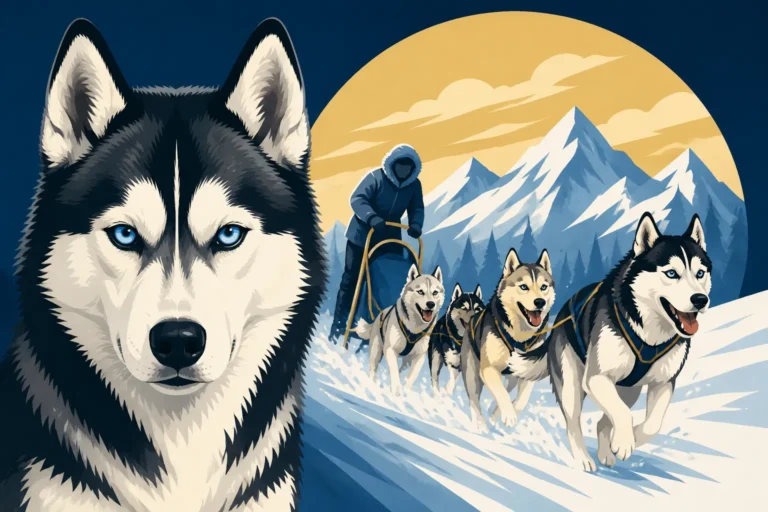
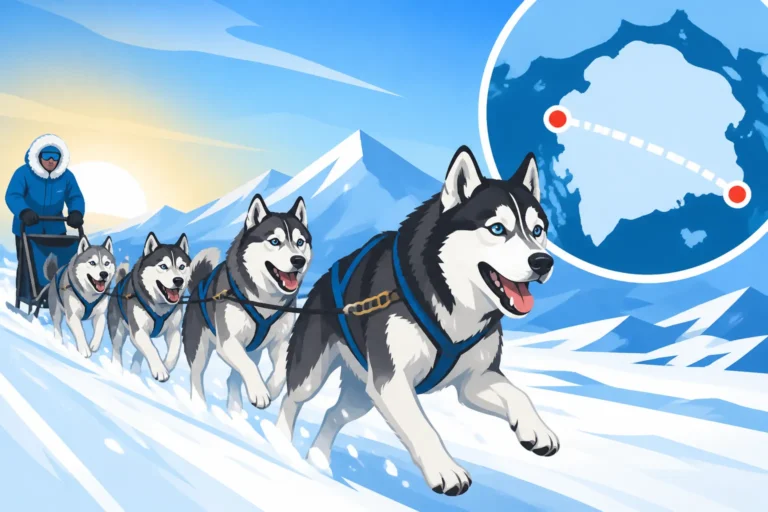
To truly understand why Siberian Huskies aren't guard dogs, we have to travel back in time to their origins with the Chukchi people of northeastern Siberia. This wasn't a society that needed dogs to guard against human intruders or large predators in the same way European breeds might have. Their world was one of extreme cold, vast distances, and a constant struggle for survival. The dogs were absolutely vital to their existence, but their role was purely functional in a way that didn't include patrolling a perimeter with aggression.
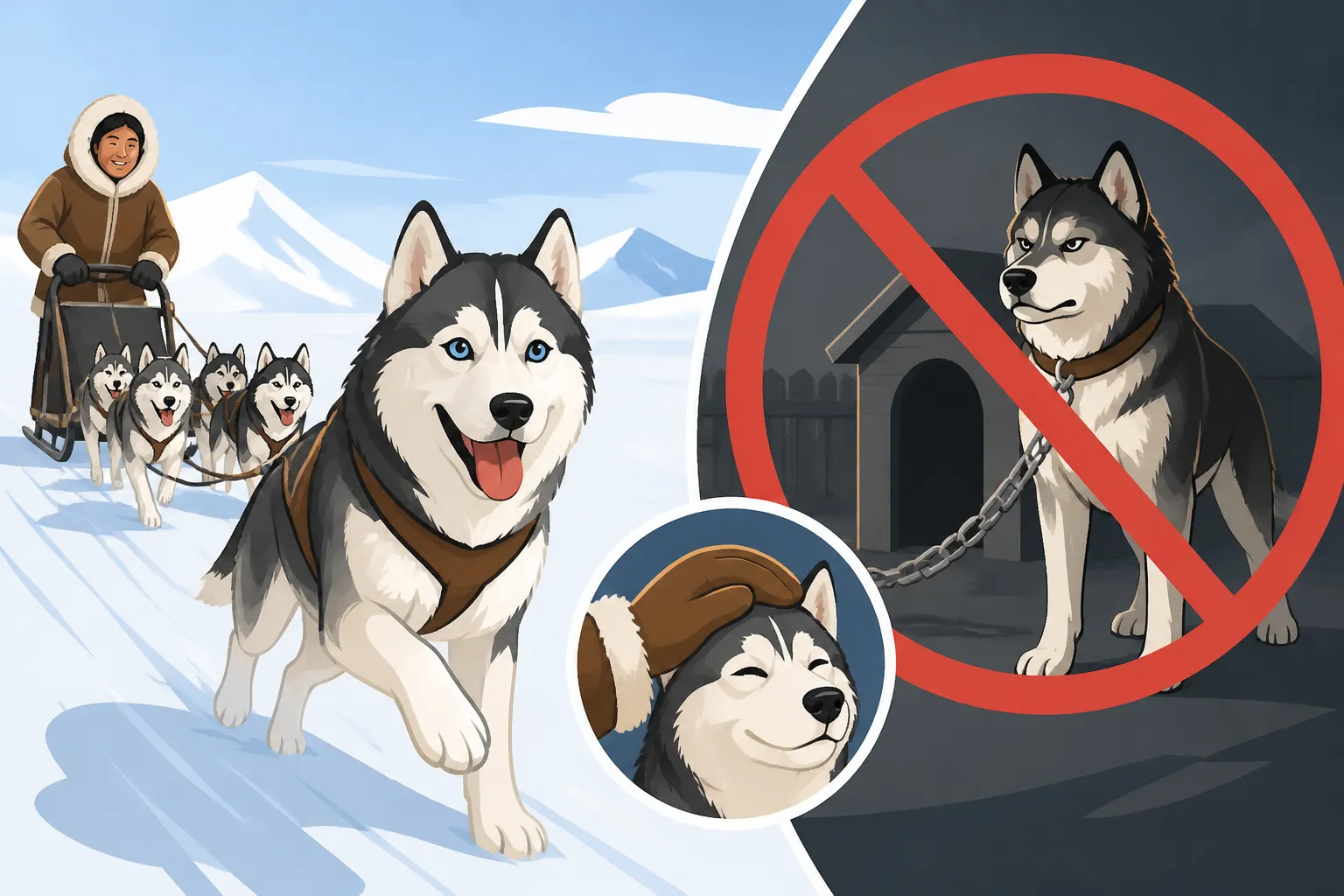
The Chukchi were semi-nomadic reindeer herders and hunters. Their survival depended on moving their camps and their herds efficiently across immense, frozen landscapes. They needed dogs that could work tirelessly, pulling sleds loaded with supplies, people, and game. These dogs weren't just tools; they were deeply integrated into family life, living in close quarters with humans, including children, inside their homes for warmth and companionship. This intimate cohabitation meant that aggression, especially towards humans, simply couldn't be tolerated. A dog that bit a child or lunged at a stranger would be a danger to the entire community and would not have been allowed to live or breed. It's a testament to their careful breeding that the Siberian Husky became known for its gentle nature. You can read more about The Chukchi Origins of the Siberian Husky.
Dogs as Family, Not Sentries
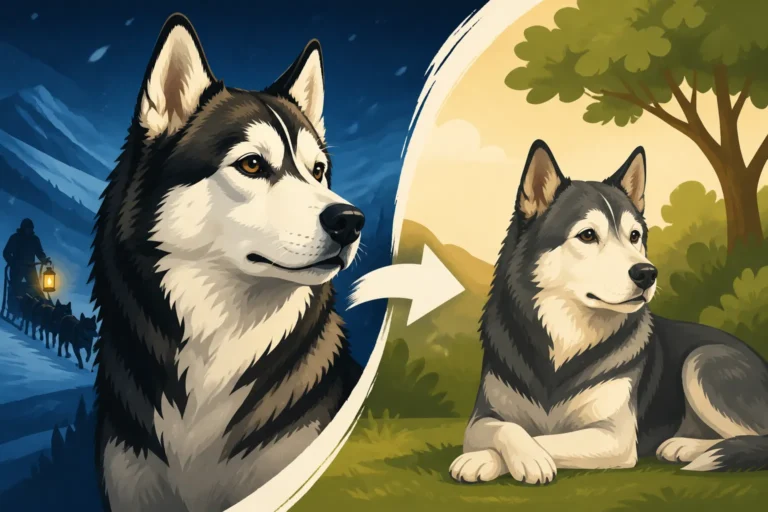
Imagine living in a small, insulated shelter, sharing your meager heat with your dogs during brutal Arctic winters. In such an environment, the line between pet and family member was practically non-existent. The dogs were often brought inside, sleeping alongside families, providing warmth and companionship. This kind of arrangement absolutely necessitated a dog with an inherently friendly, non-aggressive temperament. If a dog had a strong guarding instinct, constantly on edge or suspicious of its own human companions, it would have been a disaster waiting to happen. There wasn't room for territorial disputes within the home; every living being had to coexist peacefully for the survival of the group.
The selective breeding practices of the Chukchi naturally favored dogs that were amiable, tolerant, and even-tempered. They didn't need a dog to bark at every shadow or challenge every approaching figure. Instead, they needed a loyal companion that could be trusted implicitly around everyone, from the youngest child to the oldest elder. This explains why even today, most Siberian Huskies are famously good-natured with people, often greeting strangers with the same enthusiasm they show their own family. This inherent friendliness is a direct legacy of their original purpose and living conditions. You'll find many fascinating details about Why Husky Ancestors Slept Inside Chukchi Homes.
The Purpose of the Sled Dog
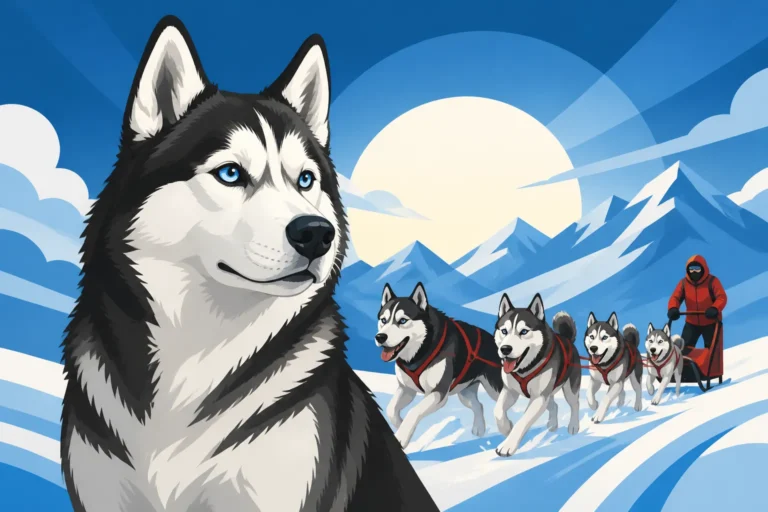
The primary, overriding purpose of the Siberian Husky was to pull a sled. Everything about their physical characteristics and temperament was honed for this specific job: efficiency, endurance, speed, and cooperation. They needed to be able to work as part of a team, side-by-side with other dogs, often for long hours and over challenging terrain. Aggression towards their teammates or handlers would have been counterproductive and dangerous, leading to chaos and inefficiencies when tasks needed to be performed.
Think about the traits essential for a good sled dog: they need to be intelligent enough to understand commands, independent enough to make decisions in changing trail conditions, and yet cooperative enough to pull in unison. They need a thick double coat for insulation, and a metabolism that allows them to run for miles on relatively little food. What they didn't need was a fierce territorial streak or a suspicious nature towards unfamiliar humans. A dog that spent its energy defending a property wouldn't have the stamina for the trail, and a dog that tried to protect its food from its team members would disrupt the harmony crucial for survival. This focus on working ability, rather than guarding, is central to What the Chukchi Bred the Siberian Husky For.
Temperament Traits That Oppose Guarding
When we look at the modern Siberian Husky, their temperament still very much reflects their heritage. While they are intelligent and can be protective of their immediate pack members in certain situations, their core traits are not aligned with traditional guard dog behavior. In fact, many of their endearing qualities are precisely what make them ineffective at guarding.
Unlike breeds specifically developed for guarding, like German Shepherds or Rottweilers, Huskies generally lack territorial aggression and suspicion towards strangers. Their famous independence often translates into a relaxed attitude towards who comes and goes, rather than a possessive defense of their space. If a stranger approaches your home, a Husky is far more likely to investigate with curiosity, perhaps offering a "woo-woo" greeting, than to stand firm and ward them off. This friendly disposition is even noted in Siberian Husky Temperament and What the Standard Says.
The Husky Welcome Wagon
Let's face it: if a stranger were to walk into your yard, a typical Siberian Husky would probably wag their tail, lean in for a pet, and maybe even offer a playful nudge. They are, by and large, incredibly friendly dogs. Their wolf-like looks might intimidate some, but their personality is usually anything but fierce. This lack of inherent suspicion means they don't possess the critical "stranger danger" alarm system that a true guard dog does. They don't differentiate between a welcomed guest and an unwanted intruder; everyone is a potential friend, or at least, a source of attention.
This isn't to say they won't alert you to someone's presence. Huskies are vocal and observant. They might howl or "talk" excitedly when someone approaches, but this isn't usually an aggressive warning. It's more of an announcement: "Hey, look! A human! Come say hello!" This enthusiasm, while charming, completely undermines any potential role as a guardian. You want a guard dog to deter, to stand its ground, to make an intruder think twice. A Husky will often do the exact opposite, inviting interaction and potentially leading an intruder right to the treat jar.
Lacking Territorial Instincts
Many guard dog breeds have a strong sense of territory. They view their home, their yard, and even their car as "theirs" and will actively defend it against perceived threats. Siberian Huskies, on the other hand, often couldn't care less about invisible property lines. They are known escape artists, driven by an innate wanderlust that has them constantly seeking new horizons. The Roaming Instinct Bred Into Every Siberian Husky is a powerful force. This instinct is directly at odds with the concept of guarding a fixed territory. Why would they defend a space they’d rather explore beyond?
Their focus isn't on possession of a space, but rather on movement and activity. They are explorers, adventurers, and often quite happy to be anywhere you are, regardless of the specific location. While they might guard their food bowl from another dog, this resource guarding is a distinct behavior from territorial aggression towards humans. It's a primal instinct related to survival among canine peers, not a defense of property against an external human threat. This often means that even if you have a huge yard, a Husky isn't thinking, "This is my domain to protect." They're thinking, "How quickly can I clear this fence and see what's on the other side?"
| Trait | Traditional Guard Dog | Siberian Husky |
|---|---|---|
| Primary Motivation | Protect property/family from threat | Sled work, companionship, explore |
| Stranger Reaction | Suspicious, wary, may challenge | Friendly, curious, seeks attention |
| Territoriality | High, actively defends perceived space | Low, strong wanderlust, not possessive |
| Aggression Level | Can be high if trained for defense | Low towards humans, except play |
| Vocalization | Deep barks, growls, warning calls | Howls, "talks," excited vocalizations |
| Prey Drive Focus | Secondary, often suppressed | High, focused on small, fast prey |
The Difference Between Prey Drive and Guarding
One common misconception is confusing a Siberian Husky's strong prey drive with a guarding instinct. These are two entirely different behavioral drives, stemming from different evolutionary purposes, and they manifest in very distinct ways. A guard dog is driven by a need to protect and deter, often using confrontation. A husky with high prey drive is driven by the instinct to chase, catch, and, unfortunately, potentially kill small, fast-moving animals.
It’s easy to see why someone might get them mixed up. Both can involve intense focus and a sudden burst of energy. However, the target and the underlying motivation are worlds apart. Your husky might suddenly bolt across the park after a squirrel, displaying incredible speed and determination, but this is not the same as defending your picnic blanket from an approaching human. Understanding this distinction is vital for husky owners, both for their dog's safety and for managing expectations about their protective capabilities.
Instinct to Hunt, Not to Defend
A Siberian Husky's prey drive is a powerful, ingrained instinct. It's what makes them incredible hunters of small game, like squirrels, rabbits, and even neighborhood cats or chickens if given the chance. This drive is a remnant of their ancestors' need to supplement their diet in the harsh Arctic environment. When a Husky sees something small and moving quickly, that ancient instinct kicks in: chase, capture, dispatch. This is why you need to be very cautious about Siberian Husky Prey Drive Around Small Animals. This entire sequence of behaviors is focused outwards, on an animal to be pursued, not inwards, on a person or property to be defended.
Consider a hypothetical scenario: an intruder breaks into your home. A guard dog would confront the intruder, barking aggressively, perhaps even blocking their path. A Husky, seeing a person running or moving quickly, might see them as something to chase or play with. Their reaction is more likely to be one of curiosity or engagement, rather than protective aggression. While their impressive athleticism might momentarily startle an intruder, it's not a deliberate act of defense. They are simply acting on their natural instincts, which are geared towards hunting, not warding off a human threat.
Alertness vs. Aggression
Siberian Huskies are certainly alert. They notice everything, and they often vocalize about it. Whether it's a leaf blowing past the window, a distant siren, or someone walking down the street, your husky is likely to offer a comment in the form of a howl, a whine, or their characteristic "woo-woo" talk. This alertness often gets misinterpreted as a protective instinct. However, being aware of one's surroundings and communicating about it is not the same as being aggressive or defensive.
Their vocalizations, while sometimes startling or loud, are rarely truly threatening. They are more expressions of excitement, curiosity, or sometimes boredom. A Husky might howl because they hear another dog, or because you just got home, or because they saw a butterfly. This is far removed from the deep, guttural barks and growls used by breeds specifically selected to deter threats. Why Your Siberian Husky Howls and Talks is a topic many owners grapple with, and it highlights their communicative nature, not their guarding prowess. So, while your husky might certainly make a lot of noise if someone approaches, don't mistake that noise for a promise of protection. It's more likely their way of saying, "Look! A new person! Let's party!"
Modern Husky Ownership and Expectations
Given their historical background and inherent temperament, it's crucial for modern Siberian Husky owners to set realistic expectations. If you're hoping for a canine security system, a Husky isn't the right choice. However, if you understand and embrace their true nature, you'll find them to be incredibly rewarding companions.
The challenges of owning a Siberian Husky often stem from owners expecting them to behave like other breeds. Their independence, high energy, and lack of guarding instincts mean they require a different approach to training, containment, and daily life. What New Siberian Husky Owners Underestimate often revolves around these core breed traits. Recognizing that their friendly disposition towards strangers and their desire to roam are part of their genetic makeup allows owners to plan accordingly and prevent common issues.
Managing Expectations for Your Husky
The best thing you can do for your Siberian Husky, and for yourself, is to accept them for who they are. They are not loyal guardians who will stand watch over your home. They are adventurous, often mischievous, incredibly friendly, and highly energetic dogs. Instead of trying to force them into a guard dog role, focus on nurturing their true strengths. They excel as running partners, hiking buddies, and intelligent companions who thrive on mental and physical stimulation. They can be incredibly affectionate with their families, forming strong bonds, but their expression of love rarely involves a defensive posture towards outsiders.
This means putting a strong emphasis on training that harnesses their intelligence and independence in constructive ways, like impulse control and consistent recall (though even then, Why a Siberian Husky Cannot Be Trusted Off Leash is a constant reminder). Provide them with ample exercise to satisfy their working dog heritage and plenty of interactive toys from places like Chewy to keep their minds engaged. When you meet their needs as the energetic, friendly, and independent dogs they are, you’ll have a happy and well-adjusted companion, even if they wouldn't scare off a fly.
Alternative Security Measures
Since your Siberian Husky won't be performing guard duties, it's up to you to implement appropriate home security measures. Rely on traditional methods to protect your property and family. This includes robust alarm systems, secure locks on all doors and windows, and maybe even external cameras. If you're looking for a physical barrier, focus on high, escape-proof fencing around your yard, designed to contain a husky, rather than to keep intruders out. Stopping a Siberian Husky From Escaping the Yard is far more pressing than training them to guard. Remember, a Husky's primary defense mechanism against a fence is usually finding a way over, under, or through it, not standing guard beside it.
While a husky's presence might act as a superficial deterrent due to their wolf-like appearance or their tendency to vocalize, don't rely on it. Their "bark" is often worse than their "bite" – and even that "bark" is usually a howl of excitement. If real security is a concern, invest in a dedicated security system. Your husky's job is to be a beloved member of your family, to run, to play, and to make you laugh with their unique personality, not to stand guard. You can find many strong leashes and harnesses at Chewy to keep your intrepid explorer safe on walks, but when it comes to home defense, that's a job for technology and human vigilance.
Disclaimer
This article is for general informational purposes only and does not constitute professional advice. Laws, prices and regulations vary by location and change over time. Consult a qualified professional for guidance on your specific situation.