Siberian Husky Against the Samoyed
It's incredibly common for people to admire the majestic beauty of northern breeds and then find themselves wondering, "Is that a Siberian Husky or a Samoyed?" While both are undeniably stunning, fluffy, and captivating dogs with thick double coats, they are distinct breeds with different histories, temperaments, and needs. This guide will help you understand the core differences between these two incredible dogs, so you can appreciate what makes each one unique and decide which might be a better fit for your life.
Origins and History: Bred for Different Jobs
When you look at a Siberian Husky and a Samoyed, their shared "spitz" characteristics are obvious – erect ears, curled tails, thick coats. But delve into their histories, and you'll find they were developed for incredibly different purposes by the indigenous peoples of the Arctic regions. These differing roles fundamentally shaped their physical traits and, more profoundly, their personalities.
The Siberian Husky's Sprinting Legacy
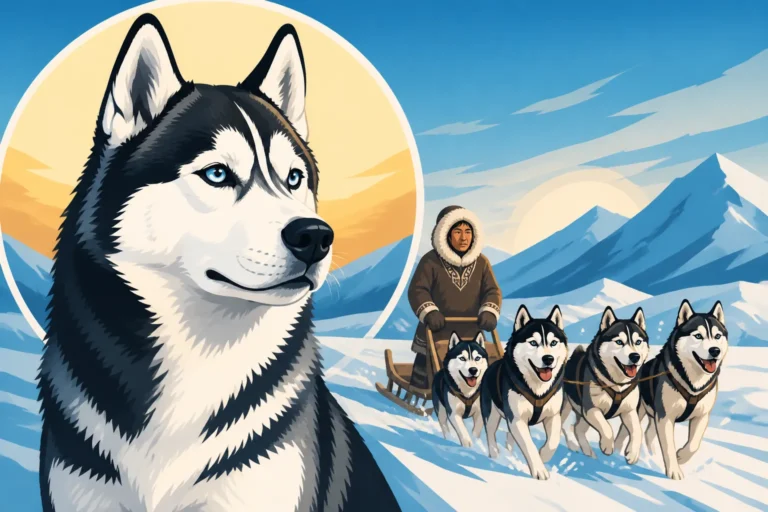
The Siberian Husky, as its name suggests, hails from Siberia, specifically bred by the Chukchi people. Their primary purpose was to pull light loads over vast, frozen distances at a relatively fast pace. Imagine needing to cover hundreds of miles across flat, desolate tundra to hunt or trade, with only a small amount of gear. The Chukchi needed dogs that were incredibly efficient, had immense endurance, and could survive on minimal food.
This demanding lifestyle forged a dog built for speed and stamina, with an almost unbelievable ability to conserve energy. They were part of the very survival of the Chukchi, making them essential team members. Their migration to Alaska in the early 20th century, where they famously dominated the All-Alaska Sweepstakes races and played a crucial role in the 1925 Serum Run to Nome, cemented their reputation as incredible sled dogs. These events propelled the Siberian Husky into the public eye, showcasing their unparalleled athletic ability and determination. You can learn more about The Chukchi Origins of the Siberian Husky and their incredible feats in The Siberian Husky in the 1925 Serum Run to Nome.
The Samoyed's Herding and Companion Role
Meanwhile, thousands of miles to the west, in the harsh expanses of Siberia and Russia, the Samoyed people (who gave the breed its name) developed their own unique spitz dog. Unlike the Huskies, the Samoyed's role wasn't primarily about covering vast distances with sleds, though they could certainly pull if needed. Instead, Samoyeds were multi-purpose dogs: herding reindeer, guarding against predators, and incredibly, sleeping inside the tents with the nomadic people.
This close living arrangement fostered a deeply affectionate and social nature. They weren't just tools for survival; they were cherished members of the family, providing warmth, protection, and companionship. Their herding instinct meant they needed to be intelligent and responsive to work flocks, while their guarding duties instilled a keen awareness of their surroundings. This history is why Samoyeds are often described as having a "human-loving" disposition, making them wonderful, if boisterous, companions. Their unique history led to a breed that is often seen as a gentle giant with a perpetual smile.
Physical Distinctions: More Than Just Coat Color
At a glance, both breeds share the dense, arctic double coat and athletic build, but looking closer reveals significant differences in their physical characteristics. These aren't just cosmetic; they reflect their historical functions and have practical implications for owners.
Size, Build, and Overall Stature
While both are medium-to-large breeds, there are notable differences in their frames and general build.
The Siberian Husky tends to be sleeker, more agile, and built for speed and endurance. They possess a moderately compact and well-muscled body, but they are not heavy-boned. Males typically stand between 21 to 23.5 inches tall at the shoulder and weigh between 45 to 60 pounds. Females are slightly smaller, usually 20 to 22 inches tall and 35 to 50 pounds. Their gait is notably effortless and flowing, reflecting their heritage as efficient trotters. The What the AKC Standard Asks of a Siberian Husky goes into detail about their ideal conformation.
Samoyeds, on the other hand, are a bit more substantial and powerful. They have a sturdier, more muscular build designed for strength and resilience in rugged terrain, rather than sheer speed. Male Samoyeds typically range from 21 to 23.5 inches in height, similar to Huskies, but they are heavier, usually weighing 45 to 65 pounds. Females are 19 to 21 inches tall and weigh 35 to 50 pounds. While their height might be comparable, their overall impression is one of greater substance and power, with a proud, watchful stance. Their movement is robust and purposeful.
Coat Types and Grooming Needs
Ah, the glorious double coat! Both breeds boast an impressive, weather-resistant double coat, but there are subtle differences in texture and maintenance.
A Siberian Husky's coat consists of a soft, dense undercoat and a straight, smooth outer coat that is medium in length, never long enough to obscure the clean-cut outline of the dog. It's designed to protect them from extreme cold and is surprisingly effective at shedding dirt and water. Huskies shed, or "blow" their undercoat, usually twice a year (in spring and fall), and during these periods, the amount of hair is truly astonishing. During a Siberian Husky Coat Blow and the Six Weeks It Lasts, you'll be brushing out handfuls of fur daily. Regular brushing outside of these periods helps keep it healthy and minimize shedding, but be prepared for consistent hair management. Many owners find a good high-velocity dryer and robust grooming tools, often available on sites like Chewy, are essential.
The Samoyed's coat is often described as more luxuriant and profuse. They have a soft, dense, short undercoat, which is typically woolly, and a harsh, longer, straight outer coat. The Samoyed's hallmark is its pure white, or biscuit/cream colored coat, often with a silver sheen. This coat is designed to protect them from both cold and sun. Samoyeds are constant shedder, though they also have heavier "blow" periods similar to Huskies. Their longer, thicker coat requires more intensive grooming to prevent matting, especially behind the ears, in the "pants," and under the tail. Daily brushing might be needed, and professional grooming every few weeks can be a lifesaver. Owners will often invest in specialized detangling sprays and conditioners.
Eye and Ear Differences
The eyes and ears are another area where these breeds offer distinct looks.
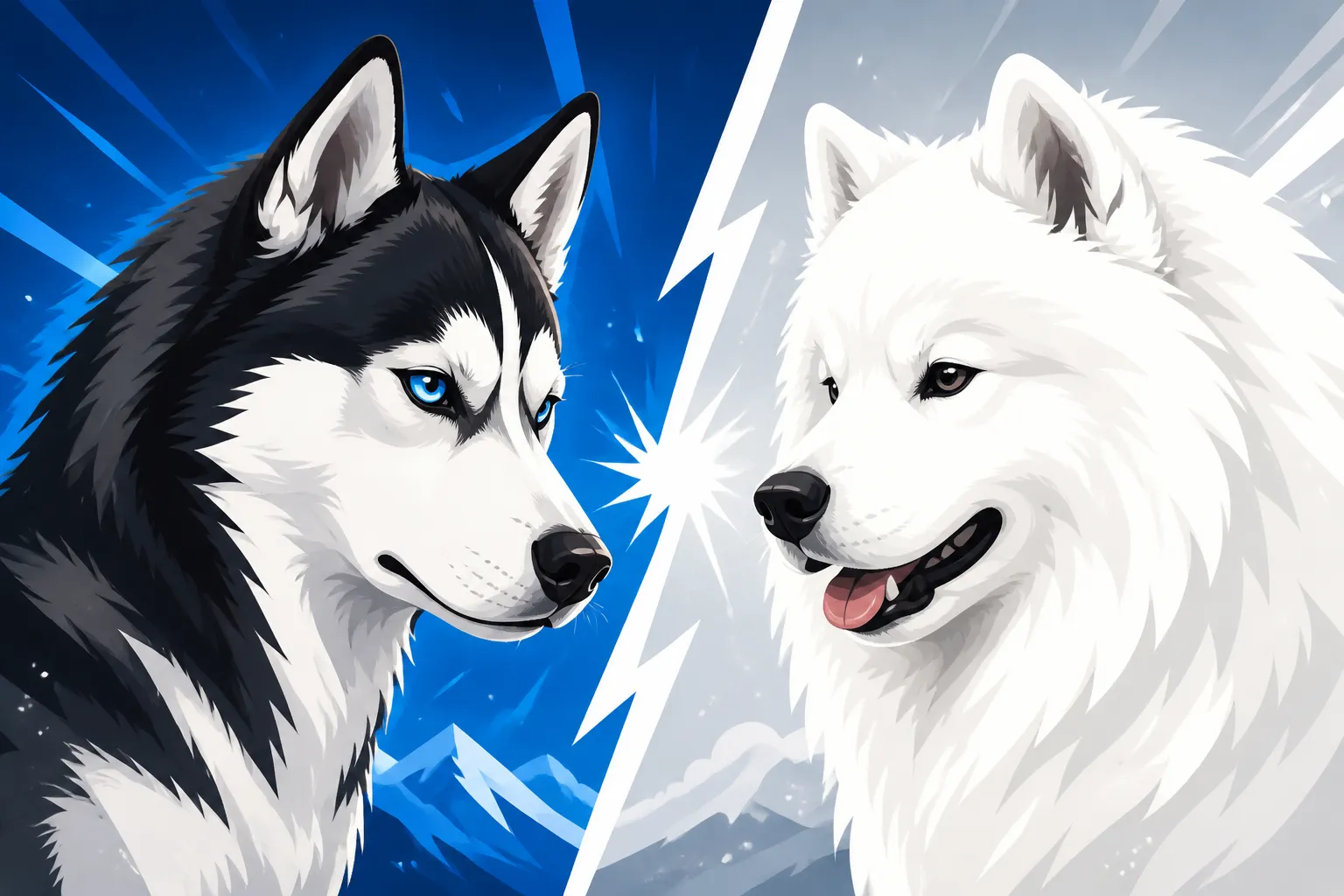
Siberian Huskies are famous for their captivating eyes. They can have blue eyes, brown eyes, one blue and one brown (bi-eyed), or even parti-colored eyes (where one eye has flecks of two colors). Siberian Husky Eye Colors and Heterochromia is a fascinating topic for many owners. Their eyes are typically almond-shaped, set moderately apart, and have a keen, intelligent expression. Their ears are medium in size, triangular, set high on the head, and carried stiffly erect, adding to their alert and wild appearance.
Samoyeds almost exclusively have dark brown, almond-shaped eyes, which are deep-set and give them a very intelligent and often smiling expression. The dark pigmentation around their eyes makes them appear even more striking against their white fur. Their famous "Samoyed smile" is a result of the upward curve of their lips combined with the deep set of their eyes. Their ears are thick, triangular, and also carried erect, but they are typically smaller in proportion to their head than a Husky's, and heavily furred inside.
Temperament and Personality: A World Apart
While both breeds are intelligent and beautiful, their personalities are perhaps where they diverge the most. Understanding these differences is crucial for any potential owner.
Independence Versus Affection
The historical roles of these dogs deeply imprinted their personalities.
Siberian Huskies are known for their independent and somewhat mischievous nature. They were bred to work cooperatively in a team, but not necessarily to be overly reliant on or subservient to a single human handler. They are intelligent, but often described as "stubborn" because they're quite capable of deciding if your command aligns with their current agenda. They can be incredibly affectionate with their families, but it's often on their terms. They thrive on companionship, whether from humans or other dogs, but they aren't typically "velcro dogs" and often appreciate their own space. Their friendliness extends to strangers, which means they make terrible guard dogs. If you're looking for a dog that will alert you to intruders, a Husky is more likely to greet them with a wagging tail. You can read more about Siberian Husky Temperament and What the Standard Says.
Samoyeds, by contrast, are renowned for their profound affection and desire to be close to their human families. Their history of sleeping in tents and herding reindeer made them integral family members, fostering a strong bond and a more biddable nature. They are often described as "people dogs" who thrive on interaction and can become quite distressed if left alone for extended periods. They are generally gentle, loyal, and good with children, earning them the nickname "the smiling dog." While they are intelligent, they are typically more eager to please than a Husky, making them somewhat easier to train for those who appreciate a more responsive companion.
Vocalizations and Communication Styles
Both breeds are known for their vocal repertoire, but how they express themselves differs.
Siberian Huskies are famous for their wide range of vocalizations, which are far more varied than a typical dog's barks. They howl, whine, grumble, and "talk" in a distinctive, expressive way that many owners find endearing. This howling is a throwback to their ancestral pack communication and can be quite loud. While some Huskies bark, it's not their primary mode of communication, and they often use it sparingly. If you've ever heard a Husky argue with its owner, you know exactly what I mean! Why Your Siberian Husky Howls and Talks explains this fascinating trait further.
Samoyeds also love to vocalize, but their primary mode is often a cheerful bark. They are known to be quite alert barkers, often letting you know about anything they perceive as unusual, whether it's a leaf blowing past the window or a distant car door slamming. While they can howl, it's usually less common and less prolonged than a Husky's. Their barks are typically higher pitched and more persistent. Owners often describe their vocalizations as joyful and enthusiastic, but it's something to consider if you live in close quarters.
Prey Drive and Socialization with Other Pets
The instinct to hunt is strong in both, but manifests differently due to their original purposes.
Siberian Huskies possess a very strong prey drive. Bred to be efficient hunters and scavengers when necessary, they often view small, fast-moving animals – cats, rabbits, squirrels, even small dogs – as prey. It's a deeply ingrained instinct that can be incredibly challenging to train out, making multi-pet households with small animals a significant risk. This is why Siberian Husky Prey Drive Around Small Animals is such a critical consideration for potential owners. Even well-socialized Huskies may have an unpredictable reaction when a small animal bolts. Introducing a Husky to a cat or other small pet requires extreme caution, careful management, and often professional guidance from a young age.
Samoyeds also have a noticeable prey drive, stemming from their herding and guarding background. They were bred to manage reindeer, which required a certain level of predatory instinct to keep the herd moving, but not to kill them. While a Samoyed might chase a squirrel with enthusiasm, their prey drive is generally considered less intense and less likely to be acted upon destructively compared to a Husky's. Many Samoyeds can live peacefully with cats and other small pets, especially if raised with them from puppyhood, though supervision is always wise. Their herding instinct might manifest as nudging or trying to 'gather' smaller children or pets, which can sometimes be overwhelming for very young kids.
Training and Exercise Needs: Matching Energy Levels
Both breeds are high-energy dogs, but how they channel that energy and respond to training can be quite different. This is a critical factor in determining which breed will integrate best into your daily life.
Exercise Requirements and Ideal Activities
Neither of these dogs are content to be couch potatoes; they demand significant physical and mental exercise.
Siberian Huskies are true athletes with an almost boundless capacity for exercise. They need daily, vigorous activity, often an hour or two of intense running, hiking, or structured sledding/canicross. A simple walk around the block is often not enough to tire a Husky; they need to run. Without sufficient exercise, a bored Husky can become destructive, noisy, or attempt escapes – a notorious trait for the breed. Many owners find activities like bikejoring, scootering, or even long-distance running with their Husky to be fulfilling outlets for their energy. If you plan to run with a Husky, you need to be prepared for their innate pulling instinct, which is a strength, not a flaw. You will need to commit to a rigorous exercise routine, perhaps even two intense sessions a day, if you want a calm and happy Husky indoors.
Samoyeds also require substantial daily exercise, typically an hour or more of brisk walking, running, or playtime. They might not have the same marathon endurance as a Husky, but they love to be active and engaged. Activities like hiking, fetching, agility, or even trick training are great ways to keep a Samoyed stimulated. Their love for snow and cold weather means they often revel in winter activities. While they enjoy pulling, it's usually less intense and sustained than a Husky's drive. A long, engaging walk or a vigorous play session in a securely fenced yard will usually satisfy a Samoyed, though they will always be up for more. Since they are so people-oriented, they genuinely enjoy exercise that involves their human family.
Trainability and Motivation Differences
Training is essential for both breeds, but you'll approach it with different strategies.
Siberian Huskies are intelligent, no doubt, but they also have a strong independent streak. This can make them challenging to train for those accustomed to more eager-to-please breeds. They respond best to positive reinforcement, short, engaging sessions, and trainers who understand their unique psychology. Consistency, patience, and a sense of humor are absolute necessities. Their recall, in particular, is often unreliable, especially if something more interesting catches their eye. This is why it's commonly said that Why a Siberian Husky Cannot Be Trusted Off Leash is a fundamental truth; a secure leash and harness, sometimes even a long line in a safe area, are paramount for their safety. High-value treats and praise work well, but you'll often find yourself needing to convince your Husky that your idea is better than theirs.
Samoyeds are also intelligent and generally more eager to please their owners, making them somewhat more amenable to traditional training methods. They respond very well to positive reinforcement, praise, and treats. Consistency is still key, as is starting early with socialization and obedience. Their sensitive nature means harsh corrections are counterproductive; they thrive on encouragement and a positive training environment. While their prey drive can be a distraction, their desire to engage with their owner often makes them more focused in training than a Husky. They can excel in dog sports like agility, obedience, and rally, especially if they see it as a fun bonding activity with their person.
Living Situations: Apartment vs. House
Considering where these dogs will live is crucial, especially regarding space and escape routes.
A Siberian Husky can potentially live in an apartment, if their exercise and mental stimulation needs are rigorously met. This means dedicated daily runs, dog park visits (with caution regarding prey drive), or other high-energy activities. However, their vocalizations (howling!), shedding, and potential for destructive behavior if bored can make apartment living difficult for both dog and owner. A securely fenced yard is almost non-negotiable for a Husky, and even then, many can be expert escape artists, climbing fences, digging under them, or opening gates. Keeping them contained often involves creativity and significant investment in secure fencing. Stopping a Siberian Husky From Escaping the Yard is a pillar of responsible Husky ownership.
Samoyeds can also adapt to apartment living if they receive ample exercise and companionship. They are generally quieter than Huskies, although their tendency for alert barking could still be an issue in close quarters. Their dense coat means they need access to cool environments in warmer climates. They also benefit greatly from a securely fenced yard for playtime, but their escape artistry is generally less pronounced than a Husky's. Because of their strong bond with their family, a Samoyed left alone too long in an apartment could develop separation anxiety, leading to destructive behaviors or excessive barking. They thrive on being where their people are, so a family that includes them in daily activities is ideal.
Health Considerations: Similarities and Specific Concerns
Both Siberian Huskies and Samoyeds are generally healthy breeds with average lifespans for their size, but like all purebreds, they have certain predispositions.
Shared Northern Breed Ailments
Due to their shared ancestral lineage and adaptations to harsh climates, both breeds share some common health concerns.
- Eye Conditions: Both breeds can be prone to various eye conditions. Siberian Husky Eye Disease and the Annual Exam is crucial for Huskies, who can develop juvenile cataracts, progressive retinal atrophy (PRA), and corneal dystrophy. Samoyeds can also suffer from PRA, cataracts, and glaucoma. Regular veterinary ophthalmologist check-ups are highly recommended for both.
- Hypothyroidism: Thyroid issues, where the body doesn't produce enough thyroid hormone, can affect both breeds. Symptoms include lethargy, weight gain, and coat changes. Siberian Husky Thyroid and Autoimmune Disease explains how this can manifest.
- Hip Dysplasia: While often thought of as a large breed problem, hip dysplasia can occur in both Huskies and Samoyeds, though it's generally less prevalent in Huskies than many other medium-to-large breeds. Responsible breeders screen their dogs. You can explore Siberian Husky Hips and Why the Rate Is Low.
- Zinc-Responsive Dermatosis: This is a condition where the body cannot properly absorb zinc, even if there's enough in the diet. It's particularly noted in northern breeds, including Huskies and Samoyeds, and leads to crusting skin lesions, especially around the eyes, muzzle, and genitals. It often requires lifelong zinc supplementation. Zinc-Responsive Dermatosis in the Siberian Husky details this specific issue.
Breed-Specific Health Tendencies
Beyond the shared traits, each breed has its own unique health predispositions.
Siberian Huskies, while robust, have a few more specific concerns:
- Uveodermatologic Syndrome (UDS): This autoimmune disorder affects the eyes and pigmented skin (nose, lips, paw pads), causing inflammation and pigment loss. It's a serious condition that requires immediate veterinary attention. Uveodermatologic Syndrome and the Siberian Husky provides more information.
- Follicular Dysplasia: A genetic condition affecting hair growth, leading to patchy hair loss, particularly in young Huskies.
- Laryngeal Paralysis: More commonly seen in older Huskies, this condition affects the larynx, causing noisy breathing and difficulty exercising.
- Low-Calorie Needs: While not a disease, Huskies have an incredibly efficient metabolism, meaning they often require significantly less food than dogs of comparable size. Overfeeding can quickly lead to obesity and related health issues. Owners often find they feed their Siberian Husky on Feeding a Siberian Husky on 60 Percent of the Label compared to what the bag suggests.
Samoyeds have their own set of specific concerns:
- Samoyed Hereditary Glomerulopathy (SHG): A severe, X-linked inherited kidney disease primarily affecting male Samoyeds, usually leading to kidney failure at a young age. DNA testing is available for breeding stock.
- Pulmonic Stenosis: A congenital heart defect that can range from mild to severe.
- Diabetes Mellitus: Samoyeds are considered to be at a higher risk for developing diabetes compared to many other breeds.
- Subvalvular Aortic Stenosis (SAS): Another heart condition, where the area below the aortic valve is narrowed, making the heart work harder.
When considering either breed, it's vital to research reputable breeders who perform thorough health testing on their breeding stock to minimize the risk of inheriting these conditions. Sites like Chewy also offer a wide range of specialized diets and supplements that can support specific health needs under veterinary guidance.
Which Breed is Right for You? A Lifestyle Match
Choosing between a Siberian Husky and a Samoyed isn't just about preferring white fur over multi-colored; it's about aligning a dog's inherent nature with your lifestyle, expectations, and commitment. Both are wonderful, intelligent, and beautiful dogs, but they thrive in different environments and with different types of owners.
Understanding Your Own Expectations
Before you even start looking, sit down and honestly evaluate what you want from a dog and what you can realistically offer.
If you dream of a dog that is incredibly athletic, loves to run for miles, has a bit of an independent, "I do what I want" attitude, and communicates with dramatic howls and grumbles, then a Siberian Husky might be your ideal match. You must be prepared for rigorous exercise routines, a constant battle against escape attempts, and managing a strong prey drive. You'll need to understand that their affection is often given on their terms, and they are not typically protective house guardians. They're not for the faint of heart, or for someone who wants a dog that lives to please. But for those who embrace their unique spirit and understand their needs, a Husky offers unparalleled companionship and adventure. Who Should and Should Not Own a Siberian Husky is an excellent resource for this self-assessment.
On the other hand, if you envision a dog that is deeply affectionate, constantly smiling, thrives on human interaction, loves to play, and wants to be a central part of family life, then a Samoyed might be calling your name. You'll need to commit to substantial exercise, consistent grooming to maintain their luxurious coat, and be prepared for an alert barker. They are generally more biddable and eager to please in training, and while they have a prey drive, it's often more manageable than a Husky's. They are fantastic companions for active families who want a dog that is truly integrated into their daily lives and will lavish them with attention.
A Day in the Life with Each Breed
To really put it into perspective, let's imagine what a typical day might look like with each breed.
A Day with a Siberian Husky: Your alarm goes off, and your Husky is already pacing, ready for their morning run or bikejoring session. You spend an hour or more vigorously exercising them, perhaps at a local park or on trails, always securely leashed. Back home, after a quick meal (which they probably finish faster than you do), they might settle for a nap, but their eyes are always open for opportunity. You head to work, ensuring the yard is completely escape-proof or that they are in a robust, escape-resistant crate. They'll likely spend the afternoon napping and plotting. In the evening, another substantial exercise session is usually required – maybe a long hike or some intense playtime. Dinner, followed by some independent chewing or interaction on their terms. You'll likely sweep or vacuum daily due to shedding, even outside of coat blow seasons, but it’s a small price for that unique, wolf-like companionship.
A Day with a Samoyed: Your Samoyed greets you with a wagging tail and an excited "smile," ready for their morning walk or play session. A good 45-60 minute walk or a vigorous game of fetch in the yard, followed by breakfast. They might watch you prepare for work, perhaps letting out a bark at a passing delivery truck, then settle down for a nap in their favorite spot. If you're home for lunch, they'll want to greet you with enthusiasm. Later, another walk, perhaps a trip to the dog park (they generally get along well with other dogs), or some interactive training. Dinner is always a highlight, followed by plenty of cuddles on the couch. You'll spend time brushing their luxurious coat most evenings, appreciating their soft fur. Their constant presence and happy demeanor make them wonderful companions who integrate seamlessly into family routines, provided their exercise and grooming needs are met.
Both breeds demand a dedicated owner who understands their needs, respects their origins, and is prepared to put in the effort required to keep them healthy, happy, and well-adjusted. Whether you lean towards the independent, athletic spirit of the Husky or the devoted, smiling companionship of the Samoyed, you're choosing an incredible dog with a rich history and a unique personality.
Disclaimer
This article is for general informational purposes only and does not constitute professional advice. Laws, prices and regulations vary by location and change over time. Consult a qualified professional for guidance on your specific situation.