Harness Against Collar for a Siberian Husky
One of the most common struggles Siberian Husky owners face on a daily basis is the battle of the leash. These dogs were literally bred to pull, and it's not always easy to figure out how to manage that immense power and drive when all you want is a pleasant walk around the block. This guide will walk you through the real differences between using a collar versus a harness for your Siberian Husky, helping you understand which is best for control, comfort, and safety.
The Inherent Challenge of Walking a Siberian Husky
Let's be honest, trying to walk a Siberian Husky with a regular flat collar can feel like trying to steer a freight train with a piece of dental floss. It's a common frustration, and you're far from alone in feeling like your arm is constantly getting yanked out of its socket. The truth is, Huskies are phenomenal athletes with an instinctual urge to pull, and that makes walking them on a simple collar a recipe for disaster for both you and your dog.
Why Traditional Collars Often Fall Short
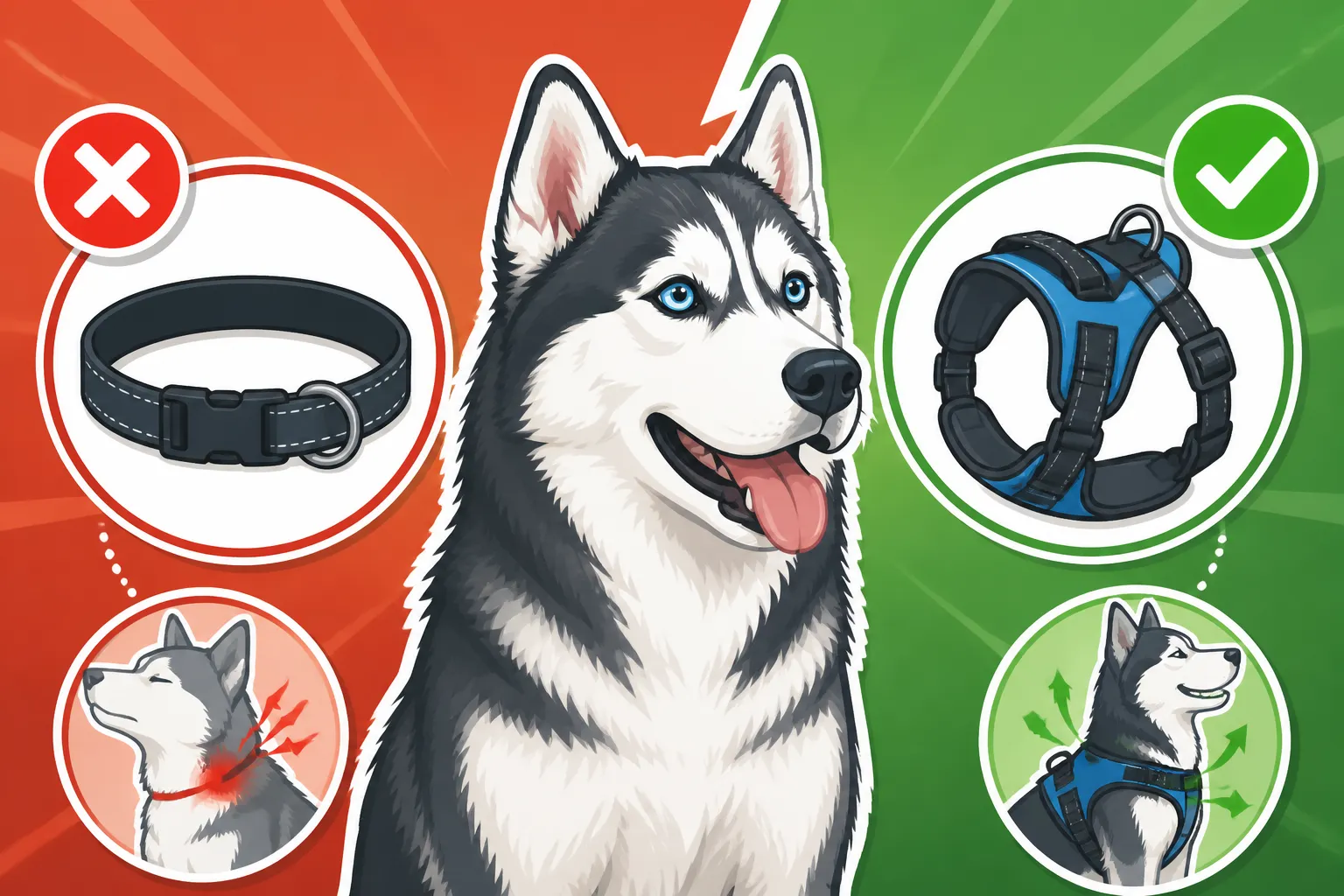
A standard flat collar, while essential for carrying identification tags, just isn't designed to effectively manage the sheer strength and determination of a Siberian Husky. Huskies have very strong necks and a low pain tolerance for pressure around their throats when they are focused on a mission – like chasing a squirrel or simply heading towards that intriguing smell a block away. The design itself works against you, often putting undue pressure on their trachea and causing discomfort or even injury without offering much in the way of control.
Think about it from your Husky's perspective. When they feel pressure around their neck, their natural instinct isn't to stop, but to lean into it and pull harder, especially if they are excited or have a strong prey drive. This can lead to a constant tug-of-war, with you losing more often than not. Owners frequently report their Huskies gagging, choking, or making awful huffing sounds, all signs that the collar is causing distress, not discipline. It becomes a vicious cycle that makes walks stressful for everyone involved. For more on managing this, you might find our guide on Siberian Husky Leash Work Against a Pulling Instinct helpful.
The Risk of Escape and Injury
Beyond the general lack of control, traditional collars pose significant risks for a Siberian Husky. Their thick, dense fur and compact heads can sometimes allow them to slip out of ill-fitting collars with surprising ease, especially if they panic or pull back suddenly. I've heard countless stories, and experienced a few myself, of a Husky backing out of their collar in an instant, leaving a terrified owner holding an empty leash while their dog rockets off down the street. Given Siberian Husky Deaths From Trauma and Escape are a leading cause of loss for the breed, this is a serious concern.
Furthermore, the constant pressure on the neck from pulling can lead to health issues over time. While Huskies have robust necks, repeated stress on the trachea, larynx, and cervical spine isn't healthy. You could be inadvertently causing damage that manifests as a chronic cough, difficulty swallowing, or even neurological problems down the line. A simple flat collar is perfectly fine for holding ID tags and walking calmly in low-stimulus environments, but it’s rarely enough for the typical Husky's energy and drive.
Understanding the Siberian Husky's Drive to Pull
To truly understand why a collar often fails and a harness shines, we need to dive into the very essence of what makes a Siberian Husky tick. These aren't just pets; they are living, breathing echoes of their ancestors who ran for miles across vast, frozen landscapes, pulling sleds with incredible efficiency and joy. This drive isn't a behavioral flaw; it's a deeply ingrained genetic trait.
A History of Working in Harness
Siberian Huskies were bred by the Chukchi people of Northeast Asia specifically for endurance and speed in pulling light loads over long distances. For thousands of years, their survival depended on their ability to work cooperatively in a team, moving supplies and people across harsh terrain. This means that pulling isn't just something they do; it's something they are designed to do, and for many, something they love to do. The moment they feel tension on their shoulders, it activates that ancestral programming, telling them, "Time to go!"
This historical context is crucial because it explains why simply telling a Husky "no pull" can feel like asking a fish not to swim. It goes against their very nature. When you put a harness on a Siberian Husky, you are, in a way, speaking their language. It signals a job, an adventure, and a chance to use their incredible physical prowess. Understanding this shift in communication can dramatically improve your walks. For those interested in leaning into this instinct safely, check out Harness Sport Gear a Siberian Husky Owner Buys.
The Joy and Energy of a Husky on the Move
Beyond history, Siberian Huskies possess an almost boundless energy. They thrive on activity and mental stimulation. A walk for a Husky isn't just about relieving themselves; it's an exploration, a sensory experience, and an opportunity to burn off steam. When they're excited, perhaps by a new scent, another dog, or just the sheer joy of movement, their focus narrows, and their pulling strength multiplies.
Trying to fight this natural exuberance with a collar around their neck can become a battle of wills that no one wins. Instead of enjoying the walk, you're constantly bracing, correcting, and feeling frustrated. A harness, especially certain types, works with their physiology rather than against it, redistributing pressure and giving you more effective leverage without causing discomfort. It allows them to engage their powerful hindquarters and strong shoulders more naturally, making their efforts productive rather than destructive to your walk experience. Proper exercise is key for Huskies, and understanding How Much Exercise a Siberian Husky Really Needs can make a huge difference.
The Advantages of Using a Harness for Your Siberian Husky
Given their unique physiology and history, a harness is almost always the superior choice for walking a Siberian Husky. It provides better control, distributes pressure safely, and can actually aid in training loose-leash walking, transforming your daily outings from a dreaded chore into an enjoyable activity.
Improved Control and Safety
The primary benefit of a harness is the dramatically improved control it offers. Instead of pressure on your Husky's delicate throat, a well-fitted harness distributes tension across their chest and shoulders. This makes it far more difficult for them to slip out, offering you peace of mind that your escape artist won't vanish around the next corner. When they pull, the force is absorbed by their stronger body parts, preventing injury and giving you a much better mechanical advantage.
For instance, a front-clip harness, which we'll discuss more in a moment, redirects your Husky's forward momentum. When they pull, the leash attached to the front clip gently turns them to the side, breaking their forward drive and encouraging them to walk beside you. This isn't painful; it's a subtle, physical cue that teaches them that pulling gets them nowhere, literally. This kind of redirection is far more effective and humane than yanking on a collar.
Comfort and Reduced Risk of Injury
Imagine wearing a tight band around your neck that constantly chokes you every time you move too quickly. That's essentially what a pulling Husky experiences with a collar. A harness, conversely, allows for natural movement of their head, neck, and throat, ensuring their comfort and reducing the risk of long-term injuries. This is especially vital for a breed as active as the Husky, who needs to breathe freely and move unimpeded.
With a harness, your Husky can pant, drink water, and investigate smells without restriction or discomfort, making their walks more enjoyable and less stressful. This improved comfort can lead to a more relaxed and cooperative dog on the leash, making the training process smoother. Plus, if you ever need to quickly grab your Husky, a harness provides a secure handle across their back or chest, allowing you to safely guide them without putting pressure on their throat. This is a big deal when you're trying to contain A Siberian Husky That Pulls Toward Other Dogs or something equally exciting.
Aid in Training Loose-Leash Walking
While Huskies are famous for pulling, a good harness, combined with consistent training, can absolutely help teach them polite leash manners. The key is to choose the right type of harness and use it as a tool, not a crutch. Instead of relying on discomfort to deter pulling, a well-designed harness uses redirection and leverage to communicate what you want.
Many positive reinforcement trainers advocate for front-clip harnesses as an excellent starting point for teaching loose-leash walking. When your Husky pulls, the leash attached at their chest pivots them gently, making it uncomfortable for them to continue forging ahead. This allows you to reward them for slack in the leash, building a positive association with walking nicely. Combined with short, engaging training sessions and high-value treats, a harness can be instrumental in shaping the desired behavior. Resources like BAXTER & Bella offer online puppy training programs that can guide you through using such tools effectively from a young age.
Different Types of Harnesses for Siberian Huskies
Not all harnesses are created equal, especially when it comes to the unique needs of a powerful and energetic breed like the Siberian Husky. Understanding the different types available will help you choose the best tool for your specific situation and training goals.
Front-Clip Harnesses
Front-clip harnesses, also often called "no-pull" harnesses, feature a leash attachment ring located on the dog's chest. This design is highly effective for reducing pulling because it redirects your Husky's momentum. When your Husky pulls forward, the leash connection on the chest gently turns them to the side, effectively steering them away from their intended direction of travel. This makes it physically difficult for them to pull in a straight line, encouraging them to walk closer to you.
These harnesses are excellent for everyday walks and for teaching loose-leash manners. They come in various styles and materials, from lightweight nylon to padded, more robust designs. When choosing one, look for adjustable straps to ensure a snug, comfortable fit that won't chafe or allow for escape. Brands widely available on platforms like Amazon offer a good range of options, but always prioritize fit and durability. This type of harness is a game-changer for many owners who feel they are constantly Holding a Siberian Husky That Outweighs Your Grip.
Back-Clip Harnesses
Back-clip harnesses have the leash attachment ring on the dog's back, typically between the shoulder blades. While they are a great improvement over a collar in terms of comfort and safety, they are generally less effective at preventing pulling. For a Siberian Husky, a back-clip harness can actually encourage pulling because it allows them to lean into the harness and use their full body strength, much like they would in a sledding harness.
However, back-clip harnesses are still excellent for dogs who already walk politely on a leash or for activities where a bit of pulling is acceptable or even desired, such as hiking or casual runs. They are also ideal for small dogs or those with medical conditions where any neck pressure is to be avoided. For a Husky, a back-clip harness might be used after they've mastered loose-leash walking with a front-clip, or if you're specifically training them for harness sports like canicross or bikejoring, where controlled pulling is the goal. Understanding the difference is key to Teaching a Siberian Husky the Difference Between Pull and Walk.
Dual-Clip and Training Harnesses
Some harnesses offer both a front and a back clip, providing versatility. You can start with the front clip for training, and as your Husky improves, you can switch to the back clip or even use both with a double-ended leash for maximum control and redirection. This can be a fantastic option for transitioning your Husky from a heavy puller to a polite walker.
There are also specialized "training harnesses" that might incorporate different pressure points or tightening mechanisms. While some of these can be effective, it's crucial to ensure they don't cause pain or discomfort. The goal is always to guide and redirect, not to punish. Always consult with a professional trainer to ensure any specialized equipment is used correctly and humanely. A certified professional can help you choose the right tools and techniques, perhaps even helping with The Cues a Siberian Husky Needs in Harness for specific activities.
When a Collar Can Still Be Useful
While harnesses are generally the preferred choice for walking a Siberian Husky, traditional collars still have important roles to play in your dog's life. It's not an either/or situation; often, a combination of both is the most practical approach.
For Identification and Quick Grabs
Every dog, especially a breed known for its The Roaming Instinct Bred Into Every Siberian Husky and escape artistry, should wear a collar with identification tags at all times. This includes your dog's name, your phone number, and perhaps even a rabies tag. Even if your Husky is microchipped, a visible ID tag can significantly speed up their return if they ever get lost. This collar doesn't need to be attached to a leash for walks, but it's a vital piece of safety equipment.
Beyond ID, a flat collar can be useful for very brief, supervised moments when you just need to quickly guide or hold your Husky. For instance, if you're moving from one room to another, or need to hold them briefly while you open a door. It provides a convenient, albeit temporary, handle for very short-term control. However, remember this isn't for extended periods of pulling or sustained restraint.
For Specific Training Situations
In some very specific, controlled training environments, a knowledgeable trainer might utilize a specific type of collar, like a martingale collar, for a Husky. Martingale collars are designed to tighten only to a certain degree when pulled, preventing the dog from backing out without continuous choke pressure. They are often recommended for sighthounds and other breeds with narrower heads compared to their necks, which can include some Huskies. These collars are still primarily for preventing escape rather than correcting pulling in the long run.
However, for the average pet owner simply trying to enjoy walks, a harness remains the safest and most effective tool for everyday leash work. Always seek professional advice before using any specialized training collar, as improper use can lead to fear, pain, and damage to your relationship with your Husky. For general leash training, focusing on positive reinforcement with a harness is almost always the better route. You might even want to consider training services offered by BAXTER & Bella, which emphasize humane and effective methods.
Essential Considerations for Choosing and Using a Harness
Once you've decided a harness is the way to go (and for most Huskies, it really is!), there are a few key things to keep in mind to ensure you choose the right one and use it effectively. Fit, material, and consistency are all paramount.
Achieving the Perfect Fit
The most critical factor for any harness is a proper fit. A harness that's too loose can allow your Husky to slip out, while one that's too tight can chafe, restrict movement, and cause discomfort. You should be able to comfortably slide two fingers underneath all the straps once the harness is on your Husky. Pay particular attention to the area behind their front legs, as this is a common spot for chafing if the harness is too loose or the material is rough.
When trying on harnesses, bring your Husky to the store if possible, or be prepared to make returns if ordering online. Have them walk around, sit, and lie down to ensure the harness moves with them and doesn't pinch or bind. Adjustability is key, as Huskies come in various shapes and sizes, even within the breed standard. A well-fitted harness should be snug, secure, and comfortable, almost like a second skin.
Material and Durability
Siberian Huskies are strong, active dogs, and they need a harness that can stand up to their adventures. Look for durable materials like strong nylon webbing with reinforced stitching. Metal D-rings for leash attachment are generally more robust than plastic ones. Padding, especially on the chest and around the straps, can significantly increase comfort and prevent chafing during long walks or runs.
Consider the climate you live in as well. If you're in a warmer area, breathable materials might be preferred. If you're out in all weather, a quick-drying material could be beneficial. Many reputable pet supply retailers, including those found on Amazon, offer harnesses designed for active breeds. Invest in a quality harness; it's an investment in your Husky's safety and your peace of mind. For more on controlling your dog, you might like Leashes That Hold a Siberian Husky That Lunges.
Consistency in Training
A harness is a tool, not a magic bullet. While it can greatly aid in managing your Husky's pulling, it needs to be combined with consistent, positive reinforcement training. Every time you walk your Husky, you're reinforcing habits. If you allow them to pull relentlessly, even with a front-clip harness, they will continue to do so.
Practice short, frequent training sessions focused on loose-leash walking in low-distraction environments before progressing to busier areas. Reward generously with high-value treats and praise every time your Husky walks with a slack leash. If they start to pull, simply stop walking. The moment the leash goes slack, start moving again. This teaches them that pulling gets them nowhere, while a loose leash means forward momentum. BAXTER & Bella provides excellent resources and training modules for teaching loose-leash walking, which can be invaluable for Husky owners.
Comparing Collars and Harnesses for Siberian Huskies
To help you visualize the differences, here's a quick comparison of collars and harnesses for your Siberian Husky.
| Feature | Flat Collar | Front-Clip Harness | Back-Clip Harness |
|---|---|---|---|
| Primary Use | ID, quick grabs, minimal restraint | Anti-pull training, everyday walks, safety | Casual walks (for non-pullers), some sports |
| Control Level | Low (easily overpowered by Husky) | High (redirects pulling effectively) | Moderate (can encourage pulling in Huskies) |
| Safety (Escape) | High risk of slipping out | Low risk of slipping out | Low risk of slipping out |
| Comfort/Health | Risk of neck/tracheal injury with pulling | Distributes pressure safely across chest | Distributes pressure safely across back/shoulders |
| Training Aid | Poor for loose-leash training; reinforces pulling | Excellent for teaching loose-leash walking | Poor for teaching loose-leash walking |
| Best for Huskies? | Only for ID and very light supervision | Highly recommended for most walking/training | Good for established polite walkers or specific sports |
Harnessing the Power: Making Walks Enjoyable Again
Ultimately, choosing between a collar and a harness for your Siberian Husky isn't just about what's easier for you; it's about what's safest, most comfortable, and most effective for your dog. For the vast majority of Siberian Huskies, a well-fitted harness, particularly a front-clip design, is the superior choice for daily walks and training. It allows you to manage their incredible strength and inherent drive to pull without resorting to uncomfortable or potentially harmful methods.
By understanding their natural instincts and providing them with the right tools, you can transform those frustrating tug-of-war sessions into genuinely enjoyable outings. Walks should be a time for bonding and exercise, not a constant battle. Invest in a good harness, commit to consistent positive reinforcement, and you'll find that harnessing your Husky's power can be a truly rewarding experience for both of you. You might even find yourself exploring more adventurous activities, leading to things like Starting Canicross With a Siberian Husky.
Remember, your Husky wants to move, to explore, and to feel engaged. By giving them a way to do that safely and comfortably, you're setting them up for a lifetime of happy, healthy adventures together.
Disclaimer
This article is for general informational purposes only and does not constitute professional advice. Laws, prices and regulations vary by location and change over time. Consult a qualified professional for guidance on your specific situation.