Looking Up a Siberian Husky in the OFA Database
Bringing a Siberian Husky into your life is an incredible adventure, but it also comes with a big responsibility – ensuring they're as healthy as can be. One of the most frustrating things for prospective owners is navigating the world of health clearances and trying to figure out if a breeder's claims about healthy parents are truly verifiable. This guide is here to demystify the Orthopedic Foundation for Animals (OFA) database, empowering you to confidently look up a Siberian Husky's health records and understand what those certifications really mean.
Understanding the OFA Database and Its Purpose
The journey of finding a healthy Siberian Husky often feels like trying to solve a puzzle, especially when breeders mention health testing. You hear phrases like "the parents are health-tested," and you want to believe it, but how do you actually check that information? This is where the OFA database becomes an invaluable tool, providing a public, verifiable record for many crucial health screenings.
Why the OFA Matters for Siberian Huskies
The Orthopedic Foundation for Animals (OFA) is a non-profit organization established in 1966 that aims to promote the health and welfare of companion animals through a reduction in the incidence of genetic disease. For Siberian Huskies, like many other breeds, there are specific health concerns that are more prevalent. The OFA provides a centralized, transparent system where veterinarians can submit results for various health tests, and these results are then made public.
It’s genuinely frustrating when you're trying to do your due diligence, maybe you've fallen in love with a Siberian Husky puppy online, and the breeder seems hesitant to provide concrete evidence of health testing. The OFA database cuts through that ambiguity. It empowers responsible breeders to demonstrate their commitment to the breed's health by voluntarily submitting their dogs' test results, contributing to a broader understanding of genetic health within the Siberian Husky population. This transparency is crucial not just for individual puppy buyers but for the breed as a whole, helping to reduce the incidence of debilitating inherited conditions. Think of it as a historical record that helps track improvements and highlight potential areas of concern across generations of Huskies.
Common Health Clearances for Siberian Huskies
While Siberian Huskies are generally a robust breed known for their longevity compared to some other medium-to-large dogs, they aren't immune to genetic health issues. The OFA tracks several important certifications relevant to the breed. The most common certifications you'll see for a Siberian Husky include:
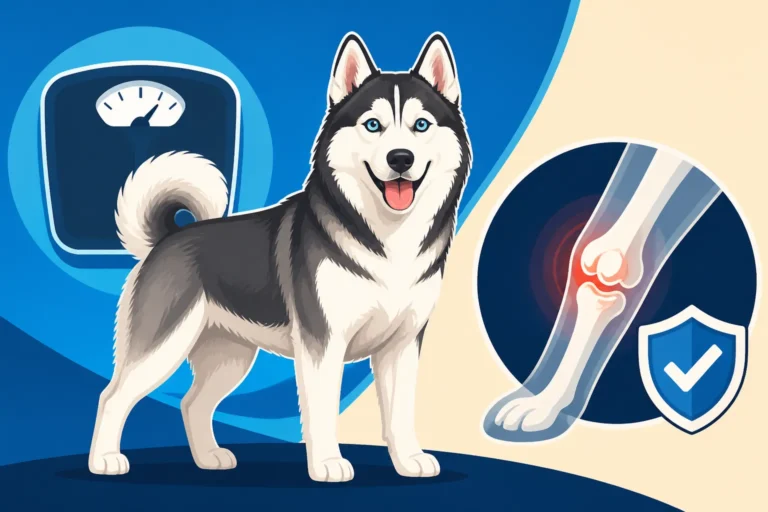
- Hips: Hip dysplasia is a condition where the hip joint doesn't form correctly, leading to arthritis and pain. While Siberian Huskies have a significantly lower rate of hip dysplasia compared to many other breeds, responsible breeders still screen for it. An OFA hip certification assesses the structure of the hip joint. You can learn more about Siberian Husky Hips and Why the Rate Is Low and how their physiology contributes to this.
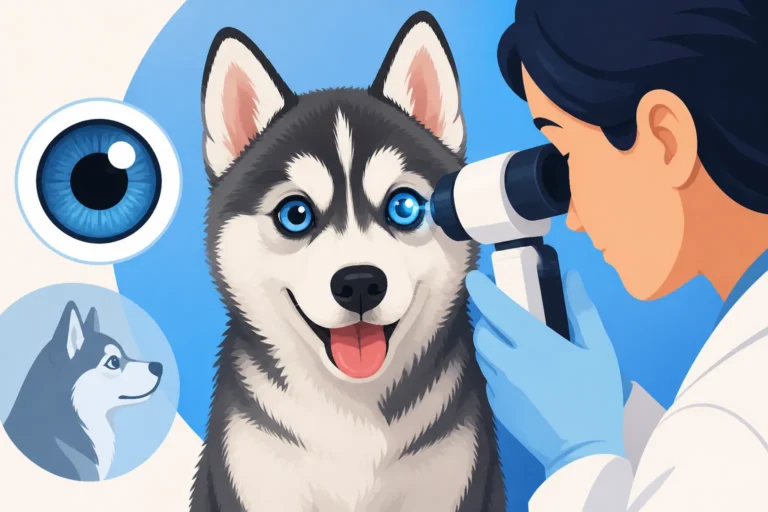
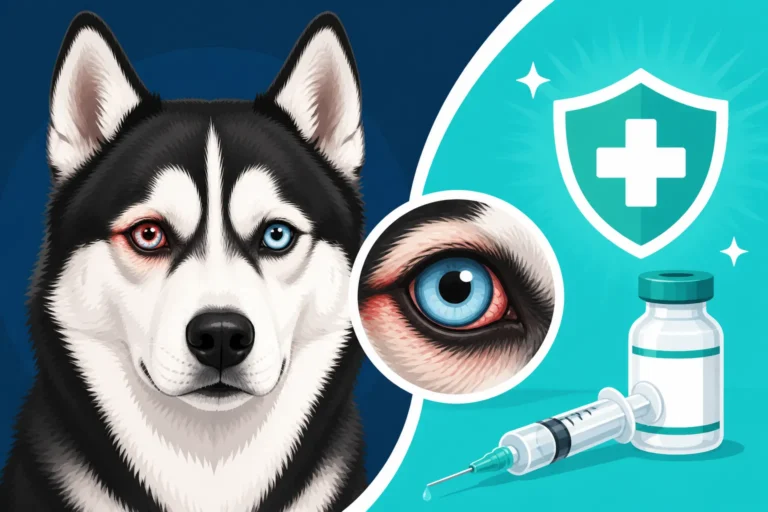
- Eyes: Inherited eye diseases are a concern in Siberian Huskies. The OFA Eye Certification Registry (CAER, formerly CERF) involves an annual examination by a board-certified veterinary ophthalmologist to screen for conditions like cataracts, progressive retinal atrophy (PRA), and corneal dystrophy. These exams need to be done yearly to remain current, as some conditions can develop later in life. This is why Siberian Husky Eye Disease and the Annual Exam is so important.
- Thyroid: Autoimmune thyroiditis, which can lead to hypothyroidism, is also tested for in Siberian Huskies. This condition can affect a dog's metabolism, coat, and energy levels. While less common than hip or eye issues, it's still a condition responsible breeders screen for. Further information about this can be found in our guide on Siberian Husky Thyroid and Autoimmune Disease.
Some breeders might also test for elbows (elbow dysplasia), though it's less of a primary concern for Huskies than for some other large breeds. A comprehensive breeder will also aim for What Siberian Husky CHIC Certification Requires, which means the dog has obtained all the core health certifications recommended by the breed parent club and had those results publicly registered with OFA. This is a gold standard for health testing.
Step-by-Step Guide to Searching the OFA Database
Navigating a new website, especially one that holds important information about your potential furry family member, can feel a bit daunting. But I promise you, the OFA database is quite user-friendly once you know where to look. It’s a vital step in ensuring you're getting a clear picture of the health lineage behind your future companion.
Navigating the OFA Website
The first step is to head directly to the source: the OFA website. Go to www.ofa.org. Once you're on the homepage, you'll want to look for the "Search OFA Records" section. It's usually prominently displayed.
Here’s a breakdown of how to search effectively:
- Select "Advanced Search": While there's often a quick search, the advanced search gives you more control and usually yields better results.
- Choose "Siberian Husky" as the Breed: This is crucial to narrow down your results efficiently.
- Enter Search Criteria: This is where you put in the dog's information.
- Registration Number: This is the most accurate way to search. If the breeder provides an AKC registration number, for example, inputting this will take you directly to the dog's records.
- Part of Name: If you don't have the full registered name, or if it's a very long name, try searching for a significant part of it. For instance, if a dog's registered name is "Ch. Frosty Paws Yukon King," searching "Yukon King" or "Frosty Paws" might work. Be aware that small variations or typos can throw off results.
- Call Name: Sometimes, a breeder will only give you the dog's "house name" or call name. While you can try searching this, it's often not the name under which they are registered with the AKC or OFA, so it's less reliable.
- Search for Sire/Dam: If you know the parents' names or registration numbers, you can search for them directly to see their individual health records.
One common frustration is when a breeder gives a dog’s call name, but the official registered name for health testing purposes is completely different. This happens often! Always ask for the dog's full, official registered name and any registration numbers (like AKC) to ensure the most accurate search. It can save you a lot of head-scratching.
Interpreting Search Results and Certificates
Once you hit "submit" on your search, you'll be presented with a table of results. Each row represents a dog that matches your search criteria.
Here’s what you need to look for and how to understand it:
- Registered Name and Number: Verify that the dog listed is indeed the one you're looking for.
- Birth Date: This helps confirm you have the right dog, especially if there are similar names.
- Test Category: You'll see columns for "Hips," "Eyes," "Thyroid," etc.
- Result/Rating: This is the meat of the information.
- Hips: Ratings can be "Excellent," "Good," "Fair" (all are passing grades and considered healthy for breeding), or "Borderline," "Mild," "Moderate," "Severe" (these indicate dysplasia). A "Normal" rating indicates a preliminary evaluation, not a final one. You'll want to see Reading a Siberian Husky's OFA Hip Result to understand these nuances.
- Eyes (CAER): Look for "Normal." If it says "Affected," it means the dog has an identifiable eye condition. "Breeder Option" might be seen for some conditions, indicating a condition noted but not necessarily disqualifying for breeding, though this is rare for primary health concerns. Remember, eye certifications need to be annual.
- Thyroid: Generally, you'll see "Normal."
- OFA Number: Each certification has a unique OFA number.
- Date of Evaluation: This tells you when the test was performed. For eyes, ensuring it's recent is key.
To see the actual certificate, click on the OFA number or the dog's name (depending on the layout). This will open a PDF document with detailed information, including the veterinarian who performed the test, the date, and the specific findings.
It's also important to differentiate between "Preliminary" (Prelim) results and "Final" results. Preliminary evaluations can be done on younger dogs, often between 12-24 months of age, especially for hips. However, for a dog to receive a final OFA certification for hips, they must be 24 months old or older. If you only see "Prelim" results for an adult dog, it's a good question to ask the breeder why final clearances haven't been obtained.
Table: Common Siberian Husky OFA Certifications and Age Requirements
| Certification Type | Condition Screened For | Minimum Age for Final Certification | Common OFA Result/Rating (Passing) | Important Notes |
|---|---|---|---|---|
| Hips | Hip Dysplasia | 24 Months | Excellent, Good, Fair | "Normal" indicates a preliminary evaluation, not a final. All passing grades are breedable. |
| Eyes (CAER) | Inherited Eye Diseases | Any Age (Annual Exam Recommended) | Normal | Must be re-certified annually to be considered current. Screens for conditions like cataracts and PRA. |
| Thyroid | Autoimmune Thyroiditis | 12 Months | Normal | Screening involves blood tests. |
| Elbows | Elbow Dysplasia | 24 Months | Normal | Less common primary concern for Huskies, but some breeders test. |
What to Do If You Can't Find a Dog's Records
It's a familiar knot in the stomach when you search the OFA database, confident you've got the right information, only for "No Records Found" to stare back at you. Don't panic immediately, but definitely consider it a yellow flag. There are several reasons why a dog's records might not appear, some benign, some indicating a potential issue.
Common Reasons for Missing OFA Records
Before jumping to conclusions, let's explore why a Siberian Husky you're looking up might not show up in the database:
- The Test Was Never Done: This is the most straightforward, and often the most concerning, reason. If a breeder claims health testing but nothing is verifiable, it's possible they simply didn't do the tests. This is a red flag.
- Results Not Submitted (or Only Submitted for Passing Grades): The OFA database is voluntary. Breeders are not required to submit all results. Unfortunately, some breeders only submit passing results, opting to keep unfavorable or failing results private. This practice undermines the transparency the OFA strives for and makes it impossible for prospective buyers to see the full health picture of a breeding line.
- The Dog Is Too Young: For hip and elbow certifications, a dog must be at least 24 months old to receive a final OFA rating. If you're looking at a dog younger than two years, they might only have "preliminary" results, which might not be as easily searchable or fully listed on the public database, or they simply haven't reached the age for final certification yet.
- Incorrect Search Terms or Name Variations: This is surprisingly common. A small typo, using a call name instead of a registered name, or even a different spelling can lead to no results. Ensure you have the full, official registered name, including any titles (like "Ch." for Champion), and any registration numbers.
- The Breeder Uses a Different Registry or Only Vet Checks: While OFA is the gold standard for many tests in the US, some international breeders might use different national registries (e.g., FCI in Europe). Others might claim their vet "checked" the hips or eyes, but without a formal, board-certified evaluation submitted to a public database, these are essentially meaningless in terms of verifiable health clearances for breeding purposes.
- The Test Isn't Covered by OFA: Not every potential health issue has an OFA certification. For example, some genetic conditions might have specific DNA tests done through labs like Embark or Wisdom Panel, and while these are excellent tools, their results aren't always directly integrated into the main OFA database (though some might be cross-referenced or listed under a CHIC number). Conditions like Siberian Husky Seizures and Idiopathic Epilepsy aren't directly certified by OFA.
It's a bit like trying to find a book in a library when you only have a vague idea of the title. Without the exact details, you're out of luck. This is why when you're reviewing Reading a Siberian Husky Puppy's Health Paperwork, verifying OFA records should be a critical step.
How to Approach a Breeder About Missing Information
If your search comes up empty, don't immediately assume the worst, but definitely don't ignore it. This is where polite, but firm, communication with the breeder is essential.
Here’s how to approach the conversation:
- Start with the Facts: Politely state that you searched the OFA database using the information they provided (e.g., "I tried searching for [Dog's Registered Name] on the OFA website, but I couldn't find any public records for their hip or eye clearances.").
- Ask for Specifics: Request the exact OFA numbers for their dogs' certifications. If they used a different database or performed DNA tests through another lab, ask for those specific reports or links. A reputable breeder will have these readily available and be happy to share them.
- Understand the "Why": Ask why the records might not be public. Is the dog too young for final clearances? Was there a specific reason a result wasn't submitted? Their answer will tell you a lot. A good breeder will be transparent and educate you, explaining their breeding philosophy and testing protocols.
- Look for Red Flags: Be wary if a breeder becomes defensive, dismissive, or tries to change the subject. Phrases like "My vet says they're fine" without verifiable documentation, or "We don't believe in OFA testing," are significant red flags. Responsible breeders are proud of their health testing and its results. If you're considering pet insurance to help cover unforeseen medical costs, like through providers such as Healthy Paws, knowing the genetic background of your puppy can still influence what might be considered a pre-existing condition, even if you have coverage. Proactive testing is always the best first line of defense.
- Be Prepared to Walk Away: Ultimately, if a breeder cannot provide verifiable health clearances or transparency, it's a strong indicator that they may not be prioritizing the long-term health of their puppies. As difficult as it might be, walking away from such a situation is often the best decision for your future Siberian Husky and your peace of mind. Remember, Health Testing Before You Buy a Siberian Husky is non-negotiable for a responsible purchase.
Beyond the OFA Database: Other Considerations
While the OFA database is a fantastic resource, it's not the be-all and end-all of a Siberian Husky's health story. A truly comprehensive approach to ensuring a healthy puppy means looking at the bigger picture. After all, a healthy puppy is just the beginning of a long and wonderful Siberian Husky Lifespan and What Shortens It.
Limitations of the OFA Database
It’s crucial to understand what the OFA database doesn't cover, so you don't have a false sense of security:
- Voluntary Submission: As mentioned, the system relies on voluntary submission. Unfavorable results can be, and sometimes are, withheld. This means the public database may present an artificially rosier picture than reality for certain lines if breeders aren't completely transparent.
- Limited Scope: OFA primarily focuses on specific orthopedic (hips, elbows) and ophthalmic conditions, as well as some endocrine (thyroid) and cardiac conditions. It doesn't encompass every possible health issue a Siberian Husky might face. For instance, while it tracks eye certifications, it doesn't directly list the results of specific DNA tests for conditions like Progressive Retinal Atrophy (PRA), although these are often completed as part of a comprehensive eye health panel.
- Does Not Guarantee Future Health: A "clear" OFA certificate means the dog was free of that specific condition at the time of testing. It doesn't guarantee the dog will never develop other health problems or that their offspring will be entirely free of genetic conditions. Genetics are complex, and even with the best testing, there are no 100% guarantees. It significantly reduces the risk, however.
- Doesn't Cover All Diseases: Many diseases, like certain cancers or autoimmune conditions that affect Huskies, don't have a simple OFA certification. A good breeder will still be aware of these issues in their lines and disclose them.
For example, while OFA provides certifications for eyes, a specific DNA test like The DNA Test for Siberian Husky PRA might be conducted separately by a specialized lab to determine carrier status, which is vital for breeding decisions.
The Role of Other Health Certifications and Pedigrees
To truly get a full picture of a Siberian Husky's health background, you need to look beyond just the OFA database.
- DNA Testing: Many genetic conditions, particularly certain eye diseases or blood disorders, can be identified via DNA tests. Reputable breeders will often perform a panel of DNA tests through companies like Embark, Wisdom Panel, or OptiGen to screen for conditions relevant to Siberian Huskies. Ask to see these results. They can identify carriers of diseases even if the dog itself isn't affected, which is crucial for making informed breeding choices.
- Veterinary Records: While not a public database, a breeder should be able to provide general veterinary records for their breeding dogs, showing regular check-ups, vaccinations, and overall health. This gives you a sense of their routine care and general well-being, complementing the genetic screenings.
- Full Pedigree Analysis: Understanding a dog's pedigree (their family tree) is invaluable. A good breeder knows the health history of the ancestors in their lines for several generations. They should be able to discuss any health issues that have popped up, even if they aren't on a public database. This deep historical knowledge is part of what makes a breeder truly responsible. It helps them avoid breeding dogs that, while clear themselves, might carry recessive genes for certain conditions.
- CHIC Program (Canine Health Information Center): The CHIC program, co-sponsored by the OFA and the AKC Canine Health Foundation, identifies health screening tests appropriate for each breed. When a dog completes all recommended tests for its breed and those results are publicly available in the OFA database, they receive a CHIC number. This signifies a commitment to comprehensive health testing. Looking for a CHIC number on a dog's OFA record is an excellent indicator of a breeder's dedication.
- Annual Specialist Exams: For conditions like eye health, even if a dog is clear at two years old, annual re-examinations by a veterinary ophthalmologist are recommended to catch late-onset conditions. The initial OFA eye certification might have been years ago, so asking about the most recent Annual Ophthalmologist Fees for a Siberian Husky and seeing their current certificate is a smart move.
Ultimately, the goal is to choose a Siberian Husky from a breeder who is transparent, knowledgeable, and committed to producing healthy, well-adjusted puppies. While tools like the OFA database are powerful, they are best used in conjunction with open communication and a thorough understanding of the breed's specific health considerations. And remember, even with the best genetic health, a lifetime of good care, appropriate nutrition, and regular vet visits – supported by pet insurance like Healthy Paws – are essential for your Husky's long-term well-being.
Disclaimer
The information provided in this article is for general informational purposes only and is not intended as a substitute for professional veterinary advice. Always consult with a qualified veterinarian or veterinary specialist regarding any medical concerns or before making any decisions about your pet's health or treatment.